Plot Explained Spoilers guaranteed!
Plot Explained

Browse by genre

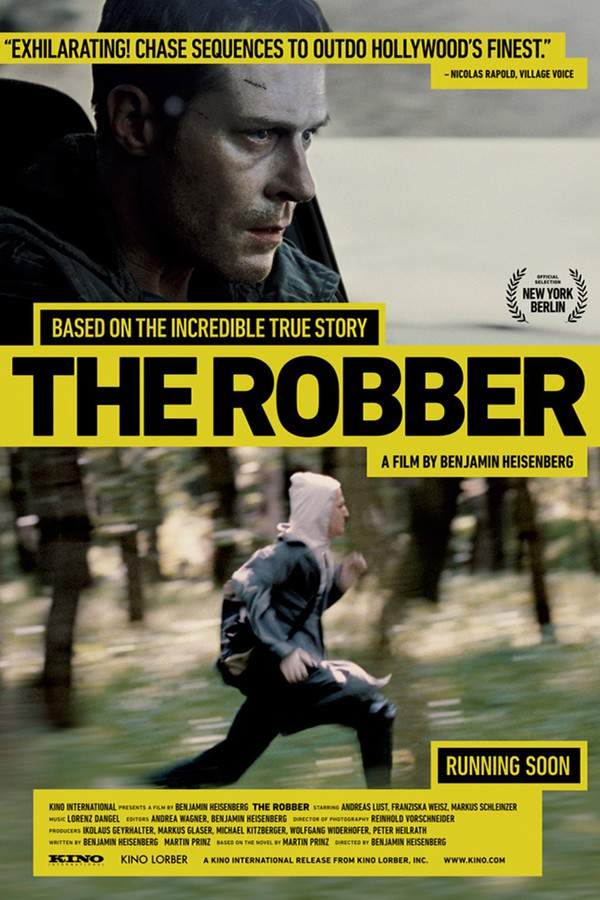
The Robber (2010) movie poster

Plot Summary

The Robber (2010) Plot Summary Explained

Release, runtime and language
2010 · 96 mins · German
Directed by
Benjamin Heisenberg
Starring
Andreas Lust, Markus Schleinzer, Franziska Weisz, Michael Welz, Johann Bednar, Peter Vilnai

A champion marathoner leads a double life as a serial bank robber, sprinting between fixes (and away from police cavalcades) as many as three times a day.

On this page (4)
  1. 1 What happens: full plot
  2. 2 Plot questions answered
  3. 3 Movie threads
  4. 4 Every angle

Full plot summary · contains spoilers

What Happens in The Robber: Full Plot Summary

The whole story of The Robber (2010) explained, from the opening scene to the final frame: every key event, every twist and what it all adds up to. Read it as a quick recap before the sequel, to check a scene you missed, or to finally understand what really happened.

Johann, portrayed by Andreas Lust, is a man with a tumultuous past, having served time in prison for attempted armed robbery. Upon his release, rather than seeking a path to redemption, he chooses to dive headfirst back into a life of crime, using a shotgun and a mask to commit a series of brazen bank heists. Seeking solace and support, Johann moves in with Erika, a compassionate social worker played by Franziska Weisz, and their relationship evolves into something deeper.

As Johann gains notoriety for his impressive marathon running skills, he simultaneously indulges in his criminal behavior, much to the concern of his parole officer. Their encounters take a dark turn when Johann becomes increasingly evasive, raising suspicions that lead Erika to discover his hidden stash of stolen money. Confronted by her findings, Erika expresses her disappointment and urges him to change, but Johann's desperation and anger take over when his parole officer pays him an unwelcome visit. In a fit of rage, Johann commits a horrific act, brutally murdering his officer with a trophy, sealing his fate.

Following a poignant farewell with Erika, Johann's life spirals further out of control as the police close in on him, ultimately leading to his capture in a hotel room where he had hidden his ill-gotten gains. Betrayed by the love of his life, Johann finds himself in a precarious situation when faced with a confession to sign. In a dramatic turn of events, he escapes through a window and ignites a frantic, cross-country manhunt. His chaotic journey finds him seeking refuge in the home of an elderly man, but an unforeseen struggle leads to a grave injury inflicted by a concealed pocket knife.

As Johann steals the old man’s car and hits the road, he soon realizes the extent of his injuries. On the run and losing consciousness, his thoughts turn to Erika, leading him to pull over and make one last call to her. In a moment filled with vulnerability and desperation, he implores Erika to stay on the line as he faces the end. With his breath gradually slowing and ultimately ceasing, Johann's story reveals not just a descent into crime, but a tragic reflection on lost chances and the fleeting nature of life.

Last updated: September 28, 2026 at 10:55

Was this helpful?

Plot questions answered

The Robber Plot Explained: Your Questions Answered

The questions people ask most about The Robber (2010): what happens in the confusing scenes, why the characters do what they do, the twists, hidden details and what the ending means. Each answer contains spoilers.

Q1

Why does Johann go back to robbing banks right after being released from prison?

Instead of using his freedom to build a new life, Johann immediately returns to armed robbery with a shotgun and a mask. His past conviction for attempted armed robbery shows the behavior is deeply ingrained, and the film presents his relapse as a compulsion rather than a calculated decision. Moving in with Erika offers him stability, but it does not redirect his need for the rush of crime.

Foreshadowing: The opening summary already frames his release as a return to chaos rather than a fresh start, hinting that his compulsion has not faded.

  • johann
  • prison release
  • bank robbery
  • relapse
  • compulsion
Q2

How does Johann manage to rob banks and run marathons at the same time?

Johann uses his elite athletic endurance to sprint away from crime scenes before police can react, sometimes pulling off multiple robberies in a single day. His marathon training provides a legitimate public identity and a structured routine that masks his criminal schedule. The film treats the two activities as parallel compulsions rather than separate lives, with his running fueling his escapes from police cavalcades.

Foreshadowing: His earlier prison time and physical conditioning set up the stamina he later relies on during heists.

  • johann
  • marathon
  • bank robbery
  • dual life
  • escape
Q3

Why does Johann murder his parole officer with a marathon trophy?

When his officer shows up unannounced and pushes Johann about his lack of cooperation, Johann's desperation and anger finally boil over. The trophy becomes a weapon of convenience in a sudden, uncontrollable fit of rage rather than a premeditated choice. The murder marks the moment his double life tips into irreversible violence and seals his fate as a fugitive.

Foreshadowing: Erika's earlier discovery of the hidden money already warned that Johann's stress was reaching a breaking point.

  • johann
  • parole officer
  • murder
  • trophy
  • rage
Q4

Why does Erika decide to turn Johann in to the police?

Erika discovers the stash of stolen money Johann has been hiding, which confirms her worst suspicions about his double life. After he refuses to change and then murders his parole officer, she is left heartbroken and conflicted between love and accountability. Turning him in is framed as a painful but necessary act once his violence makes staying loyal impossible.

Foreshadowing: Her earlier ultimatum about change already signaled that she would not protect him indefinitely.

  • erika
  • johann
  • betrayal
  • police
  • confession
Q5

How does Johann escape from jail after his arrest?

While being handed a confession to sign, Johann seizes a brief window of distraction and forces his way out through a window. The escape triggers a frantic cross-country manhunt and shifts the story from a police procedural into a chase film. It also marks his final break from any chance of a normal life with Erika.

Foreshadowing: His long-distance running ability foreshadows his ability to stay ahead of the manhunt, at least briefly.

  • johann
  • escape
  • jail
  • window
  • manhunt
Q6

Why does the old man stab Johann when he seeks refuge?

Johann breaks into the home of an elderly man hoping to hide from police, but the encounter quickly turns violent when the man resists. During the struggle, the old man uses a concealed pocket knife to defend himself, leaving Johann with a grave injury. The wound is what ultimately dooms Johann, turning his escape into a slow death on the road.

Foreshadowing: Johann's pattern of taking what he needs from others already foreshadows that he will not find safe harbor.

  • johann
  • old man
  • stabbing
  • refuge
  • pocket knife
Q7

What happens to Johann at the end of The Robber?

Badly wounded and losing consciousness behind the wheel, Johann pulls over and calls Erika one last time, asking her to stay on the line. As his breathing slows and eventually stops, he dies alone on the roadside. The ending is unambiguously bleak, framing his fate as the inevitable result of his compulsive choices rather than a redemptive release.

Foreshadowing: The hidden money under the bed foreshadows that his crimes will ultimately leave him with nothing but his regrets.

  • johann
  • ending
  • death
  • erika
  • roadside
Q8

Why does Johann call Erika while he is dying on the roadside?

As his body gives out, Johann's thoughts turn to Erika, the one person who represented a chance at a normal life. Calling her is not a plea for rescue but a final act of vulnerability, an attempt to reconnect with the life he sabotaged. The call underscores the tragedy of The Robber: even at the end, he reaches for the connection his crimes destroyed.

Foreshadowing: Their earlier farewell already showed that Erika remained the emotional center of his life.

  • johann
  • erika
  • final call
  • death
  • regret
Q9

Why does Johann keep robbing banks even after moving in with Erika?

Living with Erika offers Johann emotional support and stability, but it does not address the underlying compulsion that drives him back to crime. The film presents his robberies as an addiction that overrides his relationships rather than a rational choice he can simply stop making. Each successful heist reinforces the cycle, pulling him deeper away from the life Erika is trying to offer.

Foreshadowing: His immediate first robbery after prison already hinted that a stable home would not be enough to change him.

  • johann
  • erika
  • robbery
  • addiction
  • compulsion
Q10

What does the hidden stash of stolen money under Johann's bed symbolize?

The cash hidden under the mattress is physical proof that Johann has been living a double life, and it forces Erika to confront what she has been refusing to see. More broadly, it represents the gap between his outward appearance as a disciplined athlete and his inner identity as a criminal. The discovery of the stash is the moment that makes reconciliation impossible.

Foreshadowing: Erika's growing suspicion about inconsistencies in his schedule foreshadows the moment she finally looks for the truth.

  • johann
  • stolen money
  • stash
  • double life
  • erika
Q11

Why does Johann steal the old man's car after being stabbed?

After the violent struggle leaves him injured, Johann needs to keep moving to stay ahead of the manhunt, and the old man's car becomes his only option. The theft mirrors his earlier robberies, reinforcing that his instinct when cornered is always to take what is not his. It also seals his fate, because the stolen vehicle is what he is driving when he finally collapses and dies.

Foreshadowing: His pattern of seizing quick escape routes during robberies predicts that he will do the same thing as a fugitive.

  • johann
  • car theft
  • escape
  • manhunt
  • injury
Q12

What does Johann's marathon running symbolize in The Robber?

Marathon running mirrors Johann's criminal life: both require discipline, endurance, and an obsessive commitment that crowds out everything else. Winning races gives him a legitimate public identity that hides his robberies, while the physical stamina he builds is the same stamina that lets him outrun police. The sport ultimately becomes another expression of his compulsion rather than a path to redemption.

Foreshadowing: His record-breaking times hint early on that the same drive powering his races is also fueling his crimes.

  • johann
  • marathon
  • running
  • symbol
  • compulsion

Movie threads

More Movies Like The Robber, by Mood & Story

Curated lists built around what makes The Robber tick: the same mood, the same kind of story or the same emotional payoff. Each list explains why these movies belong together.

Double life crime dramas like The Robber

Ordinary facades hiding dangerous compulsions, until the two worlds finally collide. Movies like The Robber where a seemingly ordinary or even admirable exterior conceals a compulsive criminal second life. If you liked The Robber's exploration of dual identities, athletic respectability masking violent crime, and the inevitable collision of both worlds, these films deliver that same gripping, fatalistic tension.

  • double life
  • compulsion
  • hidden identity
  • unraveling
  • tension
  • trapped
  • Tone: tense, bleak
  • Pacing: variable pacing with intense bursts
Why these movies?

The story pattern: These narratives typically establish a protagonist whose public identity commands respect or even admiration, while a private compulsion drives them toward escalating criminal acts. Early successes breed confidence, but each transgression tightens the noose. A romantic or social connection often provides a brief illusion of escape, before a triggering event forces the two worlds to merge. Police attention, betrayal, or self-destruction bring the dual life crashing down, usually in a public, violent reckoning that exposes what the character fought to keep hidden.

Why they belong together: They are grouped for their shared narrative architecture: a respected or disciplined exterior, a dark secret life, a growing inability to keep the two apart, and a tragic unraveling. The pacing tends to vary between quiet, intimate moments and bursts of intense action, mirroring the rhythm of a life lived in constant code-switching between respectability and recklessness.

Bleak crime stories with no escape like The Robber

Compulsions that pull characters toward an end they cannot outrun. Movies like The Robber that pull no punches about where addiction, compulsion, and crime lead. If you liked The Robber's grim fatalism, heavy emotional weight, and the sense that its protagonist was always running toward his own end, these similar bleak crime dramas will match that mood with equally devastating conclusions.

  • bleak
  • fatalistic
  • desperate
  • grim
  • oppressive
  • lonely
  • Tone: bleak, fatalistic
  • Pacing: steady march with bursts
Why these movies?

The story pattern: Stories in this thread tend to open with a protagonist already deep inside a destructive cycle, then trace the tightening of circumstances around them. Small attempts at connection or redemption flicker briefly before being extinguished. External forces like law enforcement close in, internal compulsions refuse to quiet, and even the people closest to the protagonist become collateral or betrayers. The ending rarely offers catharsis, instead delivering a cold, lonely conclusion that emphasizes the impossibility of escape.

Why they belong together: They share a fatalistic, oppressive mood, a heavy emotional register, and endings that refuse to soften the consequences of crime. Tone, pacing, and intensity work together to create an experience that feels less like entertainment and more like witnessing an inevitable collapse, with bleakness as the unifying emotional thread.

Every angle

The Robber (2010) Explained: Plot, Timeline & Characters

Everything about The Robber in one place: what happens in the plot summary, the timeline in chronological order, the characters and meaning and a spoiler-free summary. What's After the Movie adds the cast, box office and post-credit scenes.

Coming soon on iOS and Android

The Plot Explained Movie Summary App

Plot summaries, endings explained and timelines on your phone. Catch up on any movie in minutes, save your favorites and never miss a twist again.

Be the first to know when we launch. Your email stays private, always.

Learn more about the app