Plot Explained Spoilers guaranteed!
Plot Explained

Browse by genre

The Bunker (1981) movie poster

Timeline

The Bunker (1981) Timeline Explained – Every Event in Order

Release, runtime and language
1981 · 150 mins · English
Directed by
George Schaefer
Starring
Anthony Hopkins, Piper Laurie, Richard Jordan, Michael Lonsdale, Robert Pugh, Edward Hardwicke

Dramatization depicting the events surrounding Adolf Hitler’s last weeks in and around his underground bunker in Berlin before and during the battle for the city.

On this page (5)
  1. 1 Events in order (15)
  2. 2 Timeline questions answered
  3. 3 Movie threads
  4. 4 Movies like The Bunker
  5. 5 Every angle

15 events in order · contains spoilers

The Bunker Timeline: Events in Chronological Order

Every key event of The Bunker (1981) in order, scene by scene, with when and where it takes place. Use it to untangle flashbacks, time jumps and parallel storylines, to refresh your memory before the sequel or to find the exact scene you are thinking of.

  1. Entry to the Führerbunker

    The film opens in July 1945 when American correspondent James O'Donnell bribes a Soviet sentry with cigarettes to gain entry into the dark, flooded Führerbunker. His entry frames the narrative by juxtaposing the present occupation with the bunker’s earlier days during the war.

    When
    July 1945
    Where
    Führerbunker
  2. Frame: Jan–May 1945 bunker flashback

    The film then shifts into an extended flashback detailing life in the bunker from January to May 1945. It follows the inhabitants as they confront encirclement, dwindling supplies, and a regime that is unraveling under pressure.

    When
    January–May 1945
    Where
    Führerbunker
  3. Encirclement of Berlin

    Berlin is encircled by Soviet forces, isolating the bunker’s occupants from the outside world. The encirclement intensifies the sense of inevitability as the city’s defenses crumble and the regime’s grip weakens.

    When
    1945
    Where
    Berlin
  4. Hitler's last meeting with Speer

    Hitler and Albert Speer have their last meeting, a tense exchange that reveals the widening gap between Speer’s pragmatic instincts and Hitler’s absolutist demands. Speer begins to voice more cautious options, but the dictator remains unmoved.

    When
    1945
    Where
    Führerbunker
  5. Speer’s abortive plan to kill Hitler

    Speer secretly develops an abortive plan to kill Hitler inside the bunker, a desperate bid to alter the doomed course. The plan never materializes, illustrating the regime’s fatal inability to change its path.

    When
    1945
    Where
    Führerbunker
  6. Speer sabotages scorched earth policy

    Speer proposes and attempts to sabotage Hitler’s scorched earth policy, arguing for at least preserving some infrastructure or industry. The effort shows the growing rift within the leadership as reality intrudes on the dictator’s destructive policies.

    When
    1945
    Where
    Führerbunker
  7. Dismissal of Guderian

    Hitler dismisses Heinz Guderian, removing a senior military voice from the command structure. The dismissal serves as a symbol of increasing isolation and the collapse of rational military input.

    When
    1945
    Where
    Führerbunker
  8. Firing of Himmler and Goering

    Hitler fires Heinrich Himmler and Hermann Goering, cutting ties with two of his most trusted lieutenants. Their removal underscores the purge atmosphere within the bunker as loyalty is weighed against survival.

    When
    1945
    Where
    Führerbunker
  9. Murder of the Goebbels children

    The film depicts the murder of the Goebbels children, a harrowing act within the bunker as the regime spirals toward collapse. The moment underscores how far the regime has descended into despair.

    When
    May 1, 1945
    Where
    Führerbunker
  10. Hitler's wedding to Eva Braun

    Hitler marries Eva Braun in a private ceremony inside the bunker. The event exposes the personal rituals that persist amid the regime’s unraveling.

    When
    April 29, 1945
    Where
    Führerbunker
  11. Suicides of Hitler, Braun and Goebbels family

    Hitler and Eva Braun commit suicide in the bunker, followed by the Goebbels family, who also take their own lives. These deaths mark the definitive end of the regime’s leadership and leave the bunker decapitated.

    When
    April 30 – May 1, 1945
    Where
    Führerbunker
  12. Survivors begin leaving the bunker

    Groups of survivors begin to leave the Reich Chancellery bunker complex. As the city falls apart, the remaining occupants move toward safety amid rubble and the chaos outside.

    When
    May 1945
    Where
    Reich Chancellery bunker complex
  13. Hentschel hears Hitler has died

    Hentschel, the bunker’s mechanic and final occupant, listens to a radio announcement that Hitler has died fighting. He throws a set of papers at the radio in disgust, a visceral rejection of the propaganda that surrounds the collapse.

    When
    May 1945
    Where
    Führerbunker
  14. Still images and survivor fate sequence

    The film dissolves into a sequence of still images with a voiceover explaining the fate of the remaining survivors. This montage ties the fates of those who escaped and those who perished into a somber coda to the bunker’s story.

    When
    Post-May 1945
    Where
    Various
  15. Final still: ruined bunker and credits

    The sequence returns to an image of Hitler delivering a political speech, then dissolves into the final still image of the ruined bunker as the credits roll. The closing moments echo the propaganda arc that underpinned the regime and leave a stark image of destruction.

    When
    Post-May 1945
    Where
    Ruined bunker

Last updated: February 18, 2026 at 23:45

Was this helpful?

Timeline questions answered

The Bunker Timeline Explained: Your Questions Answered

When does it happen, and why in that order? The questions people ask about the chronology of The Bunker (1981): time jumps, flashbacks, cause and effect between scenes and the correct order of events, each answered with spoilers.

Q1

Why did Albert Speer plan to kill Hitler inside the bunker?

Albert Speer, Hitler's architect and minister of armaments, grew increasingly desperate as the war turned against Germany. He believed that killing Hitler could stop the scorched-earth policy that would destroy Germany's infrastructure and potentially allow for a more manageable surrender. Speer's plan never materialized because he couldn't bring himself to follow through, and the opportunity vanished as the Soviet forces closed in.

Foreshadowing: Speer had already begun voicing反对 scorched-earth policy in earlier meetings with Hitler.

  • albert speer
  • hitler assassination
  • bunker
  • scorched earth
Q2

Why did Hitler fire Heinrich Himmler and Hermann Goering?

Hitler dismissed his most trusted lieutenants after discovering they had been secretly negotiating with the Allies behind his back. Himmler, the head of the SS, had made contact with Swedish intermediaries to discuss surrender terms, while Goering had been positioning himself to take power if Hitler died. Hitler saw these actions as ultimate betrayals, ordering their executions in absentia and cementing the purging atmosphere inside the bunker.

Foreshadowing: The dismissals followed the earlier removal of General Guderian, showing Hitler's growing paranoia.

  • himmler
  • goering
  • hitler
  • purge
  • betrayals
Q3

Why did Magda Goebbels kill her own children?

Magda Goebbels believed her children would have no viable future in a world where the Nazi regime had been destroyed. Convinced that death was preferable to living under the shame and likely persecution that would come with Allied occupation, she and Joseph Goebbels administered cyanide to their six children before committing suicide themselves. The film depicts this as the final act of ideological fanaticism consuming the family.

Foreshadowing: Earlier scenes show Magda wrestling with the decision as the regime's collapse became undeniable.

  • magda goebbels
  • children
  • suicide
  • cyanide
  • goebbels family
Q4

Why did the Goebbels family commit suicide after Hitler?

The Goebbels family followed Hitler's example on May 1, 1945, believing the collapse of the regime made their own survival meaningless. Joseph Goebbels, who had been Hitler's most loyal propagandist, could not imagine living in a world without the Nazi state. The family chose collective suicide rather than face the consequences of their roles in the regime.

Foreshadowing: The Goebbels had been among the last to remain in the bunker, showing their refusal to accept defeat.

  • goebbels family
  • suicide
  • joseph goebbels
  • magda goebbels
  • bunker deaths
Q5

Why did Hitler marry Eva Braun in the bunker?

Hitler married Eva Braun on April 29, 1945, just one day before their suicides, in a private civil ceremony. The marriage fulfilled Braun's long-standing desire to be legally recognized as Hitler's wife. The ceremony provided a moment of normalcy and personal dignity amid the bunker collapse, though it came as the Soviet army closed in on Berlin.

Foreshadowing: Earlier scenes depict the fragile bond between Hitler and Braun, showing their relationship developing under extreme pressure.

  • hitler
  • eva braun
  • wedding
  • marriage
  • bunker
Q6

What was the scorched earth policy and why did Speer oppose it?

The scorched earth policy was Hitler's order to destroy all German infrastructure, factories, and resources as the Allies advanced, denying the enemy any useful assets. Speer actively sabotaged this order because he believed preserving Germany's industrial base was essential for post-war survival. He argued that destroying everything would condemned the German people to generations of poverty and ruin.

Foreshadowing: Speer's earlier meetings with Hitler show him gradually gaining courage to challenge the dictator's destructive orders.

  • scorched earth
  • albert speer
  • infrastructure
  • sabotage
  • hitler orders
Q7

Why did bunker residents stay when defeat was inevitable?

Many residents remained trapped by a combination of ideological loyalty, fear of Soviet capture, and psychological denial. Some genuinely believed German counterattacks could still turn the tide, while others couldn't imagine abandoning Hitler at his moment of defeat. The strict hierarchy of the regime kept many from questioning orders, and the bunker itself became a psychological prison as much as a physical one.

Foreshadowing: Earlier scenes show residents discussing surrender rumors while simultaneously dismissing them as defeatism.

  • bunker residents
  • loyalty
  • soviet capture
  • denial
  • hitler
Q8

Why did Hitler dismiss General Guderian?

Hitler dismissed General Guderian, a senior military commander, because Guderian advocated for more flexible tactical decisions and questioned the dictator's increasingly unrealistic strategic demands. As the military situation deteriorated, Hitler replaced experienced military professionals with yes-men who would not challenge his orders, even as such challenges might have saved the remaining German forces.

Foreshadowing: Guderian's dismissal preceded the firing of Himmler and Goering, showing the pattern of removing dissenting voices.

  • hans guderian
  • hitler
  • dismissal
  • military
  • commander
Q9

What happened to the survivors after the bunker was abandoned?

After the suicides of Hitler and the Goebbels family, remaining bunker occupants began leaving the Reich Chancellery complex in May 1945. The film shows survivors emerging into a city in ruins, facing Soviet occupation. The closing sequence of still images with voiceover explains the fates of those who escaped and those who perished, providing a somber conclusion to the regime's collapse.

Foreshadowing: The timeline shows survivors beginning to leave immediately after the leadership deaths.

  • survivors
  • reich chancellery
  • soviet occupation
  • escape
  • may 1945
Q10

Why did Hentschel throw papers at the radio after hearing about Hitler?

Johannes Hentschel, the bunker's mechanic and final occupant, reacted with disgust to the radio announcement claiming Hitler had died fighting. This contradicted the actual truth that Hitler had committed suicide. Hentschel's visceral reaction of throwing papers at the radio showed his anger at the continuing propaganda even in the regime's final moments, rejecting the lies that had sustained the Nazi state.

Foreshadowing: Hentschel had been the last to leave the bunker, witnessing the complete collapse firsthand.

  • johannes hentschel
  • radio
  • propaganda
  • hitler death
  • bunker
Q11

Why did James O'Donnell enter the bunker after the war ended?

James O'Donnell, an American correspondent, entered the flooded Führerbunker in July 1945, weeks after Germany's surrender, by bribing a Soviet sentry with cigarettes. His entry serves as the framing device for the film's flashback narrative, allowing the story to move between the present reality of occupation and the historical events that transpired within those walls.

Foreshadowing: The opening scene establishes the juxtaposition between post-war ruin and the bunker during wartime.

  • james o'donnell
  • correspondent
  • bunker
  • 1945
  • soviet

Movie threads

More Movies Like The Bunker, by Mood & Story

Curated lists built around what makes The Bunker tick: the same mood, the same kind of story or the same emotional payoff. Each list explains why these movies belong together.

Movies about political collapse and last days like The Bunker

Intimate portrayals of powerful figures facing their inevitable demise. Find historical dramas and biopics similar to The Bunker that depict the suffocating final moments of powerful regimes and leaders. If you liked the grim, claustrophobic downfall in The Bunker, explore these stories of political collapse.

  • claustrophobic
  • grim
  • historical
  • downfall
  • desperate
  • tense
  • Tone: bleak, grim, desperate
  • Pacing: steady, methodical
Why these movies?

The story pattern: These narratives follow a linear descent into chaos, documenting the key events and personal betrayals that lead to an inevitable, bleak conclusion. The focus is on the psychological unraveling of individuals who once held absolute power.

Why they belong together: They are grouped by their shared focus on historical downfall, a consistently bleak tone, high emotional weight, and a claustrophobic setting that amplifies the sense of doom and political implosion.
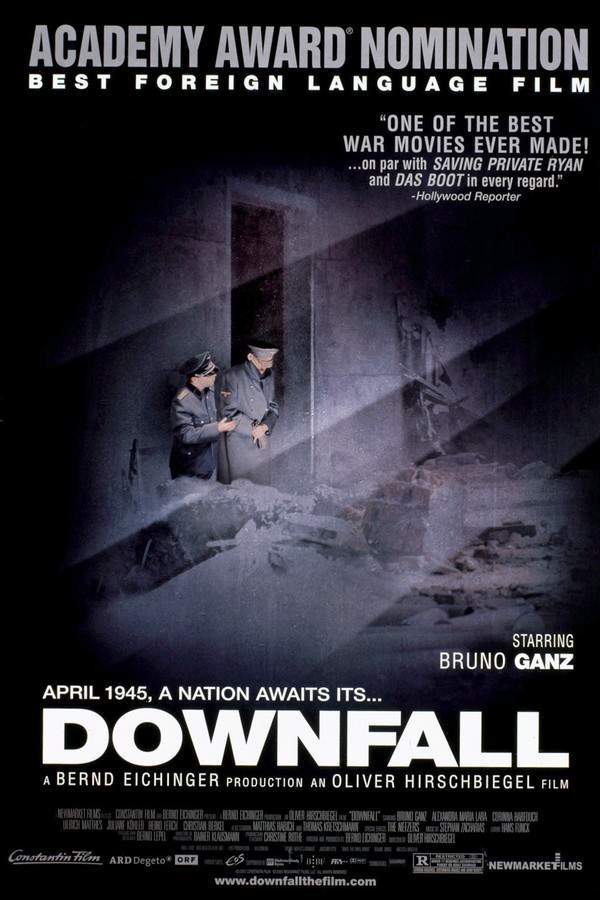
Grim war dramas with heavy emotional weight like The Bunker

War stories that focus on psychological collapse and moral decay. Discover bleak and intense war movies similar to The Bunker. If you appreciated the focus on psychological despair and the somber tone of The Bunker, these films explore the darker, more personal side of military conflict.

  • grim
  • somber
  • war
  • melancholic
  • desperate
  • heavy
  • Tone: somber, melancholic, bleak
  • Pacing: steady, deliberate
Why these movies?

The story pattern: The stories often follow a group or individual through a series of harrowing events that lead to irreversible loss and a profoundly sad or bleak ending. The journey is characterized by a loss of idealism and a crushing sense of inevitability.

Why they belong together: They share a heavy emotional weight, a bleak and somber tone, and a focus on the desperate, melancholic aspects of war rather than its heroism. The pacing is steady, allowing the grim atmosphere to fully sink in.

If you liked this

Movies Like The Bunker

Similar movies to The Bunker: the same genre, themes or kind of story. Each one comes with its own plot summary, timeline and ending explained.

Browse all movie summaries

Every angle

The Bunker (1981) Explained: Plot, Timeline & Characters

Everything about The Bunker in one place: what happens in the plot summary, the timeline in chronological order, the characters and meaning and a spoiler-free summary. What's After the Movie adds the cast, box office and post-credit scenes.

Coming soon on iOS and Android

The Plot Explained Movie Summary App

Plot summaries, endings explained and timelines on your phone. Catch up on any movie in minutes, save your favorites and never miss a twist again.

Be the first to know when we launch. Your email stays private, always.

Learn more about the app