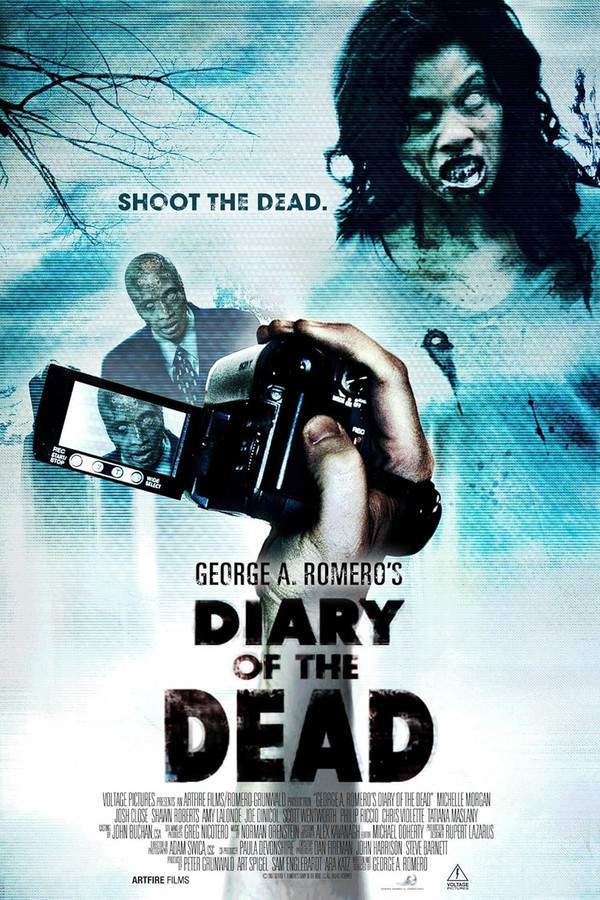
In a stark, documentary-style zombie drama, a small team of British soldiers and two scientists navigate the earliest tremors of a mysterious outbreak that menacingly creeps toward Britain. The opening scene pairs the clinical precision of a military operation with the unsettling necessity of science: two scientists collect a tissue sample from a civilian who appears to have died, only to be shocked when the body shows signs of reanimation before being shot. This unsettling incident seeds the film’s tense mood and sets up the layered storytelling that will unfold across three distinct chapters.
The Outbreak
The story’s first chapter unfolds in London, where the public mood swings between skepticism, fear, and outright paranoia as whispers of a spreading disease take hold. The city’s routine is unsettled by alarms of an illness that remains largely undocumented on-screen, leaving characters to infer danger from fragmented reports and uneasy silences. As the tension builds, a documentary crew travels from the city into the countryside, ostensibly to film material related to the virus. What begins as an observational project soon collides with reality when the crew encounters the outbreak firsthand. The narrative then pivots to revisit the fates and choices of the four individuals whose paths intersect with the crisis, a structural choice that reframes what the audience has witnessed and signals how fragile safety can be when human actions collide with an advancing threat.
The Scavengers
A month later, the film shifts focus to the road and the edge of civilization. In a small car, two men and one woman roam in search of essentials—food, radio parts, and any sign of civilization worth salvaging. Armed with a rifle and a wary sense of necessity, they move through a landscape where checkpoints of order have collapsed and every decision carries weight. The chapter is a stripped-down study of survival where resources are scarce, trust is conditional, and the balance between restraint and aggression can tip at any moment. The dynamic among the trio—how they share duties, how they handle danger, and how they interpret signals from the outside world—pushes the story from a mere chase for supplies into a meditation on human limits under pressure.
The Survivors
The final chapter centers on a larger group that has carved out a camp on a farm, a makeshift outpost where reconnaissance, defense, and internal politics coexist in a delicate equilibrium. The survivors do their best to monitor the surrounding outskirts, hold off endless waves of the infected, and maintain some sense of normalcy despite the collapse of the outside world. Yet even within this refuge, tensions flare as personalities clash and leadership frictions complicate decisions about safety and strategy. The opening scenes cut to the moment when the group executes the approaching infected with a calm, almost clinical resolve, underscoring the film’s troubling mix of mercy and violence. As the narrative progresses, it loops back in time to revisit the night of the documentary crew’s first visit and the earliest days of the outbreak, revealing an ironic twist: the label “survivors” becomes a cruel joke, as all but one of the uninfected are killed by two individuals who remain uninfected. The dual fates of the murderers are stark: one vanishes after assisting in the slaughter of the film crew, while the other turns inward to extinguish the remaining group.
Across these three chapters, the film maintains a steady, restrained tone that favors observation over explicit sensationalism. It challenges the audience to consider how quickly order disintegrates under pressure and how easily fear can redefine what it means to be a survivor. The structure—moving from a London outbreak to a countryside documentary encounter, then to a scavenging journey, and finally to a distant farm camp—builds a mosaic of human responses under siege: prudence and courage in some, desperation and ruthlessness in others. The narrative’s cyclical return to the film crew’s earliest nights casts the entire arc in a reflective light, inviting viewers to question not only who survives, but what the survival story truly costs when violence, secrecy, and the ambiguity of intent collide in a world where the dead walk and trust is a rare currency.