








Plot Explained Spoilers guaranteed!
Plot Explained

Browse by genre

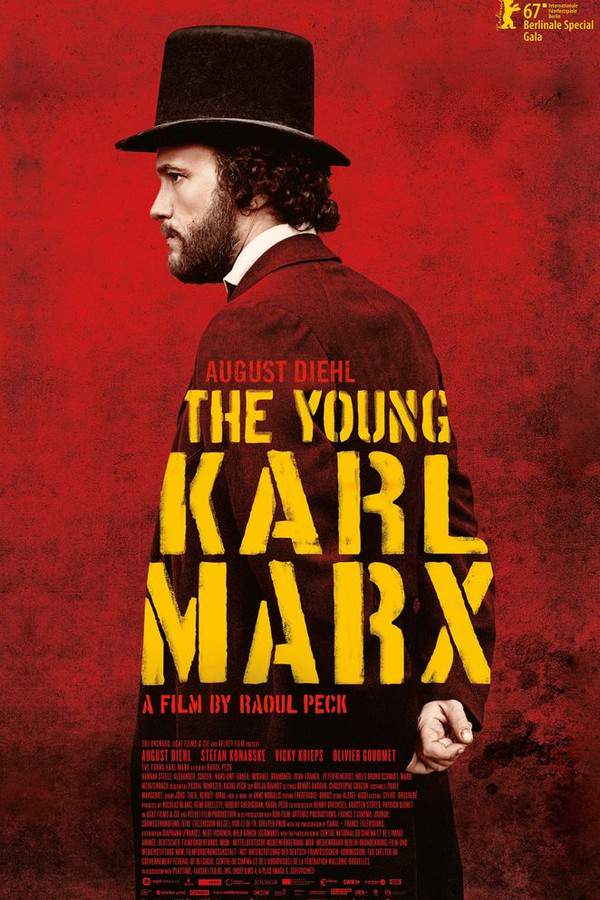
The Young Karl Marx (2018) movie poster

Timeline

The Young Karl Marx (2018) Timeline Explained – Every Event in Order

Release, runtime and language
2018 · 118 min · French
Echo score 62
JustWatch #25,909 3
Directed by
Raoul Peck
Starring
Olivier Gourmet, Vicky Krieps, August Diehl, Alexander Scheer, Hannah Steele, Hans-Uwe Bauer
Budget
$9.5M

In 1844 Paris, a young and visionary Karl Marx, then 26, finds himself fleeing with his wife, Jenny. He encounters Friedrich Engels, a keen observer of the working class, who helps complete Marx's evolving worldview. Facing censorship and political unrest, the pair collaborate to forge the burgeoning labor movement. Driven by their intellectual rigor and unwavering ideals, they begin a transformative journey that will profoundly shape the world.

On this page (6)
  1. 1 Where to watch
  2. 2 Events in order (15)
  3. 3 Timeline questions answered
  4. 4 Movie threads
  5. 5 Movies like The Young Karl Marx
  6. 6 Every angle

Where to watch

Where to Watch The Young Karl Marx (2018)

Where can you watch The Young Karl Marx? Stream, rent or buy it in the US, including on Amazon Prime Video, fuboTV and Fandango at Home Free: current JustWatch availability with up-to-date prices.

Streaming availability powered by JustWatch

15 events in order · contains spoilers

The Young Karl Marx Timeline: Events in Chronological Order

Every key event of The Young Karl Marx (2018) in order, scene by scene, with when and where it takes place. Use it to untangle flashbacks, time jumps and parallel storylines, to refresh your memory before the sequel or to find the exact scene you are thinking of.

  1. Introduction to Karl Marx

    In his twenties, Karl Marx struggles to establish himself as a significant writer in politics and sociology. He is driven by the desire to make a mark on the intellectual landscape of his time.

  2. Impoverished Individuals foraging

    The film opens with a harrowing scene showing impoverished people foraging for dead wood in a forest. This act of survival reflects a long-standing practice that is now threatened by changing regulations.

    Where
    Forest
  3. Government Regulation Changes

    The government intervenes by declaring wood collection illegal, stating that it belongs to landlords as private property. This shift creates immediate hardship for the poor, who relied on this resource for survival.

  4. Persecution of the Poor

    Following the new regulations, government officials begin persecuting the impoverished community. Extrajudicial killings become commonplace as authorities violently enforce the new laws.

  5. Marx's Awakening

    Amidst the chaos, Karl Marx becomes increasingly aware of the power dynamics at play. He realizes that the bourgeoisie have seized control of the state machinery to maintain their dominance over the working class.

  6. Meeting Friedrich Engels

    Marx meets Friedrich Engels, a young man from a wealthy family with a factory-owning father. Engels has witnessed the harsh realities of the working class, fueling his desire for reform and social justice.

  7. Engels' Transformation

    As Engels becomes more aware of the exploitation faced by workers, including children, his convictions strengthen. He recognizes the gross injustices perpetuated by the capitalist system that he once benefited from.

  8. Formation of a Political Movement

    Marx and Engels decide to forge a powerful political movement aimed at addressing the injustices faced by the impoverished workforce. They begin to attract like-minded individuals eager for change.

  9. Coup at the League of the Just

    The duo leads a bold coup at a League of the Just meeting, seizing the opportunity to redefine the group's direction. This pivotal moment lays the groundwork for the establishment of the Communist League.

  10. Publication of The Communist Manifesto

    In a climactic moment, Marx and Engels publish *The Communist Manifesto.* This revolutionary text articulates their political theories in a digestible format, resonating with the working class.

    When
    1848
  11. Impact on the Revolutions of 1848

    The publication coincides with the fervor of the 1848 revolutions across Europe. The manifesto serves not only as a call to action but also ignites a passion for justice and equity in labor rights.

    When
    1848
  12. Legacy of Their Work

    The ideas presented in *The Communist Manifesto* lay the foundation for future movements advocating for the rights of the working class. Marx and Engels' work endures as a cornerstone of socialist thought.

  13. Fostering Solidarity

    Marx and Engels' collaboration fosters a sense of solidarity among workers across social classes. Their emphasis on collective action becomes essential in the struggle for justice and reform.

  14. Ending the Era of Silence

    The film concludes as Marx and Engels’ ideas begin to spread widely, breaking down barriers of silence surrounding workers' rights. Their legacy inspires generations to continue the fight for equality and systemic change.

  15. A New Chapter in History

    As their revolutionary ideas take root, a new chapter in history begins, forever changing the landscape of political thought and action. This pivotal moment sets the stage for the global conversations surrounding socialism and workers’ rights.

Last updated: November 15, 2024 at 20:33

Was this helpful?

Timeline questions answered

The Young Karl Marx Timeline Explained: Your Questions Answered

When does it happen, and why in that order? The questions people ask about the chronology of The Young Karl Marx (2018): time jumps, flashbacks, cause and effect between scenes and the correct order of events, each answered with spoilers.

Q1

Why did the government make wood collection illegal in the film?

The government declared wood collection illegal because the forest land was reclassified as private property belonging to landlords. What had been a generations-long survival practice for impoverished people was suddenly criminalized, allowing authorities to persecute and kill the poor while protecting the property rights of the wealthy landowners.

Foreshadowing: Earlier scenes establish that Marx is searching for a way to make his intellectual voice heard, and this brutal enforcement of property laws becomes a catalyst for his political awakening.

  • wood collection
  • private property
  • government regulation
  • poverty
  • landlord
Q2

How did Karl Marx and Friedrich Engels meet?

Marx and Engels met in 1844 Paris. Marx was already established as a political writer grappling with the plight of the poor, while Engels was a young man from a wealthy factory-owning family who had become disillusioned with the capitalist system after witnessing the harsh conditions and exploitation faced by workers, including children in his father's factories.

  • Karl Marx
  • Friedrich Engels
  • meeting
  • Paris
  • collaboration
Q3

What was the League of the Just?

The League of the Just was an existing secret society of working-class activists and socialists who met to discuss political reform. It represented the organized labor movement before Marx and Engels transformed it into something larger.

Foreshadowing: The film earlier shows Marx and Engels seeking to build a political movement, setting up their desire to unite existing socialist groups.

  • League of the Just
  • secret society
  • workers movement
  • socialist organization
Q4

Why did Marx and Engels stage a coup at the League of the Just meeting?

Marx and Engels staged a coup to take control of the organization and redirect its focus. They believed the existing leadership was too moderate and wanted to transform the group into a more radical political force that would appeal to the broader working class rather than just a small group of intellectuals.

Foreshadowing: Earlier scenes show Marx and Engels discussing the need to make political theory accessible to ordinary workers, suggesting their frustration with elite-focused approaches.

  • coup
  • League of the Just
  • Communist League
  • political takeover
  • Marx Engels
Q5

What is The Communist Manifesto and why is it important?

The Communist Manifesto is the seminal work published by Marx and Engels in 1848 that distills their political theories into accessible language for the working class. It became a foundational text of socialist thought, articulating the concept of class struggle and calling for workers to unite against the bourgeoisie, serving as a rallying cry during the 1848 revolutions.

Foreshadowing: The film builds toward this publication by showing Marx and Engels developing their theories throughout their collaboration, with Marx struggling to make his complex ideas understandable to ordinary people.

  • Communist Manifesto
  • 1848
  • revolutionary text
  • class struggle
  • workers
Q6

How were the 1848 revolutions connected to Marx and Engels?

The publication of The Communist Manifesto coincided with the 1848 revolutions across Europe. The manifesto served as both a reflection of the revolutionary fervor sweeping the continent and a call to action for workers to organize and demand fair treatment. Marx and Engels' ideas resonated with the widespread desire for social and political change.

  • 1848 revolutions
  • Europe
  • revolutionary fervor
  • workers rights
  • political change
Q7

Why was Karl Marx struggling to establish himself as a writer?

In his twenties, Marx was trying to make a name for himself as an influential writer in politics and sociology. He faced the challenge of gaining recognition in intellectual circles while also wanting his ideas to reach and impact the working class, a goal that required both academic credibility and popular appeal.

Foreshadowing: This struggle establishes Marx's motivation for collaborating with Engels, who could help bridge the gap between theory and practical political action.

  • Karl Marx
  • writer
  • recognition
  • intellectual
  • politics sociology
Q8

What did Friedrich Engels witness in his father's factories?

Engels witnessed firsthand the abysmal working conditions and severe exploitation faced by factory workers, including children. This direct observation of child labor, extreme poverty, and employer brutality transformed his worldview and deepened his commitment to reforming the capitalist system that he had once benefited from.

Foreshadowing: The film opens with scenes of poverty and exploitation, establishing the conditions that would later radicalize Engels.

  • Engels
  • factories
  • child labor
  • exploitation
  • workers conditions
Q9

How did the bourgeoisie control the state according to the film?

The film depicts how the bourgeoisie effectively seized control of the state apparatus to maintain their dominance over the working class. Through mechanisms like enforcing property laws that criminalized traditional survival practices, the government served the interests of the wealthy landowners and industrialists rather than protecting the poor.

  • bourgeoisie
  • state control
  • class power
  • government
  • capitalism
Q10

Why did Marx and Engels decide to work together?

Marx and Engels decided to collaborate because their perspectives complemented each other perfectly. Marx brought deep theoretical knowledge and intellectual rigor in analyzing political economy, while Engels provided practical observations of industrial capitalism from his factory background. Together, they could develop a coherent political philosophy that was both intellectually sound and grounded in real worker conditions.

  • collaboration
  • Marx Engels partnership
  • theory
  • practice
  • political movement
Q11

What triggered Karl Marx's political awakening in the film?

Marx's political awakening was triggered by witnessing the brutal enforcement of the new wood collection laws, which led to extrajudicial killings of impoverished people. Observing how the state violently protected landlord property rights while persecuting those who had traditionally relied on the forest for survival convinced Marx that the government served the interests of the wealthy bourgeoisie.

Foreshadowing: The opening scene of poor people foraging for wood establishes the stakes before Marx fully understands the political implications.

  • Marx awakening
  • political consciousness
  • poverty
  • state violence
  • bourgeoisie

Movie threads

More Movies Like The Young Karl Marx, by Mood & Story

Curated lists built around what makes The Young Karl Marx tick: the same mood, the same kind of story or the same emotional payoff. Each list explains why these movies belong together.

Political Formation Stories like The Young Karl Marx

Films about intellectual partnerships that forged new ideas against societal resistance. Movies like The Young Karl Marx that explore the intellectual awakening and partnership of figures who shape political thought. If you enjoyed the historical drama of ideas being forged, you'll find similar stories of visionary collaboration against social injustice.

  • intellectual
  • urgent
  • hopeful
  • serious
  • gritty
  • inspiring
  • Tone: serious, hopeful, dark
  • Pacing: steady, methodical
Why these movies?

The story pattern: These narratives typically follow a linear, character-driven path where the central conflict is intellectual and ideological. The journey involves research, debate, persecution, and eventual synthesis of a new worldview, often culminating in a tangible creation like a manifesto or the founding of a movement.

Why they belong together: Movies are grouped here for their shared focus on the process of political and intellectual awakening. They share a serious tone, a methodical pacing that allows for idea development, and a hopeful core born from struggle against dark societal conditions.

Gritty Class Struggle Stories like The Young Karl Marx

Sobering portraits of poverty and exploitation that fueled movements for change. If you appreciated the gritty depiction of 19th century worker exploitation in The Young Karl Marx, you'll find more films here that unflinchingly portray social injustice and class struggle. These historical dramas are serious and heavy, yet often carry a hopeful undercurrent of resistance.

  • gritty
  • somber
  • serious
  • urgent
  • historical
  • social injustice
  • Tone: dark, somber, gritty
  • Pacing: steady, immersive
Why these movies?

The story pattern: The narrative pattern involves exposing the viewer to systemic injustice through the eyes of both the oppressed and the observers. The plot is driven by the growing awareness of this injustice and the subsequent, often difficult, organization towards collective action or intellectual response.

Why they belong together: These films are connected by their commitment to a realistic, often dark, portrayal of historical social conditions. They share a heavy emotional weight, a somber mood, and a central thematic focus on inequality, making the viewer feel the weight of the era's struggles.

If you liked this

Movies Like The Young Karl Marx

Similar movies to The Young Karl Marx: the same genre, themes or kind of story. Each one comes with its own plot summary, timeline and ending explained.

Browse all movie summaries

Every angle

The Young Karl Marx (2018) Explained: Plot, Timeline & Characters

Everything about The Young Karl Marx in one place: what happens in the plot summary, the timeline in chronological order, the characters and meaning and a spoiler-free summary. What's After the Movie adds the cast, box office and post-credit scenes.

Coming soon on iOS and Android

The Plot Explained Movie Summary App

Plot summaries, endings explained and timelines on your phone. Catch up on any movie in minutes, save your favorites and never miss a twist again.

Be the first to know when we launch. Your email stays private, always.

Learn more about the app