








Plot Explained Spoilers guaranteed!
Plot Explained

Browse by genre

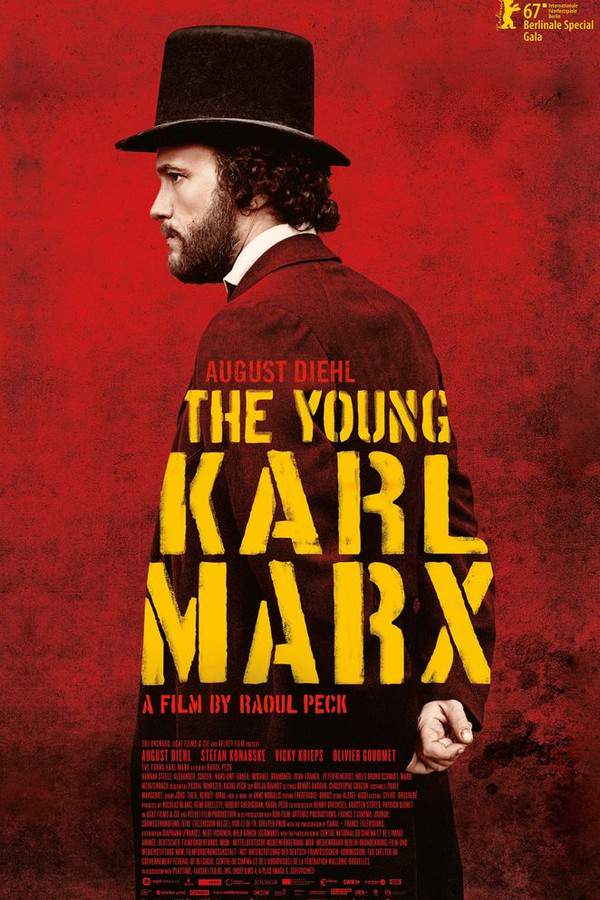
The Young Karl Marx (2018) movie poster

Characters & Themes

The Young Karl Marx (2018) Characters, Setting & Themes Explained

Release, runtime and language
2018 · 118 min · French
Echo score 62
JustWatch #25,909 3
Directed by
Raoul Peck
Starring
Olivier Gourmet, Vicky Krieps, August Diehl, Alexander Scheer, Hannah Steele, Hans-Uwe Bauer
Budget
$9.5M

In 1844 Paris, a young and visionary Karl Marx, then 26, finds himself fleeing with his wife, Jenny. He encounters Friedrich Engels, a keen observer of the working class, who helps complete Marx's evolving worldview. Facing censorship and political unrest, the pair collaborate to forge the burgeoning labor movement. Driven by their intellectual rigor and unwavering ideals, they begin a transformative journey that will profoundly shape the world.

On this page (8)
  1. 1 Where to watch
  2. 2 Characters explained (2)
  3. 3 Where & when it takes place
  4. 4 Themes & meaning (2)
  5. 5 Character & meaning questions
  6. 6 Movie threads
  7. 7 Movies like The Young Karl Marx
  8. 8 Every angle

Where to watch

Where to Watch The Young Karl Marx (2018)

Where can you watch The Young Karl Marx? Stream, rent or buy it in the US, including on Amazon Prime Video, fuboTV and Fandango at Home Free: current JustWatch availability with up-to-date prices.

Streaming availability powered by JustWatch

2 main characters · contains spoilers

The Young Karl Marx Characters Explained: Who Is Who

The main characters of The Young Karl Marx (2018), heroes and villains: what drives them, how they change over the course of the story and what each of them reveals about the film's bigger ideas.

  • Karl Marx

    played by August Diehl

    Karl Marx, portrayed by August Diehl, is a passionate and driven individual marked by his quest to understand and remedy the socio-political disparities of his time. As he grapples with his ideals, he evolves from an aspiring writer to a pivotal figure advocating for revolutionary change. His deepening awareness of injustice propels him to collaborate with Engels in founding the Communist League.

    • 📜 Philosopher
    • 🏗️ Revolutionary
  • Friedrich Engels

    played by Stefan Konarske

    Friedrich Engels, played by Stefan Konarske, comes from a privileged background but is profoundly affected by the working conditions he witnesses. His evolution from a factory owner's son to a dedicated reformist highlights his commitment to the labor movement. Engels complements Marx's ideologies, and together they seek to empower the oppressed.

    • 🏭 Industrialist
    • 📣 Activist

Last updated: October 22, 2024 at 21:40

Was this helpful?

Setting

Where and When Does The Young Karl Marx Take Place?

The setting of The Young Karl Marx (2018): the year and time period, the places and locations, and how they shape the characters, the mood and the tension of the story.

Time period

1840s

The 1840s were marked by significant social upheaval across Europe, with widespread discontent fueling revolutionary sentiments. This decade saw the rise of the working-class movement as individuals began to organize against oppressive labor conditions and advocate for workers' rights. The publication of *The Communist Manifesto* became a pivotal moment in political history, articulating the struggles of the proletariat.

Location

Europe

The movie is primarily set in Europe during the 1840s, showcasing both urban centers and rural landscapes. The depiction of impoverished individuals foraging for wood highlights the stark contrasts between the wealthy bourgeoisie and the working class. This period is characterized by social unrest and a growing awareness of the inequalities present in society.

  • 🏙️ Urban
  • 🌳 Nature

Last updated: October 22, 2024 at 21:40

Was this helpful?

2 major themes

The Young Karl Marx Meaning: Themes & Message Explained

What is The Young Karl Marx (2018) really about? The emotional, social and philosophical themes the film keeps returning to, its symbolism and the message beneath the surface.

  • Social Justice

    Central to the film is the theme of social justice, exploring the plight of the working class under the oppressive bourgeois system. Marx and Engels’ efforts to highlight the exploitation faced by workers resonate throughout the narrative, advocating for a more equitable society. Their passionate calls for reform and change ignite a movement that challenges the status quo.

  • Labor Struggles

    The film delves into the struggles of labor, underscoring the harsh realities faced by workers in factories and rural settings. It emphasizes the impact of industrialization on the workforce, particularly the exploitation of women and children. This theme highlights the necessity of solidarity among workers to confront and transform their dismal conditions.

Last updated: October 22, 2024 at 21:40

Was this helpful?

Character & theme questions

The Young Karl Marx Characters & Meaning: Your Questions Answered

The questions people ask about The Young Karl Marx (2018): who the characters really are, their relationships, what the symbols mean, where it takes place and what the movie is really about. Each answer contains spoilers.

Q1

Where is the movie set?

The film is primarily set in Europe during the 1840s, depicting both urban centers and rural landscapes. It showcases the stark contrast between wealthy bourgeois areas and impoverished working-class districts, highlighting the social inequalities that motivated Marx and Engels' work.

  • europe
  • paris
  • 1840s
  • setting
  • locations
  • urban
  • rural
Q2

What time period does the film cover?

The movie takes place during the 1840s, a decade marked by significant social upheaval across Europe. This era saw widespread discontent fueling revolutionary sentiments and the rise of the working-class movement as people began organizing against oppressive labor conditions.

  • 1840s
  • time period
  • historical era
  • european history
  • 1840s revolution
Q3

What are the main themes explored in the film?

The film centers on two primary themes: social justice and labor struggles. It explores the plight of the working class under the oppressive bourgeois system, depicting the exploitation faced by workers in factories and rural settings. The narrative emphasizes the necessity of solidarity among workers to confront and transform their dismal conditions.

  • social justice
  • labor struggles
  • themes
  • working class
  • exploitation
  • bourgeoisie
Q4

Who is Karl Marx in the movie?

Karl Marx, portrayed by August Diehl, is depicted as a passionate and driven intellectual who evolves from an aspiring writer into a pivotal revolutionary figure. He grapples with his ideals and deepens his awareness of social injustice, ultimately collaborating with Friedrich Engels to found the Communist League and articulate the struggles of the proletariat.

  • karl marx
  • character
  • revolutionary
  • communist league
  • portrait
Q5

Who is Friedrich Engels in the movie?

Friedrich Engels, played by Stefan Konarske, comes from a privileged background as a factory owner's son but is profoundly affected by the working conditions he witnesses. His evolution from a privileged observer to a dedicated reformist highlights his commitment to the labor movement, and he complements Marx's ideologies in their collaborative work.

  • friedrich engels
  • character
  • factory
  • reformist
  • labor movement
Q6

How does the movie portray the working class?

The film unflinchingly depicts the harsh realities faced by workers in factories and rural settings during the 1840s. It highlights the exploitation of workers, including women and children, showing impoverished individuals foraging for wood and struggling to survive. This portrayal underscores the stark contrasts between the wealthy bourgeoisie and the oppressed proletariat.

  • working class
  • proletariat
  • poverty
  • exploitation
  • industrialization
  • factory workers
Q7

What does the film say about social inequality?

The film presents a stark depiction of social inequality in 19th-century Europe, contrasting the comfortable lives of the wealthy bourgeoisie with the desperate poverty of the working class. Through Marx and Engels' intellectual work, the narrative advocates for recognizing and addressing these systemic disparities, framing inequality as a fundamental injustice that demands collective action.

  • social inequality
  • class conflict
  • bourgeoisie
  • proletariat
  • wealth disparity
Q8

What is the tone of the movie?

The film has a predominantly dark tone due to its unflinching portrayal of poverty, exploitation, and state-sanctioned violence against the poor. While the subject matter is serious with high emotional weight from depictions of worker suffering, the narrative remains hopeful through the intellectual collaboration between Marx and Engels, culminating in the creation of The Communist Manifesto.

  • tone
  • mood
  • atmosphere
  • dark
  • hope
  • emotional weight
Q9

How do Marx and Engels work together?

Marx and Engels complement each other through their different backgrounds and perspectives. Marx provides the theoretical framework and passionate advocacy for revolutionary change, while Engels brings firsthand observation of industrial working conditions. Together, they combine intellectual rigor with practical insights to articulate a coherent vision for the labor movement.

  • marx engels collaboration
  • partnership
  • intellectual teamwork
  • communist league
Q10

Why is the 1840s setting important to the story?

The 1840s setting is crucial because it was a period of widespread social upheaval and growing revolutionary sentiment across Europe. This decade saw the rise of organized working-class movements and the publication of pivotal political documents. The film captures this transformative era when ideas about workers' rights and social equality began to gain mainstream attention.

  • 1840s significance
  • historical context
  • european revolutions
  • workers movement
Q11

Does the film contain violence?

The film includes references to violence, particularly state-sanctioned violence against the poor and workers who protest or organize. The narrative depicts the consequences of political persecution and the risks faced by those advocating for workers' rights during this period of intense social and political conflict.

  • violence
  • political persecution
  • content warning
  • state violence

Movie threads

More Movies Like The Young Karl Marx, by Mood & Story

Curated lists built around what makes The Young Karl Marx tick: the same mood, the same kind of story or the same emotional payoff. Each list explains why these movies belong together.

Political Formation Stories like The Young Karl Marx

Films about intellectual partnerships that forged new ideas against societal resistance. Movies like The Young Karl Marx that explore the intellectual awakening and partnership of figures who shape political thought. If you enjoyed the historical drama of ideas being forged, you'll find similar stories of visionary collaboration against social injustice.

  • intellectual
  • urgent
  • hopeful
  • serious
  • gritty
  • inspiring
  • Tone: serious, hopeful, dark
  • Pacing: steady, methodical
Why these movies?

The story pattern: These narratives typically follow a linear, character-driven path where the central conflict is intellectual and ideological. The journey involves research, debate, persecution, and eventual synthesis of a new worldview, often culminating in a tangible creation like a manifesto or the founding of a movement.

Why they belong together: Movies are grouped here for their shared focus on the process of political and intellectual awakening. They share a serious tone, a methodical pacing that allows for idea development, and a hopeful core born from struggle against dark societal conditions.

Gritty Class Struggle Stories like The Young Karl Marx

Sobering portraits of poverty and exploitation that fueled movements for change. If you appreciated the gritty depiction of 19th century worker exploitation in The Young Karl Marx, you'll find more films here that unflinchingly portray social injustice and class struggle. These historical dramas are serious and heavy, yet often carry a hopeful undercurrent of resistance.

  • gritty
  • somber
  • serious
  • urgent
  • historical
  • social injustice
  • Tone: dark, somber, gritty
  • Pacing: steady, immersive
Why these movies?

The story pattern: The narrative pattern involves exposing the viewer to systemic injustice through the eyes of both the oppressed and the observers. The plot is driven by the growing awareness of this injustice and the subsequent, often difficult, organization towards collective action or intellectual response.

Why they belong together: These films are connected by their commitment to a realistic, often dark, portrayal of historical social conditions. They share a heavy emotional weight, a somber mood, and a central thematic focus on inequality, making the viewer feel the weight of the era's struggles.

If you liked this

Movies Like The Young Karl Marx

Similar movies to The Young Karl Marx: the same genre, themes or kind of story. Each one comes with its own plot summary, timeline and ending explained.

Browse all movie summaries

Every angle

The Young Karl Marx (2018) Explained: Plot, Timeline & Characters

Everything about The Young Karl Marx in one place: what happens in the plot summary, the timeline in chronological order, the characters and meaning and a spoiler-free summary. What's After the Movie adds the cast, box office and post-credit scenes.

Coming soon on iOS and Android

The Plot Explained Movie Summary App

Plot summaries, endings explained and timelines on your phone. Catch up on any movie in minutes, save your favorites and never miss a twist again.

Be the first to know when we launch. Your email stays private, always.

Learn more about the app