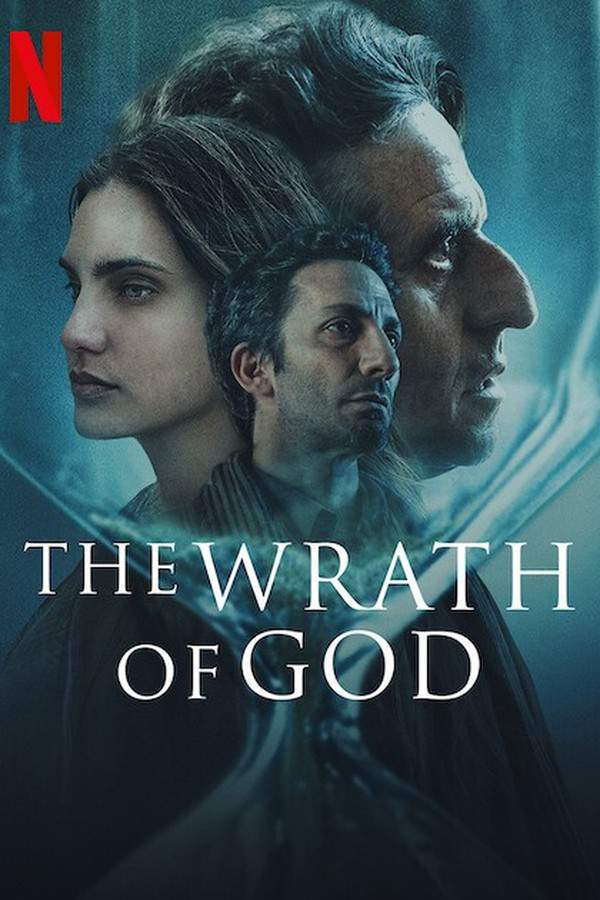
Haunted by a string of mysterious family deaths, Luciana becomes entangled in a terrifying ordeal. Her boss, a writer burdened by guilt, appears to know more than he reveals about the sinister forces at work. Determined to save her sister Valentina, Luciana confronts the encroaching darkness, struggling to discern truth from delusion in a desperate fight for survival and a chance at redemption.
Warning: spoilers below!
Haven’t seen The Wrath of God yet? This summary contains major spoilers. Bookmark the page, watch the movie, and come back for the full breakdown. If you're ready, scroll on and relive the story!
Trace every key event in The Wrath of God (2022) with our detailed, chronological timeline. Perfect for unpacking nonlinear stories, spotting hidden connections, and understanding how each scene builds toward the film’s climax. Whether you're revisiting or decoding for the first time, this timeline gives you the full picture.
Last updated: December 03, 2024 at 14:27
Find frequently asked questions about the The Wrath of God (2022) timeline, including chronological order, nonlinear jumps, cause-and-effect links, and scene sequence clarifications. This timeline FAQ helps explain when key events happen, how moments connect, and why the story unfolds in that specific order.
Keogh was coerced into transporting the whiskey because Jennings, the English gunrunner, had leverage over him. While the exact nature of that leverage isn't specified in the summary, it's implied Jennings commanded enough power in the revolutionary territory to compel an Irish patriot like Keogh into dangerous service.
Chela's necklace represents an unsanctioned marriage within her Aymara matriarchal society. In this culture, women choose their partners, and by giving Keogh the necklace, Chela has essentially married him without his knowledge or consent according to their customs.
Earlier, Keogh encounters Chief Nacho and is reunited with Chela, setting up this cultural reveal.
Van Horne abandoned the planned ambush during mass because Senora de la Plata arrived at the church. He feared that staging the attack with her present would endanger her life, so he chose to protect her rather than proceed with the assassination attempt.
The ambush was planned for 4 p.m. when de la Plata would attend mass for the deceased miners.
De la Plata harbors intense hatred toward priests because Santilla's men have violently targeted and killed several priests in his town. This personal history of loss and trauma explains his deep suspicion and hostility toward Father Van Horne.
At dinner, de la Plata explicitly states his disdain for priests and mentions losing several in his town.
Van Horne reveals he was once a genuine Catholic priest but became disillusioned after encountering a corrupt bishop. This loss of faith explains why he abandoned his priesthood and ultimately chose to fight violence with violence rather than rely on religious authority.
This backstory surfaces when Van Horne plans the procession and offers various spiritual services to the townspeople.
De la Plata's mother shoots her own son during the final confrontation because he is about to kill Keogh. In a desperate moment to save Keogh's life and end her son's tyranny, she turns his own weapon against him, shooting him from behind as he prepares to execute the final vengeance.
The mother's presence during the showdown sets up this critical intervention.
Keogh, along with Chief Nacho and several Aymara warriors, infiltrates de la Plata's compound using grenades to blast through the prison entrance. This coordinated attack creates enough chaos to free Chela and other hostages while inciting a town uprising against de la Plata's forces.
Nacho arrives battered with news of the hostages, setting the rescue plan in motion.
Jennings is mortally wounded during the chaotic fight at de la Plata's compound. Despite his injuries, he makes a final sacrifice by detonating a grenade, destroying de la Plata's second-in-command and many of their captors before dying from his wounds.
The rescue mission escalates into a full battle where Jennings chooses to sacrifice himself.
Van Horne surrenders himself to de la Plata because the villain is executing hostages every half hour, including Chela and Pablito. After witnessing the brutal murder of Pablito right before his eyes, Van Horne decides to give himself up to save the remaining innocent lives.
Nacho arrives bloodied with the ultimatum: surrender or watch all hostages die.
The mock execution serves as Santilla's psychological torture and leverage. After capturing Keogh, Van Horne, and Jennings, he stages their execution to break their spirits before offering them a twisted deal: assassinate Tomas de la Plata in exchange for their lives.
This cruel ploy forces the protagonists into their dangerous mission against de la Plata.
De la Plata rules Mojada through fear, violence, and tight military control. He has his own armed men, executes hostages to maintain compliance, and opposes any religious or spiritual authority that might unite the local population against him.
The Aymara people and townspeople live under constant threat until the final uprising.
Discover curated groups of movies connected by mood, themes, and story style. Browse collections built around emotion, atmosphere, and narrative focus to easily find films that match what you feel like watching right now.
Stories of ordinary people fighting to survive amid violent political upheaval.Find movies like The Wrath of God, where desperate characters fight for survival in a violent revolutionary landscape. If you enjoyed the high-stakes action and grim political turmoil, explore similar stories of ordinary people pushed to their limits.
The narrative follows protagonists who are not necessarily soldiers or heroes, but civilians or reluctant participants thrust into a life-or-death struggle. The plot is often a linear, fast-paced journey through a series of captures, escapes, and confrontations, where the primary goal is simple survival against overwhelming odds.
These films are grouped by their shared atmosphere of a society in collapse, the high-intensity pacing of a thriller, and the heavy emotional weight of witnessing brutality and loss. They share a dark, resolute tone and focus on the human cost of political conflict.
Characters seek atonement for past guilt in a brutal, high-stakes present.If you liked the theme of guilt and redemption in The Wrath of God, discover other movies where characters seek atonement through violent struggle. These stories feature morally conflicted protagonists and end on a bittersweet note after heavy sacrifice.
The narrative pattern involves a character with a troubled history who is given a chance to rectify past mistakes or protect others. This path to redemption is paved with violence and difficult moral choices. The story concludes with the central threat neutralized, but key losses along the way ensure the ending feels earned yet somber, focusing on the price of absolution.
These films share a focus on moral conflict and the theme of redemption achieved through sacrifice. They blend high-intensity action with heavy emotional drama, resulting in a similarly bittersweet and resonant conclusion that lingers with the viewer.
Don't stop at just watching - explore The Wrath of God in full detail. From the complete plot summary and scene-by-scene timeline to character breakdowns, thematic analysis, and a deep dive into the ending - every page helps you truly understand what The Wrath of God is all about. Plus, discover what's next after the movie.
Read a complete plot summary of The Wrath of God, including all key story points, character arcs, and turning points. This in-depth recap is ideal for understanding the narrative structure or reviewing what happened in the movie.
Discover the characters, locations, and core themes that shape The Wrath of God. Get insights into symbolic elements, setting significance, and deeper narrative meaning - ideal for thematic analysis and movie breakdowns.
What really happened at the end of The Wrath of God? This detailed ending explained page breaks down final scenes, hidden clues, and alternate interpretations with expert analysis and viewer theories.