










Plot Explained Spoilers guaranteed!
Plot Explained

Browse by genre

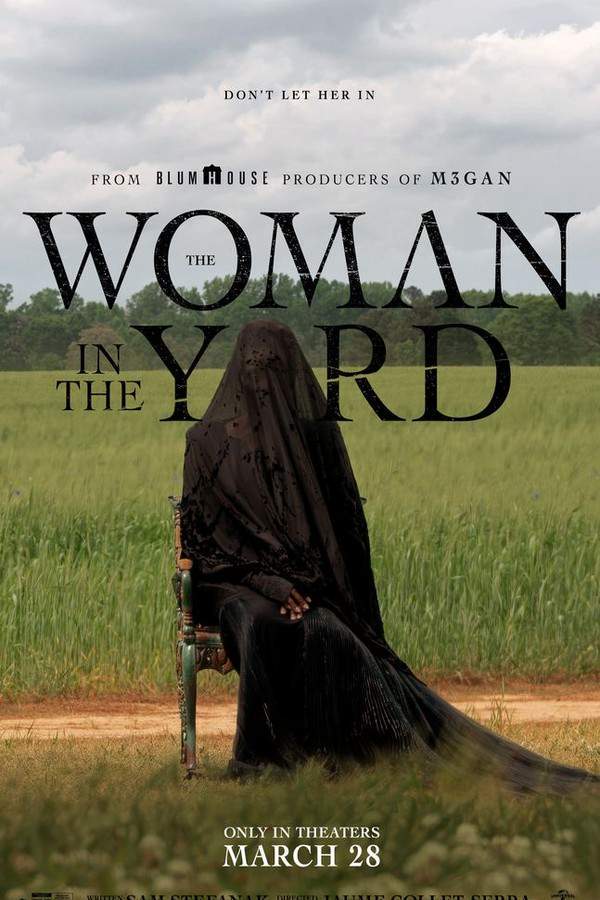
The Woman in the Yard (2025) movie poster

Ending Explained

The Woman in the Yard (2025) Ending Explained – Final Scene & Meaning

Release, runtime and language
2025 · 1 h 25 m · English
Echo score 63
JustWatch #1,847 32
Directed by
Jaume Collet-Serra
Starring
Danielle Deadwyler, Okwui Okpokwasili, Russell Hornsby, Peyton Jackson, Estella Kahiha
Budget
$12M

After a serious injury, Ramona finds herself alone in her rural farmhouse, responsible for her two young children, a 14-year-old son and a 6-year-old daughter. Their lives are disrupted when a mysterious, spectral woman, completely cloaked in black, begins appearing in their yard. Initially, Ramona believes the woman is lost or mentally unstable, but as her presence becomes more persistent, an unsettling mystery unfolds.

On this page (7)
  1. 1 Where to watch
  2. 2 What happens at the end
  3. 3 Final events in order
  4. 4 Ending questions answered
  5. 5 Movie threads
  6. 6 Movies like The Woman in the Yard
  7. 7 Every angle

Where to watch

Where to Watch The Woman in the Yard (2025)

Where can you watch The Woman in the Yard? Stream, rent or buy it in the US, including on Amazon Prime Video, Peacock Premium and Peacock Premium Plus: current JustWatch availability with up-to-date prices.

Streaming availability powered by JustWatch

Ending explained · contains spoilers

What Happens at the End of The Woman in the Yard?

How The Woman in the Yard (2025) ends, what the final scene means, which earlier moments set it up and how to read the ending if the film leaves it open. The full ending explained, with every spoiler.

The ending of The Woman in the Yard is quite ambiguous and layered with psychological and supernatural elements. As the story progresses, we see Ramona teetering on the edge of despair, haunted by the mysterious woman in the yard—who represents her deepest fears, guilt, and possibly suicidal thoughts. Throughout the film, this spectral figure appears to be more than just a ghost; she embodies Ramona’s inner torment and unresolved trauma, especially related to her husband's death and her own role in a tragic car accident. The woman constantly pressures Ramona toward death, symbolized most dramatically when she guides Ramona’s hand to the rifle’s trigger, seemingly urging her to end her pain. In the climax, we are led to believe Ramona might go through with her intent to shoot herself, but the scene cuts away before any gunshot is heard. Instead, we see dawn breaking on a peaceful farm, with the family seemingly intact and the woman absent—yet subtle clues suggest this is a fabricated or supernatural illusion. The presence of the "Iris Haven" sign and a reversed signature on a painting hints at a constructed reality, raising doubts that they truly escaped or survived. Some interpret the film as Ramona’s mind creating a false paradise, possibly in a state of surviving trauma or even being dead and trapped in a purgatory-like existence. Others see it as a hint that Ramona may still be alive but haunted by her guilt and grief, which continue to manifest visually and psychologically. The film leaves it open whether Ramona truly succumbed or managed to find some peace. Ultimately, the ending suggests she might remain caught in her inner darkness, with the final scenes symbolizing either a fleeting hope that is ultimately illusory or a grim acceptance of her own despair. The film’s true message seems to revolve around the power of the mind’s darkness—how guilt, grief, and trauma can distort reality and trap someone in a cycle of suffering. It’s a haunting, unresolved finale that emphasizes the fragile line between perception and reality, and questions whether escape is possible at all.

Last updated: June 25, 2025 at 08:44

Was this helpful?

The last 4 events

How The Woman in the Yard Ends: The Final Events in Order

The last events of The Woman in the Yard (2025) in chronological order, the run-up to the ending explained above. The complete timeline has all 15 events, scene by scene.

Open the full timeline
  1. Family Reunion

    After the woman vanishes, Taylor and Annie return to find Ramona. They share an emotional embrace, marking a reconciliation and signaling the restoration of their familial bond.

    Where
    Living room
  2. Restoration of Light

    As the family rejoices, the lights in the house come back on. This symbolizes hope and renewal for Ramona and her children, indicating they can now move forward together.

    Where
    House
  3. Naming the House

    In a touching moment, it is revealed that David and Ramona had named their home 'Iris Haven.' This title signifies the sanctuary they aimed to create for their family, embodying their love and shared dreams.

    Where
    Iris Haven
  4. The Last Shot

    The film concludes with a haunting painting of the mysterious woman’s face, signifying her lasting impact on Ramona's life. Additionally, Ramona's name is written backwards at the bottom, suggesting themes of identity and reflection.

    Where
    House

Ending questions answered

The Woman in the Yard Ending: Your Questions Answered

The questions people ask most about the ending of The Woman in the Yard (2025): what the final scene means, how the twist works, what happens to each character and how to read the ending. Each answer contains spoilers.

Q1

Who or what is the woman in the yard?

The woman in the yard is not a literal ghost but a spectral manifestation of Ramona's own psychological torment. She represents Ramona's deepest fears, guilt, and suicidal impulses, essentially an external embodiment of the protagonist's inner darkness. The film reveals she is tied to Ramona's unresolved trauma surrounding her husband's death and her role in the car accident that caused it.

Foreshadowing: Earlier scenes show the woman appearing only to Ramona, never to the children, hinting she exists primarily in Ramona's mind.

  • woman in yard identity
  • Ramona mental state
  • supernatural vs psychological
  • guilt manifestation
Q2

Does Ramona actually shoot herself in the end?

The film deliberately leaves this ambiguous. In the climactic scene, the woman guides Ramona's hand toward the rifle's trigger, and we see Ramona's finger on the trigger, but the scene cuts away before any gunshot is heard. The next morning shows the family alive at dawn with no visible indication of whether the shot was fired.

Foreshadowing: The building tension throughout the film, with the woman increasingly pressuring Ramona toward death, builds to this moment of possible self-destruction.

  • Ramona rifle scene
  • did she shoot herself
  • climax ending
  • suicide scene
Q3

Is the happy ending at dawn real or an illusion?

The evidence strongly suggests the peaceful morning scene, where Ramona and her children are alive and the woman is gone, is not genuine reality. Subtle clues like the "Iris Haven" sign and a reversed signature on a painting indicate a constructed or fabricated reality. This could represent Ramona's mind creating a false paradise, either while she dies or as a psychological escape from her trauma.

Foreshadowing: The abrupt shift from potential tragedy to peaceful dawn, with no explanation for how they got there, signals something is not what it seems.

  • is ending real
  • illusion ending
  • Iris Haven sign
  • false paradise
  • fake reality
Q4

What does the Iris Haven sign represent in the ending?

The "Iris Haven" sign appearing in the final scene serves as a key visual clue that the peaceful ending may not be real. It suggests a constructed or imagined place, possibly Ramona's mental creation of a safe haven, or a liminal space between life and death. The name itself implies an escape or sanctuary, which contrasts sharply with the torment Ramona has experienced.

Foreshadowing: The sign only appears in the final moments, making it a late revelation that reframes everything we just witnessed.

  • Iris Haven sign meaning
  • ending clue
  • symbol meaning
  • visual clue ending
Q5

What is Ramona's secret guilt regarding her husband?

Ramona carries overwhelming guilt because she was responsible for the car accident that killed her husband. The film reveals she played a role in causing the crash, a trauma that has haunted her throughout the story. This guilt is what the woman in the yard exploits, using Ramona's self-blame and grief as leverage to push her toward self-destruction.

Foreshadowing: The woman's constant pressure and Ramona's visible emotional distress hint at a deep, unresolved trauma beneath the surface.

  • Ramona guilt husband death
  • car accident
  • husband's death cause
  • secret trauma
Q6

What happens to Ramona's children in the ending?

In the final scene, Ramona's two children, her 14-year-old son and 6-year-old daughter, are seen alive and with her at the farmhouse at dawn. However, given the ambiguous reality of the ending, it's unclear whether they truly survived or are part of Ramona's constructed reality. The woman's absence from this scene could mean she has been defeated, or that she no longer serves a purpose in this mental landscape.

Foreshadowing: Throughout the film, the children never interact with the woman, suggesting she exists only in Ramona's perception.

  • children survive
  • kids ending
  • son daughter fate
  • family ending
Q7

Is the woman a ghost or a mental hallucination?

The film presents the woman as a psychological manifestation rather than a traditional ghost. She appears only to Ramona, not to other characters, and her behavior directly mirrors Ramona's internal struggle with grief and suicidal thoughts. The woman pressures Ramona toward self-destruction in ways that reflect Ramona's own desire to escape her pain, making her a literal embodiment of suicidal ideation rather than a supernatural entity.

Foreshadowing: The woman's dialogue focuses on themes of ending pain and escape, aligning with Ramona's psychological state rather than typical ghost behavior.

  • woman ghost or hallucination
  • mental manifestation
  • psychological antagonist
  • suicidal ideation embodiment
Q8

What does the reversed signature on the painting mean?

The reversed signature on a painting in the final scene serves as another clue that the peaceful ending is not real. It suggests the reality has been constructed or inverted, possibly by Ramona's mind creating a distorted version of her life. This visual inconsistency reinforces the interpretation that the family may be trapped in a fabricated mental space rather than actual reality.

Foreshadowing: The painting appears in the house throughout the film, but only shows its reversed nature in the ending.

  • reversed signature painting
  • clue
  • illusion evidence
  • visual inconsistency
Q9

Did Ramona die at the end of the movie?

The film intentionally leaves this unanswered. One interpretation is that Ramona did shoot herself and the peaceful ending is either her dying fantasy or a purgatory she creates. Another view suggests she may still be alive but trapped in her guilt and grief, with the haunting mental battle continuing. The ending oscillates between these possibilities, making it unclear whether Ramona succumbed to her despair or found some form of peace.

Foreshadowing: The woman appears victorious in pressuring Ramona toward the rifle, but the sudden tonal shift to peace raises questions about what truly happened.

  • did Ramona die
  • suicide ending
  • death interpretation
  • ending ambiguity
Q10

What is the main message or theme of the ending?

The ending emphasizes how guilt, grief, and trauma can distort perception and trap someone in a cycle of suffering. It explores the fragile line between perception and reality, questioning whether escape from inner darkness is truly possible. The message suggests that without confronting one's inner demons, the mind can create elaborate illusions, both comforting and destructive, that prevent genuine healing.

Foreshadowing: The entire film builds toward showing how Ramona's unresolved trauma manifests as the woman, ultimately consuming her reality.

  • ending meaning
  • movie theme
  • message
  • guilt trauma
  • mental health theme

Movie threads

More Movies Like The Woman in the Yard, by Mood & Story

Curated lists built around what makes The Woman in the Yard tick: the same mood, the same kind of story or the same emotional payoff. Each list explains why these movies belong together.

Psychological Horror of Manifested Trauma like The Woman in the Yard

Stories where the supernatural is a physical embodiment of deep-seated emotional trauma. Discover movies like The Woman in the Yard, where supernatural scares are deeply intertwined with a character's psychological state. This thread groups psychological horror and supernatural thrillers where the haunting is a direct manifestation of grief, guilt, or trauma, creating a uniquely personal and emotionally devastating experience.

  • psychological
  • supernatural
  • grieving
  • traumatic
  • suspenseful
  • cathartic
  • Tone: dark, melancholic, psychologically intense
  • Pacing: steady, methodical unraveling
Why these movies?

The story pattern: The narrative typically follows a protagonist grappling with a recent or past trauma. A supernatural presence emerges, its actions and nature inexplicably linked to the protagonist's unprocessed emotions. The story unfolds as a mystery where solving the supernatural threat is synonymous with confronting and acknowledging a devastating personal truth, leading to a climactic and often emotionally draining resolution.

Why they belong together: These films are grouped by their shared core concept: the antagonist is not an external monster but a projection of the protagonist's inner turmoil. They share a heavy emotional weight, a dark tone focused on psychological suffering, and a steady pacing that allows the connection between trauma and terror to be methodically revealed.
Isolated Parent Horror Stories like The Woman in the Yard

A vulnerable parent must protect their children from a mysterious threat while isolated and alone. Find films similar to The Woman in the Yard that explore the horror of protecting your family when you are isolated and vulnerable. These stories focus on parents facing supernatural threats, blending domestic drama with intense suspense and the primal fear of child endangerment.

  • isolated
  • suspenseful
  • anxious
  • ominous
  • parental fear
  • supernatural
  • Tone: dark, anxious, suspenseful
  • Pacing: steady, building dread
Why these movies?

The story pattern: The plot revolves around a parent, frequently a mother, who is the primary caregiver in an isolated location like a remote house. A supernatural entity begins to intrude, initially as a vague presence that escalates into a direct danger to the children. The narrative is a sustained siege, testing the parent's resilience, sanity, and ingenuity as they work to uncover the threat's nature and save their family.

Why they belong together: These movies are united by their core premise: the collision of parental duty with supernatural horror. They share a high-intensity, suspenseful mood driven by the stakes of child endangerment. The tone is dark and anxious, emphasizing the protagonist's isolation and the heavy weight of their responsibility, creating a consistently gripping and stressful experience.

If you liked this

Movies Like The Woman in the Yard

Similar movies to The Woman in the Yard: the same genre, themes or kind of story. Each one comes with its own plot summary, timeline and ending explained.

Browse all movie summaries

Every angle

The Woman in the Yard (2025) Explained: Plot, Ending, Timeline & Characters

Everything about The Woman in the Yard in one place: what happens in the plot summary, the timeline in chronological order, the characters and meaning, the ending explained and a spoiler-free summary. What's After the Movie adds the cast, box office and post-credit scenes.

Coming soon on iOS and Android

The Plot Explained Movie Summary App

Plot summaries, endings explained and timelines on your phone. Catch up on any movie in minutes, save your favorites and never miss a twist again.

Be the first to know when we launch. Your email stays private, always.

Learn more about the app