Plot Explained Spoilers guaranteed!
Plot Explained

Browse by genre

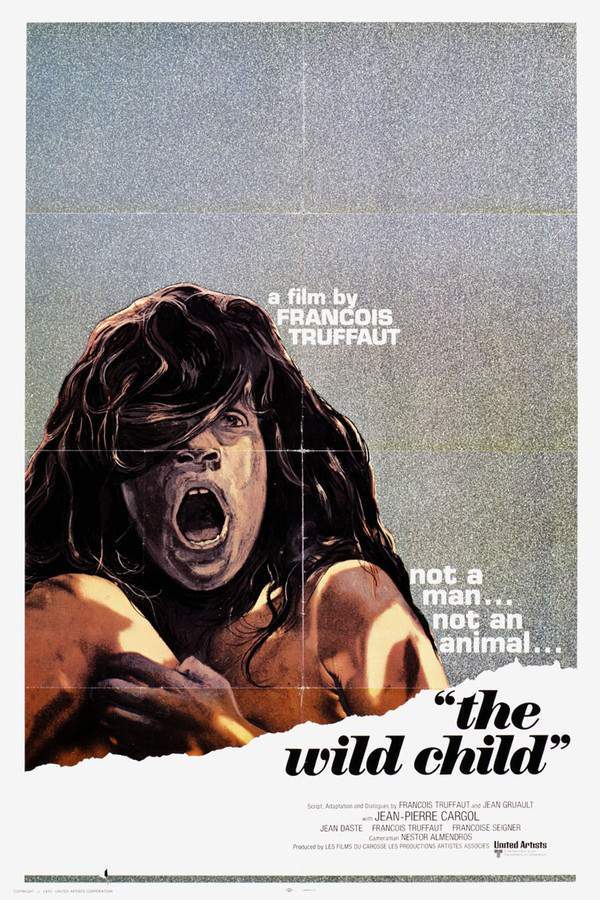
The Wild Child (1970) movie poster

Timeline

The Wild Child (1970) Timeline Explained – Every Event in Order

Release, runtime and language
1970 · 83 min · French
Loading streaming availability…
Starring
Annie Miller, Claude Miller, François Truffaut, Françoise Seigner, Jean Dasté, Jean Gruault

Raised by wolves in the wilderness, a young boy is discovered and brought to Paris to be integrated into civilized society. A dedicated educator, Dr. Itard, believes he can nurture the boy’s development and overcome the challenges presented by his isolated upbringing. Through patience and understanding, Dr. Itard strives to help the boy adapt, revealing that his difficulties stem from a lack of human interaction, not from any intellectual or sensory impairments.

On this page (6)
  1. 1 Where to watch
  2. 2 Events in order (13)
  3. 3 Timeline questions answered
  4. 4 Movie threads
  5. 5 Categories
  6. 6 Every angle
Loading streaming availability…

13 events in order · contains spoilers

The Wild Child Timeline: Events in Chronological Order

Every key event of The Wild Child (1970) in order, scene by scene, with when and where it takes place. Use it to untangle flashbacks, time jumps and parallel storylines, to refresh your memory before the sequel or to find the exact scene you are thinking of.

  1. A Child is Found

    In 1798, a young boy named Victor is discovered wandering naked in a secluded forest in Aveyron, France. His wild appearance and behavior lead a woman to scream in terror and alert nearby hunters, initiating a frantic search for what they believe to be a wild child.

    When
    1798
    Where
    Aveyron, France
  2. The Hunt Begins

    The hunters unleash their pack of dogs to track down Victor, who instinctively climbs a tree to escape. However, he eventually falls and battles against the dogs before seeking refuge in a hole, where he tries to hide from his pursuers.

    When
    1798
    Where
    Aveyron, France
  3. Captured by the Hunters

    Victor's hiding place is discovered by the relentless dogs. After being forced out by smoke, he is captured, revealing that he has lived a life disconnected from civilization and its norms.

    When
    1798
    Where
    Aveyron, France
  4. Transported to Paris

    After his capture, Victor is transported to Paris, where he is placed in a school designed for 'deaf-mutes'. The surroundings are unfamiliar, and he struggles to adapt to the new environment, which further emphasizes his isolation.

    When
    1798
    Where
    Paris, France
  5. Misjudged by Peers

    In the school, Victor is quickly misjudged by his peers and adults alike, who believe he is both deaf and incapable of learning. This erroneous assumption highlights the lack of understanding regarding his true nature and traumatic past.

    When
    1798
    Where
    Paris, France
  6. Dr. Itard's Interest

    Dr. François Truffaut, a compassionate physician, takes a keen interest in Victor's case. Unlike others, he recognizes that Victor is neither deaf nor 'idiot,' but rather a boy shaped by his unique, harrowing experiences in solitude.

    When
    1798
    Where
    Paris, France
  7. Victor's New Guardian

    Dr. Itard decides to take Victor under his care, expressing a determination to educate him. He relocates Victor to his home, giving him a structured environment where he can receive the attention and nurturing he desperately needs.

    When
    1798
    Where
    Outskirts of Paris, France
  8. Support from Françoise

    Françoise Seigner, Dr. Itard's devoted housekeeper, plays a crucial role in Victor's adaptation. Her kindness and support complement Dr. Itard's educational efforts, creating a nurturing environment for Victor to thrive.

    When
    1798
    Where
    Outskirts of Paris, France
  9. Learning to Socialize

    As Victor settles into his new life, he begins to learn how to socialize with those around him. Through patience and persistence, he starts to understand social cues and form connections, which were foreign to him before.

    When
    1798
    Where
    Outskirts of Paris, France
  10. Mastering Language

    Dr. Itard employs various methods to assist Victor in grasping the basics of language. Over time, Victor makes significant strides in communication, illustrating the powerful impact of dedicated mentorship on a child's development.

    When
    1798
    Where
    Outskirts of Paris, France
  11. Evolution of Identity

    Victor's journey marks a profound evolution of identity as he transitions from a wild child to a socialized youth. This transformation reflects not just his learning, but also the deepening bond he shares with Dr. Itard and Françoise.

    When
    1798
    Where
    Outskirts of Paris, France
  12. Continued Challenges

    Despite his progress, Victor continues to face challenges in fully adapting to social norms and communication. His past traumas linger, reminding everyone involved that healing and growth are ongoing processes.

    When
    1798
    Where
    Outskirts of Paris, France
  13. The Impact of Education

    The educational efforts led by Dr. Itard have a profound impact on Victor's life trajectory. He becomes a testament to the resilience of the human spirit and the importance of understanding and compassion in teaching.

    When
    1798
    Where
    Outskirts of Paris, France

Last updated: November 16, 2024 at 18:47

Was this helpful?

Timeline questions answered

The Wild Child Timeline Explained: Your Questions Answered

When does it happen, and why in that order? The questions people ask about the chronology of The Wild Child (1970): time jumps, flashbacks, cause and effect between scenes and the correct order of events, each answered with spoilers.

Q1

How was Victor able to survive alone in the forest for so long?

Victor survived by living instinctually, using the same survival skills as wild animals. He had learned to find food, shelter, and water on his own, likely having been abandoned or lost at a very young age. His ability to climb trees, hide from pursuers, and endure harsh conditions demonstrated that he had adapted completely to wilderness life.

Foreshadowing: The hunters' difficulty in capturing him shows he had developed sharp instincts over years of isolation.

  • survival
  • wilderness
  • wild child
  • isolation
  • instincts
Q2

Why did people assume Victor was deaf and incapable of learning?

Victor could not speak and displayed animal-like behavior, which led teachers and observers to mistake his lack of socialization for deafness and intellectual disability. Since he had never been exposed to human language or social norms, he could not respond to verbal cues or follow simple instructions, leading others to conclude he was fundamentally impaired.

Foreshadowing: His initial placement in a school for deaf-mutes reflects how his behaviors were misinterpreted.

  • misdiagnosis
  • deaf
  • education
  • socialization
  • assumptions
Q3

Why was Dr. Itard convinced Victor could be educated when others gave up on him?

Dr. Itard recognized that Victor's apparent limitations stemmed from isolation, not innate disability. He observed Victor's ability to solve practical problems, like using tools and navigating his environment, as evidence of underlying intelligence. Itard believed that with proper exposure and patient teaching, Victor could develop language and social skills just as any child would.

Foreshadowing: Itard's medical background helped him distinguish between learned behavior and inherent capacity.

  • Itard
  • education
  • potential
  • patience
  • intelligence
Q4

What was the significance of naming the boy Victor?

Dr. Itard named the boy Victor, likely choosing a name that symbolized victory over his wild origins and the triumph of human compassion and education. The name represented Itard's belief that Victor could overcome his traumatic past and achieve a meaningful life within society.

Foreshadowing: The naming ceremony marks Victor's formal transition from wild child to a recognized member of human society.

  • naming
  • identity
  • transformation
  • Victor
Q5

Why did the hunters use dogs to track down the boy?

The hunters used dogs because Victor moved through the forest like a wild animal, making him nearly impossible to catch on foot. The dogs could track his scent through dense vegetation and chase him up trees, using their natural hunting instincts to corner a human target that had been living like a beast.

Foreshadowing: Victor's ability to climb trees and hide in holes shows he had learned to evade pursuers over many years.

  • hunt
  • dogs
  • capture
  • pursuit
  • Aveyron
Q6

What were the main challenges Victor faced when learning to live in society?

Victor struggled with basic human interactions because he had never experienced them. He had to learn to wear clothes, eat with utensils, trust adults, and understand facial expressions and tone of voice. His traumatic capture also left him fearful of authority figures, making the learning process emotionally difficult.

Foreshadowing: The smoke that forced him from his hiding place represents the violent intrusion of civilization into his world.

  • adaptation
  • socialization
  • challenges
  • trauma
  • learning
Q7

Why was Victor first placed in a school for deaf-mutes instead of a regular institution?

Victor was sent to a school for deaf-mutes because he could not speak and showed no response to verbal commands, leading educators to assume he was hearing-impaired. In 1798, there was little understanding of how isolation affected child development, so the inability to communicate was interpreted as a physical disability rather than a lack of exposure to language.

Foreshadowing: The school's placement reflects the period's limited understanding of developmental psychology.

  • deaf-mutes
  • school
  • misdiagnosis
  • communication
  • 1798
Q8

How did Dr. Itard go about teaching Victor to communicate?

Dr. Itard used repetitive, sensory-based lessons to introduce language to Victor. He associated objects with their written names, used physical demonstrations, and rewarded incremental progress. Recognizing Victor's visual and tactile learning strengths, Itard adapted his methods to match how Victor's brain had developed outside human contact.

Foreshadowing: Itard's willingness to experiment with different approaches reflected his understanding that Victor learned differently.

  • teaching methods
  • language
  • communication
  • Itard
  • education
Q9

What role did Françoise Seigner play in Victor's development?

Françoise Seigner served as Victor's primary caretaker and provided the emotional nurturing that complemented Dr. Itard's academic instruction. As the housekeeper, she created a stable home environment, assisted with daily care, and offered Victor the consistent warmth and attention he needed to build trust with adults after his traumatic experiences.

Foreshadowing: Her presence in the home provided Victor with a maternal figure he had never known.

  • Françoise
  • caretaker
  • nurturing
  • home
  • support
Q10

Why was Victor found completely naked in the forest?

Victor was found naked because he had lived for years without human clothing or shelter. Having likely been abandoned or lost as a toddler, he had no concept of wearing garments or living in buildings. His complete nakedness signaled just how long he had existed completely outside human society.

Foreshadowing: His nudity shocked the woman who discovered him, setting off the entire dramatic hunt.

  • naked
  • discovery
  • isolation
  • wild
  • Aveyron
Q11

Why did Victor fight back against the hunters and wound one of them?

Victor fought desperately because he perceived the hunters and their dogs as threats to his survival. Having learned to defend himself against wild animals in the forest, he responded with the same instincts when cornered by humans. His aggression was not malicious but rather a primal survival response to what he experienced as an attack.

Foreshadowing: His violent resistance demonstrated how completely he had adopted wild animal behavior.

  • fight
  • defense
  • survival
  • aggression
  • hunt
Q12

Why did Victor have difficulty trusting Dr. Itard and other adults?

Victor's inability to trust stemmed from his traumatic capture experience, where adults had chased him with dogs and forced him from his home with smoke. These violent memories made him fearful of anyone in authority, and his years of isolation meant he had no framework for understanding adult intentions, even when they were kind.

Foreshadowing: The traumatic hunt created lasting psychological scars that hindered his integration.

  • trust
  • trauma
  • fear
  • adults
  • psychological

Movie threads

More Movies Like The Wild Child, by Mood & Story

Curated lists built around what makes The Wild Child tick: the same mood, the same kind of story or the same emotional payoff. Each list explains why these movies belong together.

Movies about patient journeys of human connection like The Wild Child

Stories where empathy and care slowly bridge the gap between isolation and belonging. Explore films similar to The Wild Child, featuring stories about forming bonds through patience and empathy. If you liked the gentle, instructive relationship between Dr. Itard and Victor, you'll find more movies about compassionate mentors, social integration, and the slow, hopeful process of learning to connect.

  • patient
  • hopeful
  • instructive
  • gentle
  • reflective
  • quiet
  • Tone: hopeful, compassionate, reflective
  • Pacing: slow, methodical, patient
Why these movies?

The story pattern: These narratives typically revolve around a central figure—often a child or an outsider—who is isolated from society, and a compassionate guide who patiently works to integrate them. The plot unfolds as a series of small, incremental steps rather than large dramatic events, focusing on breakthroughs in communication and understanding.

Why they belong together: Movies are grouped here because they share a hopeful, gentle tone and a slow, observational pace. They center on the transformative power of empathy and the shared journey of teacher and student, offering a reflective and deeply human viewing experience.

Nature vs nurture movies with stories similar to The Wild Child

Films that question the origins of humanity through the lens of isolation and education. Discover films like The Wild Child that explore the themes of nature versus nurture. If you were fascinated by Victor's journey from wild isolation to human society, you'll enjoy similar stories about feral children, social experiments, and the fundamental question of how environment shapes identity and behavior.

  • reflective
  • instructive
  • thought-provoking
  • humanistic
  • compassionate
  • scientific
  • Tone: reflective, inquisitive, hopeful
  • Pacing: steady, observational
Why these movies?

The story pattern: The narrative pattern involves discovering an individual raised outside of conventional human society—whether in the wild or in extreme isolation—and the subsequent scientific or personal efforts to civilize and understand them. The central conflict explores whether their behavior is innate or can be reshaped by care and education, often leading to revelations about human development.

Why they belong together: These films are united by their central thematic focus on the interplay between innate character and environmental influence. They share a reflective mood, a straightforward yet poignant narrative approach, and an underlying curiosity about the essence of humanity, making them intellectually and emotionally cohesive.

Categories

Movie Lists Featuring The Wild Child

The Wild Child appears in these hand-built movie categories. Each one groups movies by a specific mood, theme or story type, with their plot summaries and endings explained.

View all movie categories

Every angle

The Wild Child (1970) Explained: Plot, Timeline & Characters

Everything about The Wild Child in one place: what happens in the plot summary, the timeline in chronological order, the characters and meaning and a spoiler-free summary. What's After the Movie adds the cast, box office and post-credit scenes.

Coming soon on iOS and Android

The Plot Explained Movie Summary App

Plot summaries, endings explained and timelines on your phone. Catch up on any movie in minutes, save your favorites and never miss a twist again.

Be the first to know when we launch. Your email stays private, always.

Learn more about the app