Plot Explained Spoilers guaranteed!
Plot Explained

Browse by genre

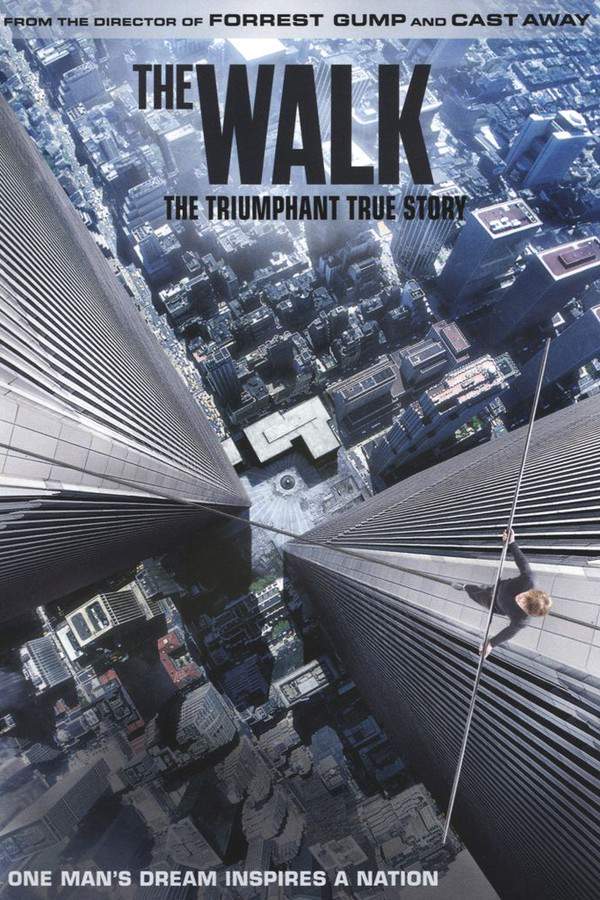
The Walk (2015) movie poster

Plot Summary

The Walk (2015) Plot Summary Explained

Release, runtime and language
2015 · 123 min · English
JustWatch #15,877 4
Directed by
Robert Zemeckis
Starring
Joseph Gordon-Levitt
Budget
$35M

Driven by a lifelong obsession, Philippe Petit attempts an impossible feat: tightrope walking between the iconic Twin Towers of New York City. With the encouragement of his mentor, Papa Rudy, and the help of a dedicated team, Petit meticulously plans and executes his audacious quest. Facing numerous obstacles, including potential betrayal and perilous situations, he pushes the boundaries of human ingenuity and courage in a breathtaking display of skill and determination.

On this page (6)
  1. 1 Where to watch
  2. 2 What happens: full plot
  3. 3 Plot questions answered
  4. 4 Movie threads
  5. 5 Movies like The Walk
  6. 6 Every angle

Where to watch

Where to Watch The Walk (2015)

Where can you watch The Walk? Stream, rent or buy it in the US, including on Tubi TV, YouTube Free and Amazon Video: current JustWatch availability with up-to-date prices.

Streaming availability powered by JustWatch

Full plot summary · contains spoilers

What Happens in The Walk: Full Plot Summary

The whole story of The Walk (2015) explained, from the opening scene to the final frame: every key event, every twist and what it all adds up to. Read it as a quick recap before the sequel, to check a scene you missed, or to finally understand what really happened.

Philippe Petit, portrayed by Joseph Gordon-Levitt, fearlessly stands atop the iconic Statue of Liberty, proclaiming that he does not fear death. This bold statement is a testament to his determination as he dreams of performing a high-wire walk between the Twin Towers of the World Trade Center.

The tale takes us back to Paris, France in 1973, where Philippe captivates street audiences with his performances but often finds himself evading the police for not having a permit. In a humorous mishap, while collecting donations, he accidentally bites into a jawbreaker tossed to him by a girl, causing a moment of pain but also inspiration.

While at the dentist’s office, Philippe discovers a magazine featuring the unfinished Twin Towers, and his ambition is ignited. Memories of his childhood flood back, recalling the high-wire walkers he admired at the circus. As an adult, he attempts to walk the wire in a circus tent, only to be caught by the owner, Rudy Omankowsky (played by Ben Kingsley). Excited by Philippe's juggling skills, Rudy agrees to help him with his ambitions.

With a heavy heart, Philippe leaves his family behind. His mother weeps while his father dismisses his dreams as foolish. As he pedals into town, he encounters Annie, a singer played by Charlotte Le Bon, and they swiftly connect, leading her to become his first partner in his daring plans. Philippe also befriends Jean-Louis (Clement Sibony), a photographer and skilled archer, who joins him as a second accomplice, enhancing his plans with expertise.

Philippe’s determination is portrayed vividly as he practices wire-walking over a lake, only to be booed by fishermen and fall in. Nevertheless, this only fuels his passion further. His adventures lead him to attempt a dramatic performance across the towers of Notre Dame, culminating in his arrest.

His journey takes a pivotal turn when he recruits Jean-Francois, known as Jeff (Cesar Domboy), an algebra teacher terrified of heights, yet enthusiastic to support Philippe. Together with Annie and Jean-Louis, they venture to newfound heights in New York City, where Philippe’s initial fear of the towering structures is quickly replaced by determination. A memorable moment occurs as he sneaks into the construction site of the South Tower, fueling his resolve with each step he takes.

Determined to pull off "The Coup" on August 6, 1974, Philippe refuses a safety harness, believing it would defeat his purpose. As he prepares, his mental state becomes increasingly strained, causing a tense atmosphere among his accomplices. The crew, camouflaged as delivery men, faces various challenges but remains committed to setting up the daring wire.

On the day of the performance, dark clouds loom over the roof as Philippe, along with Jeff and a handful of allies, undertake their monumental task under cover of night. As dawn breaks, Philippe prepares, amid mounting tension, for the breathtaking walk that would capture the world's attention.

Though challenges arise, Philippe successfully walks across the wire to the North Tower, eliciting awe from those below. Not quite finished with his stunt, he bravely walks back to the South Tower, teasing law enforcement that had gathered. Ultimately, he surrenders and, while arrested, receives praise from onlookers, marking his journey as both a monumental success and a mixture of emotions.

In the aftermath, the judge mandates Philippe to perform a free high-wire act in Central Park, a requirement he gladly embraces. However, his personal life feels incomplete as Annie chooses to return to France, leaving Philippe to reflect on his choices. Ultimately, he receives an unprecedented access pass to the Twin Towers, which serves as a poignant reminder of fleeting dreams—a bittersweet conclusion underscored by the fading smile on his face.

The film concludes with a haunting image of the Twin Towers, now gone, marking an end to both Philippe's astonishing journey and the legacy of the structures he dared to conquer.
Last updated: November 03, 2024 at 21:31

Was this helpful?

Plot questions answered

The Walk Plot Explained: Your Questions Answered

The questions people ask most about The Walk (2015): what happens in the confusing scenes, why the characters do what they do, the twists, hidden details and what the ending means. Each answer contains spoilers.

Q1

What inspired Philippe Petit to walk between the Twin Towers?

While at the dentist's office in 1973, Philippe discovered a magazine featuring the unfinished Twin Towers. The sight instantly ignited his ambition, recalling his childhood fascination with high-wire walkers he admired at the circus. He knew immediately that walking between the two towers would be his ultimate artistic statement.

Foreshadowing: Earlier in the film, Philippe stands on the Statue of Liberty declaring he does not fear death, establishing the fearless mindset that would drive this impossible feat.

  • inspiration
  • twin towers
  • childhood dream
  • magazine
Q2

Why did Philippe refuse to wear a safety harness during the walk?

Philippe believed that wearing a safety harness would defeat the entire purpose of his artistic endeavor. He viewed the walk as a pure test of his skill and balance, where any safety net would compromise the integrity of the performance. For him, the danger was integral to the art itself.

  • safety harness
  • danger
  • artistic integrity
  • risk
Q3

Who was Jeff and why did Philippe recruit him for the walk?

Jeff (Jean-Francois) was an algebra teacher who was terrified of heights but enthusiastic about supporting Philippe's dream. Despite his fear, Philippe recruited him because he needed additional help on the day of the walk. Jeff's courage in facing his terror exemplified the kind of determination Philippe valued in his team.

  • jeff
  • algebra teacher
  • height fear
  • team member
Q4

What happened to Annie after the Twin Towers walk?

After the successful walk, Annie chose to return to France, ending her relationship with Philippe. While Philippe achieved his artistic triumph, the personal cost was losing his partner. This bittersweet outcome reflects how his single-minded pursuit of his dream affected his personal life.
  • annie
  • france
  • relationship
  • breakup
  • personal cost
Q5

Why was Philippe arrested at Notre Dame before attempting the Twin Towers?

Philippe attempted a high-wire performance across the towers of Notre Dame in Paris as a dramatic showcase of his abilities. The performance drew the attention of law enforcement, leading to his arrest. This earlier stunt was essentially practice for his larger ambition and demonstrated his willingness to risk arrest for his art.

  • notre dame
  • arrest
  • paris
  • performance
Q6

How did Philippe and his team plan the high-wire walk?

Philippe meticulously planned "The Coup" over months with his team: Annie, Jean-Louis, and later Jeff. They conducted reconnaissance at the World Trade Center construction site, smuggled equipment onto the roofs disguised as delivery men, and stringed the wire between the towers overnight. The planning required precise timing, secret logistics, and absolute commitment from all involved.

Foreshadowing: The film shows Philippe practicing wire-walking over a lake and being mocked by fishermen, demonstrating his relentless dedication to perfecting his craft.

  • planning
  • the coup
  • logistics
  • team
  • preparation
Q7

What was the judge's sentence for Philippe Petit after his arrest?

Instead of serving jail time, the judge mandated Philippe to perform a free high-wire act in Central Park. This unique sentence allowed Philippe to continue doing what he loved while also entertaining the public. The judge's creative ruling effectively turned the arrest into another performance opportunity.

  • judge
  • sentence
  • central park
  • arrest
  • court
Q8

Why did Philippe's father dismiss his dreams of being a high-wire walker?

Philippe's father dismissed his dreams as foolish, showing no support for his son's ambitions. This dismissive attitude from his father only fueled Philippe's determination to prove everyone wrong. Despite his father's rejection, Philippe left his family behind to pursue his calling, driven by an inner conviction that transcended his family's expectations.

  • father
  • family
  • rejection
  • determination
  • dreams
Q9

How did Philippe meet his mentor Rudy and what was their relationship?

Philippe met Rudy Omankowsky, a circus tent owner, when he was caught attempting to walk the wire in Rudy's circus tent. Despite the transgression, Rudy recognized Philippe's juggling talent and agreed to help support his ambitions. Rudy became an early mentor who believed in Philippe's potential before anyone else did.

  • rudy
  • mentor
  • circus
  • omankowsky
  • support
Q10

What is the significance of the ending showing the Twin Towers gone?

The film concludes with a haunting image of the Twin Towers as they appear today, non-existent since the 9/11 attacks. This creates profound historical melancholy, transforming Philippe's achievement into both a triumphant celebration of human audacity and a mournful tribute to structures that no longer exist. The fading smile on Philippe's face captures the bittersweet nature of memory and loss.

  • ending
  • twin towers
  • 9/11
  • historical significance
  • memory

Movie threads

More Movies Like The Walk, by Mood & Story

Curated lists built around what makes The Walk tick: the same mood, the same kind of story or the same emotional payoff. Each list explains why these movies belong together.
Movies with Meticulous Mission Planning like The Walk

Stories where meticulous planning and teamwork are key to achieving an unbelievable feat. If you loved the detailed, heist-like planning in The Walk, this thread features movies where characters meticulously prepare for an audacious, high-stakes goal. Find similar stories of teamwork, problem-solving, and thrilling execution in films like these.

  • tense
  • meticulous
  • thrilling
  • daring
  • strategic
  • teamwork
  • Tone: tense, determined, awe-inspiring
  • Pacing: steady, methodical build
Why these movies?

The story pattern: The narrative follows a clear, step-by-step structure: a grand vision is conceived, a team is gathered, a complex plan is devised, and numerous logistical and personal challenges are faced. The climax is the execution of the plan, where meticulous preparation meets real-world chaos.

Why they belong together: Movies are grouped here by their shared focus on process, preparation, and the intellectual thrill of solving a massive puzzle. They share a tone of tense anticipation and a pacing that builds steadily towards a spectacular, often breathtaking, payoff.

Movies with Bittersweet Triumphs like The Walk

Journeys where a great personal victory is shadowed by loss or melancholy. For viewers who appreciated the poignant ending of The Walk, this thread features movies where a hard-won victory is bittersweet. Discover similar stories of great achievement shadowed by loss, personal cost, or historical melancholy.

  • bittersweet
  • melancholic
  • triumphant
  • poignant
  • reflective
  • legendary
  • Tone: bittersweet, melancholic, awe-inspired
  • Pacing: steady, character-driven
Why these movies?

The story pattern: The narrative follows a protagonist's passionate pursuit of a dream, culminating in its fulfillment. However, the resolution is complex; the success is real but is accompanied by a sense of loss—a relationship ends, a sacrifice is made, or the achieved dream itself becomes a memory of something lost.

Why they belong together: These films are united by their emotional complexity, balancing exhilaration with melancholy. They share a tone that is both uplifting and somber, leaving the viewer with a powerful, reflective feeling about the price of dreams and the passage of time.

If you liked this

Movies Like The Walk

Similar movies to The Walk: the same genre, themes or kind of story. Each one comes with its own plot summary, timeline and ending explained.

Browse all movie summaries

Every angle

The Walk (2015) Explained: Plot, Timeline & Characters

Everything about The Walk in one place: what happens in the plot summary, the timeline in chronological order, the characters and meaning and a spoiler-free summary. What's After the Movie adds the cast, box office and post-credit scenes.

Coming soon on iOS and Android

The Plot Explained Movie Summary App

Plot summaries, endings explained and timelines on your phone. Catch up on any movie in minutes, save your favorites and never miss a twist again.

Be the first to know when we launch. Your email stays private, always.

Learn more about the app