Plot Explained Spoilers guaranteed!
Plot Explained

Browse by genre

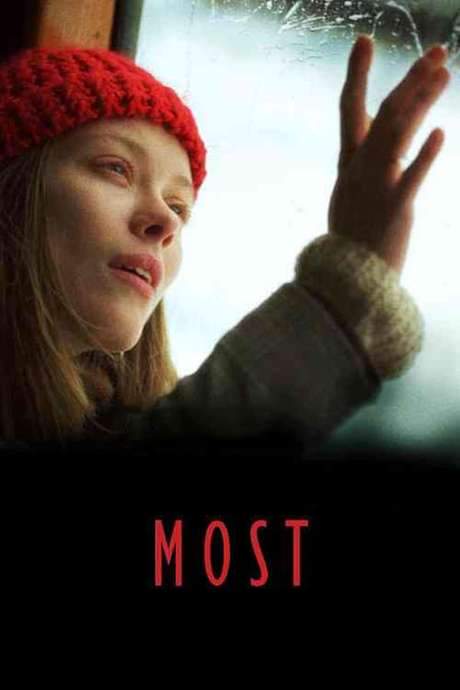
Most (2003) movie poster

Plot Summary

Most (2003) Plot Summary Explained

Release, runtime and language
2003 · 29 mins · Czech
Directed by
Bobby Garabedian
Starring
John Lavachielli, Brad Heller, Vladimír Javorský, Klára Issová, Ladislav Ondřej, Linda Rybová

A poetic and powerful story of a father forced to choose between love and duty.

On this page (5)
  1. 1 What happens: full plot
  2. 2 Plot questions answered
  3. 3 Movie threads
  4. 4 Movies like Most
  5. 5 Every angle

Full plot summary · contains spoilers

What Happens in Most: Full Plot Summary

The whole story of Most (2003) explained, from the opening scene to the final frame: every key event, every twist and what it all adds up to. Read it as a quick recap before the sequel, to check a scene you missed, or to finally understand what really happened.

Most is the story of a single Czech father, Vladimír Javorský who takes his eight-year-old son to work at the railroad drawbridge where he is the bridge tender.

Early on, the boy meets Pavlinka, Klára Issová, a woman boarding a train who struggles with a drug problem. Back at the bridge, the father heads to the engine room and tells his son to stay by the edge of the nearby lake. A ship approaches, and the bridge is raised. Although the train was scheduled to arrive an hour later, it comes early.

The boy sees this and tries to warn his father, who is distracted and unaware of the oncoming train. As the train nears, the boy slips into the drawbridge gear while trying to lower the bridge, leaving the father with a horrific choice: kill his son or let the train crash. The father lowers the bridge, and the gears crush the boy. The train passengers remain oblivious to the tragedy, save for the drug-addicted woman who glimpses the event from her train window.

The movie ends with the man wandering a new city and encountering the former drug-addicted Pavlinka, holding a baby who resembles the dead child.

Last updated: February 20, 2026 at 18:44

Was this helpful?

Plot questions answered

Most Plot Explained: Your Questions Answered

The questions people ask most about Most (2003): what happens in the confusing scenes, why the characters do what they do, the twists, hidden details and what the ending means. Each answer contains spoilers.

Q1

Why does the father lower the bridge knowing his son is in the gearworks?

The father has only seconds to react as the train approaches at full speed. He cannot reach his son in time to pull him out, and stopping the bridge would cause the train to crash, killing dozens of passengers. Lowering the bridge is the only way to save the train, even though it means the gears will crush his son. The father makes the horrific choice to sacrifice one life to save many.

Foreshadowing: Earlier, the father tells his son to stay by the lake, establishing that the boy is near the dangerous machinery.

  • bridge tender
  • tragic choice
  • sacrifice
  • father son
  • gears
Q2

Why does the train arrive earlier than expected?

The train was scheduled to arrive an hour after the ship passed, but it comes early without warning. This unexpected timing catches the father distracted in the engine room and the boy alone on the bridge. The early arrival is the catalyst that creates the impossible situation.

Foreshadowing: The timeline notes mention the ship's delay hints at a fragile schedule, subtly foreshadowing the timing disaster.

  • train schedule
  • timing
  • accident
  • ship bridge
Q3

Why is the father in the engine room when the train approaches?

As the bridge tender, the father must operate the machinery when a ship approaches. He goes to the engine room to raise and lower the drawbridge, leaving his son alone by the lake. He is focused on his work and does not hear the train approaching, which is why the boy must try to warn him personally.

Foreshadowing: The father explicitly tells his son to stay by the lake edge while he attends to his duties.

  • bridge tender
  • engine room
  • distraction
  • father responsibility
Q4

Why does only the drug-addicted woman see what happens?

The passengers on the train are unaware because they are inside the carriages and the tragedy happens quickly below. The drug-addicted woman is the only one looking out her window at that moment, having earlier made eye contact with the boy at the station. Her drug-induced state may also make her more observant of her surroundings or more likely to be looking out the window.

Foreshadowing: The woman and boy exchange a meaningful look at the station, establishing a connection that makes her the sole witness.

  • drug addict
  • witness
  • train passengers
  • woman
  • pavlinka
Q5

What does the baby at the end represent?

The baby the woman holds strongly resembles the dead boy, though the film is ambiguous about whether this is literal or symbolic. The ending suggests either reincarnation, the woman keeping a child from a similar situation, or simply the father's grief manifesting in seeing his son's face everywhere. The ambiguity is intentional, leaving the interpretation open.

Foreshadowing: The boy and woman connect at the station early in the film, creating a thread that resurfaces in the ending.

  • baby
  • ending
  • reincarnation
  • grief
  • pavlinka
Q6

Why does the father wander to a new city after the accident?

The father is consumed by guilt and grief after killing his own son. He leaves his job and his old life, wandering aimlessly through a new city. This represents his complete emotional breakdown and inability to live with what he did. He is a man destroyed by his impossible choice.

Foreshadowing: The aftermath scene shows the father staring into empty space, completely paralyzed by grief.

  • father
  • grief
  • wandering
  • guilt
  • aftermath
Q7

Why does the boy try to lower the bridge himself?

The boy sees the train coming and realizes his father does not know. In his panic to prevent disaster, he attempts to lower the bridge himself to warn the train or stop the collision. He slips into the gearworks while trying to operate the mechanism, becoming trapped as the bridge begins to move.

Foreshadowing: The boy has shown curiosity about the world and a sense of responsibility throughout the opening scenes.

  • boy
  • bridge
  • gear
  • panic
  • warning
Q8

Who is Pavlinka and what is her story?

Pavlinka is the drug-addicted woman the boy meets at the train station at the beginning. She struggles with addiction and is boarding a train. After the tragedy, months later, the father encounters her in a new city. She is now sober and caring for a baby. Her arc represents potential redemption and the possibility of healing from past struggles.

Foreshadowing: Her brief exchange with the boy at the station hints at deeper suffering and a story beyond this moment.

  • pavlinka
  • drug addict
  • woman
  • recovery
  • baby
Q9

Why does no one help the boy before he is crushed?

The entire sequence happens in a matter of seconds. The boy slips into the gearworks as the bridge lowers, and the father must make an instant decision. There is no time for anyone to intervene. The father is the only one who could act, and he must choose between his son and the train.

Foreshadowing: The build-up shows the train closing the gap quickly, emphasizing there is no time to spare.

  • boy
  • rescue
  • impossible choice
  • seconds
Q10

What other choices did the father have?

The father had almost no alternative. If he did not lower the bridge, the train would crash into the raised drawbridge, killing many passengers. If he tried to save his son first, the train would crash. He could have refused to raise the bridge for the ship, but the ship had already passed by the time the early train arrived. His role as bridge tender meant he was legally and ethically bound to operate the bridge for both ship and train.

Foreshadowing: The bridge routine earlier establishes the strict protocols a bridge tender must follow.

  • alternatives
  • dilemma
  • bridge tender
  • duty
Q11

Why does the film show Pavlinka with a baby at the end?

The ending brings full circle the two people the father could not save: his son and the woman struggling with addiction. Now she has found sobriety and a baby, suggesting new life and hope. The father seeing this baby may represent his need for closure, the possibility of redemption, or the cruelness of being reminded of what he lost. It is both a haunting and potentially redemptive final image.

Foreshadowing: The parallel between the boy's fate and the woman's struggle connects their stories throughout the film.

  • pavlinka
  • baby
  • ending
  • redemption
  • new life

Movie threads

More Movies Like Most, by Mood & Story

Curated lists built around what makes Most tick: the same mood, the same kind of story or the same emotional payoff. Each list explains why these movies belong together.

Movies about heartbreaking parental choices like Most

Stories where parents face impossible choices that test their love and duty. If you were moved by the tragic dilemma in Most, explore other films that feature parents forced to make impossible moral decisions. These movies share a focus on sacrifice, devastating consequences, and the heavy emotional toll of choosing between love and duty.

  • tragic
  • heartbreaking
  • tense
  • somber
  • poignant
  • oppressive
  • Tone: melancholic, tragic, tense
  • Pacing: steady, deliberate
Why these movies?

The story pattern: These narratives typically follow a linear, straightforward path toward a central, unavoidable ethical crisis. The pacing steadily builds emotional weight, leading to a climactic decision that irrevocably alters the characters' lives, often concluding with a deep sense of loss and sorrow.

Why they belong together: Movies are grouped here because they share a core focus on the specific agony of parental sacrifice. They create a similar viewing experience of melancholy, tension, and heavy emotional weight, exploring the aftermath of decisions made under extreme duress.

Slow burn allegorical tragedies similar to Most

Deliberate, somber stories that use simple narratives to explore profound loss. If you appreciated the steady, allegorical build-up to tragedy in Most, you'll find similar films here. These movies use straightforward storytelling to deliver a powerful emotional punch, often exploring themes of sacrifice and grief through a melancholic lens.

  • melancholic
  • somber
  • tragic
  • poignant
  • allegorical
  • straightforward
  • Tone: melancholic, somber, poignant
  • Pacing: steady, slow burn
Why these movies?

The story pattern: Stories in this thread unfold with a linear, uncluttered structure. The pacing is steady, methodically increasing emotional intensity until a climactic, tragic event. The narrative often carries a symbolic or allegorical weight, making the personal tragedy feel universal.

Why they belong together: These films are connected by their shared approach to tragedy: a slow, steady build-up, a straightforward narrative complexity, and a deeply melancholic tone that results in an emotionally draining experience focused on a central, catastrophic loss.

If you liked this

Movies Like Most

Similar movies to Most: the same genre, themes or kind of story. Each one comes with its own plot summary, timeline and ending explained.

Browse all movie summaries

Every angle

Most (2003) Explained: Plot, Timeline & Characters

Everything about Most in one place: what happens in the plot summary, the timeline in chronological order, the characters and meaning and a spoiler-free summary. What's After the Movie adds the cast, box office and post-credit scenes.

Coming soon on iOS and Android

The Plot Explained Movie Summary App

Plot summaries, endings explained and timelines on your phone. Catch up on any movie in minutes, save your favorites and never miss a twist again.

Be the first to know when we launch. Your email stays private, always.

Learn more about the app