









Plot Explained Spoilers guaranteed!
Plot Explained

Browse by genre

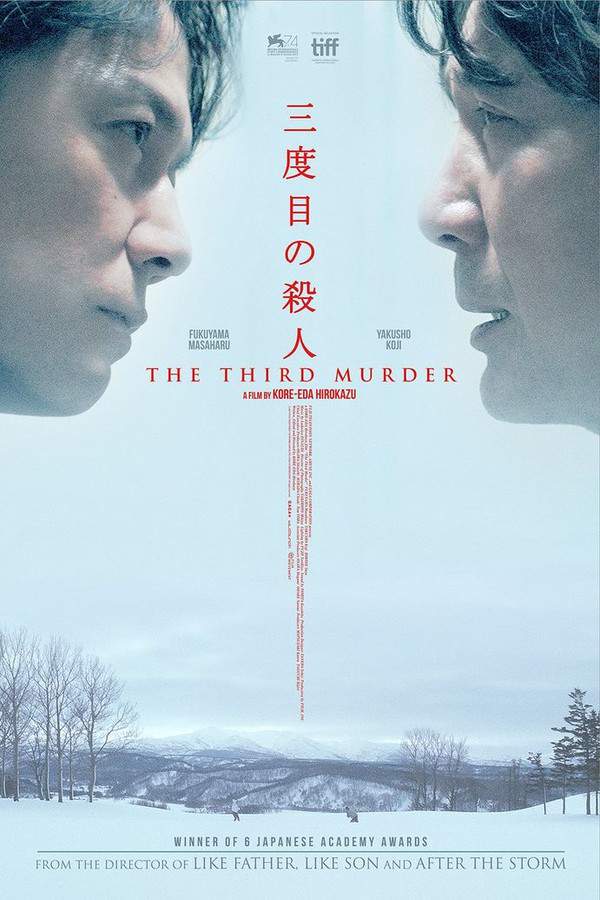
The Third Murder (2018) movie poster

Timeline

The Third Murder (2018) Timeline Explained – Every Event in Order

Release, runtime and language
2018 · 124 min · Japanese
Echo score 75
JustWatch #1,515 17
Directed by
Hirokazu Koreeda
Starring
Masaharu Fukuyama, Kôji Yakusho, Suzu Hirose, Shin'nosuke Mitsushima, Izumi Matsuoka, Aju Makita

A brilliant lawyer, Shigemori, takes on the defense of Misumi, a man who readily admits to murder. Initially believing the case straightforward, Shigemori soon finds his certainty shaken as unsettling details emerge. As he investigates, the line between guilt and innocence blurs, and he questions everything he thought he knew. The pursuit of justice becomes a complex and unsettling journey, leaving the outcome uncertain and the truth elusive.

On this page (5)
  1. 1 Where to watch
  2. 2 Events in order (15)
  3. 3 Timeline questions answered
  4. 4 Movie threads
  5. 5 Every angle

Where to watch

Where to Watch The Third Murder (2018)

Where can you watch The Third Murder? Stream, rent or buy it in the US, including on Film Movement Plus, Hoopla and Kanopy: current JustWatch availability with up-to-date prices.

Streaming availability powered by JustWatch

15 events in order · contains spoilers

The Third Murder Timeline: Events in Chronological Order

Every key event of The Third Murder (2018) in order, scene by scene, with when and where it takes place. Use it to untangle flashbacks, time jumps and parallel storylines, to refresh your memory before the sequel or to find the exact scene you are thinking of.

  1. Murder Discovery

    At **12:30 am on October 11, 2017**, a horrifying scene was uncovered alongside the banks of the *Tama River*. The charred remains of a man lay in the shadows, marking the beginning of a dark and twisted murder investigation that would send shockwaves through the community.

    When
    12:30 am, October 11, 2017
    Where
    Tama River
  2. First Meeting

    Shigemori, a seasoned criminal defense attorney, begins his journey at the Yokohama Detention Center where he meets **Misumi**, the man accused of robbery and murder. Misumi's ominous past intertwines with Shigemori’s own family, as Shigemori’s father was previously the presiding judge in Misumi's earlier case.

    Where
    Yokohama Detention Center
  3. Unraveling Deceptions

    As they investigate, Shigemori and his assistant Kawashima uncover a maze of lies within Misumi's accounts of the murder. Misumi claims to have acted under the influence of substances to kill the former owner of a food factory in *Kawasaki*, raising immediate questions about his state of mind at the time.

    Where
    Kawasaki
  4. Incriminating Evidence

    Misumi's previous attorney, **Settsu**, provides evidence that contradicts Misumi's claims, revealing premeditation in the crime. Additionally, surveillance footage shows Misumi stealing money post-murder, forcing Shigemori to reevaluate his defense strategy and Misumi's true intentions.

  5. Visit to Victim’s Family

    During a somber visit to the victim's family, Shigemori witnesses the emotional turmoil of the victim's teenage daughter, whose limp eerily symbolizes a clue found at the crime scene. The visit draws heavy emotion, as Misumi's letter to the family opens old wounds of grief.

  6. Factory Investigations

    Kawashima’s inquiries uncover unresolved tensions between Misumi and his former employer at the food factory, hinting at potential motives of revenge tied to unpaid wages. This newfound information prompts Shigemori to consider a narrative shift in their defense.

    Where
    Food Factory
  7. Moral Quandary

    As the investigation deepens, Shigemori grapples with a moral dilemma involving justice and compassion towards Misumi. He uncovers hints that the victim's wife may have orchestrated the murder while Misumi asserts that she promised him security in exchange for silence.

  8. Exploring Misumi’s Past

    Shigemori travels to *Rumoi*, Misumi's hometown, seeking clarity about Misumi's motivations. Encounters with an arresting officer reveal dubious aspects of Misumi's past, including allegations of coercion by his former attorney that could have influenced his confessions.

    Where
    Rumoi
  9. Family Strain

    Conversations in Rumoi lead to a chilling discovery about Misumi's estranged daughter, **Megumi**, who is set to testify against him. This revelation adds personal turmoil to Misumi's case, reflecting the deep rifts in family dynamics due to his criminal past.

  10. Trial Preparations

    As the trial approaches, Shigemori attempts to delve deeper into Misumi’s psyche regarding the stolen wallet. Their discussions bring to light Misumi's struggles between sincerity and the manipulations of his legal defense, intensifying the emotional stakes.

  11. Sakie's Testimony

    The trial reaches a pivotal moment when **Sakie**, the victim's wife, takes the stand. Her testimony reveals unexpected ties between the victim's business dealings and the murder, challenging the defense's strategy and drawing connections to her trauma.

  12. Confessions and Shifts

    In the wake of Sakie’s words, Misumi reconfigures his story, declaring his innocence and asserting that the stolen money was related to illegal activities rather than greed. This unexpected alteration creates a ripple effect in the courtroom, complicating the defense’s position.

  13. Verdict Delivered

    The judge ultimately sides with the prosecution, sentencing Misumi to death. This verdict not only seals Misumi's fate but also echoes the bittersweet complexities of justice, leaving Shigemori and those involved questioning the nature of truth and morality.

  14. Final Reflection

    After the trial, Shigemori confronts Sakie once more, exploring Misumi's conflicting notions of guilt and truth. This reflection leads Shigemori to ponder the overarching themes of the human experience—the balance of hope and despair.

  15. Moment of Stillness

    As Shigemori exits Misumi's home, he stands at an intersection, enveloped in a moment of introspection. The stillness around him resonates with the chaos within, representing the complex ties between humanity and the emotional weight of their shared experiences.

Last updated: November 22, 2024 at 18:52

Was this helpful?

Timeline questions answered

The Third Murder Timeline Explained: Your Questions Answered

When does it happen, and why in that order? The questions people ask about the chronology of The Third Murder (2018): time jumps, flashbacks, cause and effect between scenes and the correct order of events, each answered with spoilers.

Q1

Why did Misumi keep changing his story about the murder?

Misumi gave three contradictory confessions throughout the trial. Initially he claimed he killed for debt-related revenge, then admitted to premeditation, and finally declared innocence, stating the money was for illegal business transactions. This pattern suggests Misumi was either trying to protect someone (possibly Sakie), manipulate the legal outcome, or was coerced by his attorneys. The defense attorney Settsu even advised him to plead guilty to avoid the death penalty, indicating the confusing confessions served strategic purposes rather than revealing clear truth.

Foreshadowing: Earlier scenes show Misumi sending money to his estranged daughter Megumi, hinting at a protective motivation beyond self-interest.

  • misumi confession
  • changing story
  • murder trial
  • conflicting statements
Q2

What was Sakie's actual involvement in her father's murder?

Sakie, the victim's wife, initially appeared as a grieving widow but her testimony revealed deeper involvement. She admitted reaching out to Misumi two weeks before the murder, promising him security should he remain silent about her involvement. During her testimony, she revealed she was motivated by years of abuse from her father, suggesting she may have orchestrated or encouraged Misumi to kill him. However, at the final hearing, she expressed disbelief that Misumi killed for money and asked for mercy rather than retribution.

Foreshadowing: The mysterious cross left at the crime scene mirrored Sakie's daughter's limp, creating an early visual clue connecting the family to the murder.

  • sakie victim wife
  • murder involvement
  • abuse history
  • conspiracy
Q3

Why did Shigemori's father spare Misumi 30 years ago?

Shigemori's father was the presiding judge in Misumi's earlier murder case 30 years ago. Rather than sentencing him to death, the judge spared Misumi's life, allowing him to be released after serving his sentence. This historical connection creates personal stakes for Shigemori, as defending Misumi forces him to confront his father's past decision. The film suggests this earlier judgment may have been too lenient, leading to the second murder.

Foreshadowing: The film hints that Misumi sent a postcard to Shigemori's father, suggesting an ongoing connection between them that influenced the current case.

  • shigemori father
  • judge
  • death penalty
  • 30 years ago
  • previous case
Q4

What was the significance of the cross and limp found at the crime scene?

The cross left at the crime scene was a mysterious clue that led investigators to the victim's teenage daughter, who walked with a pronounced limp. This detail connected the crime scene to the victim's family and suggested the killer had some relationship or knowledge of the family. The symbol also foreshadowed the complex family dynamics involving abuse and trauma within the household.

Foreshadowing: When Shigemori visits the victim's family, he meets the daughter whose limp directly mirrors the symbol left at the crime scene, confirming the connection.

  • crime scene clue
  • cross
  • limp
  • evidence
  • investigation
Q5

Why did Misumi send money to his daughter Megumi?

Misumi sent the stolen 500,000 yen to his estranged daughter Megumi after the murder, claiming it was to help her despite their fractured relationship. This act reveals a complex side to Misumi, he is a murderer but also a father trying to provide for his child from whom he is estranged. Megumi, however, wanted nothing to do with him and was prepared to testify against him in court, making his gesture largely futile.

Foreshadowing: In Rumoi, Shigemori learns that Megumi refused to contact her father, setting up the tragic irony of Misumi's attempted reconciliation through crime.

  • megumi daughter
  • money transfer
  • estranged relationship
  • family
Q6

What was Misumi's real motivation for killing the factory owner?

Misumi initially claimed the murder was motivated by unpaid wages and revenge against his former employer. However, the truth became murky as his confessions shifted. Evidence suggested Sakie (the victim's wife) may have hired him, and her testimony about her father's abuse hinted at a darker family conflict. Misumi's claim that he acted under the influence was contradicted by his attorney's evidence of premeditation, making his true motivation ambiguous throughout.

Foreshadowing: The investigation reveals tensions at the factory over unpaid wages, but Sakie's involvement suggests the murder was more complex than simple workplace revenge.

  • motivation
  • revenge
  • unpaid wages
  • hiring killer
  • factory owner
Q7

Did Misumi actually steal money from the victim after the murder?

Surveillance footage confirmed that Misumi did steal money from the victim's wallet after the murder. This discovery forced Shigemori to reassess his defense strategy, as it contradicted claims that theft was not a motive. However, Misumi later changed his story again, asserting the money was for illegal business transactions rather than personal gain, creating further ambiguity about his true intentions.

Foreshadowing: This discovery came during Shigemori's investigation, causing him to question everything he thought he knew about his client.

  • theft
  • stolen money
  • wallet
  • surveillance footage
  • robbery
Q8

Why was Misumi sentenced to death if he claimed innocence?

Despite Misumi's final claim of innocence, the court found him guilty and sentenced him to death. The prosecution presented evidence of premeditation, the stolen money, and his inconsistent confessions which undermined his credibility. Even when Misumi claimed coercion from both prosecution and his own counsel, the judge sided with the prosecution. The verdict reflects the court's distrust of his shifting stories rather than definitive proof of his guilt for the specific charges.

Foreshadowing: Settsu warned Misumi that pleading guilty might be safer than claiming innocence, foreshadowing the deadly outcome of his inconsistent defense.

  • death sentence
  • verdict
  • execution
  • guilty verdict
  • courtroom
Q9

What did Sakie mean when she said truth is subjective?

Sakie's final statement that "truth is subjective" encapsulates the film's central theme. Throughout the trial, multiple versions of events emerged, Misumi confessed, then recanted, then claimed innocence. Sakie herself hid her involvement while presenting herself as a grieving widow. The ambiguous ending suggests there may never be one definitive truth about what happened, leaving the nature of justice itself in question.

Foreshadowing: The entire film builds toward this ambiguity, with each character's conflicting accounts making the concept of objective truth increasingly elusive.

  • truth
  • subjective
  • ambiguous ending
  • meaning
  • theme
  • philosophy
Q10

How is Sakie connected to Misumi through Megumi's disability?

Shigemori hypothesizes that Misumi may have felt affection for Sakie because they both shared a connection to Megumi's disability, Sakie's stepdaughter walked with a limp similar to what Misumi's own daughter experienced. This theory suggests Misumi's willingness to protect Sakie or take blame may stem from empathy toward her situation as a caregiver. However, Sakie rejected this suggestion when confronted by Shigemori, and the true nature of their relationship remains unclear.

Foreshadowing: This connection emerges during Shigemori's conversations with Sakie, where he probes the hidden relationships between the defendants.

  • sakie misumi connection
  • disability
  • megumi
  • empathy
  • relationship

Movie threads

More Movies Like The Third Murder, by Mood & Story

Curated lists built around what makes The Third Murder tick: the same mood, the same kind of story or the same emotional payoff. Each list explains why these movies belong together.

Legal Dramas with Moral Ambiguity like The Third Murder

Stories where the pursuit of truth leads only to deeper ambiguity and moral doubt. Explore movies like The Third Murder that challenge the concept of objective truth within legal and ethical frameworks. If you enjoyed the philosophical uncertainty and complex character motivations, you'll find similar thought-provoking stories here that leave clear-cut answers behind.

  • ambiguous
  • philosophical
  • unsettling
  • thought-provoking
  • morally complex
  • uncertain
  • Tone: dark, intellectually unsettling
  • Pacing: slow, methodical
Why these movies?

The story pattern: Narratives in this thread typically follow a protagonist, often an investigator or lawyer, who begins with a clear goal but has their convictions systematically dismantled. The plot unfolds through shifting perspectives, unreliable testimony, and hidden histories, ultimately concluding without a definitive resolution, forcing the audience to sit with the discomfort of ambiguity.

Why they belong together: These films are grouped by their shared focus on epistemological uncertainty. They prioritize psychological tension over action, feature morally complex characters, and deliver an experience defined by intellectual and ethical unease rather than plot-driven closure.
Slow Burn Psychological Dramas like The Third Murder

A creeping, atmospheric unease that builds quietly into profound existential tension. Discover films with a similar slow burn pacing and heavy, unsettling atmosphere as The Third Murder. If you appreciated its methodical build-up of dread and the somber, introspective mood, this selection offers more movies that prioritize psychological tension over fast-paced plots.

  • slow burn
  • unsettling
  • claustrophobic
  • somber
  • melancholic
  • psychological
  • Tone: somber, claustrophobic, melancholic
  • Pacing: slow, deliberate, methodical
Why these movies?

The story pattern: The journey is inward, focusing on a character's psychological unraveling as they confront an unsettling reality. The plot moves deliberately, often through long, tense conversations and meticulous observation, creating a suffocating atmosphere where the real horror is the erosion of certainty and the weight of unanswerable questions.

Why they belong together: What binds these films is their shared mood and pacing: a SLOW, deliberate rhythm that fosters a DARK, SOMBER tone and a HIGH level of psychological INTENSITY. They create a specific viewing experience defined by patience, unease, and a heavy emotional footprint.

Every angle

The Third Murder (2018) Explained: Plot, Timeline & Characters

Everything about The Third Murder in one place: what happens in the plot summary, the timeline in chronological order, the characters and meaning and a spoiler-free summary. What's After the Movie adds the cast, box office and post-credit scenes.

Coming soon on iOS and Android

The Plot Explained Movie Summary App

Plot summaries, endings explained and timelines on your phone. Catch up on any movie in minutes, save your favorites and never miss a twist again.

Be the first to know when we launch. Your email stays private, always.

Learn more about the app