Plot Explained Spoilers guaranteed!
Plot Explained

Browse by genre

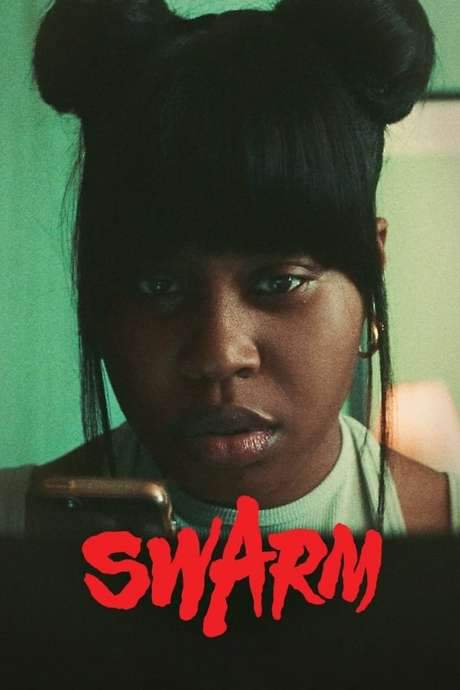
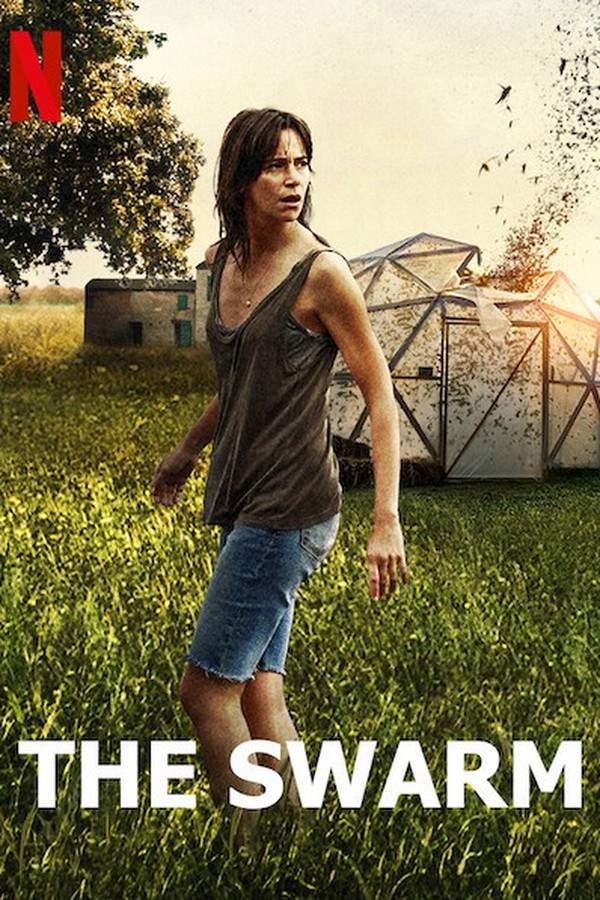
The Swarm (2021) movie poster

Plot Summary

The Swarm (2021) Plot Summary & Ending Explained

Release, runtime and language
2021 · 101 min · French
Echo score 75
JustWatch #7,577 10
Directed by
Just Philippot
Starring
Christian Bouillette, Clément Bertani, Marie Narbonne, Raphael Romand, Renan Prevot, Sofian Khammes
Budget
$2.8M

When Virginie's farm faces ruin, a disturbing discovery turns her ordinary existence into a fight for survival. Her valuable locusts develop an appetite for human blood, triggering widespread fear and paranoia within her family and community. As tensions rise, Virginie must confront the horrifying consequences of this shocking revelation and protect everything she holds dear, even as the swarm closes in.

On this page (7)
  1. 1 Where to watch
  2. 2 What happens: full plot
  3. 3 Plot questions answered
  4. 4 How it ends
  5. 5 Movie threads
  6. 6 Movies like The Swarm
  7. 7 Every angle

Where to watch

Where to Watch The Swarm (2021)

Where can you watch The Swarm? Stream, rent or buy it in the US, including on Hoopla, Plex and YouTube: current JustWatch availability with up-to-date prices.

Streaming availability powered by JustWatch

Full plot summary · contains spoilers

What Happens in The Swarm: Full Plot Summary

The whole story of The Swarm (2021) explained, from the opening scene to the final frame: every key event, every twist and what it all adds up to. Read it as a quick recap before the sequel, to check a scene you missed, or to finally understand what really happened.

Virginie, a widow and devoted single mother, resides in the serene countryside of France, where she juggles life with her two children, Laura and Gaston. Despite her efforts, she struggles to raise locusts for protein, a venture that has turned into more of a disappointment than a success, particularly for her daughter who feels embarrassed by their unusual choice of sustenance. Previously, the family tended to goats during the time when Virginie's husband, Nico, was alive. However, following his tragic death—an event hinted to be a suicide—the focus shifted to locusts, which are proving to be a failed endeavor. Virginie's financial situation grows increasingly dire as her locusts fail to reproduce in sufficient numbers.

In a surprising turn, Gaston makes a startling discovery: the locusts seem drawn to flesh and blood after one of his pet locusts feeds on a wound on his hand. Simultaneously, Laura finds herself in conflict with Kévin, a classmate who mocks her and their family in derogatory online videos. Adding to Virginie's struggles, she is frustrated that people only purchase her locusts out of pity, which leads her to a moment of rage where she angrily destroys the nests in her enclosure. Unfortunately, she slips in the chaos and loses consciousness. Upon regaining her senses, she is horrified to find the locusts feeding on wounds on her arm, prompting her to flee the scene.

The following night, the locusts surge with renewed vigor. In a desperate act, Virginie partially opens the enclosure, allowing them to feed from her now exposed, unbandaged arm. This bold move triggers an astonishing increase in the locust population, enabling her to sell large quantities. However, this newfound success comes at a price: Virginie must continue providing them with blood and flesh. Meanwhile, Laura grows increasingly alarmed by her mother’s disturbing fixation on the locusts. In a fit of rage, she tears open one of the greenhouses, unleashing a swarm that goes on to attack Gaston’s goat, Huguette, tied to a truck nearby.

When Virginie returns from town and hears Gaston's distress about Huguette being taken by the locusts, she learns of the greenhouse incident caused by Laura. After discovering Huguette covered in locusts in a field, Virginie chooses to keep this tragic revelation from Gaston. As her mental state deteriorates due to the demands of the locusts, she becomes increasingly isolated, distancing herself from friends such as Karim. The open wounds on her body become another painful secret she can’t share, and intimacy with Karim becomes difficult for her.

Eventually, Gaston gets his chance to attend a long-desired soccer camp, but it's Laura who delivers him, as Virginie has been up all night nurturing the locusts. Upon returning home, Laura stumbles upon her mother’s room, a gruesome sight of bloodied clothing strewn across the floor. In a rush of panic, she dashes to the greenhouses, only to discover Virginie in an unsettling situation, being devoured by locusts. Desperate for help, Laura texts Karim about her mother's alarming state.

In an attempt to bring some levity, Karim invites the family for a movie night. However, when he finds himself alone with Laura in the kitchen, she struggles to confide in him about her mother’s plight, only managing to mention the locusts. Tension escalates when Virginie arrives, leading to a confrontation that ends with Karim insisting that Laura shouldn’t return home. Later that evening, the neighbor ventures into the greenhouses searching for his missing dog, only to meet a tragic end—an outcome that is soon discovered by Karim, who realizes the horrifying truth of Virginie's secret. In a moment of panic, he grabs gasoline to ignite the greenhouses in an attempt to end the nightmare.

As the chaos unfolds, locusts break free and swarm toward the house where Karim and Laura have taken refuge. Hearing Laura's screams, Virginie rushes into the house, only to find Karim being overwhelmed by the insects. Amid the frenzy, Laura manages to escape into the woods, chased by the relentless swarm. In a tense moment of survival, she hides beneath an overturned boat on a lake, while the locusts threaten to drown her.

In a heroic act of love, Virginie sacrifices herself, cutting her palms to attract the locusts away from Laura. As the swarm turns on her, Laura emerges from her hiding place and swims towards her mother, ultimately embracing her in a poignant moment. Together, they face the remnants of the swarm as dawn breaks, signifying a glimmer of hope in the midst of despair.
Last updated: November 16, 2024 at 15:59

Was this helpful?

Plot questions answered

The Swarm Plot Explained: Your Questions Answered

The questions people ask most about The Swarm (2021): what happens in the confusing scenes, why the characters do what they do, the twists, hidden details and what the ending means. Each answer contains spoilers.

Q1

Why does Virginie start raising locusts after her husband's death?

After Virginie's husband Nico dies, hinted to be a suicide, the family loses their goat farming business. Desperate to provide for her two children, Laura and Gaston, Virginie pivots to raising locusts as an alternative protein source. This venture represents her attempt to survive financially after the tragedy, but the locusts fail to reproduce in sufficient numbers, pushing her toward increasingly desperate measures.

Foreshadowing: The shift from goats to locusts mirrors Virginie's descent from stability into chaos, as the locusts become a metaphorical representation of her unraveling mental state.

  • Virginie
  • locusts
  • Nico
  • suicide
  • financial struggle
  • farm
Q2

How do the locusts become dangerous?

Gaston discovers the locusts are attracted to flesh and blood when one of his pet locusts feeds on a wound on his hand. This discovery prompts Virginie to test the theory by deliberately exposing her own wounds to the locusts. When they feed on her blood, their population surges dramatically, allowing her to sell them profitably. However, this creates a cycle where the locusts develop an appetite for human blood and flesh.

Foreshadowing: Gaston's initial observation about the locusts feeding on his hand wound plants the seeds for the horror that follows.

  • locusts
  • blood
  • Gaston
  • feeding
  • population surge
Q3

Why does Virginie keep feeding her blood to the locusts?

Once Virginie discovers that feeding her blood to the locusts causes them to reproduce rapidly, she sees it as the only way to make her failing farm profitable. The locusts multiply dramatically, enabling her to sell large quantities and escape her financial ruin. However, this creates a dependency, the locusts now require regular blood supply, and Virginie becomes trapped in a self-destructive cycle, unable to stop even as her physical and mental health deteriorates.

Foreshadowing: Virginie's initial success with blood-feeding sets up her complete isolation and physical decline.

  • Virginie
  • blood
  • locusts
  • addiction
  • financial desperation
Q4

Why does Laura tear open the greenhouse?

Laura destroys one of the greenhouses in a fit of rage and desperation. She is increasingly alarmed by her mother's disturbing fixation on the locusts and the secretive, obsessive behavior that follows. Laura feels helpless watching Virginie's mental and physical deterioration, and her destructive act represents both frustration with the situation and an attempt to expose or stop what her mother has become consumed by.

Foreshadowing: Laura's destructive act directly leads to the locusts attacking the goat Huguette, showing how her desperate attempt to fight back only makes things worse.

  • Laura
  • greenhouse
  • destruction
  • rage
  • frustration
Q5

What happens to Huguette the goat?

When Laura tears open the greenhouse in anger, she releases a swarm of locusts that attack Huguette, the family's goat tied to a truck nearby. Virginie discovers Huguette covered in locusts in a field, but she chooses to hide this tragedy from Gaston, who loved the goat. This lie further isolates Virginie and adds to the burden of secrets she carries.

Foreshadowing: Huguette's death foreshadows the human casualties that follow, demonstrating the deadly consequences of the locusts once they're unleashed.

  • Huguette
  • goat
  • Laura
  • greenhouse
  • death
Q6

Why does Virginie hide the truth about Huguette from Gaston?

Virginie lies to Gaston about Huguette's fate because she is already consumed by guilt and the growing horror of her situation. She knows her obsession with the locusts has already caused harm, and telling Gaston that his beloved goat was killed by the very creatures she forced him to help raise would only deepen the family's trauma. This decision reflects her deteriorating mental state and her desperate attempt to protect her children from the full truth of what she's created.

Foreshadowing: Virginie's lie sets up the eventual revelation of her complete breakdown and the family's fragmentation.

  • Virginie
  • Gaston
  • Huguette
  • lie
  • guilt
Q7

How does the neighbor die in the greenhouses?

The neighbor enters Virginie's greenhouses searching for his missing dog. He is unaware that the locusts have become dangerous and that Virginie has been secretly feeding them blood. The locusts attack and kill him, and Karim later discovers this horrifying truth, realizing the extent of the danger that Virginie has been hiding.

Foreshadowing: The neighbor's death serves as the catalyst for Karim to understand the true threat and attempt to destroy the locusts.

  • neighbor
  • greenhouses
  • death
  • Karim
  • discovery
Q8

Why does Karim set fire to the greenhouses?

After Karim discovers the neighbor's body in the greenhouses and realizes the locusts have become deadly, he panics and grabs gasoline to burn down the greenhouses. His intention is to destroy the locusts and end the threat before they can harm Laura and the family. However, his attempt backfires, the fire causes the locusts to swarm out of the greenhouses and attack the house where Laura and Karim are hiding.

Foreshadowing: Karim's desperate attempt to eliminate the threat inadvertently triggers the chaotic final attack that forces Virginie's hand.

  • Karim
  • fire
  • greenhouses
  • panic
  • locusts
Q9

How does Virginie's sacrifice save Laura?

As Laura hides beneath an overturned boat on a lake, the locusts prepare to overwhelm her. Virginie rushes to the scene and cuts her palms to deliberately attract the locusts away from her daughter. The blood draws the swarm to her, allowing Laura to escape the water. In the chaos, Laura swims toward her mother, and they embrace as the remaining locusts attack Virginie. This act of maternal love saves Laura from death, though Virginie is killed by the swarm.
Foreshadowing: Virginie's willingness to sacrifice herself using her blood mirrors her earlier use of blood to control the locusts, but this time she uses it to save rather than profit.

  • Virginie
  • Laura
  • sacrifice
  • blood
  • locusts
  • death
Q10

What causes the locusts to start attacking people?

The locusts begin attacking people once they develop a taste for human blood through Virginie's regular feeding. As the locust population grows and their hunger increases, they no longer remain confined to the greenhouses. When the neighbor enters searching for his dog, and later when Karim's fire drives them out, the locusts naturally seek out other sources of blood, humans. Their attack on Huguette was the first indication of this shift from controlled feeding to predatory behavior.

Foreshadowing: Gaston's discovery that locusts can feed on blood was the first step toward their transformation into killers.

  • locusts
  • blood
  • attacks
  • hunger
  • predation
Q11

Why does Virginie become so isolated from her family?

Virginie becomes increasingly isolated because she must hide the secret of her blood-feeding ritual from everyone, including her children and Karim. The open wounds on her body become another painful secret she cannot share. As the locusts demand more blood, she spends nights nurturing them, neglecting her children and distancing herself from friends. Her shame and desperation prevent her from reaching out, and she pushes away anyone who might discover her dark practice.

Foreshadowing: Virginie's isolation directly leads Laura to take matters into her own hands, tearing open the greenhouse in frustration.

  • Virginie
  • isolation
  • secrets
  • wounds
  • family
  • Karim
Q12

What does the ending scene at dawn mean?

The ending shows Laura and Virginie standing together at dawn, facing the remnants of the locust swarm after Virginie's sacrifice. This bittersweet moment represents hope emerging from devastation, Laura survived because of her mother's love, and though the swarm is largely destroyed, they now face an uncertain future together. The dawn signifies survival and the possibility of healing, but the grim landscape and Virginie's sacrifice also underscore the heavy cost of their survival.

Foreshadowing: The darkness of the night attack gives way to dawn, symbolizing the transition from horror to fragile hope.

  • dawn
  • ending
  • hope
  • sacrifice
  • survival
  • Laura
  • Virginie

Ending explained

What Happens at the End of The Swarm?

How The Swarm (2021) ends, in short: the final scene, the last twist and what it means for the characters. The full ending explained, with every spoiler, lives on its own page.

Read the full ending explained

In the climax of "The Swarm," Virginie’s obsession with breeding blood-fed locusts reaches its tragic peak. After her neighbor's dog is killed and she drains its blood to feed the locusts, Virginie herself cuts her hand and smears her blood on her face to attract the insects. As the locusts swarm around her, she allows them to feast on her blood, which finally satisfies their hunger and makes them disperse, leaving her wounded but alive. Despite her injuries and the chaos she caused, Virginie appears to survive, but the devastating consequences of her actions are clear. The massive swarm she created—bred through her own blood—has become a dangerous force that can now threaten elsewhere, free to continue its destruction beyond her farm. The film leaves viewers with a chilling thought: her reckless greed and obsession have turned her into the origin of a destructive plague that could spread far beyond her control, illustrating how human hubris and obsession with survival can unleash unforeseen horror. Virginie’s tragic end underscores the idea that her moral downfall has created a new, uncontrollable monster that will continue its destructive path long after her story ends.

The Swarm ending explained in full

Movie threads

More Movies Like The Swarm, by Mood & Story

Curated lists built around what makes The Swarm tick: the same mood, the same kind of story or the same emotional payoff. Each list explains why these movies belong together.

Rural Psychological Horror Movies like The Swarm

Stories where isolation and economic despair ferment into psychological terror. If you liked the oppressive dread and economic anxieties of The Swarm, discover more movies like it. This list features similar horror stories set in rural isolation, where financial desperation and psychological unraveling create a uniquely unsettling and claustrophobic atmosphere.

  • unsettling
  • oppressive
  • claustrophobic
  • desperate
  • anxious
  • melancholic
  • Tone: dark, oppressive, unsettling
  • Pacing: steady, methodical
Why these movies?

The story pattern: The narrative typically follows characters trapped by their circumstances—often a failing farm or remote business—whose psychological stress manifests as a tangible, often body-related, horror. The story unfolds methodically, linking the breakdown of the environment with the breakdown of the mind, culminating in a desperate, often sacrificial, act.

Why they belong together: Movies are grouped here for their shared focus on rural settings as a source of dread, the blending of real-world economic anxieties with supernatural or monstrous horror, and a steady, oppressive pacing that builds towards a grim revelation.

Maternal Sacrifice Horror Films similar to The Swarm

Horror stories centered on a mother's desperate, self-destructive love. For viewers who appreciated the heavy emotional weight and maternal themes in The Swarm, this collection highlights similar horror movies. These films focus on mothers facing unimaginable terrors, where their love becomes a source of both salvation and horrific consequence, often ending on a bittersweet note.

  • desperate
  • heavy
  • unsettling
  • anxious
  • tragic
  • body horror
  • Tone: dark, heavy, desperate
  • Pacing: steady, character-driven
Why these movies?

The story pattern: The narrative arc follows a mother whose protective instincts are pushed to a terrifying extreme. The horror element—a monster, a curse, or a psychological break—is intrinsically linked to her relationship with her child. The plot is a downward spiral of increasing desperation, culminating in a finale where her love demands a terrible price, resulting in a bittersweet or bleak resolution.

Why they belong together: These films share a core theme of motherhood under extreme duress, a heavy emotional weight, and a dark tone. They are united by the specific character journey of a mother whose love becomes the catalyst for horror and whose sacrifice defines the story's tragic outcome.

If you liked this

Movies Like The Swarm

Similar movies to The Swarm: the same genre, themes or kind of story. Each one comes with its own plot summary, timeline and ending explained.

Browse all movie summaries

Every angle

The Swarm (2021) Explained: Plot, Ending, Timeline & Characters

Everything about The Swarm in one place: what happens in the plot summary, the timeline in chronological order, the characters and meaning, the ending explained and a spoiler-free summary. What's After the Movie adds the cast, box office and post-credit scenes.

Coming soon on iOS and Android

The Plot Explained Movie Summary App

Plot summaries, endings explained and timelines on your phone. Catch up on any movie in minutes, save your favorites and never miss a twist again.

Be the first to know when we launch. Your email stays private, always.

Learn more about the app