Plot Explained Spoilers guaranteed!
Plot Explained

Browse by genre

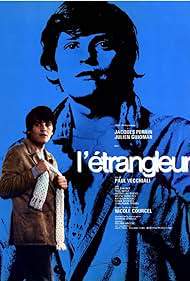
The Strangler (1970) (2023) movie poster

Timeline

The Strangler (1970) (2023) Timeline Explained – Every Event in Order

Release, runtime and language
2023 · 1 h 33 m · English
Directed by
Paul Vecchiali
Starring
Jacques Perrin, Jean-Michel Dhermay, Julien Guiomar, Eva Simonet, Paul Barge, Jacqueline Danno

During the 1970s in America, a disturbed man named Emile believes he is performing mercy killings by targeting women he deems unhappy. A dedicated detective begins a relentless pursuit of the serial killer. The investigation takes increasingly unconventional turns, leading to morally ambiguous actions and raising questions about the nature of justice and the detective's own obsession with catching the culprit.

On this page (4)
  1. 1 Events in order (14)
  2. 2 Timeline questions answered
  3. 3 Movie threads
  4. 4 Every angle

14 events in order · contains spoilers

The Strangler (1970) Timeline: Events in Chronological Order

Every key event of The Strangler (1970) (2023) in order, scene by scene, with when and where it takes place. Use it to untangle flashbacks, time jumps and parallel storylines, to refresh your memory before the sequel or to find the exact scene you are thinking of.

  1. Leo's Dark Secret

    Leo Kroll works as a lab technician, appearing normal to those around him. However, he harbors a disturbing secret: he is a serial killer who preys on nurses, driven by an unsettling obsession with maternal figures.

  2. Clara's Role

    Clara, a nurse, becomes the latest object of Leo's fixation. She once cared for his possessive mother during her hospitalization, intensifying Leo's dark obsession with her.

  3. Chilling Signature

    At each murder scene, an eerie doll is left behind, symbolizing Leo's morbid fascination with dolls. This chilling signature becomes a calling card that taunts the investigators and creates a haunting atmosphere.

  4. Tally's Gift

    Tally, an employee at an amusement park, gifts Leo a doll, hinting at a flicker of humanity within him. This moment adds complexity to his character, showing that he is capable of attachment despite his dark persona.

    Where
    Amusement Park
  5. Mother's Hospital Visits

    Leo frequently visits his ailing mother, who continues to exert a toxic influence over him. These visits deepen his inner turmoil and escalate his malevolence, foreshadowing tragic events to come.

    Where
    Hospital
  6. Fatal Confession

    During one of his visits, Leo confesses to Clara about his heinous acts, leading to his mother's fatal heart attack shortly after. This confession marks a turning point, blending his dark desires with familial obligation.

    Where
    Hospital
  7. Amusement Park Transformed

    The amusement park, once a place of joy, transforms into a shadowy reminder of Leo's twisted desires. Each visit becomes increasingly perilous, reflecting his psychological decline.

    Where
    Amusement Park
  8. Encounter with Barbara

    At the park, Leo encounters Barbara, Tally's co-worker, which leads to chaos. This meeting sets off a series of events that will inevitably change the course of their lives, sealing Leo's fate.

    Where
    Amusement Park
  9. Desperate Urge

    Pushed by desperation, Leo's obsession shifts from dolls to destruction. The shocking murder of Barbara complicates the ongoing police investigation and escalates the tension.

  10. Confrontation with Tally

    After his mother's death, Leo is forced to confront his hatred for women. He proposes to Tally, but her rejection spurs his already twisted psyche, sowing seeds of doubt and igniting his dark instincts.

  11. Police Surveillance

    As the police close in on Leo, they bug Tally's apartment, hoping to capture him in the act. This strategic move represents a last-ditch effort to apprehend the dangerous serial killer.

    Where
    Tally's Apartment
  12. Climactic Encounter

    In a heart-pounding climax, Leo emerges from the shadows to claim another victim. The police storm into the scene unexpectedly, leading to a chaotic confrontation.

    Where
    Tally's Apartment
  13. Final Showdown

    As gunshots ring out, Leo leaps through the window in a desperate attempt to escape. This final showdown encapsulates the chaos of his life and the ultimate failure of his dark plans.

    Where
    Tally's Apartment
  14. Uncertain Fate

    With Leo's fate left hanging as he evades capture, Tally's situation also becomes precarious. The tension lingers, allowing viewers to ponder the ambiguous outcome of the harrowing events.

Last updated: November 17, 2024 at 17:43

Was this helpful?

Timeline questions answered

The Strangler (1970) Timeline Explained: Your Questions Answered

When does it happen, and why in that order? The questions people ask about the chronology of The Strangler (1970) (2023): time jumps, flashbacks, cause and effect between scenes and the correct order of events, each answered with spoilers.

Q1

Why does Leo Kroll kill nurses?

Leo Kroll targets nurses because he has an unsettling obsession with maternal figures. His fixation stems from his complicated relationship with his possessive mother, and he projects his need for maternal care onto nurses who represent caregiving and nurturing to him.

Foreshadowing: Early scenes establish Leo's obsession with his mother and his job at a lab where he interacts with medical professionals.

  • leo kroll
  • serial killer
  • nurses
  • obsession
  • maternal figures
Q2

What triggers Leo's mother's heart attack?

Leo Kroll's mother suffers a fatal heart attack during one of his hospital visits after he confesses to her about murdering Clara. The shock of learning about his crimes directly causes her cardiac arrest.

Foreshadowing: Leo frequently visits his ailing mother, and these visits are shown to deeply agitate him, building toward this tragic confession.

  • mother
  • heart attack
  • confession
  • hospital
Q3

Why does Leo confess to his mother about Clara's murder?

Leo confesses to his mother because she exerts a toxic psychological hold over him. His confession appears to be an attempt to gain some form of acceptance or understanding from the only maternal figure in his life, though his mother's reaction proves fatal.

Foreshadowing: Earlier visits show his mother continuing to influence him negatively, creating tension that culminates in his confession.

  • confession
  • mother
  • clara
  • murder
Q4

Why does Leo Kroll kill Barbara?

Leo kills Barbara, Tally's coworker, after his obsession shifts from dolls to destruction following his mother's death and Tally's rejection. Desperate and unhinged, he attacks Barbara seemingly at random during an encounter at the amusement park, marking a dangerous escalation in his violence.

Foreshadowing: The narrative shows Leo's desperation intensifying after Tally rejects his proposal and his mother's death, pushing him toward more chaotic violence.

  • barbara
  • murder
  • amusement park
  • escalation
Q5

Why does Leo propose to Tally after his mother's death?

After his mother's death, Leo proposes to Tally because he is desperate to fill the void left by his mother's influence. Tally, who had shown him kindness by gifting him a doll, represents a potential new maternal figure for him to attach himself to.

Foreshadowing: Tally's earlier gift of a doll had shown Leo's capacity for attachment, making her his new target after his mother's death.

  • proposal
  • tally
  • mother
  • rejection
  • desperation
Q6

Why does Tally reject Leo's proposal?

Tally rejects Leo's proposal because she is naturally disturbed by his increasingly erratic and threatening behavior. His obsessive nature and the violent events surrounding him make it impossible for her to reciprocate his feelings.

Foreshadowing: Earlier scenes show Tally witnessing Leo's transformation into a dangerous figure, making her rejection inevitable.

  • tally
  • rejection
  • proposal
  • fear
Q7

What happens to Tally at the end of the film?

Tally's fate is left intentionally ambiguous. During the climactic confrontation at her apartment, Leo leaps through the window to escape, and Tally becomes ensnared beneath the debris. The film does not confirm whether she survives, leaving her fate uncertain.

Foreshadowing: The final confrontation builds tension around Tally's vulnerability, with the police storming the apartment unexpectedly.

  • tally
  • ending
  • ambiguous fate
  • debris
Q8

What is the significance of the dolls left at crime scenes?

The dolls represent Leo's morbid fascination with childhood and maternal imagery. They serve as his chilling signature, connecting each murder and reflecting his twisted psychology around possession and maternal figures.

Foreshadowing: Leo is shown to have a disturbing attachment to dolls throughout the film, beginning with Tally's gift to him.

  • dolls
  • crime scenes
  • signature
  • obsession
Q9

Why does Leo jump out the window during the climax?

Leo jumps through the window in a desperate attempt to escape after the police storm into Tally's apartment unexpectedly. Rather than be captured, he chooses to leap from the building in a final, tragic act of evasion.

Foreshadowing: The police's surveillance and unexpected arrival create the tense situation that drives Leo to this desperate escape attempt.

  • window
  • escape
  • police
  • climax
  • leap
Q10

Why do the police bug Tally's apartment?

The police bug Tally's apartment as a strategic surveillance move to catch Leo in the act. Knowing he is likely to target her, they hope to capture evidence and apprehend him during an attack. However, the situation escalates beyond their control during the actual confrontation.

Foreshadowing: The investigation timeline shows the police closing in on Leo, with surveillance representing their final attempt to catch him.

  • police
  • surveillance
  • bugging
  • apartment
  • evidence

Movie threads

More Movies Like The Strangler (1970), by Mood & Story

Curated lists built around what makes The Strangler (1970) tick: the same mood, the same kind of story or the same emotional payoff. Each list explains why these movies belong together.

Obsessive detective stories with moral collapse like in The Strangler (1970)

Where the line between hunter and hunted becomes dangerously blurred. Movies like The Strangler (1970) feature detectives whose obsession with a case consumes them. If you liked the intense, morally ambiguous police pursuit and the chilling cat-and-mouse dynamic, you'll find similar thrillers in this thread where justice is not clear-cut.

  • obsessive
  • tense
  • unsettling
  • morally grey
  • psychological
  • bleak
  • Tone: dark, tense
  • Pacing: steady, driven
Why these movies?

The story pattern: Stories in this thread follow a linear investigative plot that spirals into a character study of obsession. The protagonist, often a law enforcement officer, becomes personally and unhealthily invested, leading to questionable methods and a finale that questions the cost of their pursuit.

Why they belong together: These movies are grouped by their shared focus on a protagonist's dangerous obsession, a dark and tense atmosphere, and a narrative that prioritizes psychological tension over straightforward resolution, leaving the audience with unsettling questions.
Psychological crime dramas from the killer's perspective like in The Strangler (1970)

Unflinching journeys into the psychology of a serial murderer. If you were fascinated by the unsettling look into Emile's disturbed mind in The Strangler (1970), this thread collects similar movies that explore the psychology of serial killers. These films provide a dark, character-driven exploration of mental illness and violent fixation.

  • disturbing
  • psychological
  • unsettling
  • oppressive
  • paranoid
  • chilling
  • Tone: dark, disturbing
  • Pacing: steady, character-focused
Why these movies?

The story pattern: The narrative pattern centers on a character study of a serial killer, exploring their motivations, delusions, and internal logic. The plot is often straightforward, charting their crimes and growing instability, while the atmosphere is consistently disturbing and paranoid.

Why they belong together: These films are connected by their primary focus on the antagonist's psychological state, a dark and oppressive tone, and a steady pacing that builds dread through character degradation rather than complex mystery.

Every angle

The Strangler (1970) (2023) Explained: Plot, Timeline & Characters

Everything about The Strangler (1970) in one place: what happens in the plot summary, the timeline in chronological order, the characters and meaning and a spoiler-free summary. What's After the Movie adds the cast, box office and post-credit scenes.

Coming soon on iOS and Android

The Plot Explained Movie Summary App

Plot summaries, endings explained and timelines on your phone. Catch up on any movie in minutes, save your favorites and never miss a twist again.

Be the first to know when we launch. Your email stays private, always.

Learn more about the app