


Plot Explained Spoilers guaranteed!
Plot Explained

Browse by genre

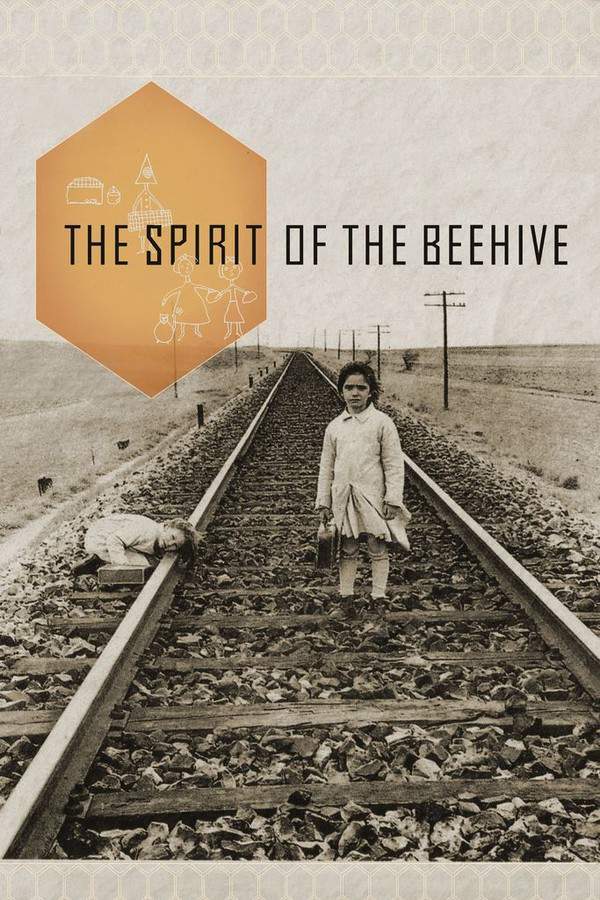
The Spirit of the Beehive (2006) movie poster

Timeline

The Spirit of the Beehive (2006) Timeline Explained – Every Event in Order

Release, runtime and language
2006 · 95 min · Spanish
JustWatch #18,737 4
Directed by
Víctor Erice
Starring
Ana Torrent, Fernando Fernán Gómez, Teresa Gimpera

In a small village in post-Civil War Spain, two young sisters are captivated by a film they see at a traveling cinema. One of the girls, believing the film’s imagery to be real, sets out on a journey to find the monster she saw on screen. Her quest becomes a poignant exploration of childhood imagination, loss, and the lingering trauma of the Francoist era, as she seeks connection and understanding amidst a landscape still marked by conflict.

On this page (6)
  1. 1 Where to watch
  2. 2 Events in order (14)
  3. 3 Timeline questions answered
  4. 4 Movie threads
  5. 5 Categories
  6. 6 Every angle

Where to watch

Where to Watch The Spirit of the Beehive (2006)

Where can you watch The Spirit of the Beehive? Stream, rent or buy it in the US, including on Fandango At Home: current JustWatch availability with up-to-date prices.

Streaming availability powered by JustWatch

14 events in order · contains spoilers

The Spirit of the Beehive Timeline: Events in Chronological Order

Every key event of The Spirit of the Beehive (2006) in order, scene by scene, with when and where it takes place. Use it to untangle flashbacks, time jumps and parallel storylines, to refresh your memory before the sequel or to find the exact scene you are thinking of.

  1. Introduction to Ana's World

    Ana, a six-year-old girl, lives in a secluded manor in a Spanish village on the Castilian plateau. The year is 1940, shortly after the Spanish Civil War has concluded, leaving deep emotional scars on her family.

    When
    1940
    Where
    Castilian plateau, Spain
  2. Family Dynamics

    Ana's father is deeply engrossed in his beekeeping while her mother, lost in fantasies, writes letters to a distant love. This emotional neglect shapes Ana's interactions with her older sister, Isabel, who takes on the role of her confidante.

    Where
    Secluded manor
  3. Isolation and Influence

    While affectionate, Isabel often exploits Ana's innocence, encouraging her curiosity about the world. This dynamic sets the stage for Ana's exploration of her surroundings and her fascination with the unknown.

    Where
    Secluded manor
  4. Impact of the Cinema

    The arrival of a mobile cinema featuring *Frankenstein* captivates both Ana and Isabel. After watching the film, Ana is haunted by the scene of the monster accidentally drowning a girl, prompting complex feelings about good and evil.

    Where
    Spanish village
  5. Questions of Morality

    Questioning the film's events, Ana seeks clarity from Isabel about the monster's actions and fate. Isabel reassures her, suggesting that movies are just illusions and that the monster could be a spirit she can communicate with.

  6. Discovering the Sheepfold

    Isabel leads Ana to an abandoned sheepfold, claiming it is the monster's home. Intrigued, Ana returns alone several times, deepening her obsession with the idea of communicating with the creature.

    Where
    Abandoned sheepfold
  7. Compassion for the Soldier

    While exploring, Ana discovers a wounded Republican soldier hiding in the sheepfold. Instead of fleeing, she shows kindness, feeding him and providing her father's coat and watch, demonstrating her innate empathy.

    Where
    Abandoned sheepfold
  8. Tragic Discovery

    One night, the Francoist police find the soldier, leading to his tragic death. The situation escalates as the police suspect Ana's father of aiding the fugitive, creating a looming tension over the family.

    Where
    Abandoned sheepfold
  9. The Consequences Mount

    Ana's father realizes the dangerous implications of the situation when he discovers the items linked to the soldier, causing anxiety within the family. Ana, unaware of the full gravity, is left to grapple with her confused emotions.

  10. Ana's Panic and Escape

    Upon returning to the sheepfold, Ana is horrified to find bloodstains and no sign of the soldier. In a state of panic, she flees from her father, unable to process the unfolding tragedy.

    Where
    Abandoned sheepfold
  11. Search for Ana

    Night falls as Ana's family and villagers initiate a frantic search for her. This chaotic effort echoes scenes from *Frankenstein*, highlighting the themes of fear and uncertainty that engulf the community.

    Where
    Spanish village
  12. A Haunting Vision

    Ana finds solace at a lake, kneeling as she visualizes the monster emerging from the trees beside her. This moment symbolizes her longing for connection amidst her trauma and an escape from her reality.

    Where
    Lake
  13. Return to Reality

    The next morning, Ana is found unharmed, but her mother is informed by the physician that Ana needs help to cope with her unexpressed trauma. The family attempts to reconnect, but Ana remains distant and isolated.

    Where
    Spanish village
  14. Retreat Into Solitude

    Instead of re-establishing her ties with family, Ana chooses to retreat into her own world. She stands alone by the window, silently summoning the spirit of the monster, staying true to Isabel's encouragement to reach out.

    Where
    Secluded manor

Last updated: November 16, 2024 at 18:11

Was this helpful?

Timeline questions answered

The Spirit of the Beehive Timeline Explained: Your Questions Answered

When does it happen, and why in that order? The questions people ask about the chronology of The Spirit of the Beehive (2006): time jumps, flashbacks, cause and effect between scenes and the correct order of events, each answered with spoilers.

Q1

Why does Ana become so obsessed with the Frankenstein monster after watching the film?

Ana is deeply affected by the scene where the monster accidentally drowns a little girl, and she is confused about why the monster was killed after harming someone. Her limited understanding of the world leaves her searching for answers, and her vulnerable emotional state, being neglected by her preoccupied parents, makes her latch onto the monster as a figure she can try to understand and perhaps communicate with, especially after Isabel suggests the monster is like a spirit.

Foreshadowing: The film's opening establishes Ana's emotional isolation, with her father absorbed in beekeeping and her mother lost in fantasy, making her receptive to finding connection in the monster.

  • Ana
  • Frankenstein
  • monster
  • childhood
  • obsession
  • movie theater
Q2

Why does Isabel tell Ana that the monster is a spirit she can communicate with?

When Ana asks about the monster killing the girl and being killed, Isabel tries to comfort her younger sister by explaining that movies are just illusions. She reassures Ana that the monster isn't really dead by describing him as a spirit, offering Ana a way to process her fear. However, Isabel also exploits this idea, using it to entertain herself by sending Ana to the abandoned sheepfold, where she can observe her sister's frightened reactions.

Foreshadowing: Isabel's tendency to manipulate Ana for her own amusement is established early when she uses Ana's curiosity to create her own entertainment.

  • Isabel
  • Ana
  • spirit
  • communication
  • lie
  • manipulation
Q3

Why does Ana decide to help the wounded Republican soldier at the sheepfold?

When Ana discovers the wounded soldier hiding in the sheepfold, she responds with natural compassion rather than fear. Though she initially went there looking for the monster, she sees a human being in need and chooses to help him. Her childlike empathy allows her to see past the political divisions that define the adult world, and she brings him food, her father's coat, and his pocket watch to keep him warm and help him survive.

Foreshadowing: Ana has been searching for a connection, whether monster or spirit, so when she finds a real person in need, her instinct is to reach out.

  • Republican soldier
  • Ana
  • help
  • compassion
  • sheepfold
  • coat
  • watch
Q4

Why do the Francoist police kill the soldier at the sheepfold?

The Francoist authorities are hunting down remaining Republican fighters after the Civil War, and when they discover the soldier hiding in the sheepfold, they shoot him on sight. This reflects the brutal repression of Francoist forces against anyone who supported the losing Republican side. The soldier's death is quick and brutal, representing the violence that still permeates Spain even though the war has officially ended.

Foreshadowing: The political tension in 1940 Spain is established early, with the family living in the aftermath of the civil war's devastation.

  • Francoist police
  • soldier
  • death
  • Republicans
  • hunting
  • sheepfold
Q5

Why does Ana's father realize something dangerous is happening?

Ana becomes visibly distressed when her father discovers the pocket watch that she gave to the soldier. Her extreme reaction, her panic and grief, makes clear to him that she has been involved with someone, and given the items connected to her, he understands she may have aided a fugitive. This tips him off to the dangerous situation and the potential consequences for their family.

Foreshadowing: Earlier, the family dynamics show the father's attention to details through his beekeeping observations, which carries over to noticing Ana's unusual behavior.

  • father
  • pocket watch
  • discovery
  • Ana
  • reaction
  • danger
Q6

What does Ana find when she returns to the sheepfold after the police come?

When Ana returns to the sheepfold, she finds bloodstains on the ground but no sign of the soldier, he has been killed and removed. This horrifying discovery shows her the violent reality of what happened and confronts her with the consequences of her own actions, though she doesn't fully understand the gravity of the situation.

Foreshadowing: The story has been building toward this moment of Ana's innocent involvement meeting the brutal reality of the post-war violence.

  • bloodstains
  • sheepfold
  • soldier
  • death
  • Ana
  • discovery
Q7

Why does Ana run away from her father at the sheepfold?

When Ana's father confronts her at the sheepfold after discovering the bloodstains, she panics and runs. She is overwhelmed by fear, guilt, and confusion, she helped someone, that person is gone, and now her father is angry. She cannot process what has happened, so her instinct is to flee from this overwhelming situation.

Foreshadowing: The contrast between Ana's innocent actions and the violent adult world has been building throughout the film.

  • Ana
  • run away
  • father
  • panic
  • sheepfold
  • fear
Q8

What does Ana's vision at the lake represent?

While lost in the forest, Ana kneels by a lake and imagines the Frankenstein monster emerging from the trees, also kneeling beside her. This vision represents her longing for connection and understanding after experiencing trauma. The monster, which she has been trying to communicate with throughout the film, finally appears to her in her moment of greatest need, but only in her imagination, highlighting her retreat from reality into fantasy.

Foreshadowing: Isabel earlier told Ana that the monster could be summoned if she closed her eyes and called out, which Ana does at the lake.

  • lake
  • monster
  • vision
  • Ana
  • imagination
  • connection
Q9

Why does Ana remain distant from her family after being found?

After being found unharmed, Ana is told by the physician that she must learn to cope with her unexpressed trauma. Rather than processing her experience with her family, she retreats further into herself. She chooses to stand alone by the window, silently summoning the spirit of the monster as Isabel taught her, preferring the world of her imagination over the painful reality of her family and the events she witnessed.

Foreshadowing: The film's ending mirrors the Frankenstein search scene, showing Ana has fully withdrawn into her fantasy world.

  • Ana
  • isolation
  • family
  • retreat
  • window
  • spirit
  • trauma
  • ending
Q10

Why is the Frankenstein film significant to Ana's journey?

The Frankenstein screening sets Ana's entire journey in motion. The monster's accidental drowning of a girl and subsequent killing haunts her, leading her to seek answers and eventually create a fantasy of communicating with the monster. The film's themes of being misunderstood, of causing harm unintentionally, and of being abandoned mirror Ana's own experiences. The villagers' search for lost Ana even echoes the search for the monster in the film, creating a parallel between fiction and her reality.

Foreshadowing: The mobile cinema arrival is a pivotal early event that shapes all subsequent actions in the film.

  • Frankenstein
  • movie
  • cinema
  • monster
  • parallel
  • Ana
Q11

Why do Ana's parents seem emotionally absent throughout the film?

Ana's father is consumed by his beekeeping, spending his time documenting observations while ignoring his family's emotional needs. Her mother, much younger than her father, is lost in fantasies about a distant love, constantly writing letters to this absent figure. This emotional neglect leaves Ana vulnerable and seeking connection elsewhere, first from her sister, then from the fantasy of the monster, and finally in helping the wounded soldier.

Foreshadowing: The opening scenes establish the family's emotional disconnection, which directly contributes to Ana's isolation.

  • parents
  • neglect
  • beekeeping
  • mother
  • letters
  • Ana
  • emotional absence
Q12

What does the beekeeping and beehive imagery represent in the film?

The beekeeping represents Ana's father's obsession with a solitary, isolated pursuit, preferring the controllable world of bees to the emotional demands of his family. The beehive itself can be seen as a symbol of the family unit: a structured community that Ana's father observes but doesn't truly participate in. Ana's name echoes this, as she is also left to observe life from the margins, watching the world from windows rather than actively engaging with it.

Foreshadowing: The title itself references the beehive, establishing this imagery as thematically significant from the start.

  • beekeeping
  • bees
  • hive
  • symbol
  • father
  • isolation
  • Ana

Movie threads

More Movies Like The Spirit of the Beehive, by Mood & Story

Curated lists built around what makes The Spirit of the Beehive tick: the same mood, the same kind of story or the same emotional payoff. Each list explains why these movies belong together.

Movies about childhood imagination confronting reality like The Spirit of the Beehive

Stories where a child's fantasy world confronts a harsh adult reality. If you were captivated by the way The Spirit of the Beehive uses a child's perspective to explore post-war trauma, you'll find similar depth in these films. This collection features movies where young protagonists use their imagination to navigate and understand a broken world, blending poetic beauty with heavy emotional themes.

  • dreamlike
  • melancholic
  • poignant
  • atmospheric
  • contemplative
  • haunting
  • Tone: melancholic, poetic, bittersweet
  • Pacing: slow, contemplative
Why these movies?

The story pattern: Narratives in this thread typically follow a child protagonist whose rich inner life or belief in a fantasy (a monster, a friend, a promised land) serves as a buffer against a difficult reality—be it war, family strife, or political oppression. The journey often involves a gradual, quiet shattering of this innocence, as the fantasy collides with an unforgiving truth, leading to a bittersweet or ambiguous loss of naivety.

Why they belong together: These films are grouped together because they share a unique blend of a child's-eye view, a melancholic tone, and a focus on how imagination mediates trauma. They are united by their slow, atmospheric pacing, heavy emotional weight, and the powerful contrast between youthful wonder and adult sorrow.
Atmospheric post-war dramas with a melancholic tone like The Spirit of the Beehive

Quiet, haunting stories set in the lingering aftermath of war. For viewers who appreciated the haunting, quiet atmosphere of post-Civil War Spain in The Spirit of the Beehive, this list features similar movies steeped in the melancholy of aftermath. These films explore the lingering effects of conflict on individuals and communities through slow, contemplative storytelling and a heavy emotional mood.

  • somber
  • haunting
  • atmospheric
  • quiet
  • contemplative
  • lonely
  • Tone: melancholic, somber, bleak
  • Pacing: slow, atmospheric
Why these movies?

The story pattern: The narrative pattern often revolves around characters grappling with the invisible wounds of war—grief, isolation, and a fractured sense of normalcy. Plots are frequently subtle and character-driven, emphasizing mood over action. The conflict is internal and societal, exploring how people rebuild, remember, or retreat in the face of overwhelming loss, often leading to ambiguous or bittersweet conclusions.

Why they belong together: Movies in this thread share a specific atmospheric quality: a slow, deliberate pace, a dominant melancholic or bleak tone, and a setting defined by the aftermath of violence. They are connected by their focus on the emotional and political residue of conflict rather than the conflict itself, creating a consistent vibe of quiet dread and sorrow.

Categories

Movie Lists Featuring The Spirit of the Beehive

The Spirit of the Beehive appears in these hand-built movie categories. Each one groups movies by a specific mood, theme or story type, with their plot summaries and endings explained.

View all movie categories

Every angle

The Spirit of the Beehive (2006) Explained: Plot, Timeline & Characters

Everything about The Spirit of the Beehive in one place: what happens in the plot summary, the timeline in chronological order, the characters and meaning and a spoiler-free summary. What's After the Movie adds the cast, box office and post-credit scenes.

Coming soon on iOS and Android

The Plot Explained Movie Summary App

Plot summaries, endings explained and timelines on your phone. Catch up on any movie in minutes, save your favorites and never miss a twist again.

Be the first to know when we launch. Your email stays private, always.

Learn more about the app