Plot Explained Spoilers guaranteed!
Plot Explained

Browse by genre

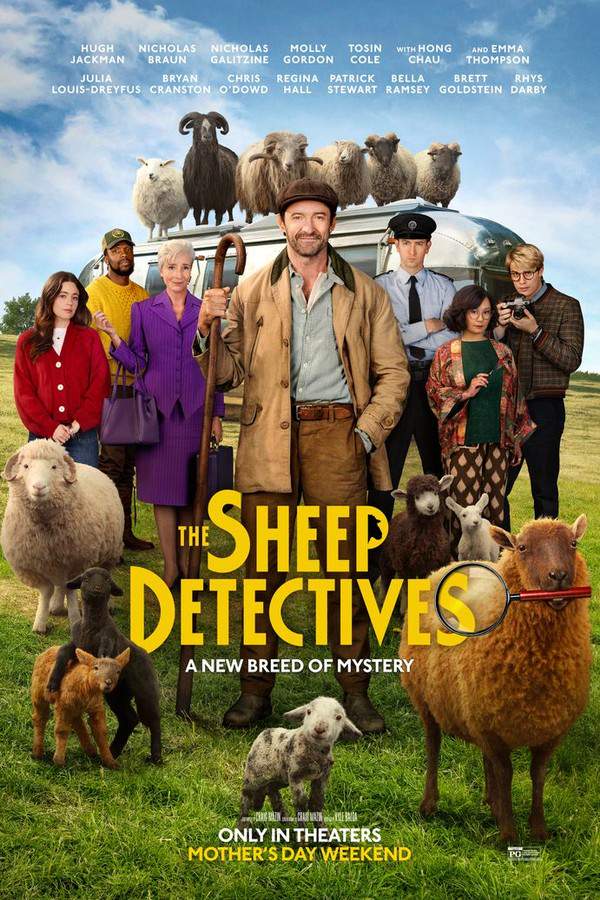
The Sheep Detectives (2026) movie poster

Plot Summary

The Sheep Detectives (2026) Plot Summary & Ending Explained

Release, runtime and language
2026 · 1 h 49 m · English
Echo score 78
JustWatch #65 27
Directed by
Kyle Balda
Starring
Regina Hall, Hugh Jackman, Hong Chau, Patrick Stewart, Chris O'Dowd, Tosin Cole
Budget
$75M

George Hardy (Hugh Jackman) is a shepherd who raises his flock only for their wool. Each night he reads a murder‑mystery aloud, assuming the sheep can't follow, yet they understand and spend hours debating the clues. When George is found dead, the herd becomes an unlikely team of detectives, using their nightly discussions to solve the case.

On this page (7)
  1. 1 Where to watch
  2. 2 What happens: full plot
  3. 3 Plot questions answered
  4. 4 How it ends
  5. 5 The book behind the movie
  6. 6 Movie threads
  7. 7 Every angle

Where to watch

Where to Watch The Sheep Detectives (2026)

Where can you watch The Sheep Detectives? Stream, rent or buy it in the US, including on Amazon Prime Video, Amazon Video and Apple TV Store: current JustWatch availability with up-to-date prices.

Streaming availability powered by JustWatch

Full plot summary · contains spoilers

What Happens in The Sheep Detectives: Full Plot Summary

The whole story of The Sheep Detectives (2026) explained, from the opening scene to the final frame: every key event, every twist and what it all adds up to. Read it as a quick recap before the sequel, to check a scene you missed, or to finally understand what really happened.

Every night, in a quiet rural bend of the world, a shepherd gathers his flock and reads aloud a murder mystery, insisting with a gentle certainty that the sheep can understand every twist and turn of the tale. The ritual feels like a small ritual of imagination, a soft ritual in which words become the night’s clues and the woolly audience sits, ears perked, as if listening for hidden meanings in the ink and the cadence of the storyteller’s voice. The atmosphere is calm and patient, even when the narration grows dark, because the shepherd's certainty that the sheep grasp the story lends the scene a surreal, almost lullaby-like quality.

Then, tragedy intrudes on the routine. The shepherd is found dead, and the world seems to pause just long enough for a new kind of logic to take root among the flock. In the wake of his death, the sheep respond with a surprising clarity: they treat the event as if it were the very mystery they had been listening to each night. They conclude, almost instinctively, that this was a murder, and they believe they know the best way to approach solving it. The idea that animals might deduce human affairs adds a quiet, uncanny humor to the moment, shifting the tale from a simple bedtime mystery into something more reflective and strange.

As the narrative unfolds, the flock’s behavior becomes a study in how stories shape perception. The sheep begin to piece together what they think they heard—the patterns of suspicion, the possible motives, the unlikely alibis—while the world around them watches with a mix of skepticism and tenderness. The mystery is not solved in the traditional sense; instead, the sheep’s earnest attempts to reconstruct the plot reveal a gentle commentary on storytelling itself: how a tale can outgrow its pages, how listeners fill gaps with their own beliefs, and how imagination can offer a kind of solace even when reality grows heavier with consequence.

The film’s tone stays buoyant and restrained, allowing whimsy to coexist with a sober thread of inquiry. It invites viewers to consider the distance between fiction and reality, and to wonder what truth looks like when told through the earnest, wool-covered eyes of a listening audience. The shepherd’s original performance and the sheep’s ensuing deductions become a meditation on belief, narration, and the idea that sometimes the act of reading—or listening—is as significant as the truth that finally comes to light.

In the end, the story remains faithful to its core premise: a nightly ritual of storytelling gives way to a real-life mystery, and a flock of listeners finds in their shared interpretation a way to navigate the unknown. The result is a thoughtful, offbeat fable that leans into humor, wonder, and the quiet power of collective imagination, leaving the audience with a lingering sense that, even in the face of tragedy, narrative itself can offer a way forward.
Last updated: May 18, 2026 at 06:56

Was this helpful?

Plot questions answered

The Sheep Detectives Plot Explained: Your Questions Answered

The questions people ask most about The Sheep Detectives (2026): what happens in the confusing scenes, why the characters do what they do, the twists, hidden details and what the ending means. Each answer contains spoilers.

Q1

Why do the sheep decide to investigate the shepherd's death as a murder?

The sheep conclude it was murder because they had been listening to murder mystery stories every night. They absorbed the patterns, motives, and detective methods from those tales, so when the shepherd dies, they naturally apply the same logic. Their certainty comes from the stories giving them a framework to interpret real events.

Foreshadowing: The sheep had been treating every story twist as real clues, so this was simply the next step in their understanding.

  • sheep
  • detective
  • murder investigation
  • shepherd death
  • mystery solving
Q2

How can the sheep understand murder mystery stories?

The film presents this as a whimsical premise - the shepherd reads aloud each night and insists the sheep can follow. Whether they truly understand or simply respond to his certainty is left ambiguous. The sheep nod, bleat, and react as if following the plot, creating a surreal but gentle atmosphere.

Foreshadowing: From the very first night, the shepherd treats their bleats as if they grasp every clue.

  • sheep
  • listening
  • understanding stories
  • detective fiction
  • narrative
Q3

Is the shepherd's death actually solved by the end of the film?

No, the film leaves the mystery unresolved. The sheep continue investigating, debating theories and imagining solutions, but they never arrive at a definitive answer. This reflects the film's theme that narrative itself offers solace, even without closure.

  • resolution
  • unsolved mystery
  • ending
  • shepherd death
  • closure
Q4

Was the shepherd actually murdered or did he die from natural causes?

The film never confirms how the shepherd died. The sheep assume it was murder based on their story logic, but this could reflect their limited understanding rather than reality. The ambiguity is intentional, keeping the focus on how the sheep process the loss through their narrative lens.

  • shepherd death
  • cause of death
  • murder
  • accident
  • ambiguity
Q5

Why does the shepherd read murder mysteries to his sheep every night?

The shepherd believes his sheep can understand the stories. He treats their bleats as responses to plot twists and proceeds with gentle certainty that they follow every clue. The ritual becomes a nightly bonding practice that shapes the farm's atmosphere.

  • shepherd
  • reading
  • ritual
  • murder mystery
  • nightly routine
Q6

What is the connection between the fictional mysteries and the real investigation?

The sheep use the detective methods they've heard in stories - mapping clues, debating motives, questioning alibis - to approach the real death. The film explores how fiction becomes a lens for interpreting reality, blurring the line between what they've heard and what actually happened.

Foreshadowing: The boundary between the mystery and the flock's own lives blurs as the shepherd reads.

  • fiction
  • reality
  • detective methods
  • narrative
  • interpretation
Q7

What happens when the sheep compare real events to the stories they know?

They try to force-fit the evidence into familiar story patterns - looking for motives, alibis, and plot twists they've heard before. Their process reveals how deeply the narratives have influenced their thinking, but also shows the limits of applying fictional logic to real situations.

  • evidence
  • theories
  • suspects
  • plot comparison
  • detective reasoning
Q8

What does the film mean by ending with an unresolved mystery?

The ending suggests that the act of investigating and debating offers the sheep comfort, even without answers. The narrative becomes a way to process grief and uncertainty. This reflects the film's theme that storytelling provides meaning and direction, regardless of whether truth is ever found.

  • bittersweet
  • ending
  • solace
  • narrative
  • grief
  • closure
Q9

Why are the sheep so confident they can solve a human murder?

Their confidence comes entirely from the stories they've absorbed. The murder mysteries gave them a sense that solving crimes is simply about following clues and logic. They don't recognize the gap between fictional detective work and real investigation, which adds both humor and poignancy to their efforts.

  • confidence
  • sheep detectives
  • logic
  • investigation
  • self-belief
Q10

How does the film balance the whimsical premise with the shepherd's death?

The film maintains a restrained, gentle tone throughout. The death provides emotional weight, but the focus remains on reflection rather than suspense. The whimsy of animal detectives coexists with a sober exploration of loss, creating a bittersweet tone that invites contemplation rather than grief.

  • tone
  • whimsy
  • death
  • balance
  • gravity
  • atmosphere

Ending explained

What Happens at the End of The Sheep Detectives?

How The Sheep Detectives (2026) ends, in short: the final scene, the last twist and what it means for the characters. The full ending explained, with every spoiler, lives on its own page.

Read the full ending explained

The mystery at the heart of The Sheep Detectives resolves with a revelation that recontextualizes the entire investigation: the true killer is Elliot Matthews, the over-eager reporter who had seemingly been helping Tim Derry solve the case. Elliot is revealed to be a false identity assumed by Peter Van Vuren, George's estranged son. George had given up his children for adoption years ago, but after coming into wealth from a farming patent, he sought to reconnect with them. When George decided to leave his fortune to Rebecca—Peter's sister—Peter murdered his father by poisoning him during a meeting in George's trailer, then posed as a journalist to manipulate the investigation and frame Rebecca for the crime.

The villain's exposure comes through an unexpected source: the sheep themselves. Lily, Mopple, and the unnamed winter lamb provide the crucial intervention that allows Tim to uncover Peter's deception in time. This moment underscores one of the film's central themes—the contrast between predatory self-interest and genuine empathy. Peter embodies the former, willing to kill his own father for inheritance, while the sheep, often dismissed as simple creatures, demonstrate loyalty and emotional intelligence that the human villains lack. Rebecca, by contrast, chooses to honor George's legacy by remaining in Denbrook and caring for his beloved flock, embodying the film's belief in enduring love over selfish gain.

Continue reading the ending (1 more paragraphs)

The emotional climax centers on Lily, the film's true protagonist, whose journey involves confronting the reality of death—something her species instinctively forgets to avoid pain. When the outcast sheep Sebastian sacrifices himself to save Lily from Caleb's dogs, she must choose whether to forget him or carry the weight of grief. With Mopple's help, she learns that remembering is an act of love. In a poignant final gesture, Lily names the previously anonymous winter lamb "George," preserving their shepherd's memory while embracing the marginalized sheep she had previously ignored. Rebecca's decision to buy back the sheep destined for Caleb and Ham's butchery business completes this arc of renewal. The Sheep Detectives ultimately argues that while death is unavoidable, how we choose to remember and honor those we love defines us—and that empathy, even from the most unlikely sources, can be the key to both solving mysteries and healing wounds.

The Sheep Detectives ending explained in full

Movie threads

More Movies Like The Sheep Detectives, by Mood & Story

Curated lists built around what makes The Sheep Detectives tick: the same mood, the same kind of story or the same emotional payoff. Each list explains why these movies belong together.

Whimsical Animal Detective Movies Like The Sheep Detectives

Stories where unexpected heroes use their unique perspectives to solve mysteries. Discover movies like The Sheep Detectives featuring unlikely animal detectives and whimsical mysteries. If you enjoyed the sheep's unique investigative approach, you'll love these stories where unconventional heroes solve crimes with charm and cleverness.

  • whimsical
  • offbeat
  • thoughtful
  • gentle
  • quirky
  • reflective
  • Tone: whimsical, thoughtful
  • Pacing: slow, deliberate
Why these movies?

The story pattern: Narratives in this thread follow unconventional protagonists—often animals or overlooked characters—who apply their unique worldview to solve a mystery. The journey focuses on observation, deduction, and the triumph of perceived innocence over complexity, usually unfolding at a deliberate pace that allows for reflection and character.

Why they belong together: These films share a core premise of unlikely detectives, a whimsical tone that finds charm in the investigative process, and a gentle pacing that prioritizes atmosphere and character over high-stakes action. They blend mystery with light comedy and thoughtful reflection.

Quiet Rural Mystery Movies Like The Sheep Detectives

Mysteries unfold slowly in isolated settings, where atmosphere and contemplation outweigh action. Find movies similar to The Sheep Detectives that feature slow-burn mysteries in rural settings. If you liked the film's reflective atmosphere and gentle pacing, you'll enjoy these thoughtful stories where place and mood are as important as the plot.

  • reflective
  • quiet
  • atmospheric
  • thoughtful
  • gentle
  • melancholic
  • Tone: reflective, bittersweet
  • Pacing: slow burn, atmospheric
Why these movies?

The story pattern: The narrative pattern involves a disruptive event, often a crime, that intrudes upon a peaceful, isolated setting. The investigation proceeds slowly, interwoven with themes of community, loss, and the contrast between outward tranquility and inner turmoil. The resolution is often bittersweet, acknowledging the lasting impact of the event.

Why they belong together: This thread groups films based on their shared slow pacing, low-intensity atmosphere, and rural setting that frames a reflective mystery. The experience is defined by a contemplative mood, a focus on the emotional weight of the events, and a tone that balances whimsy or gentleness with sober inquiry.

Every angle

The Sheep Detectives (2026) Explained: Plot, Ending, Timeline & Characters

Everything about The Sheep Detectives in one place: what happens in the plot summary, the timeline in chronological order, the characters and meaning, the ending explained and a spoiler-free summary. What's After the Movie adds the cast, box office and post-credit scenes.

Coming soon on iOS and Android

The Plot Explained Movie Summary App

Plot summaries, endings explained and timelines on your phone. Catch up on any movie in minutes, save your favorites and never miss a twist again.

Be the first to know when we launch. Your email stays private, always.

Learn more about the app