Plot Explained Spoilers guaranteed!
Plot Explained

Browse by genre

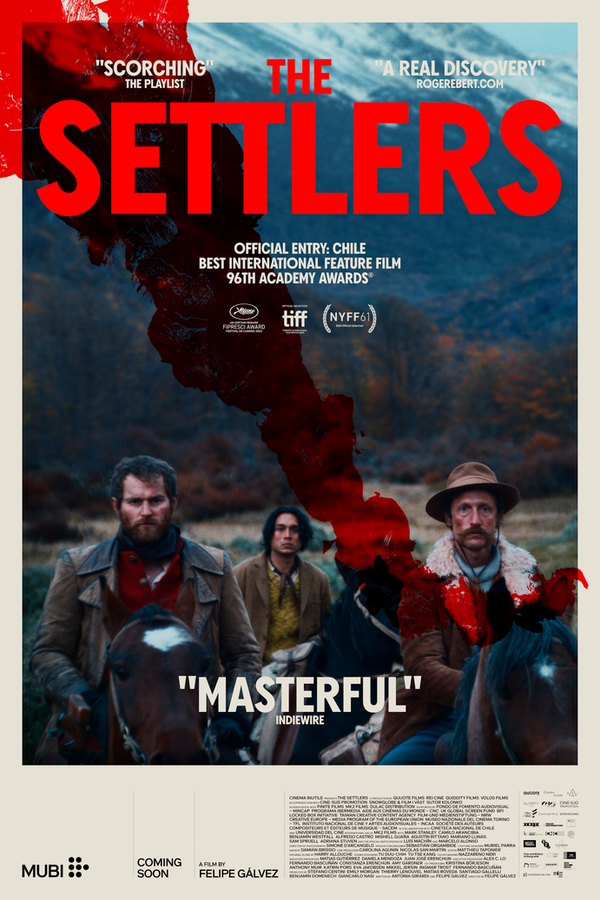
The Settlers (2024) movie poster

Ending Explained

The Settlers (2024) Ending Explained – Final Scene & Meaning

Release, runtime and language
2024 · 1 h 37 m · English
Echo score 70
Loading streaming availability…
Directed by
Felipe Gálvez Haberle
Starring
Sam Spruell, Alfredo Castro, Mark Stanley, Camilo Arancibia, Marcelo Alonso, Agustín Rittano

In the early 1900s, three men journey into the harsh, remote territory of Tierra del Fuego, seeking survival and fortune. As they navigate the challenging environment, a skilled marksman named Segundo finds himself caught between loyalty to his companions and the need to protect himself in a town governed by few rules.

On this page (6)
  1. 1 Where to watch
  2. 2 What happens at the end
  3. 3 Final events in order
  4. 4 Ending questions answered
  5. 5 Movie threads
  6. 6 Every angle
Loading streaming availability…

Ending explained · contains spoilers

What Happens at the End of The Settlers?

How The Settlers (2024) ends, what the final scene means, which earlier moments set it up and how to read the ending if the film leaves it open. The full ending explained, with every spoiler.

The ending of "The Settlers" is a stark reflection of the lasting impact of violence and injustice inflicted upon indigenous populations. After years of brutal colonization and genocide, Segundo and Rosa have managed to survive, though scarred by their experiences. When government officials like Vicuna arrive years later, they pretend to care about their stories and advocate for rights, but their true purpose is mostly superficial—aiming to cover up the atrocities of the past and project an image of progress. Rosa, aware of this deception, refuses to let her dignity be compromised by false promises and manipulations. Meanwhile, Segundo, haunted by the horrors he witnessed and participated in, struggles with his internal trauma. The couple’s decision to share their story on camera appears to serve as a form of acknowledgment and a way to seek some measure of validation, but it also highlights how little has truly changed. The film ends with Rosa and Segundo remaining resilient in the face of ongoing exploitation, knowing that the legacy of violence still lingers and that true justice has yet to be achieved. Their story underscores that the scars of the past are not easily erased and that institutional power often disguises its cruelty with hollow gestures. The ending leaves viewers with the sobering reality that the cycle of violence and marginalization continues, and only through acknowledgment and genuine change can justice be truly served.

Last updated: June 25, 2025 at 08:44

Was this helpful?

The last 4 events

How The Settlers Ends: The Final Events in Order

The last events of The Settlers (2024) in chronological order, the run-up to the ending explained above. The complete timeline has all 12 events, scene by scene.

Open the full timeline
  1. Vicuña seeks Segundo on Chiloé Island

    Vicuña travels to Chiloé Island to locate Segundo and speaks with Rosa, his wife. Rosa warns that Segundo is out at sea, but Vicuña presses to speak with him. This meeting foreshadows a confrontation and potential confession.

    When
    1900
    Where
    Chiloé Island
  2. Segundo recounts the beach banquet

    Inside their home, Vicuña asks about how Segundo met Rosa and about the past. Segundo then recounts a beachside banquet where MacLennan and others slaughtered hundreds of natives after a drunken feast, driving them into the sea or strangling them. The confession exposes the scale of violence.

    When
    1900
    Where
    Chiloé Island home
  3. Tea scene and filming of the confession

    Vicuña arranges a tea ritual with Segundo and Rosa outside their house, filming them as Laura pours tea. Rosa refuses to drink, signaling a refusal to participate in the nation's moral reckoning. The scene emphasizes the personal cost and unresolved tensions surrounding the past.

    When
    1900
    Where
    Outside their house, Chiloé Island
  4. Memory, accountability, and the centennial frame

    The interview sequence culminates in a public camera record of crimes and the uneasy acceptance of responsibility. Menéndez's defense, Segundo's confession, and Rosa's resistance converge to question how a nation should remember its violent history. The story hints at future consequences as the centennial approaches.

    When
    1910
    Where
    Chiloé Island / national context

Ending questions answered

The Settlers Ending: Your Questions Answered

The questions people ask most about the ending of The Settlers (2024): what the final scene means, how the twist works, what happens to each character and how to read the ending. Each answer contains spoilers.

Q1

Why does the government want to record Segundo and Rosa's story?

The government officials arrive seeking to document Segundo and Rosa's experiences, but their purpose is largely superficial. Rather than genuinely seeking justice, they aim to cover up the atrocities of the past and project an image of progress. Rosa recognizes this deception and refuses to let her dignity be compromised by these false promises, understanding that the recording will be used to whitewash history rather than provide true acknowledgment.

  • government
  • vicuna
  • camera
  • recording
  • cover-up
  • acknowledgment
Q2

What does Rosa's refusal to cooperate with officials signify?

Rosa's refusal represents her deep awareness of the government's manipulative intent. She understands that participating in their performative exercise would compromise her dignity and allow the exploitation of her trauma. Her resistance demonstrates that she refuses to be used as a tool for historical erasure, choosing instead to maintain her integrity despite the pressure from institutional power.

  • rosa
  • refusal
  • dignity
  • government
  • manipulation
  • resistance
Q3

Why does the ending feel unresolved or bleak?

The ending feels bleak because the film deliberately avoids providing false closure. After years of brutality and loss, Segundo and Rosa are still subjected to exploitation by government forces. The cycle of violence and marginalization continues, and true justice remains elusive. The film's conclusion underscores that historical trauma cannot be easily erased and that institutional power often disguises its cruelty with hollow gestures.

  • bleak ending
  • unresolved
  • justice
  • cycle of violence
  • trauma
Q4

What happens to Segundo and Rosa at the end of the film?

Segundo and Rosa survive the years of colonization and genocide, but they remain deeply scarred by their experiences. They are eventually approached by government officials who exploit their story for political purposes. The couple decides to share their story on camera, which serves as a form of acknowledgment, though it also highlights how little has truly changed. They remain resilient but continue to face ongoing exploitation.

  • segundo
  • rosa
  • survival
  • ending
  • fate
Q5

What is the significance of the camera or filming in the ending?

The camera represents the government's performative attempt to address historical wrongs while actually perpetuating exploitation. While the recording appears to offer Segundo and Rosa a chance to tell their truth, it is ultimately co-opted to serve political agendas of erasure. The film suggests that such institutional gestures, while superficially offering acknowledgment, often reproduce the power imbalances of the past.

  • camera
  • recording
  • performance
  • truth
  • institutional power
Q6

Does Segundo find peace or justice at the end?

Segundo does not find true peace or justice. Haunted by the horrors he witnessed and participated in during the colonization, he continues to struggle with deep internal trauma. Sharing his story on camera provides some measure of validation, but the film's bleak conclusion suggests that genuine healing remains out of reach. The government co-opts his testimony rather than delivering substantive justice.

  • segundo
  • peace
  • justice
  • trauma
  • guilt
  • massacre
Q7

What does the ending say about historical memory and truth?

The ending presents a stark critique of how institutions handle historical truth. The government's interest in recording Segundo and Rosa's story is revealed as a superficial gesture aimed at image management rather than genuine acknowledgment. The film argues that without real accountability and systemic change, narratives of historical trauma can be co-opted and manipulated, perpetuating cycles of erasure and exploitation.

  • historical memory
  • truth
  • erasure
  • acknowledgment
  • institutional power
Q8

Why does the film end on such a pessimistic note?

The pessimistic ending is a deliberate artistic choice that reflects the film's critique of historical erasure. Rather than offering redemptive closure, the film insists on confronting the ongoing reality that indigenous populations continue to face exploitation. The bleak conclusion forces viewers to acknowledge that without genuine systemic change, the cycle of violence persists. This mirrors the real historical trajectory where colonial violence's legacies remain unaddressed.

  • pessimistic
  • bleak
  • colonial violence
  • ongoing exploitation
  • systemic change
Q9

What is the meaning behind the government's hollow gestures in the ending?

The hollow gestures represent how institutional power often disguises its continued cruelty with performative acts of reconciliation. Officials like Vicuna arrive with promises of acknowledgment and rights, but their true purpose is to contain and control the narrative. This critique extends beyond the film's historical setting to suggest that similar dynamics of exploitation persist in contemporary institutions.

  • vicuna
  • hollow gestures
  • institutional power
  • exploitation
  • performance
  • reconciliation
Q10

How does the ending reflect the ongoing exploitation of indigenous peoples?

The ending demonstrates that exploitation continues even after the apparent end of colonization. Segundo and Rosa, having survived physical violence, are now subjected to symbolic violence through the government's cooptation of their story. The film suggests that indigenous peoples remain subject to systems that extract their narratives for political gain while denying substantive justice or structural change.

  • indigenous exploitation
  • colonization
  • ongoing oppression
  • systemic injustice
  • extraction

Movie threads

More Movies Like The Settlers, by Mood & Story

Curated lists built around what makes The Settlers tick: the same mood, the same kind of story or the same emotional payoff. Each list explains why these movies belong together.

Movies about historical brutality like The Settlers

Grim journeys into the darkest chapters of human history and colonial atrocities. If you were gripped by the unflinching depiction of colonial genocide in The Settlers, explore these other powerful films. This list features movies like The Settlers that delve into dark historical events with a similar tone of moral gravity and stark realism.

  • bleak
  • harsh
  • oppressive
  • grim
  • historical
  • brutal
  • Tone: dark, bleak, somber
  • Pacing: steady, methodical
Why these movies?

The story pattern: Stories in this thread typically follow characters who are either perpetrators, witnesses, or victims of systemic violence, often set against the backdrop of historical conflicts or colonial expansion. The narrative structure is often straightforward or moderately complex, focusing on the inevitable progression towards a bleak outcome, emphasizing the moral corrosion and human cost of these events.

Why they belong together: These films are grouped together because they share a commitment to portraying historical violence with stark realism and a dark, heavy tone. They prioritize emotional weight over entertainment, creating a cohesive viewing experience for those seeking challenging and thought-provoking historical dramas.

Stories of moral conflict in harsh landscapes like The Settlers

Characters grapple with their conscience in lawless territories defined by survival. For viewers who appreciated the internal struggle against a brutal backdrop in The Settlers, this list finds similar films. Discover other movies like The Settlers where characters face moral collapse in unforgiving settings, exploring themes of survival and betrayal.

  • moral conflict
  • harsh landscape
  • survival
  • betrayal
  • grim
  • somber
  • Tone: dark, grim, somber
  • Pacing: steady, deliberate
Why these movies?

The story pattern: The narrative pattern involves a character or group entering a frontier or lawless zone, where the struggle to survive leads to escalating moral compromises. The plot is driven by the tension between external threats and internal conflict, culminating in a realization of the cost of those compromises. The harsh landscape acts as a crucible, exposing the darkest aspects of human nature.

Why they belong together: These movies share a potent mix of a specific setting (hostile frontier), a central theme (moral conflict), and a consistent tone (dark, grim). This creates a cohesive thread for viewers interested in psychological depth within survivalist scenarios.

Every angle

The Settlers (2024) Explained: Plot, Ending, Timeline & Characters

Everything about The Settlers in one place: what happens in the plot summary, the timeline in chronological order, the characters and meaning, the ending explained and a spoiler-free summary. What's After the Movie adds the cast, box office and post-credit scenes.

Coming soon on iOS and Android

The Plot Explained Movie Summary App

Plot summaries, endings explained and timelines on your phone. Catch up on any movie in minutes, save your favorites and never miss a twist again.

Be the first to know when we launch. Your email stays private, always.

Learn more about the app