








Plot Explained Spoilers guaranteed!
Plot Explained

Browse by genre

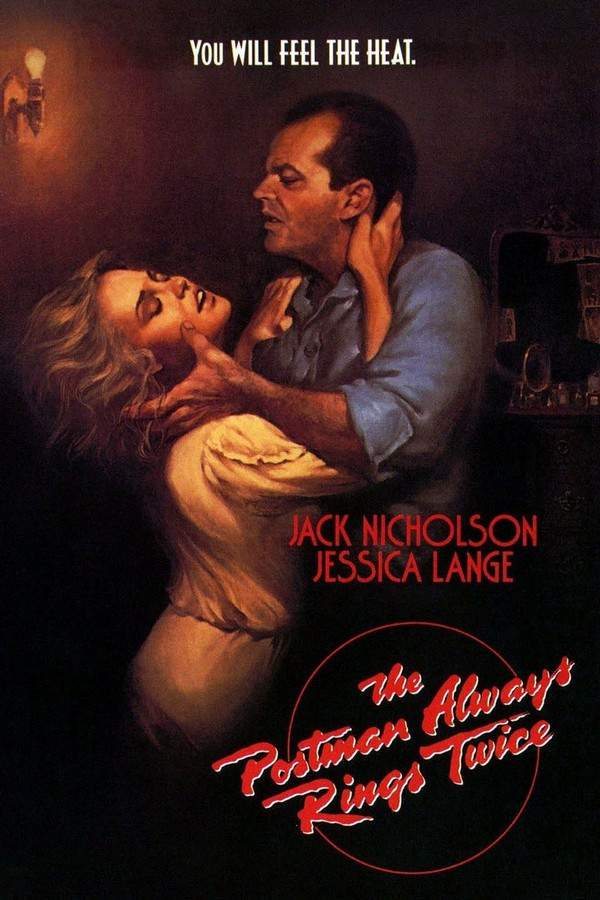
The Postman Always Rings Twice (1946) movie poster

Timeline

The Postman Always Rings Twice (1946) Timeline Explained – Every Event in Order

Release, runtime and language
1946 · 113 min · English
Directed by
Tay Garnett
Starring
Hume Cronyn, John Garfield, Cecil Kellaway, Leon Ames, Lana Turner, Alan Reed

A drifter finds work at a roadside diner in California and becomes entangled in a dangerous affair with the alluring wife of the owner. Their passion leads them to conspire against her husband, setting in motion a series of events filled with betrayal and escalating peril as they attempt to eliminate him and pursue their forbidden love.

On this page (6)
  1. 1 Where to watch
  2. 2 Events in order (15)
  3. 3 Timeline questions answered
  4. 4 The book behind the movie
  5. 5 Movie threads
  6. 6 Every angle

Where to watch

Where to Watch The Postman Always Rings Twice (1946)

Where can you watch The Postman Always Rings Twice? Stream, rent or buy it in the US, including on Plex, Tubi TV and Amazon Video: current JustWatch availability with up-to-date prices.

Streaming availability powered by JustWatch

15 events in order · contains spoilers

The Postman Always Rings Twice Timeline: Events in Chronological Order

Every key event of The Postman Always Rings Twice (1946) in order, scene by scene, with when and where it takes place. Use it to untangle flashbacks, time jumps and parallel storylines, to refresh your memory before the sequel or to find the exact scene you are thinking of.

  1. Frank Arrives at Twin Oaks

    Frank Chambers, a drifter, arrives at the quaint 'Twin Oaks' diner with District Attorney Kyle Sackett. The serene hills surrounding Los Angeles provide a picturesque backdrop as Frank acclimates to his new environment.

    Where
    Twin Oaks Diner
  2. The Affair Begins

    Frank becomes entangled in a passionate and illicit romance with Cora, the young wife of the diner’s owner, Nick. Cora, feeling trapped in her loveless marriage, seeks an escape and finds solace in Frank's company.

    Where
    Twin Oaks Diner
  3. Cora's Desperate Scheme

    Cora convinces Frank to join her in a plot to free themselves from Nick. They plan to stage Nick's death as an accident, believing that it will allow them to claim the diner and start fresh.

    Where
    Twin Oaks Diner
  4. The Incident with Nick

    During a power failure, Cora strikes Nick with a bag of ball-bearings in their attempt to execute their plan. However, fate intervenes when a police officer arrives unexpectedly, complicating their scheme.

    Where
    Twin Oaks Diner
  5. Nick Survives

    Nick survives the attack but loses all memory of the incident, leaving Frank and Cora to run the diner together. For a brief moment, they enjoy a taste of freedom, unaware of the potential consequences looming ahead.

    Where
    Twin Oaks Diner
  6. The Officer's Return

    A police officer revisits the diner, revealing that Cora has returned Nick to the hospital. This visit shatters Frank and Cora’s sense of security, prompting Frank to contemplate leaving Cora to avoid further complications.

    Where
    Twin Oaks Diner
  7. Frank's Return to Los Angeles

    Despite his desire to leave, Frank finds himself drawn back to the market near where Nick and Cora shop for groceries. He clings desperately to the hope of reuniting with Cora, indicating his unresolved feelings for her.

    Where
    Los Angeles
  8. The Tense Reunion

    Frank encounters Nick, who cryptically suggests that something significant will happen that night. Tension rises as the three gather for a meal, where Nick announces plans to sell their home, unsettling both Frank and Cora.

    Where
    Twin Oaks Diner
  9. Planning the Next Move

    Frank and Cora collaborate on a new plan for a staged drunken driving accident designed to eliminate Nick. Their conspiracy grows darker as they wrestle with guilt and their motivations for wanting Nick out of their lives.

    Where
    Twin Oaks Diner
  10. Tragic Consequences

    The plan culminates in chaos when Nick is killed in the accident they staged, leaving Frank severely injured. This turns their already complicated lives into an unmanageable nightmare filled with guilt and legal consequences.

    Where
    Twin Oaks Diner
  11. Cora's Legal Storm

    Cora faces murder charges while dealing with her manipulative lawyer, Arthur Keats, who keeps crucial evidence away from the prosecution. Despite her involvement in Nick's death, she ends up with a plea deal for manslaughter.

    Where
    Court
  12. Diner's New Popularity

    As media attention dwindles, the diner surprisingly gains popularity, but the tension between Frank and Cora is palpable. Their impending marriage feels more like a mutual agreement rather than a commitment born of love.

    Where
    Twin Oaks Diner
  13. Frank's Infidelity

    While Cora tends to her ailing mother, Frank engages in a short affair with another woman. However, upon Cora's return, their relationship hangs by a thread as mistrust and betrayal seep in.

    Where
    Los Angeles
  14. Cora's Pregnancy

    On a beach, Cora reveals that she is pregnant, which adds complexity to their tumultuous relationship. They share a moment of apparent happiness, swimming together, but the future remains uncertain.

    Where
    Beach
  15. Tragic Accident

    Frank's recklessness results in a fatal car crash, claiming Cora's life. The loss leaves him grappling with profound guilt as he faces the harsh repercussions of their tumultuous journey.

    Where
    Los Angeles

Last updated: November 21, 2024 at 10:57

Was this helpful?

Timeline questions answered

The Postman Always Rings Twice Timeline Explained: Your Questions Answered

When does it happen, and why in that order? The questions people ask about the chronology of The Postman Always Rings Twice (1946): time jumps, flashbacks, cause and effect between scenes and the correct order of events, each answered with spoilers.

Q1

Why does Cora convince Frank to kill her husband?

Cora feels trapped in her loveless marriage to Nick and yearns for freedom. She believes that eliminating Nick will grant her and Frank ownership of the Twin Oaks diner and the chance to start a new life together. Her desperation to escape the monotonous diner life drives her to manipulate Frank into participating in the murder plot.

Foreshadowing: Early scenes establish Cora's dissatisfaction with her marriage, showing her resentment toward the daily grind and her desire for a different life.

  • cora smith
  • nick smith
  • murder plot
  • motivation
  • twin oaks diner
Q2

How does the first murder attempt on Nick happen?

Cora and Frank plan to stage Nick's death as an accident. Cora strikes Nick on the head with a bag of ball-bearings while a power failure caused by a curious cat creates darkness throughout the diner. However, a police officer unexpectedly arrives during the chaos, forcing Cora to improvise. She strikes Nick again, leaving him grievously wounded but alive.

Foreshadowing: The power failure and cat are introduced early as seemingly innocent details that later become crucial to the murder attempt.

  • ball-bearings
  • power failure
  • police officer
  • staged accident
Q3

Why does Nick survive but lose his memory?

Nick survives the attack but suffers complete amnesia regarding the incident. This twist works in Frank and Cora's favor initially, as Nick cannot testify about what happened. The memory loss is never fully explained medically, but it allows them to run the diner together temporarily while Nick recovers.

Foreshadowing: The brutal nature of the attack with the ball-bearings suggests significant head trauma that could cause memory loss.

  • nick smith
  • amnesia
  • memory loss
  • hospital
Q4

Why does Frank come back to the diner after leaving?

After the police officer's return and Cora reconciling with Nick, Frank decides to leave for Los Angeles. However, weeks later he finds himself drawn back to the market where Nick and Cora shop, unable to shake his desire to see Cora again. His unresolved passion for her compels him to return, setting the stage for the tragic events that follow.

Foreshadowing: Frank's initial departure shows his attempt at moral escape, but his return demonstrates his inability to break free from Cora.

  • frank chambers
  • return
  • cora smith
  • los angeles
Q5

How does the second murder attempt succeed?

Frank and Cora devise a plan to stage a drunken driving accident by having Nick drive drunk while Frank accompanies him. However, when District Attorney Kyle Sackett unexpectedly arrives, they stage a fake quarrel that gives Frank the opportunity to strike Nick a lethal blow during the struggle. The car crashes, killing Nick and severely injuring Frank, making it appear as though Frank was also a victim.

Foreshadowing: Sackett's arrival is unexpected and creates the perfect cover for the murder, though it was not part of the original plan.

  • kyle sackett
  • staged accident
  • nick death
  • car crash
Q6

Why does Cora get a plea deal instead of prison time?

Cora faces murder charges but her lawyer Arthur Keats strategically keeps her full confession from the prosecution. He successfully argues to exclude this critical evidence, leading to a plea deal where Cora pleads guilty to manslaughter and receives probation. The legal manipulation and lack of physical evidence work in her favor despite her clear involvement.

Foreshadowing: Keats's manipulative legal tactics are introduced as Cora's only defense strategy against the murder charges.

  • cora smith
  • arthur keats
  • plea deal
  • manslaughter
  • confession
Q7

Why is Frank convicted for Cora's death?

Frank's reckless driving causes a fatal car crash that kills Cora while she is pregnant. Though he claims the accident was unintentional, the prosecution holds him responsible for her death. The court convicts him of murder, and he is sentenced to death row, completing the tragic arc of the film noir where consequences catch up to the protagonist.

Foreshadowing: The film establishes Frank's pattern of reckless decisions leading to catastrophic consequences throughout the story.

  • death row
  • conviction
  • car accident
  • cora death
Q8

Why does Frank accept his execution at the end?

Frank initially maintains his innocence regarding Cora's death, but District Attorney Kyle Sackett confronts him with the truth about his involvement in Nick's murder. Frank realizes that if he avoids execution for Cora's death, he would still face prosecution for Nick's murder. He accepts his execution as karmic justice, the ultimate price for the irreversible damage he caused, understanding that his actions destroyed multiple lives.

Foreshadowing: Sackett's reasoning reveals that Frank's moral reckoning has been inevitable since Nick's death, with the universe delivering poetic justice.

  • frank chambers
  • kyle sackett
  • execution
  • acceptance
  • karmic justice
Q9

What happens to Kennedy, the investigator?

Kennedy, an investigator working with Cora's attorney Arthur Keats, tries to exploit a signed confession from Cora to extort or prosecute her. Frank learns of this threat and reacts violently, killing Kennedy and his associate before retrieving the incriminating document. This violent act further entangles Frank in criminality and removes a dangerous element from their lives, though it adds to his list of crimes.

Foreshadowing: Kennedy's introduction as a potentially exploitative figure sets up the violent confrontation that follows.

  • kennedy
  • investigator
  • confession
  • arthur keats
  • violence
Q10

What causes Cora's death in the final scene?

Cora dies when Frank loses control of the car while driving recklessly. While pregnant with their child, she and Frank are swimming at the beach when he drives negligently, resulting in a catastrophic crash that kills her. The accident underscores the film's theme of destructive passion and the unavoidable consequences of the characters' actions.

Foreshadowing: The beach scene shows a moment of apparent happiness, but the film has already established that their happiness cannot last.

  • cora death
  • car crash
  • pregnancy
  • beach scene
  • accident

Movie threads

More Movies Like The Postman Always Rings Twice, by Mood & Story

Curated lists built around what makes The Postman Always Rings Twice tick: the same mood, the same kind of story or the same emotional payoff. Each list explains why these movies belong together.

Fatalistic Crime Thrillers Like The Postman Always Rings Twice

Where forbidden desire leads to a destructive chain of betrayal and inevitable doom. If you admired the dangerous passion and grim fate in The Postman Always Rings Twice, explore more movies about illicit love affairs that lead to murder and retribution. These similar stories feature desperate characters caught in a web of their own making, with a tense, dark tone and bleak endings.

  • fatalistic
  • desperate
  • suspenseful
  • passionate
  • cynical
  • anxious
  • Tone: dark, fatalistic, tense
  • Pacing: steady, relentless
Why these movies?

The story pattern: The narrative pattern typically begins with a powerful, forbidden attraction that ignites a murderous conspiracy. The initial thrill of the scheme is quickly replaced by paranoia, guilt, and mutual distrust. The plot unfolds as a relentless downward spiral, where each attempt to cover one crime leads to another, culminating in an ending where the characters face the inevitable consequences of their moral choices.

Why they belong together: These films are grouped together because they share a core focus on the destructive power of passion coupled with crime. They maintain a high-intensity, dark tone and a steady pacing that builds suspense towards a heavy, often bleak conclusion. The shared mood is one of fatalism, desperation, and psychological torment.
Psychological Film Noir Movies Like The Postman Always Rings Twice

Stories steeped in shadowy atmospheres where guilt and paranoia consume the protagonists. Fans of the shadowy tension and psychological torment in The Postman Always Rings Twice will enjoy these similar film noir classics and neo-noirs. These movies share a dark, cynical mood, a steady pacing that builds dread, and complex characters whose bad decisions lead to their downfall.

  • cynical
  • claustrophobic
  • anxious
  • suspenseful
  • fatalistic
  • psychological
  • Tone: dark, cynical, tense
  • Pacing: steady, character-driven
Why these movies?

The story pattern: The narrative journey is an internal one, charting the psychological unraveling of characters who commit a grave act. The external conflict with the law or other figures is often secondary to the internal conflict of guilt, fear, and paranoia. The world feels inherently corrupt, and the story structure is a linear progression towards a bleak realization of one's own moral failure.

Why they belong together: These movies are united by their distinct film noir aesthetic and psychological depth. They share a dark tone, steady pacing, and a high level of tension derived from character psychology rather than just action. The collective vibe is anxious, claustrophobic, and deeply cynical about human nature and fate.

Every angle

The Postman Always Rings Twice (1946) Explained: Plot, Timeline & Characters

Everything about The Postman Always Rings Twice in one place: what happens in the plot summary, the timeline in chronological order, the characters and meaning and a spoiler-free summary. What's After the Movie adds the cast, box office and post-credit scenes.

Coming soon on iOS and Android

The Plot Explained Movie Summary App

Plot summaries, endings explained and timelines on your phone. Catch up on any movie in minutes, save your favorites and never miss a twist again.

Be the first to know when we launch. Your email stays private, always.

Learn more about the app