



Plot Explained Spoilers guaranteed!
Plot Explained

Browse by genre

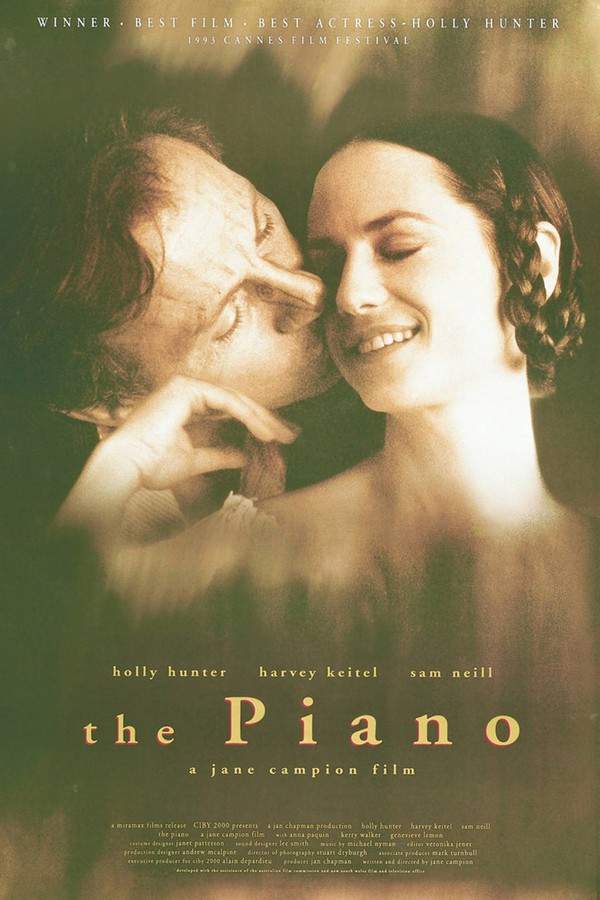
The Piano (1993) movie poster

Timeline

The Piano (1993) Timeline Explained – Every Event in Order

Release, runtime and language
1993 · 121 min · English
Directed by
Jane Campion
Starring
Sam Neill, Holly Hunter, Harvey Keitel

In 19th-century New Zealand, a mute Scottish pianist named Ada McGrath and her young daughter, Flora, are sold into marriage. Ada’s new husband, Alisdair, is a landowner who has agreed to provide a piano for his bride, but their relationship is strained by Ada’s inability to speak. As she struggles to adapt to her new life, Ada finds comfort and connection with George Baines, a kind and supportive worker on Alisdair's estate. This unexpected bond creates a complicated and passionate situation that challenges societal norms and threatens to unravel Ada’s carefully constructed world.

On this page (6)
  1. 1 Where to watch
  2. 2 Events in order (15)
  3. 3 Timeline questions answered
  4. 4 Movie threads
  5. 5 Movies like The Piano
  6. 6 Every angle

Where to watch

Where to Watch The Piano (1993)

Where can you watch The Piano? Stream, rent or buy it in the US, including on Amazon Video, Apple TV Store and Fandango At Home: current JustWatch availability with up-to-date prices.

Streaming availability powered by JustWatch

15 events in order · contains spoilers

The Piano Timeline: Events in Chronological Order

Every key event of The Piano (1993) in order, scene by scene, with when and where it takes place. Use it to untangle flashbacks, time jumps and parallel storylines, to refresh your memory before the sequel or to find the exact scene you are thinking of.

  1. Departure from Scotland

    Ada McGrath and her daughter Flora set sail from Scotland for colonial New Zealand. Ada, who suffers from elective mutism, is embarking on an arranged marriage with settler Alisdair Stewart, leaving behind her old life filled with memories and silence.

    When
    Mid-1800s
  2. Stranded on the Beach

    After a mishap involving the ship's crew, Ada, Flora, and their cherished piano find themselves stranded on a beach in New Zealand. This unexpected turn of events sets the stage for the complex relationships that will develop between the characters.

    Where
    New Zealand Beach
  3. Meeting Alisdair and George

    Alisdair Stewart arrives on the beach with his Māori crew and neighbor George Baines, introducing Ada to her new reality. George, a retired sailor with Māori facial tattoos, becomes intrigued by Ada's passion for her music and the silent language she uses.

    Where
    New Zealand
  4. The Piano Negotiation

    Through a bold proposition, George offers to exchange land for Ada's piano and lessons. Although Alisdair is unaware of George's feelings for Ada, the exchange sets off a chain of events that complicate their lives and relationships.

  5. Piano Lessons Begin

    Ada reluctantly agrees to teach George piano, limiting their lessons to the black keys. This arrangement fosters a bond between them, despite Ada's resistance to his romantic advances and her frustration with Alisdair.

    Where
    Alisdair's Farm
  6. Stirrings of Desire

    As Ada continues teaching George, she begins to explore her own sensuality away from Alisdair’s advances. Their emotional connection becomes undeniable, which prompts George to return the piano to Ada in a selfless act.

    Where
    Alisdair's Farm
  7. Confrontation with Alisdair

    Alisdair overhears an intimate moment between Ada and George, leading to a violent confrontation. He forces Ada to vow to cease seeing George, establishing a tense atmosphere filled with control and resistance.

    Where
    Alisdair's Home
  8. Flora's Errand

    Ada instructs Flora to deliver a love note to George, but it ends up in Alisdair's hands, igniting his wrath. He reacts violently, severely punishing Ada by severing her index finger, which robs her of her ability to play piano.

  9. George's Warning

    Alisdair sends Flora to deliver a threatening message to George after incapacitating Ada. The tension escalates as the stakes become higher for Ada, George, and Flora, creating an atmosphere of fear.

  10. Escape from Alisdair

    Ada and George seize an opportunity to escape from Alisdair, loading her belongings and piano onto a Māori canoe. Their flight symbolizes a quest for freedom, but also places them in a precarious situation.

  11. Piano Overboard

    In a moment of despair, Ada asks George to throw the piano overboard as they navigate to safety. This act signifies her struggle between her love for music and the desire for freedom from her painful past.

  12. Ada's Struggle Underwater

    Caught in the tethered rope of the piano, Ada finds herself submerged under the water in a desperate struggle for survival. Just as she begins to succumb to the depths, a change of heart compels her to fight for her life.

    Where
    Ocean
  13. New Life in Nelson

    In the epilogue, Ada reflects on her new life in Nelson, New Zealand with George and Flora. As she embraces healing, she teaches piano, while adapting to life with a metal finger crafted by George.

    Where
    Nelson, New Zealand
  14. Journey of Healing

    As they settle into their new home, Ada embarks on a journey of healing after the trauma she experienced. Her desire to regain her voice compels her to practice speech and contend with haunting memories of her lost piano.

  15. Haunted by the Past

    Despite her efforts to move forward, Ada is frequently haunted by dreams of her piano resting at the ocean's bottom. These dreams symbolize her unresolved emotions and the weight of her past that continues to follow her.

Last updated: November 16, 2024 at 18:03

Was this helpful?

Timeline questions answered

The Piano Timeline Explained: Your Questions Answered

When does it happen, and why in that order? The questions people ask about the chronology of The Piano (1993): time jumps, flashbacks, cause and effect between scenes and the correct order of events, each answered with spoilers.

Q1

Why does Ada stay mute in The Piano?

Ada suffers from elective mutism, a condition where she has chosen not to speak since the age of six. Rather than verbal communication, she expresses herself through playing the piano and sign language, with her daughter Flora serving as her interpreter. Her silence appears connected to past trauma and a form of rebellion against the oppressive societal expectations placed upon her, particularly regarding her arranged marriage and the control men attempt to exercise over her.

Foreshadowing: The mystery surrounding her silence and Flora's father's identity is introduced from the very beginning of the film.

  • elective mutism
  • ada's silence
  • why ada doesn't speak
  • flora interpreter
Q2

Why does George want Ada's piano?

George Baines initially proposes to Alisdair to exchange land for the piano and piano lessons from Ada. While this appears to be a practical arrangement on the surface, George is genuinely captivated by Ada's passion for music and her vibrant spirit. His interest in the piano is really an excuse to get closer to Ada, as he is drawn to her silent intensity and the way she expresses herself through music.

Foreshadowing: George's intrigue is established the moment he sees Ada on the beach, drawn to her unique way of communicating through music.

  • george baines
  • piano lessons
  • ada and george
  • land exchange piano
Q3

Why does Ada teach George only black keys?

When Ada reluctantly agrees to teach George piano, she deliberately restricts their lessons to the black keys only. This is both a practical barrier and a symbolic resistance, she maintains control over how much of herself she reveals. The black keys create a different sound palette and allow her to keep George at a distance emotionally while still sharing part of her world through music.

Foreshadowing: This restriction is Ada's way of protecting herself from the romantic advances George makes while still allowing herself to connect with him through music.

  • black keys piano lesson
  • ada's boundaries
  • why only black keys
Q4

Why does George return the piano to Ada?

George returns the piano to Ada because he realizes that a genuine emotional connection with her is unlikely while he holds the piano hostage. His selfless act demonstrates that he wants her genuine affection, not just access to her through the instrument. By returning it freely, he shows he respects her and hopes she might eventually love him for who he is, not because she owes him something.

Foreshadowing: This act of kindness marks a turning point in their relationship, leading Ada to finally open up emotionally.

  • george returns piano
  • genuine affection
  • Selfless act
Q5

Why does Alisdair cut off Ada's finger?

After Flora accidentally delivers a love note meant for George to Alisdair instead, he becomes consumed by rage. In a violent act of retribution, Alisdair severs Ada's index finger with an axe, permanently robbing her of the ability to play the piano. This brutal mutilation is his way of punishing her for betraying him and assert complete control over her, destroying the one thing that gives her voice and identity outside of him.

Foreshadowing: Alisdair's violent and controlling nature was established earlier when he forced Ada to vow to cease seeing George after discovering their intimacy.

  • alisdair violence
  • finger severed
  • mutilation
  • punishment betrayal
Q6

Why does Ada ask George to throw the piano overboard?

During their escape on the Māori canoe, Ada suddenly asks George to throw the piano overboard. This act represents a profound moment of letting go, she chooses freedom and a new life with George over the piano that has defined her identity and trapped her in her past. The piano, once her only voice, becomes a weight she must release to truly move forward.

Foreshadowing: This decision follows the traumatic loss of her finger and represents the culmination of her journey from attachment to liberation.

  • piano overboard
  • letting go
  • freedom
  • ada's choice
Q7

Was Ada's underwater scene in The Piano a suicide attempt?

When the piano is thrown overboard, Ada becomes entangled in the rope tethered to it and is dragged underwater. This moment is ambiguous, she may have intentionally allowed herself to be caught, seeking to end her suffering. However, at the last moment, she changes course and fights for survival. The film presents this as both a desperate act and a turning point where she chooses to live, symbolizing her transformation from passive victim to someone who actively fights for her freedom.

Foreshadowing: The scene follows her earlier declaration that she wants the piano gone, suggesting she was prepared to let everything, including herself, be released.

  • underwater scene
  • suicide attempt
  • rope
  • drowning
  • survival
Q8

Why does Ada start learning to speak at the end of The Piano?

In the epilogue set in Nelson, New Zealand, Ada begins taking speech lessons as part of her healing journey. After losing her finger and experiencing profound trauma, she is working to reclaim her voice in a new way, not just through music but through actual speech. This represents her transformation: she is no longer defined by her silence or her loss, but is actively reconstructing her identity and finding new ways to express herself.

Foreshadowing: The haunting dreams she has of her piano at the ocean's bottom symbolize the weight of her past that she must eventually release to fully heal.

  • speech lessons
  • healing
  • voice
  • recovery
  • nelson
Q9

Why does Flora give the love note to Alisdair instead of George?

Ada instructs Flora to deliver a package containing a piano key carved with a love note to George. However, Flora inadvertently gives it to Alisdair instead. This innocent mistake has devastating consequences, as Alisdair's rage upon reading the note leads directly to his brutal mutilation of Ada. Flora's error serves as a tragic turning point that sets in motion the most violent events of the film.

Foreshadowing: This moment demonstrates how Flora, despite her devoted role as Ada's interpreter, is still a child who can make catastrophic mistakes in the adult world of secrets and passion.

  • flora mistake
  • love note
  • piano key
  • alisdair wrath
Q10

Why is Ada haunted by dreams of her piano at the bottom of the ocean?

Throughout the epilogue, Ada is frequently haunted by dreams of her piano resting at the ocean's bottom, with her still bound to it. These dreams symbolize her unresolved emotional attachment to her past self, the piano represented her voice, her identity, and her connection to her former life. Even though she chose to let it go, part of her remains tethered to that identity, and she must contend with the haunting memories of what she lost to gain her freedom.

Foreshadowing: The dreams reflect the bittersweet nature of her liberation: she has freedom and love, but has lost a fundamental part of herself.

  • piano dreams
  • haunted
  • ocean bottom
  • unresolved past
  • symbolism
Q11

Why does Alisdair allow Ada to leave with George?

After cutting off Ada's finger, Alisdair experiences a moment of complex emotional turmoil. When he touches a sleeping Ada, he imagines hearing her voice urging him to let George have her. This hallucination, combined with his jealousy and torment, appears to finally convince him to release her. He questions George about whether Ada has ever spoken to him, and upon learning she has not, he allows their escape, perhaps recognizing that her heart was never his to keep.

Foreshadowing: This moment reveals Alisdair's deep insecurity about never having truly connected with Ada, as she never spoke to him.

  • alisdair lets go
  • jealousy
  • hallucination
  • release
  • freedom

Movie threads

More Movies Like The Piano, by Mood & Story

Curated lists built around what makes The Piano tick: the same mood, the same kind of story or the same emotional payoff. Each list explains why these movies belong together.

Movies about unspoken desires and artistic expression like The Piano

Stories where characters communicate through art, gesture, and intense silence. Discover movies like The Piano, where characters express their deepest feelings not through dialogue but through art, gesture, and powerful silence. These stories focus on intense, unspoken connections and the struggle to communicate in a world that doesn't listen.

  • sensual
  • intense
  • melancholic
  • passionate
  • dreamlike
  • oppressive
  • Tone: melancholic, sensual, intense
  • Pacing: slow, deliberate
Why these movies?

The story pattern: Narratives in this thread often center on a character who is physically or emotionally mute, an artist, or an outsider whose primary mode of expression is non-verbal. The core conflict involves their struggle to be understood and to form authentic connections against societal norms that privilege conventional communication.

Why they belong together: These films are grouped by their shared focus on the power of non-verbal communication. They create a unique, intimate vibe through a deliberate pace that allows the audience to read subtle gestures and feel the weight of silence, resulting in a deeply emotional and sensory viewing experience.

Movies about breaking free from societal constraints like The Piano

Stories of profound personal liberation from oppressive social structures. Find movies like The Piano about characters trapped by societal or marital constraints who experience a defiant sexual or artistic awakening. These powerful dramas explore the heavy cost and complex victory of breaking free from oppressive norms.

  • oppressive
  • defiant
  • passionate
  • melancholic
  • bittersweet
  • traumatic
  • Tone: melancholic, oppressive, passionate
  • Pacing: slow build to intense climax
Why these movies?

The story pattern: The narrative pattern follows a protagonist living under severe social or domestic oppression. A catalyst—often a person or a passion—ignites a powerful awakening, leading to a passionate rebellion. The climax typically involves a traumatic event or sacrifice, resulting in a bittersweet liberation that carries the scars of the struggle.

Why they belong together: These movies share a specific emotional journey: the slow build of oppression, the fiery intensity of awakening and rebellion, and the heavy, bittersweet resolution. The combination of high emotional weight, a melancholic tone, and a deliberate pacing creates a consistently powerful and cathartic vibe.

If you liked this

Movies Like The Piano

Similar movies to The Piano: the same genre, themes or kind of story. Each one comes with its own plot summary, timeline and ending explained.

Browse all movie summaries

Every angle

The Piano (1993) Explained: Plot, Timeline & Characters

Everything about The Piano in one place: what happens in the plot summary, the timeline in chronological order, the characters and meaning and a spoiler-free summary. What's After the Movie adds the cast, box office and post-credit scenes.

Coming soon on iOS and Android

The Plot Explained Movie Summary App

Plot summaries, endings explained and timelines on your phone. Catch up on any movie in minutes, save your favorites and never miss a twist again.

Be the first to know when we launch. Your email stays private, always.

Learn more about the app