Plot Explained Spoilers guaranteed!
Plot Explained

Browse by genre

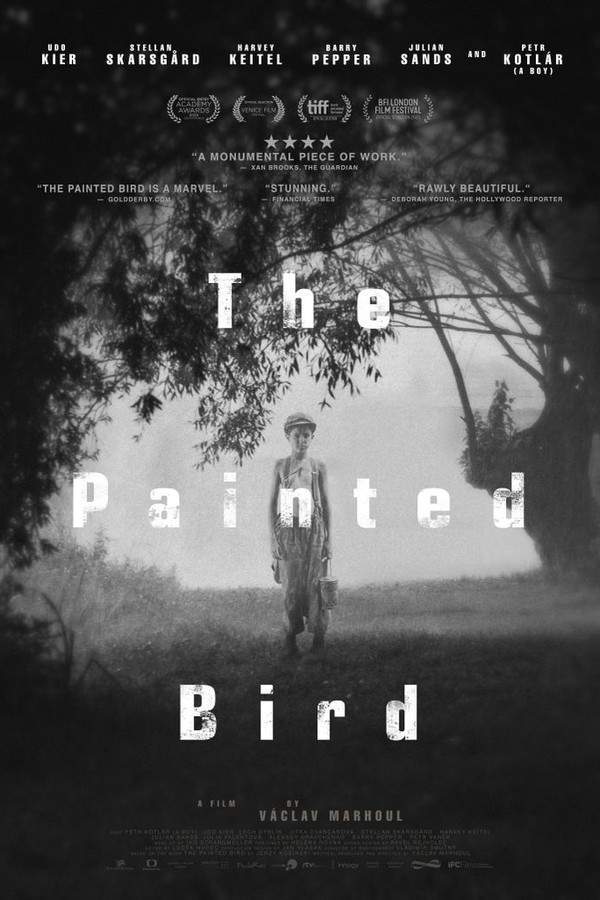
The Painted Bird (2019) movie poster

Characters & Themes

The Painted Bird (2019) Characters, Setting & Themes Explained

Release, runtime and language
2019 · 169 mins · Czech
Echo score 70
Loading streaming availability…
Starring
Stellan Skarsgård, Harvey Keitel, Udo Kier, Julian Sands, Barry Pepper, Alla Sokolova
Budget
$7.8M

Light is visible only in the dark After losing his parents, a young Jewish boy wanders Eastern Europe, seeking refuge during World War II.

On this page (8)
  1. 1 Where to watch
  2. 2 Characters explained (4)
  3. 3 Where & when it takes place
  4. 4 Themes & meaning (3)
  5. 5 Character & meaning questions
  6. 6 Movie threads
  7. 7 Movies like The Painted Bird
  8. 8 Every angle
Loading streaming availability…

4 main characters · contains spoilers

The Painted Bird Characters Explained: Who Is Who

The main characters of The Painted Bird (2019), heroes and villains: what drives them, how they change over the course of the story and what each of them reveals about the film's bigger ideas.

  • The Boy (Joska)

    A young boy forced to survive in a war-torn landscape, he is depicted as innocent yet profoundly affected by the horrors around him. His journey through various encounters shapes his character, as he grapples with trauma and violence at every turn. Despite his suffering, he exhibits resilience and a desperate longing for connection.

    • 👶 Youth
    • 💪 Resilience
    • 🏃‍♂️ Survival
  • Lekh

    played by Lech Dyblik

    A bird breeder who shows kindness to the boy amidst the suffering of war, Lekh represents a fleeting sense of hope. His tragic demise and the violent treatment of the wild woman he loves highlight the brutal societal norms. Lekh's character showcases the thin line between kindness and despair in a ravaged world.

    • 🦜 Kindness
    • 💔 Tragedy
    • 🌪️ Suffering
  • Mitka

    played by Barry Pepper

    A Soviet sniper who temporarily takes care of the boy, Mitka embodies the harsh realities of war, juxtaposed with moments of care. His involvement in violent reprisal raises questions about morality in conflict, reflecting the complexities of human behavior during desperate times. His character symbolizes the duality of protector and aggressor.

    • 🔫 War
    • 🤔 Morality
    • 🪖 Loyalty
  • Nikodém

    played by Petr Vaněk

    The boy's father, whose tearful reunion showcases the fraught emotions surrounding family in a time of crisis. He represents a glimmer of hope for the boy, but their strained relationship highlights the impact of trauma and separation. Nikodém's character evokes themes of memory and the longing for familial bonds.

    • 👨‍👦 Family
    • 💞 Hope
    • 😢 Reunion

Last updated: September 18, 2026 at 08:55

Was this helpful?

Setting

Where and When Does The Painted Bird Take Place?

The setting of The Painted Bird (2019): the year and time period, the places and locations, and how they shape the characters, the mood and the tension of the story.

Time period

World War II

The story unfolds during World War II, a period characterized by widespread conflict and human suffering. This era was marked by the atrocities of war, including the Holocaust, which significantly affected the lives of many, especially those identified as Jews. The tumultuous conditions create a backdrop of fear and despair, driving the urgent and tragic experiences of the young boy.

Location

German-occupied East Europe, various villages

The movie takes place in the war-torn landscapes of German-occupied East Europe during World War II. It highlights the various villages that the young boy encounters, each marked by their own struggles and the horrors of war. These settings reflect the chaos and depravity of the time, where ignorance and violence shape the lives of those living there.

  • 🏡 Village
  • 🌍 Europe
  • 🏴‍☠️ War Zone

Last updated: September 18, 2026 at 08:55

Was this helpful?

3 major themes

The Painted Bird Meaning: Themes & Message Explained

What is The Painted Bird (2019) really about? The emotional, social and philosophical themes the film keeps returning to, its symbolism and the message beneath the surface.

  • Survival

    The central theme of survival permeates the movie as the young boy navigates through a hostile world filled with danger. He faces numerous threats and violent encounters that challenge his will to live. It explores the lengths to which one must go to survive amid atrocities and the constant struggle for safety.

  • Loss of Innocence

    The narrative captures the tragic loss of innocence as the boy encounters horrific realities at a young age. Each encounter strips away his childhood, forcing him into a brutal world filled with exploitation and betrayal. This theme underscores the devastating impact of war on youth and the cruel transition to adulthood.

  • Violence and Depravity

    The film illustrates the violence and depravity that permeates society during wartime. Incidents of injustice, abuse, and moral decay reflect the darkest aspects of human nature. Through the boy's eyes, the narrative reveals the horrifying consequences of unchecked hatred and brutality.

Last updated: September 18, 2026 at 08:55

Was this helpful?

Character & theme questions

The Painted Bird Characters & Meaning: Your Questions Answered

The questions people ask about The Painted Bird (2019): who the characters really are, their relationships, what the symbols mean, where it takes place and what the movie is really about. Each answer contains spoilers.

Q1

Where does the story take place?

The Painted Bird unfolds across the war-torn landscapes of German-occupied Eastern Europe during World War II. The boy moves through a series of rural villages, each ravaged by the conflict and marked by their own distinct horrors. These isolated, hostile settings amplify the sense of danger and moral collapse that defines the film.

  • eastern europe
  • german-occupied
  • wwii
  • rural villages
  • war-torn landscape
Q2

What time period does the film cover?

The film is set during World War II, a period defined by widespread military conflict and the Holocaust. The story reflects the chaos and terror faced by civilians, especially Jewish people, across Eastern Europe. This historical context is essential to understanding the constant threat the boy faces as he moves between communities.

  • world war ii
  • 1940s
  • holocaust era
  • wartime
  • historical period
Q3

What are the central themes of the movie?

The Painted Bird explores three major themes: survival, loss of innocence, and the violence and depravity that pervade wartime societies. Through the boy's eyes, the film examines how war strips childhood away and pushes people toward brutality. Together, these themes paint a portrait of human darkness during one of history's most violent periods.

  • survival
  • loss of innocence
  • violence
  • depravity
  • wartime trauma
Q4

What is the significance of the title?

The title draws on the folk metaphor of a painted bird used to lure other birds back to a trap. This image connects directly to Lekh's role as a bird breeder and to the broader theme of outsiders being exploited by hostile communities. The painted bird becomes a symbol for anyone marked as different, much like the boy, who is targeted because of his Jewish identity and orphaned status.

  • painted bird
  • metaphor
  • outsider
  • symbolism
  • folk image
Q5

Who is the boy at the center of the story?

The unnamed young boy, sometimes called Joska, is a Jewish child separated from his parents during the war. He is depicted as innocent at the start but is progressively shaped by traumatic encounters across multiple villages. His journey through Eastern Europe forms the spine of the film, and his resilience in the face of relentless cruelty defines his character arc.

  • joska
  • young jewish boy
  • protagonist
  • orphan
  • resilience
Q6

Who is Lekh?

Lekh is a bird breeder who provides one of the few moments of genuine kindness the boy experiences during his journey. He represents a fleeting sense of hope in a brutal, indifferent world. However, his tragic fate and the violence surrounding the wild woman he loves underscore the film's bleak view of human nature.

  • lekh
  • bird breeder
  • kindness
  • hope
  • supporting character
Q7

Who is Mitka?

Mitka is a Soviet sniper who temporarily takes care of the boy during the war. He embodies the moral complexity of wartime, acting as both protector and participant in violent reprisals. His character highlights the duality of human behavior in conflict, where care and brutality can coexist in the same person.

  • mitka
  • soviet sniper
  • protector
  • duality
  • wartime morality
Q8

Who is Nikodém?

Nikodém is the boy's father, whom the child eventually reunites with after a long separation marked by trauma. Their reunion is emotionally charged but strained, reflecting how war damages family bonds even when loved ones survive. Nikodém represents both the hope of return and the lasting scars carried by those who lived through the conflict.

  • nikodem
  • father
  • family reunion
  • separation
  • trauma
Q9

Why is the film so dark and brutal?

The Painted Bird uses relentless brutality to reflect the realities of Nazi-occupied Eastern Europe and the systemic violence of the Holocaust era. Director Václav Marhoul structured the film as an episodic journey where each new village delivers escalating horrors with no meaningful respite. The intensity serves a thematic purpose: to depict how war dehumanizes both victims and perpetrators, stripping away any possibility of comfort.

  • brutality
  • nazi occupation
  • holocaust
  • darkness
  • episodic structure
Q10

What is the historical context of the story?

The story takes place during the Nazi occupation of Eastern Europe, a period marked by mass persecution, forced displacement, and the systematic murder of Jewish people and other targeted groups. The boy is Jewish, which places him at constant risk as he travels through communities that are either complicit in or indifferent to that violence. This historical reality forms the foundation for every encounter and threat the boy faces.

  • nazi occupation
  • holocaust
  • jewish persecution
  • eastern europe
  • historical reality
Q11

How does the setting shape the boy's journey?

The rural, war-ravaged villages of Eastern Europe serve as more than a backdrop; they actively shape the boy's experience by isolating him from any safety net. Each location introduces new dangers, customs, and forms of cruelty, making the landscape itself a kind of antagonist. This shifting, hostile geography reinforces the film's themes of displacement, vulnerability, and the impossibility of finding refuge.

  • setting
  • villages
  • displacement
  • vulnerability
  • geographical isolation

Movie threads

More Movies Like The Painted Bird, by Mood & Story

Curated lists built around what makes The Painted Bird tick: the same mood, the same kind of story or the same emotional payoff. Each list explains why these movies belong together.

Wartime child odysseys like The Painted Bird

Childhood dissolves in wartime, where every stranger is a threat and survival costs innocence. Movies like The Painted Bird that follow a young protagonist through the horrors of war, surviving from episode to episode as innocence is systematically destroyed. If you are looking for emotionally heavy war dramas centered on children navigating hostile territory, antisemitism, and loss of innocence, this collection gathers the most devastating entries in the genre.

  • loss of innocence
  • childhood trauma
  • wartime survival
  • oppressive
  • haunting
  • harrowing
  • Tone: dark, bleak, somber
  • Pacing: episodic, variable rhythm
Why these movies?

The story pattern: These stories typically unfold as picaresque journeys where a child, often orphaned or separated from caregivers, traverses a war-torn landscape. Each new location introduces a different figure, an exploitative stranger, a reluctant protector, or a brutal authority, who shapes the child's understanding of human nature. Pacing alternates between moments of false safety and sudden violence, mirroring the unpredictability of survival itself. The child rarely speaks much, observing and absorbing trauma through visual storytelling. By the end, even if the child is physically reclaimed, psychological healing remains impossible; the final image usually reveals the damage has become permanent.

Why they belong together: These films share a commitment to depicting war through a child's perspective, foregrounding loss of innocence rather than military strategy. The tone is overwhelmingly dark and bleak, with heavy emotional weight, graphic violence, and disturbing content. The narratives are episodic rather than linear-plot-driven, using a series of encounters to build cumulative dread. Movies cluster around WWII, the Holocaust, and Eastern European settings, but the pattern extends to any conflict where children bear the brunt of adult cruelty.

Bleak, unrelenting films like The Painted Bird

Suffocating cruelty with no relief, where hope is a lie and suffering compounds endlessly. If you are searching for movies like The Painted Bird that refuse to soften the blow, this collection gathers the most punishing and nightmarish viewing experiences in cinema. Expect graphic violence, disturbing themes, existential despair, and endings that confirm there is no escape from the cruelty depicted. These films share an unyieldingly dark tone, heavy emotional weight, and a commitment to showing human evil without redemptive framing.

  • brutal
  • oppressive
  • nightmarish
  • desolate
  • suffocating
  • unforgiving
  • Tone: dark, bleak, nightmarish
  • Pacing: variable, unpredictable rhythm
Why these movies?

The story pattern: The structure of these films is built around sustained, oppressive atmosphere rather than clean narrative arcs. Episodes of slow, almost documentary-style observation of suffering are punctuated by sudden, shocking acts of violence that feel arbitrary and inescapable. Protagonists are usually powerless, displaced, or marked for harm before the story begins, with minimal agency. Pacing refuses to grant the viewer recovery time, shifting abruptly between quiet dread and explosive brutality. Thematically, the films explore xenophobia, antisemitism, exploitation, and the absence of moral order. Whatever hope flickers briefly is extinguished, and the ending, frequently ambiguous or explicitly bleak, rejects the comfort of resolution.

Why they belong together: These films share an uncompromising commitment to depicting suffering without sentimentality or salvation. The tone is dark, bleak, and oppressive; pacing is variable, mixing slow atmospheric buildups with sudden shocks; emotional weight is heavy; intensity is high. They are the kind of cinema viewers describe as difficult, devastating, or unwatchable yet artistically essential. They tend to draw from art cinema and Eastern European traditions, prioritizing allegory and existential weight over conventional drama. Recommended for audiences seeking cinema that tests endurance and refuses easy answers.

If you liked this

Movies Like The Painted Bird

Similar movies to The Painted Bird: the same genre, themes or kind of story. Each one comes with its own plot summary, timeline and ending explained.

Browse all movie summaries

Every angle

The Painted Bird (2019) Explained: Plot, Timeline & Characters

Everything about The Painted Bird in one place: what happens in the plot summary, the timeline in chronological order, the characters and meaning and a spoiler-free summary. What's After the Movie adds the cast, box office and post-credit scenes.

Coming soon on iOS and Android

The Plot Explained Movie Summary App

Plot summaries, endings explained and timelines on your phone. Catch up on any movie in minutes, save your favorites and never miss a twist again.

Be the first to know when we launch. Your email stays private, always.

Learn more about the app