Plot Explained Spoilers guaranteed!
Plot Explained

Browse by genre

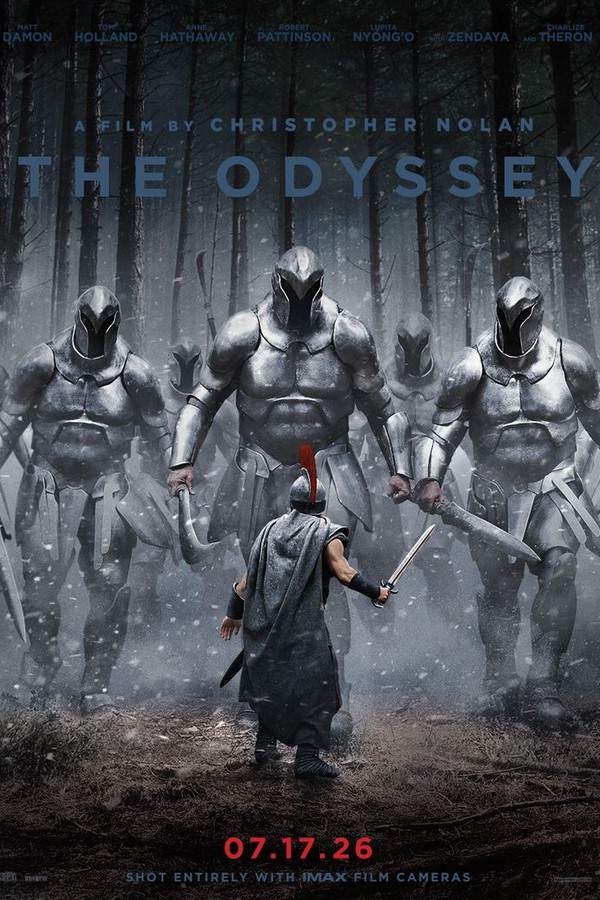
The Odyssey (2026) movie poster

Timeline

The Odyssey (2026) Timeline Explained – Every Event in Order

Release, runtime and language
2026 · 2 h 52 m · English
Echo score 70
Loading streaming availability…
Directed by
Christopher Nolan
Starring
Charlize Theron, Josh Stewart, Matt Damon, Tom Holland, Lupita Nyong'o, John Leguizamo
Budget
$250M

After the fall of Troy, the legendary king of Ithaca sets out on a long, perilous journey home. Along the way he must contend with capricious gods, fearsome mythological beasts and a succession of harsh trials that test both his cunning and his very humanity, pushing him to the brink.

On this page (7)
  1. 1 Where to watch
  2. 2 Events in order (15)
  3. 3 How it worked in The Odyssey
  4. 4 Timeline questions answered
  5. 5 The book behind the movie
  6. 6 Movie threads
  7. 7 Every angle
Loading streaming availability…

15 events in order · contains spoilers

The Odyssey Timeline: Events in Chronological Order

Every key event of The Odyssey (2026) in order, scene by scene, with when and where it takes place. Use it to untangle flashbacks, time jumps and parallel storylines, to refresh your memory before the sequel or to find the exact scene you are thinking of.

  1. Twenty Years Without a King

    For twenty years, Ithaca has been kingless since Odysseus never returned from the Trojan War. Suitors led by the nobleman Antinous aggressively court his wife Penelope in a bid to claim the throne from her son, Telemachus. Only Penelope, Telemachus, and Odysseus's half-blind servant Eumaeus still believe the king will one day return.

    When
    Twenty years after the Trojan War
    Where
    Ithaca
  2. Telemachus Seeks Answers in Sparta

    Penelope fears raids by the murderous 'Sea Peoples', who violate Zeus's law of respect between guests and hosts. Seeking news of his father, Telemachus travels to Sparta with Odysseus's old friend Mentor to question King Menelaus. Menelaus and his wife Helen recount the war, but they can offer no certainty about Odysseus's fate. Meanwhile, Antinous learns of the journey and conspires to kill Telemachus upon his return and plunder Ithaca.

    Where
    Sparta
  3. Athena Commands the Return

    On the distant island of Ogygia, the goddess Athena appears before Odysseus and commands him to return home at last. The nymph Calypso, who is infatuated with him, resents the order yet urges Odysseus to remember his past. His memories pull him back to the terrible story of his long, doomed voyage from Troy.

    Where
    Ogygia
  4. Flashback: The Fall of Troy

    Years earlier, the Greek army under Agamemnon conquered Troy using Odysseus's cunning stratagem, the Trojan Horse. Greek soldiers hid inside the wooden structure while the soldier Sinon was sacrificed as a decoy. With Menelaus and Agamemnon safely home, Odysseus and his crew set sail, beginning their ill-fated journey back to Ithaca.

    When
    Years earlier, at the end of the Trojan War
    Where
    Troy
  5. Flashback: The Curse of Polyphemus

    Stopping at an island for supplies, Odysseus and his men are trapped in a cave by the cyclops Polyphemus, who hungrily devours several soldiers. The survivors blind the monster and make their escape. From the water they hear Polyphemus crying out to his father, the sea god Poseidon, whose wrath soon unleashes brutal sea conditions on the crew.

    Where
    A cave on an island
  6. Flashback: The Laestrygonian Massacre

    The battered fleet lands at Telepylus, where the Laestrygonians, man-eating giants, attack without warning. Most of the remaining crew are slaughtered, and two of the fleet's three ships are sunk. The disaster shatters what is left of the men's trust in their leader.

    Where
    Telepylus
  7. Flashback: Circe's Island

    The surviving crew rebels against Odysseus and seeks refuge on the island of Aeaea, where the witch Circe turns them into pigs. Odysseus persuades her to restore his men, including his second-in-command Eurylochus. Circe then reveals that to reach Ithaca, he must first cross the river Oceanus into the land of the dead.

    Where
    Aeaea
  8. Flashback: Into the Underworld

    Crossing the river Oceanus, Odysseus enters Hades, where he meets the shades of his fallen soldiers. Sinon's shade reproaches him for his deception and reveals that Antinous manipulated him into taking Sinon's place in the Greek army. Agamemnon's shade tells of his murder at the hands of his wife Clytemnestra, and the prophet Tiresias foretells that only Odysseus will ever survive the journey home.

    Where
    Hades (the Underworld)
  9. Flashback: The Sirens and the Sea Monsters

    Chased from the underworld by the shades of his fallen army, Odysseus follows Tiresias's guidance for the trials ahead. He survives the deadly allure of the Sirens as well as the twin sea monsters Charybdis and Scylla. Yet each ordeal thins his crew further and deepens the men's desperation.

    Where
    The open sea
  10. Flashback: The Cattle of Apollo

    Landing on Thrinacia, Odysseus warns his starving men not to touch the cattle of Apollo, since Tiresias foretold they would die if they did. Weak with hunger, the men disobey and slaughter the sacred herd. Zeus answers with a violent storm that sinks their ship, killing everyone except Odysseus, who washes ashore unconscious on Ogygia.

    Where
    Thrinacia
  11. Seven Years of Oblivion on Ogygia

    On Ogygia, Calypso's lotus flowers strip Odysseus of his memories, and he remains with her for seven years. When he finally regains himself, he builds a raft and surrenders his fate to the storm and the sea. His return home, however, comes with the suitors' plot against Telemachus already in motion.

    When
    Seven years after the shipwreck
    Where
    Ogygia
  12. The Homecoming in Disguise

    Odysseus comes ashore in disguise, taking the alias 'Sinon'. From Eumaeus he learns that the suitors sent bandits to assassinate Telemachus and Mentor; the bandits kill Mentor, but Odysseus rescues Telemachus and slays the attackers. His loyal old dog Argos dies as it joyfully recognizes its master, and Telemachus quietly deduces the stranger's true identity.

    Where
    Ithaca
  13. Feast, Confrontation, and Confession

    During a feast, the disguised Odysseus confronts Antinous about betraying Sinon, and the furious suitor thrashes him before Telemachus intervenes. After the meal, Odysseus confesses to Penelope his guilt for violating Zeus's law during the sacking of Troy and desecrating Athena's statue after killing her priestess. He reveals that the dreaded 'Sea Peoples' were the Greeks themselves, whose brutality helped ignite the Late Bronze Age collapse, and begs Penelope's forgiveness.

    Where
    Ithaca
  14. The Trial of the Bow

    Penelope instructs the suitors to return at dawn and declares she will remarry whoever can string Odysseus's great bow and shoot an arrow through a row of axe heads. Every suitor fails at the impossible task. When Odysseus takes the bow and succeeds effortlessly, his true identity is revealed before the entire hall.

    When
    At dawn
    Where
    Ithaca
  15. The Reckoning and the Farewell

    The hall erupts in battle, and with Telemachus fighting at his side, Odysseus cuts down the challenging suitors, including the treacherous Antinous. Once the remaining suitors surrender, Odysseus cedes the throne of Ithaca to his son. He then departs with Penelope to seek peace in exile, sailing west to honor his fallen soldiers, with the couple musing that time will forget Odysseus's mistakes.

    Where
    Ithaca

Last updated: October 19, 2026 at 19:48

Was this helpful?

trick · contains spoilers

How It Worked in The Odyssey

How the trick in The Odyssey really worked, step by step: what each move looked like at the time, what was actually going on and how one step made the next possible.

Trick 4 steps

The Trojan Horse Stratagem

Odysseus conquered Troy by building a massive wooden decoy horse that concealed Greek soldiers inside, with a soldier named Sinon sacrificed as a decoy to ensure the ruse worked.

1Odysseus devises thewooden decoy2Looked like something else at the timeGreek soldiers hideinside the decoy3Sinon is sacrificedas a decoy4Troy falls to thestratagem
WhoLooked like something else
Read the 4 steps as text
  1. 1

    Odysseus devises the wooden decoy

    Odysseus

    Odysseus devised the Trojan Horse, a massive wooden decoy, as the stratagem for conquering Troy.

  2. 2

    Greek soldiers hide inside the decoy

    Hidden Greek soldiers

    What it looked like: The massive wooden horse appeared to be only a decoy object rather than a container of armed men.

    Greek soldiers were hidden inside the massive wooden horse.

  3. 3

    Sinon is sacrificed as a decoy

    Sinon

    A soldier named Sinon was sacrificed as a decoy to ensure the ruse worked.

  4. 4

    Troy falls to the stratagem

    Greek forces · Odysseus

    The ruse worked, and the Greek forces led by Agamemnon finally conquered Troy through the legendary stratagem.

Timeline questions answered

The Odyssey Timeline Explained: Your Questions Answered

When does it happen, and why in that order? The questions people ask about the chronology of The Odyssey (2026): time jumps, flashbacks, cause and effect between scenes and the correct order of events, each answered with spoilers.

Q1

Why does it take Odysseus twenty years to return home from Troy?

In The Odyssey, Odysseus's twenty-year absence is the result of a chain of divine punishments and mortal mistakes. Blinding the cyclops Polyphemus provokes Poseidon's wrath, which destroys his fleet across the Laestrygonians, Circe, and the Sirens. After his crew eats Apollo's sacred cattle on Thrinacia, Zeus sinks the last ship, and Odysseus washes up on Ogygia, where Calypso's lotus flowers strip his memory for seven years.

  • odysseus twenty years
  • return home
  • trojan war delay
  • poseidon curse
Q2

Why does Odysseus blind Polyphemus if it guarantees Poseidon's revenge?

Odysseus blinds Polyphemus in The Odyssey because it is the only way to escape the cyclops's cave after the monster devours several of his men. Trapped inside with no weapons capable of killing the creature, blinding it is the cost of survival. Polyphemus then calls on his father Poseidon, which curses the fleet for the rest of the voyage.

  • polyphemus
  • cyclops
  • blinding
  • poseidon curse
  • odysseus
Q3

What actually kills Odysseus's crew on the island of Thrinacia?

In The Odyssey, the crew is killed because they disobey Odysseus's explicit warning and slaughter the sacred cattle of Apollo while starving on Thrinacia. The prophet Tiresias had already foretold that the men would die if they touched the herd. Zeus answers the sacrilege with a violent storm that sinks the ship, killing everyone except Odysseus, who washes ashore on Ogygia.

  • thrinacia
  • apollo cattle
  • odysseus crew death
  • tiresias prophecy
Q4

Why does Odysseus lose his memory on Ogygia?

Odysseus loses his memory on Ogygia because Calypso gives him her lotus flowers after he washes ashore unconscious from Zeus's storm. In The Odyssey, the nymph's lotus renders him amnesic for seven years, allowing her to keep him on the island without resistance. Only when Athena finally intervenes does he slowly recover his identity and build a raft to leave.

Foreshadowing: Athena's earlier command to return home hints that his captivity is being engineered by the gods.

  • calypso
  • lotus flowers
  • memory loss
  • ogygia
  • seven years
Q5

Who are the 'Sea Peoples' really in the film?

The Odyssey reveals that the 'Sea Peoples' everyone on Ithaca fears are not foreign raiders at all. When the disguised Odysseus confesses to Penelope, he admits that the Sea Peoples were actually the Greeks themselves, whose brutality and violations of Zeus's law during and after the sack of Troy triggered the historical Late Bronze Age collapse.

Foreshadowing: Penelope's early fear of the Sea Peoples is set up as a real threat before the film twists it into a confession of Greek guilt.

  • sea peoples
  • late bronze age collapse
  • greek guilt
  • trojan war consequences
Q6

Why does Odysseus disguise himself as 'Sinon' when he returns to Ithaca?

Odysseus adopts the alias 'Sinon' because he needs to enter Ithaca unseen and test who among the suitors remains loyal and who is treacherous. The name is deliberately loaded: in The Odyssey, Sinon's shade reveals that Antinous manipulated him into taking the fall soldier's place in the Trojan Horse, so using the alias forces Antinous to react to his own crime.

Foreshadowing: Sinon's role as the sacrificed decoy at Troy sets up why the name carries so much weight in Ithaca.

  • sinon alias
  • odysseus disguise
  • antinous
  • trojan horse decoy
Q7

What does Tiresias prophesy for Odysseus in the Underworld?

In The Odyssey, the prophet Tiresias tells Odysseus in Hades that by divine will only he will ever reach Ithaca alive, while the rest of his crew will perish. He also warns that his men must not harm the cattle of Apollo on Thrinacia, a warning the starving crew ultimately breaks.

  • tiresias prophecy
  • hades
  • odysseus fate
  • apollo cattle warning
Q8

Why does Antinous betray Sinon and take his place in the Greek army?

According to Sinon's shade in Hades, Antinous manipulated Sinon into taking the soldier's place inside the Trojan Horse so that Antinous could avoid the sacrifice and remain safely in Greece. In The Odyssey, the deception is what allows Antinous to return to Ithaca and later lead the suitors against Odysseus's house.

Foreshadowing: Antinous's eagerness to kill Telemachus and plunder Ithaca mirrors the same ruthlessness that cost Sinon his life.

  • antinous
  • sinon betrayal
  • trojan horse
  • greek army manipulation
Q9

Why does Penelope announce she will remarry right after Odysseus confesses?

Penelope does not yet know that the beggar confessing to her is actually Odysseus, since he is still in disguise. By declaring the bow contest the next morning, she forces every suitor to compete publicly, giving Odysseus the chance to reveal himself on his own terms. In The Odyssey, her announcement is the trap that springs the final reckoning.

Foreshadowing: Penelope's twenty years of stalling the suitors builds toward this single decisive morning.

  • penelope remarriage
  • bow contest
  • suitors
  • odysseus disguise
Q10

How does the bow contest reveal Odysseus's true identity?

In The Odyssey, Penelope declares that whoever can string Odysseus's great bow and shoot an arrow through a row of axe heads will win her hand. Every suitor fails the impossible task because only Odysseus has the strength and familiarity with the weapon. When the disguised beggar effortlessly strings it and fires cleanly, the entire hall realizes the king has returned.

  • bow contest
  • odysseus bow
  • axe heads
  • identity reveal
  • suitors
Q11

Why does Odysseus give up the throne to Telemachus after killing the suitors?

Odysseus cedes Ithaca because he has confessed to Penelope that he violated Zeus's law and helped cause the Late Bronze Age collapse. Unable to rule a kingdom he has shamed, he passes the crown to Telemachus, who is now ready to lead. In The Odyssey, the abdication is his penance for the sins he carried home from Troy.

Foreshadowing: His quiet confession to Penelope about the Sea Peoples already signals he no longer believes he deserves to rule.

  • odysseus abdication
  • telemachus throne
  • penance
  • ithaca succession
Q12

What does Odysseus confess to Penelope about the fall of Troy?

Still in disguise, Odysseus confesses to Penelope that he desecrated Athena's statue during the sack of Troy after killing her priestess, who was Athena herself in disguise. He admits that his army violated Zeus's law of hospitality and that the Greek rampage became the Sea Peoples' raids that ended the Bronze Age. In The Odyssey, the confession is his attempt to be forgiven before revealing who he is.

Foreshadowing: Athena's anger in earlier visions foreshadows the priestess encounter Odysseus finally admits to.

  • odysseus confession
  • athena priestess
  • troy desecration
  • zeus law
Q13

Why does Odysseus sail into exile after winning back Ithaca?

After defeating the suitors, Odysseus leaves Ithaca with Penelope to seek peace in exile rather than reign. In The Odyssey, the choice reflects his acceptance that his guilt over Troy cannot be ruled away, and that renewal for his family must come through separation from the throne. Sailing west also lets him honor the fallen soldiers whose shades he met in Hades.

Foreshadowing: Tiresias's prophecy that only Odysseus would return home already implied his journey would not end with a quiet kingship.

  • odysseus exile
  • ithaca departure
  • fallen soldiers
  • bittersweet ending

Movie threads

More Movies Like The Odyssey, by Mood & Story

Curated lists built around what makes The Odyssey tick: the same mood, the same kind of story or the same emotional payoff. Each list explains why these movies belong together.

Mythic voyage and divine trials like in The Odyssey

Epic journeys where gods, monsters, and fate test one hero's endurance. Looking for movies like The Odyssey? These epic adventure and fantasy films share a mythic, perilous journey tone, with heroes facing gods, monsters, and impossible trials at sea or in legendary lands. Expect gorgeous world-building, brutal set-pieces, and somber, atmospheric storytelling reminiscent of Homeric sagas and other grand mythological adventures.

  • epic
  • mythological
  • perilous
  • atmospheric
  • somber
  • heroic
  • Tone: dark, somber, mythic
  • Pacing: variable, episodic and atmospheric
Why these movies?

The story pattern: A hero is cast out of his homeland by forces beyond his control and must traverse a vast, dangerous world where ancient powers actively intervene. The narrative unfolds as a sequence of episodic trials: monstrous encounters, underworld visions, tests of cunning, and moral compromises. The pacing breathes between breathless, violent set-pieces and quiet, reflective beats where the hero questions whether survival is worth the cost. By the end, the hero is fundamentally changed, often stripped of his former identity or throne.

Why they belong together: These films cluster around three shared pillars: a legendary or mythological setting where gods and monsters feel tangible, a journey structured around escalating trials rather than a single confrontation, and a hero whose endurance is tested both physically and spiritually. The tone is consistently dark and atmospheric, with violence that feels ceremonial rather than gratuitous, and endings that rarely arrive as clean victories.

Bittersweet war homecoming and guilt like in The Odyssey

Soldiers coming home carrying the weight of what they did and what they lost. If you liked The Odyssey, these dramas and epics share its core emotional engine: a warrior or exile returning home after years of war, weighed down by guilt, grief, and the suspicion that home no longer wants him. Expect nonlinear storytelling, flashbacks to brutal combat, family drama, identity-stripping disguises, and endings that cost the hero everything he fought for.

  • guilt-ridden
  • haunted
  • exile
  • family loyalty
  • war trauma
  • nonlinear
  • Tone: dark, guilt-ridden, bittersweet
  • Pacing: variable, flashbacks intercut with present-day tension
Why these movies?

The story pattern: The protagonist arrives home as an outsider, often unrecognized, having survived horrors the audience has witnessed through flashbacks. A political or domestic conspiracy complicates the reunion, forcing the hero to navigate between deception and brutal reckoning. Family members, especially a spouse and child, become both motivation and obstacle, and the climax usually requires violence that reopens old wounds. The resolution is bittersweet: peace is bought at the price of further exile, abdication, or the knowledge that history will judge the hero harshly.

Why they belong together: These stories are united by a post-war veteran perspective, a nonlinear structure that cuts between present-day home life and traumatic past campaigns, and a bittersweet or tragic resolution where reunion is never clean. Themes of disguise, identity loss, divided loyalty, and moral reckoning dominate, and the tone sits firmly in dark and heavy territory with relatively low humor. Movies fit when their central question mirrors Odysseus's: can homecoming redeem the cost of survival?

Every angle

The Odyssey (2026) Explained: Plot, Ending, Timeline & Characters

Everything about The Odyssey in one place: what happens in the plot summary, the timeline in chronological order, the characters and meaning, the ending explained and a spoiler-free summary. What's After the Movie adds the cast, box office and post-credit scenes.

Coming soon on iOS and Android

The Plot Explained Movie Summary App

Plot summaries, endings explained and timelines on your phone. Catch up on any movie in minutes, save your favorites and never miss a twist again.

Be the first to know when we launch. Your email stays private, always.

Learn more about the app