Plot Explained Spoilers guaranteed!
Plot Explained

Browse by genre

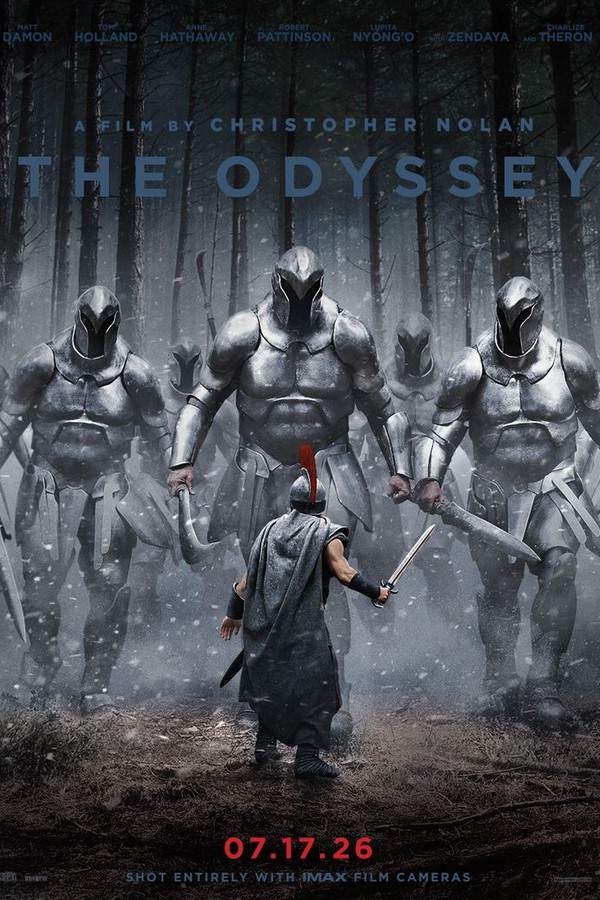
The Odyssey (2026) movie poster

Characters & Themes

The Odyssey (2026) Characters, Setting & Themes Explained

Release, runtime and language
2026 · 2 h 52 m · English
Echo score 70
Loading streaming availability…
Directed by
Christopher Nolan
Starring
Charlize Theron, Josh Stewart, Matt Damon, Tom Holland, Lupita Nyong'o, John Leguizamo
Budget
$250M

After the fall of Troy, the legendary king of Ithaca sets out on a long, perilous journey home. Along the way he must contend with capricious gods, fearsome mythological beasts and a succession of harsh trials that test both his cunning and his very humanity, pushing him to the brink.

On this page (10)
  1. 1 Where to watch
  2. 2 Characters explained (5)
  3. 3 Character relationship map
  4. 4 Where & when it takes place
  5. 5 Themes & meaning (3)
  6. 6 Character & meaning questions
  7. 7 Dreams & reality explained
  8. 8 The book behind the movie
  9. 9 Movie threads
  10. 10 Every angle
Loading streaming availability…

5 main characters · contains spoilers

The Odyssey Characters Explained: Who Is Who

The main characters of The Odyssey (2026), heroes and villains: what drives them, how they change over the course of the story and what each of them reveals about the film's bigger ideas.

  • Odysseus (Matt Damon)

    Odysseus is portrayed as a heroic yet flawed leader, deeply determined to return home after the Trojan War. His cunning and resourcefulness are tested through trials that challenge his morality and resolve. Despite the weight of his decisions and guilt over past actions, Odysseus embodies the relentless pursuit of home and identity.

    • 🗡️ Hero
    • 🌊 Adventurer
    • 🤔 Complex
  • Penelope (Anne Hathaway)

    Penelope is depicted as a resilient and intelligent woman who remains loyal to Odysseus during his 20-year absence. She skillfully navigates the pressures from suitors while holding onto hope for her husband's return. Her character reflects strength and adaptability in a chaotic environment, embodying the theme of unwavering love.

    • ❤️ Loyal
    • 👑 Queen
    • 🧠 Intelligent
  • Telemachus (Tom Holland)

    Telemachus, Odysseus's son, undergoes a transformation from a boy to a man burdened by the absence of his father. His bravery in seeking knowledge about Odysseus reflects his desire for identity and independence. Throughout the story, Telemachus embodies the hope for new beginnings and a stronger future for Ithaca.

    • 🧑‍🦱 Brave
    • 👶 Son
    • 🔍 Seekers of Truth
  • Calypso (Charlize Theron)

    Calypso is a complex character torn between her love for Odysseus and the constraints of her divine role as a nymph. Her infatuation with Odysseus showcases themes of desire and captivity, as she embodies both the danger and allure of longing. Calypso's character raises questions about freedom and the cost of love.

    • 🌊 Nymph
    • 💘 Obsessed
    • ⚖️ Torn
  • Antinous (Robert Pattinson)

    Antinous is a primary antagonist, embodying betrayal and ambition as he vies for Penelope's hand. His ruthless tactics and manipulative nature reveal the darker side of desire for power. Antinous represents the challenges faced by Odysseus upon his return, emphasizing the theme of loyalty and the consequences of treachery.

    • 👑 Suitor
    • 🔪 Devious
    • 💔 Betrayer

Last updated: October 26, 2026 at 16:51

Was this helpful?

7 characters · 8 connections · contains spoilers

The Odyssey Character Relationship Map

Who is connected to whom in The Odyssey: family, love, friendships, rivalries and hidden ties, colour-coded. Pick a character to see their side of the story, or a connection to see what brings two characters together.

How much of the story to show
OOdysseusMatt DamonPPenelopeAnne HathawayTTelemachusTom HollandAAntinousRobert PattinsonCCalypsoCharlize TheronEEumaeusMMentor

Last updated: October 26, 2026 at 16:51

Was this helpful?

Setting

Where and When Does The Odyssey Take Place?

The setting of The Odyssey (2026): the year and time period, the places and locations, and how they shape the characters, the mood and the tension of the story.

Time period

Ancient Greece, during the Trojan War and its aftermath

The story is set in Ancient Greece, primarily during the aftermath of the Trojan War, a significant conflict that involved legendary heroes and gods. This era is marked by epic tales of heroism, moral dilemmas, and divine intervention. The events, spanning over two decades, illustrate the complexities of loyalty, love, and destiny in a world shaped by war and mythology.

Location

Ithaca, Ogygia, Sparta, Hades, Thrinacia

Ithaca is the home of Odysseus, known for its strategic significance and rich mythology. Ogygia, an island where Calypso keeps Odysseus captive, represents a place of beauty and longing. Sparta, ruled by Menelaus, is recognized as a powerful city-state during ancient Greek times. Hades is depicted as the underworld, where Odysseus encounters spirits of the deceased. Thrinacia, home to the cattle of Apollo, serves as a critical turning point in Odysseus's journey.

  • 🏝️ Island
  • 🏛️ Ancient Greece
  • 👻 Underworld

Last updated: October 26, 2026 at 16:51

Was this helpful?

3 major themes

The Odyssey Meaning: Themes & Message Explained

What is The Odyssey (2026) really about? The emotional, social and philosophical themes the film keeps returning to, its symbolism and the message beneath the surface.

  • Heroism

    The theme of heroism runs deep throughout 'The Odyssey', showcasing Odysseus as a multifaceted hero who faces numerous trials. His journey reflects the struggle between personal ambitions and the greater good, as he seeks to reclaim his kingdom. The bravery demonstrated by Odysseus and his allies encapsulates the essence of ancient heroic ideals.

  • Divine Intervention

    The story illustrates a constant interplay between gods and mortals, with characters like Athena directly influencing the fate of Odysseus. Divine intervention raises questions about free will and destiny, highlighting how the gods guide or challenge human actions. The narrative urges belief in divine will while simultaneously revealing the consequences of human folly.

  • Loyalty and Betrayal

    Themes of loyalty and betrayal are poignantly reflected in the relationships among characters. While Penelope's unwavering faith in Odysseus contrasts with Antinous's treachery, it highlights the complexities of trust in a tumultuous world. This theme emphasizes the emotional turmoil caused by deception and the enduring power of loyalty amidst adversity.

Last updated: October 26, 2026 at 16:51

Was this helpful?

Character & theme questions

The Odyssey Characters & Meaning: Your Questions Answered

The questions people ask about The Odyssey (2026): who the characters really are, their relationships, what the symbols mean, where it takes place and what the movie is really about. Each answer contains spoilers.

Q1

What is Odysseus really fighting for on his journey home?

Odysseus's central goal is to return to Ithaca and reclaim his home and kingdom after the Trojan War. The Odyssey frames that return as a search for identity as much as a physical journey, because the choices he makes test his cunning, morality, and willingness to face the consequences of war. His heroic determination is therefore tied to moral responsibility rather than simple victory.

Foreshadowing: Odysseus's lingering guilt over his past actions foreshadows the moral burden of the journey ahead.

  • odysseus
  • homecoming
  • kingdom
  • identity
  • war guilt
Q2

Which places does Odysseus travel through on his way home?

The Odyssey unfolds across a mythic Ancient Greek world, with Ithaca as Odysseus's home and the goal of his journey. He also encounters Ogygia, where Calypso holds him; Sparta, ruled by Menelaus; Hades, the underworld; and Thrinacia, home to Apollo's cattle. Together, these locations connect his private longing for home with the political, military, and supernatural world of ancient myth.

  • odysseus
  • ithaca
  • ancient greece
  • ogygia
  • sparta
  • hades
  • thrinacia
Q3

Why is Ithaca so important to Odysseus?

Ithaca matters because it is both Odysseus's home and the kingdom he intends to reclaim, not simply the place where his journey ends. Its strategic importance and deep mythology give the return personal and political weight: Odysseus is pursuing a place for himself, his family, and his identity after war. The pull of Ithaca also supplies the story's central tension between what a hero has endured and the home he hopes to recover.

  • ithaca
  • odysseus
  • homecoming
  • kingdom
  • identity
Q4

When does the story take place?

The story is set in Ancient Greece during the Trojan War and its aftermath, in an age of legendary heroes rather than a precisely documented historical period. The events span more than two decades, and gods, monsters, and the underworld are treated as real forces shaping human lives. This mythic setting makes loyalty, fate, and the moral consequences of divine intervention central concerns.

  • ancient greece
  • trojan war
  • aftermath
  • mythic era
  • twenty years
Q5

Are the gods controlling Odysseus's fate?

The gods influence Odysseus's path, but The Odyssey does not present them as simply controlling every human choice. Athena directly guides and supports him, while other divine powers challenge or punish human folly, leaving room for personal decisions to carry moral weight. The result is a tension between free will and destiny, with belief in the gods coexisting with awareness of the consequences of human actions.

  • gods
  • athena
  • free will
  • destiny
  • divine intervention
Q6

Why is Penelope's loyalty so important to the story?

Penelope's defining strength is her refusal to let Odysseus's twenty-year absence erase their bond. She remains hopeful while resisting the suitors, demonstrating the loyalty and adaptability that the story treats as forms of courage. Her role makes the homecoming about more than Odysseus reclaiming a kingdom: it is also the effort to restore a family relationship strained by separation, deception, and pressure.

Foreshadowing: Penelope's early refusal to abandon hope foreshadows the contrast between her loyalty and Antinous's treachery.

  • penelope
  • loyalty
  • suitors
  • ithaca
  • resilience
Q7

What is Ogygia, and why does Calypso keep Odysseus there?

Ogygia is Calypso's island, a place of beauty where she keeps Odysseus captive and expresses her love for him. For Odysseus, it embodies the danger of longing for a life detached from home, while for Calypso it expresses love constrained by her divine role. Their relationship therefore turns the island into a symbol of the conflict between desire, freedom, and the cost of love.

  • ogygia
  • calypso
  • captivity
  • longing
  • freedom
Q8

What does the story say about heroism?

Heroism in The Odyssey is not limited to physical courage. Odysseus wins through cunning, resourcefulness, and endurance, but his status as a hero also exposes him to guilt and consequences for the violence of the Trojan War. The theme sets his ambition to reclaim his kingdom against a larger concern for the greater good, presenting heroism as a burden that must be examined rather than simply celebrated.

  • heroism
  • courage
  • cunning
  • war guilt
  • greater good
Q9

What is Telemachus's role in the story?

Telemachus is Odysseus's son and the bridge between the hero's absence and Ithaca's future. He begins as a boy burdened by his father's unknown fate, then seeks knowledge and independence as he tries to define his own identity. His coming-of-age role gives the story a hopeful counterweight to Odysseus's ordeal and represents the possibility of a stronger future for Ithaca.

Foreshadowing: Telemachus's early search for knowledge about his father foreshadows his growth into a leader.

  • telemachus
  • coming of age
  • leadership
  • ithaca
  • identity
Q10

Who is Antinous and what does he want?

Antinous is the principal antagonist among the suitors competing for Penelope's hand and a place of power in Ithaca. He is defined by ambition, manipulation, and treachery, making him a personal embodiment of the betrayal threatening the family Odysseus has left behind. His role shows that the struggle for power at home is as dangerous to Odysseus as the monsters and gods encountered at sea.

  • antinous
  • suitors
  • betrayal
  • ambition
  • power
Q11

How is Hades portrayed in the story?

Hades is the Greek underworld, where Odysseus encounters spirits of the deceased. Rather than functioning only as a frightening destination, it gives the mythic world a space for reflection on the dead, the past, and the consequences of a hero's choices. Its presence also makes the boundary between the living and supernatural worlds feel tangible.

  • hades
  • underworld
  • spirits
  • greek mythology
Q12

Why is Thrinacia a significant location?

Thrinacia is the island associated with Apollo's cattle, and its significance comes from the clash between human survival and divine boundaries. As a critical turning point in Odysseus's journey, it shows how decisions made under pressure can carry religious and moral consequences. The location reinforces the theme of divine intervention: the gods set limits that mortals must learn to respect.

  • thrinacia
  • apollo
  • divine punishment
  • human folly
Q13

Is the story based on Greek mythology?

The story is rooted in the Greek myth of Odysseus and the Trojan War, following the tradition of the ancient epic. It combines legendary figures and gods with monsters, the underworld, and themes of homecoming, loyalty, and fate. The Odyssey belongs to the world of myth, but its central concern is recognizably human: what it means to return from war and rebuild a life.

  • greek mythology
  • trojan war
  • legendary heroes
  • epic tradition
  • homecoming

2 realities · 3 crossings · contains spoilers

The Odyssey Reality Map: Dreams & Worlds Explained

The film's reality is structured as the mortal realm of Ithaca and the Greek seas, plus a distinct underworld of Hades that Odysseus must physically enter and leave. Circe tells him that reaching Ithaca requires crossing the river Oceanus into Hades, where the shades of the dead reveal information that shapes his homecoming.

How much of the story to show
Top levelRealLevel 11Level 1Real worldThe Mortal WorldThe physical realm of Ithaca, the Greek islands and the seas whereOdysseus's twenty-year voyage and homecoming take place.OdysseusOUnknownHades, the UnderworldThe realm of the dead reached beyond the river Oceanus, where Odysseusencounters the shades of his fallen comrades and the prophet Tiresias.OdysseusO
Who
Read the realities and crossings as text
  • Real world

    The Mortal World

    The physical realm of Ithaca, the Greek islands and the seas where Odysseus's twenty-year voyage and homecoming take place.

  • Unknown

    Hades, the Underworld

    The realm of the dead reached beyond the river Oceanus, where Odysseus encounters the shades of his fallen comrades and the prophet Tiresias.

How the realities connect

  • Way in: The Mortal World → Hades, the Underworld, Crossing the river Oceanus into Hades

    On Circe's advice that reaching Ithaca requires it, Odysseus crosses the river Oceanus and enters the depths of Hades.

    When: During Odysseus's voyage home

  • Way out: Hades, the Underworld → The Mortal World, Chased out of the underworld

    Odysseus leaves Hades and returns to the mortal seas after being chased from the underworld by the ghosts of his own army.

    When: After speaking with the shades in Hades

  • Affects: Hades, the Underworld → The Mortal World, Sinon's shade exposes Antinous's manipulation

    In Hades, the ghost of Sinon reveals that Antinous manipulated him into joining the army, a revelation Odysseus later raises when he confronts Antinous in Ithaca.

    When: After Odysseus's return to Ithaca

Movie threads

More Movies Like The Odyssey, by Mood & Story

Curated lists built around what makes The Odyssey tick: the same mood, the same kind of story or the same emotional payoff. Each list explains why these movies belong together.

Mythic voyage and divine trials like in The Odyssey

Epic journeys where gods, monsters, and fate test one hero's endurance. Looking for movies like The Odyssey? These epic adventure and fantasy films share a mythic, perilous journey tone, with heroes facing gods, monsters, and impossible trials at sea or in legendary lands. Expect gorgeous world-building, brutal set-pieces, and somber, atmospheric storytelling reminiscent of Homeric sagas and other grand mythological adventures.

  • epic
  • mythological
  • perilous
  • atmospheric
  • somber
  • heroic
  • Tone: dark, somber, mythic
  • Pacing: variable, episodic and atmospheric
Why these movies?

The story pattern: A hero is cast out of his homeland by forces beyond his control and must traverse a vast, dangerous world where ancient powers actively intervene. The narrative unfolds as a sequence of episodic trials: monstrous encounters, underworld visions, tests of cunning, and moral compromises. The pacing breathes between breathless, violent set-pieces and quiet, reflective beats where the hero questions whether survival is worth the cost. By the end, the hero is fundamentally changed, often stripped of his former identity or throne.

Why they belong together: These films cluster around three shared pillars: a legendary or mythological setting where gods and monsters feel tangible, a journey structured around escalating trials rather than a single confrontation, and a hero whose endurance is tested both physically and spiritually. The tone is consistently dark and atmospheric, with violence that feels ceremonial rather than gratuitous, and endings that rarely arrive as clean victories.

Bittersweet war homecoming and guilt like in The Odyssey

Soldiers coming home carrying the weight of what they did and what they lost. If you liked The Odyssey, these dramas and epics share its core emotional engine: a warrior or exile returning home after years of war, weighed down by guilt, grief, and the suspicion that home no longer wants him. Expect nonlinear storytelling, flashbacks to brutal combat, family drama, identity-stripping disguises, and endings that cost the hero everything he fought for.

  • guilt-ridden
  • haunted
  • exile
  • family loyalty
  • war trauma
  • nonlinear
  • Tone: dark, guilt-ridden, bittersweet
  • Pacing: variable, flashbacks intercut with present-day tension
Why these movies?

The story pattern: The protagonist arrives home as an outsider, often unrecognized, having survived horrors the audience has witnessed through flashbacks. A political or domestic conspiracy complicates the reunion, forcing the hero to navigate between deception and brutal reckoning. Family members, especially a spouse and child, become both motivation and obstacle, and the climax usually requires violence that reopens old wounds. The resolution is bittersweet: peace is bought at the price of further exile, abdication, or the knowledge that history will judge the hero harshly.

Why they belong together: These stories are united by a post-war veteran perspective, a nonlinear structure that cuts between present-day home life and traumatic past campaigns, and a bittersweet or tragic resolution where reunion is never clean. Themes of disguise, identity loss, divided loyalty, and moral reckoning dominate, and the tone sits firmly in dark and heavy territory with relatively low humor. Movies fit when their central question mirrors Odysseus's: can homecoming redeem the cost of survival?

Every angle

The Odyssey (2026) Explained: Plot, Ending, Timeline & Characters

Everything about The Odyssey in one place: what happens in the plot summary, the timeline in chronological order, the characters and meaning, the ending explained and a spoiler-free summary. What's After the Movie adds the cast, box office and post-credit scenes.

Coming soon on iOS and Android

The Plot Explained Movie Summary App

Plot summaries, endings explained and timelines on your phone. Catch up on any movie in minutes, save your favorites and never miss a twist again.

Be the first to know when we launch. Your email stays private, always.

Learn more about the app