Plot Explained Spoilers guaranteed!
Plot Explained

Browse by genre

The Nose or Conspiracy of Mavericks (2020) movie poster

Timeline

The Nose or Conspiracy of Mavericks (2020) Timeline Explained – Every Event in Order

Release, runtime and language
2020 · 89 mins · Russian
Starring
Chulpan Khamatova, Yuri Rost, Naum Kleiman, Andrey Khrzhanovsky, Inna Krymova, Lyudmila Antonova

This film explores 20th-century Russia, focusing on the period following the Russian Civil War and the subsequent merging of the Party and the state. This union led to widespread corruption and the suppression of both left and right-wing opposition groups. The narrative blends historical settings with biographical accounts and showcases works from prominent Russian avant-garde artists, composers, and writers of the era, offering a vivid portrayal of a complex and transformative period.

On this page (4)
  1. 1 Events in order (12)
  2. 2 Timeline questions answered
  3. 3 Movie threads
  4. 4 Every angle

12 events in order · contains spoilers

The Nose or Conspiracy of Mavericks Timeline: Events in Chronological Order

Every key event of The Nose or Conspiracy of Mavericks (2020) in order, scene by scene, with when and where it takes place. Use it to untangle flashbacks, time jumps and parallel storylines, to refresh your memory before the sequel or to find the exact scene you are thinking of.

  1. In-flight meta-narrative begins

    An Aeroflot flight carries major proponents of Russian theater and cinema, all watching different classics on the in-flight TV. As the camera glides past each passenger, eras and works merge into a single meta-narrative. The sequence sets the film's overarching frame where past and present collide mid-air.

    When
    during flight
    Where
    Onboard Aeroflot flight
  2. Gogol arrives in St. Petersburg

    Nikolai Gogol arrives in St. Petersburg, circa 1828. He begins writing The Nose. This entry anchors the narrative in early 19th-century Russia and foreshadows the surreal events to come.

    When
    circa 1828
    Where
    St. Petersburg
  3. Kovalyov searches for the missing Nose

    Major Kovalyov introduces himself and begins searching for the missing Nose. The Nose itself takes on a life of its own, eluding the owner and defying ordinary logic. The pursuit exposes the story's satirical edge.

    When
    circa 1830s
    Where
    St. Petersburg
  4. The Nose's surreal journey

    The Nose is seen wearing glasses and traveling in a luxurious car, a surreal image that highlights its independence from Kovalyov. The episode dramatizes Gogol’s satirical nightmare about identity and bureaucratic power. This uncanny interchange marks a key surreal beat in the early section.

    When
    circa 1830s
    Where
    St. Petersburg
  5. Shostakovich and Meyerhold in the 1920s

    In the 1920s, Dmitri Shostakovich works on an adaptation of Gogol’s novella and meets Vsevolod Meyerhold. The possible collaboration begins to take shape, blending modernist theater with classical satire. The cross-era connection foreshadows how art can resist or adapt to political pressures.

    When
    1920s
    Where
    Moscow
  6. Bolshoi Opera scene with Zhdanov

    An opera at the Bolshoi Theatre is performed featuring a Bulgakov piece, attended by Stalinist accomplices including official Zhdanov. The scene places art inside the machinery of state power, showing how culture is curated for ideological ends.

    When
    1930s
    Where
    Bolshoi Theatre, Moscow
  7. A letter about patronage

    The entourage attends the performance because a letter from the playwright complains about the lack of patronage for the arts. The letter catalyzes official attention and public display, blurring art with political theater.

    When
    1930s
    Where
    Moscow
  8. Pravda editorial targets Meyerhold and Shostakovich

    The next day, Pravda publishes 'Muddle Instead of Music', an editorial aimed at Meyerhold and Shostakovich. The piece embodies the regime’s critical stance toward experimental art and dissent. It demonstrates how media can be used to police cultural creation.

    When
    the day after the Bolshoi performance (1930s)
    Where
    Moscow
  9. Part 3 opens with Meyerhold’s story

    Part 3 opens with the story of Vsevolod Meyerhold and, more broadly, the experiences of writers, scientists, and artists under an authoritarian government. The narrative broadens from a single satire to a collective history of censorship and control. The film builds a sweeping panorama of cultural life under repression.

    When
    1930s
    Where
    Russia
  10. Across eras the meta-narrative persists

    Across epochs—Gogol’s 1820s, Shostakovich’s 1920s, and Meyerhold’s era—the film continues to weave the lives of artists under pressure into a single, overlapping tapestry. Characters and events reflect the tension between artistic ambition and political authority. The kernel of the film’s message emerges: art endures by negotiating power.

    When
    present in-film montage
    Where
    Screen montage
  11. Censorship and patronage themes

    The sequence emphasizes how editorial lines, state patronage, and political ideology shape what art can become. It shows how cultural life is steered by those in power. The narrative asks who really writes history and art.

    When
    1930s
    Where
    Russia
  12. Framing by flight and stage

    The closing frames fuse a literal flight with a theatre stage, suggesting history itself is a performance layered with wit and tragedy. The audience is left with a sense that art travels through time like a story carried on the wings of flight. The Aeroflot frame becomes a metaphorical doorway to Russia’s long artistic lineage.

    When
    present
    Where
    Flight frame and stage

Last updated: March 05, 2026 at 18:40

Was this helpful?

Timeline questions answered

The Nose or Conspiracy of Mavericks Timeline Explained: Your Questions Answered

When does it happen, and why in that order? The questions people ask about the chronology of The Nose or Conspiracy of Mavericks (2020): time jumps, flashbacks, cause and effect between scenes and the correct order of events, each answered with spoilers.

Q1

Why does the Nose leave Major Kovalyov?

The Nose leaves Kovalyov because in Gogol's satirical tale, it gains independent existence and social status beyond its owner. The Nose literally escapes Kovalyov's control, dons spectacles, travels in luxury cars, and achieves a higher rank than Kovalyov himself. This surreal element serves as Gogol's commentary on identity, social hierarchy, and how one's status or appendages can take on a life of their own, becoming more powerful than the person they belong to.

Foreshadowing: The whimsical tone established when Gogol arrives in St. Petersburg hints at the porous boundaries between reality and absurdity that will define the Nose storyline.

  • major kovalyov
  • nose
  • gogol
  • surreal
  • identity
Q2

What is the Pravda editorial 'Muddle Instead of Music'?

"Muddle Instead of Music" is a real historical Pravda editorial published in 1936 that attacked Shostakovich's opera "Lady Macbeth of Mtsensk." In the film, this editorial targets both Meyerhold and Shostakovich, representing how the Soviet regime used state media to police artistic expression. The editorial exemplifies the broader campaign against experimental art and demonstrates how cultural figures could be swiftly drawn into political campaigns that threatened their careers and freedoms.

Foreshadowing: The Bolshoi scene with Zhdanov and Stalinist officials establishes the political pressure on artists that culminates in the Pravda attack.

  • pravda
  • shostakovich
  • meyerhold
  • censorship
  • soviet
Q3

Who is Vsevolod Meyerhold in the film?

Vsevolod Meyerhold was a pioneering Russian theater director and innovator who appears in the 1920s-1930s portion of the film. He represents the conflict between artistic experimentation and political conformity. The film shows his collaboration with Shostakovich and depicts his ultimate fate under Stalinist repression, Meyerhold was arrested in 1939 and executed in 1940. His story illustrates the broader theme of how authoritarian regimes suppress creative vision.

Foreshadowing: The early collaboration between Shostakovich and Meyerhold in the 1920s foreshadows the tragic consequences that unfold in the 1930s.

  • meyerhold
  • theater
  • shostakovich
  • director
  • repression
Q4

Why does the film use an Aeroflot flight as its framing device?

The Aeroflot flight serves as a metaphorical vessel that carries Russian theater and cinema luminaries through time. As the camera sweeps through the cabin where passengers watch different classic films, the boundaries between historical eras collapse into "a single, dreamlike tapestry." This device allows the film to seamlessly merge Gogol's 1820s, Shostakovich's 1920s, and the Stalinist 1930s into one continuous meditation on art, power, and memory, suggesting that history itself is a performance layered with both wit and tragedy.

Foreshadowing: The opening flight sequence establishes the film's non-linear, meta-narrative approach that weaves multiple eras together.

  • aeroflot
  • framing
  • time
  • flight
  • meta-narrative
Q5

How is Shostakovich connected to Gogol's The Nose?

Shostakovich worked on adapting Gogol's novella "The Nose" into an operatic or theatrical work during the 1920s. The film depicts this creative endeavor as part of its broader exploration of how Russian artists across generations engage with classic literature. This adaptation represents the continuity of artistic interpretation, how different eras reinterpret classic works to reflect contemporary concerns, including the tension between artistic freedom and political constraint that defines both Gogol's time and Shostakovich's.

Foreshadowing: The early Gogol segment establishing the Nose's surreal journey sets up Shostakovich's later adaptation effort.

  • shostakovich
  • gogol
  • nose
  • adaptation
  • opera
Q6

What is Zhdanov's role in the film?

Andrei Zhdanov was a Soviet politician and close associate of Stalin who appears at the Bolshoi Opera in the 1930s. He represents the state's direct involvement in cultural affairs. The scene shows Zhdanov and other Stalinist officials attending the performance, demonstrating how culture was placed under state surveillance. The "Zhdanov Doctrine" later formalized the party's control over artistic expression, and his presence at the Bolshoi foreshadows the increasing ideological pressure that led to the Pravda editorial attacking Meyerhold and Shostakovich.

Foreshadowing: The Zhdanov scene at the Bolshoi directly precedes and sets up the Pravda "Muddle Instead of Music" attack.

  • zhdanov
  • stalin
  • bolshoi
  • censorship
  • soviet culture
Q7

What does the Nose represent in Gogol's story?

The Nose symbolizes multiple things: social rank and bureaucratic power, the fragmentation of identity, and the absurdity of human attachment to status. By having the Nose achieve higher social standing than its owner, obtaining a rank superior to Major Kovalyov, Gogol creates a surreal satire on how society values position over the person who holds it. The Nose's independence also represents how aspects of ourselves can escape our control, becoming forces that rival or surpass our own authority.

Foreshadowing: The whimsical and menacing mood established in Gogol's arrival foreshadows the satirical depth of the Nose storyline.

  • nose
  • symbolism
  • identity
  • rank
  • satire
Q8

Why does a letter about patronage for the arts matter in the film?

The letter from a playwright complaining about the lack of patronage for the arts serves as the catalyst that brings the Stalinist officials (including Zhdanov) to the Bolshoi performance. This dramatizes how art in Soviet Russia became intertwined with political patronage and surveillance. The letter highlights the precarious position of artists who depended on state support while being subject to state control, creating a system where requesting patronage also meant inviting ideological oversight.

Foreshadowing: The letter's complaint about patronage directly leads to the official attendance at the Bolshoi, setting up the chain of events leading to the Pravda editorial.

  • patronage
  • arts
  • letter
  • censorship
  • soviet
Q9

How does the film portray censorship under authoritarian rule?

The film portrays censorship through the arc of Meyerhold and Shostakovich, from their early 1920s collaboration and creative freedom to the 1930s crackdown symbolized by the Pravda editorial. It shows how artists initially found space to experiment, then faced increasing political pressure, public denunciation, and ultimately suppression. The narrative demonstrates that censorship operates through multiple mechanisms: direct bans, self-censorship, the weaponization of public opinion, and the physical elimination of artists. The film's sweeping scope across eras illustrates this as a persistent pattern in Russian cultural history.

Foreshadowing: The early collaborative scenes between Shostakovich and Meyerhold establish what is later lost to censorship and repression.

  • censorship
  • repression
  • meyerhold
  • shostakovich
  • authoritarian
Q10

What connects the different historical eras in the film?

The different eras, the 1820s of Gogol, the 1920s of Shostakovich and Meyerhold, and the 1930s of Stalinist repression, are connected through recurring themes of art versus power, creative vision versus political conformity, and the fate of artists under authoritarian rule. The airplane framing device physically merges these time periods, suggesting that the struggles and triumphs of Russian artists across centuries form a continuous lineage. Characters and motifs (like The Nose) reappear or echo across periods, emphasizing how history repeats and how art persists through generational upheaval.

Foreshadowing: The meta-narrative structure from the opening flight sequence establishes that all these eras will be woven together into one tapestry.

  • historical eras
  • time
  • art
  • power
  • connection

Movie threads

More Movies Like The Nose or Conspiracy of Mavericks, by Mood & Story

Curated lists built around what makes The Nose or Conspiracy of Mavericks tick: the same mood, the same kind of story or the same emotional payoff. Each list explains why these movies belong together.

Surreal Historical Allegories like The Nose or Conspiracy of Mavericks

Where the absurd and the tragic collide in re-imagined historical landscapes. If you enjoyed the blend of history and surrealism in The Nose or Conspiracy of Mavericks, explore more movies that use fantastical elements to dissect real-world events. These films offer intellectually rich and artistically bold perspectives on history, power, and memory.

  • surreal
  • historical
  • dreamlike
  • intellectual
  • reflective
  • oppressive
  • Tone: melancholic, surreal, reflective
  • Pacing: variable, contemplative
Why these movies?

The story pattern: Narratives in this thread often fragment or distort historical timelines, using symbolic characters and absurd events to critique political systems or explore collective trauma. The plot structure is typically non-linear, prioritizing thematic resonance over straightforward chronology.

Why they belong together: These films are grouped by their shared approach of using surreal, dreamlike, or absurdist storytelling as a lens for historical and political commentary. They create a unique, intellectually demanding viewing experience that challenges conventional historical narratives.
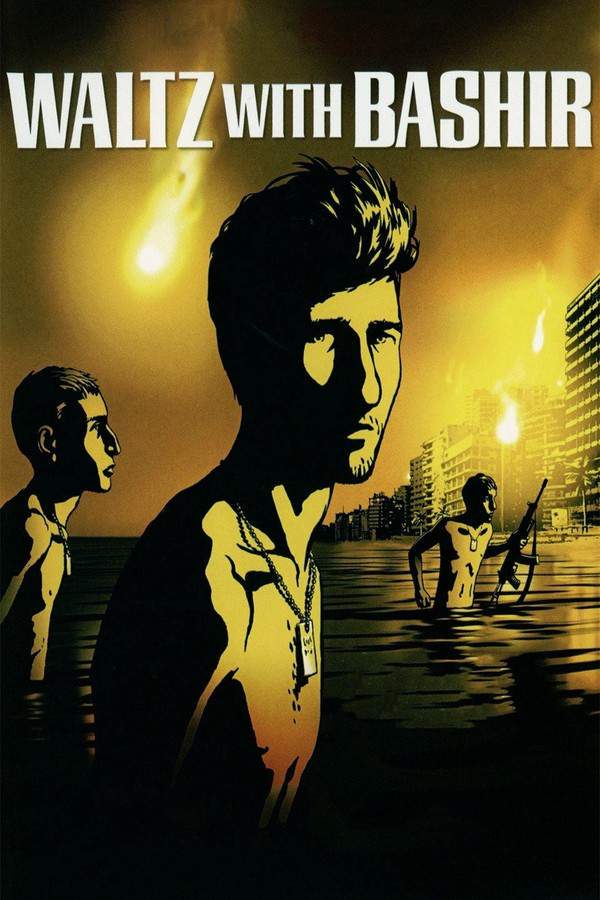
Movies about Artists Under Oppression like The Nose or Conspiracy of Mavericks

Stories of creative spirits navigating the crushing weight of authoritarian rule. Fans of The Nose or Conspiracy of Mavericks will appreciate these stories about the struggle for artistic creation against political repression. Discover films that delve into the lives of creators facing censorship and the personal cost of making art under authoritarian regimes.

  • oppressive
  • melancholic
  • historical
  • intellectual
  • reflective
  • tragic
  • Tone: melancholic, oppressive, reflective
  • Pacing: steady, reflective
Why these movies?

The story pattern: The central conflict pits the protagonist's inner creative drive against external political forces. The journey often involves sacrifice, internal conflict, and a meditation on whether art can survive or meaningfully resist oppression, typically leading to a bittersweet or ambiguous resolution.

Why they belong together: These movies share a powerful thematic core: the clash between individual creativity and systemic control. They evoke a specific melancholic and reflective mood, focusing on the emotional and intellectual toll of creating under duress.

Every angle

The Nose or Conspiracy of Mavericks (2020) Explained: Plot, Timeline & Characters

Everything about The Nose or Conspiracy of Mavericks in one place: what happens in the plot summary, the timeline in chronological order, the characters and meaning and a spoiler-free summary. What's After the Movie adds the cast, box office and post-credit scenes.

Coming soon on iOS and Android

The Plot Explained Movie Summary App

Plot summaries, endings explained and timelines on your phone. Catch up on any movie in minutes, save your favorites and never miss a twist again.

Be the first to know when we launch. Your email stays private, always.

Learn more about the app