Plot Explained Spoilers guaranteed!
Plot Explained

Browse by genre

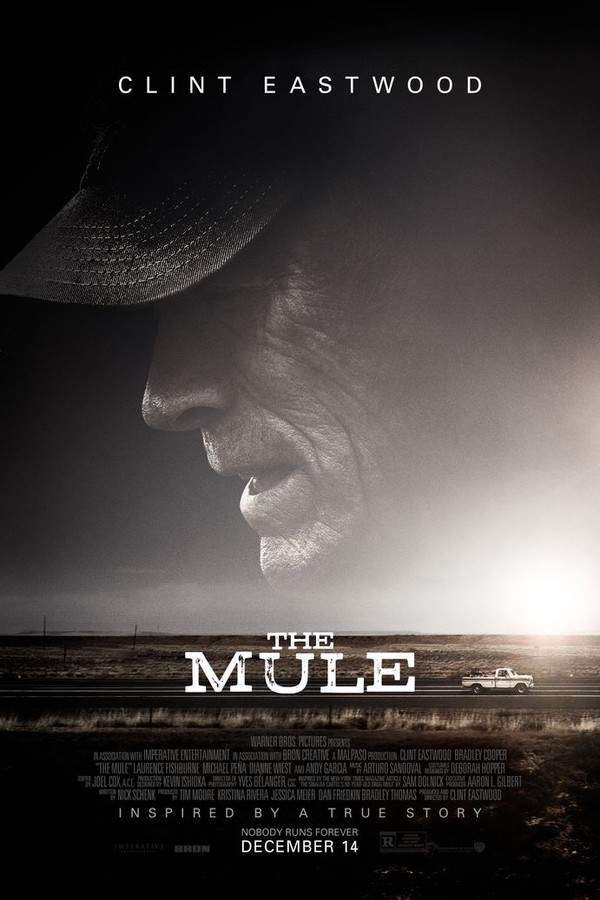
The Mule (2018) movie poster

Ending Explained

The Mule (2018) Ending Explained – Final Scene & Meaning

Release, runtime and language
2018 · 116 min · English
Echo score 58
Loading streaming availability…
Starring
Andy Garcia, Noel Gugliemi, Bradley Cooper, Laurence Fishburne, Michael Peña, Clint Eastwood
Budget
$50M

Facing financial ruin, Earl Stone becomes an unwitting drug courier for a Mexican cartel, seeking a way out of his desperate situation. As he transports increasing amounts of drugs, Earl’s conscience is challenged by the risks involved, and he finds himself caught between the cartel’s dangerous enforcers and the looming threat of law enforcement. He must confront his past decisions as his newfound prosperity is overshadowed by the consequences of his actions.

On this page (7)
  1. 1 Where to watch
  2. 2 What happens at the end
  3. 3 Final events in order
  4. 4 Ending questions answered
  5. 5 Movie threads
  6. 6 Movies like The Mule
  7. 7 Every angle
Loading streaming availability…

Ending explained · contains spoilers

What Happens at the End of The Mule?

How The Mule (2018) ends, what the final scene means, which earlier moments set it up and how to read the ending if the film leaves it open. The full ending explained, with every spoiler.

The ending of The Mule reveals Earl Stone's deep sense of guilt and the moral conflict that has haunted him throughout the film. After a long, quiet life dedicated to horticulture and providing for his family, Earl finds himself trapped in a criminal world when he becomes a drug mule for a cartel, mostly out of desperation and a desire to reconnect with his estranged loved ones. His actions, however, leave him riddled with remorse, especially after he risks everything to visit his dying wife in the hospital. Even though the cartel’s boss Gustavo shows mercy, the DEA arrives just as Earl is attempting to make amends in his own way. Faced with the inevitable, Earl chooses to take full responsibility for his crimes and pleads guilty, refusing to let his lawyer fight for him. This decision reflects his moral integrity and his wish to seek redemption through accepting his punishment.

By going to prison, Earl finally confronts the consequences of his choices and finds a strange sense of peace. His time behind bars allows him to reconnect with his passions, especially his love for plants and horticulture, which seems to bring him solace. The film suggests that after a lifetime of neglecting his family and personal happiness, Earl manages to find a work-life balance in the most unlikely of places—prison. There is a quiet hope in the final scenes, as Earl’s family promises to visit him, indicating that some form of reconciliation has finally begun. His journey ends on a bittersweet note, emphasizing the idea that even in his flaws and mistakes, Earl has achieved a measure of redemption and inner peace.

The story of Earl Stone mirrors real events, as the film is inspired by the true story of Leo Sharp, a WWII veteran turned drug courier who was eventually caught and sentenced. Unlike his fictional counterpart, the real Leo Sharp sought to avoid jail and proposed paying his penalty through farming, but he ultimately served a short sentence before being released and living out his days peacefully. The film’s ending shares similarities with the ending of Better Call Saul, where both characters confront their pasts, accept responsibility, and find a form of redemption—Earl in prison, and Saul in his own personal journey—highlighting that moral reconciliation often comes at a high cost, yet can bring peace. Ultimately, The Mule portrays an aging man seeking purpose and redemption, concluding with the poignant message that it’s never too late to find peace within oneself.

Last updated: June 25, 2025 at 09:00

Was this helpful?

The last 4 events

How The Mule Ends: The Final Events in Order

The last events of The Mule (2018) in chronological order, the run-up to the ending explained above. The complete timeline has all 16 events, scene by scene.

Open the full timeline
  1. Earl Goes Missing

    Earl vanishes off the radar, leaving both DEA and cartel members in disarray. This disappearance adds to the tension as his actions have complex repercussions.

  2. Family Reunion

    Iris begins to reconcile with Earl as he stays by Mary’s side until her passing. After attending her funeral, he is invited to Thanksgiving, hinting at a possible mending of familial ties.

    Where
    Funeral
  3. Earl's Arrest

    Eventually, Bates locates Earl and arrests him, marking a turning point in Earl's story. In court, Earl takes control of his narrative, pleading guilty while receiving emotional farewells from his family.

    Where
    Court
  4. Nurturing Daylilies in Prison

    The film concludes with Earl finding solace in nurturing daylilies within the prison garden, symbolizing resilience and a connection to his past. This act represents his enduring spirit amidst struggles.

    Where
    Prison

Ending questions answered

The Mule Ending: Your Questions Answered

The questions people ask most about the ending of The Mule (2018): what the final scene means, how the twist works, what happens to each character and how to read the ending. Each answer contains spoilers.

Q1

Why does Earl Stone plead guilty and refuse his lawyer's help?

Earl chooses to plead guilty because he finally accepts responsibility for his actions after a lifetime of neglect and poor decisions. By refusing to let his lawyer fight for him, he demonstrates genuine moral integrity and seeks true redemption rather than escaping consequences. This decision reflects his transformation from a self-serving man into someone willing to face the full weight of his crimes.

Foreshadowing: Earlier scenes show Earl repeatedly avoiding accountability, making this decision a significant character reversal.

  • plead guilty
  • Earl Stone
  • confession
  • redemption
  • legal consequences
Q2

Does Earl Stone go to prison at the end?

Yes, Earl is sentenced to prison for his role as a drug courier. However, rather than viewing this as a tragedy, the film portrays his incarceration as a strange form of liberation. Inside prison, he reconnects with his passion for horticulture and finds a work-life balance that eluded him for decades.

Foreshadowing: The film establishes Earl's love for plants and gardening early on, making this resolution feel earned.

  • prison sentence
  • Earl Stone
  • incarceration
  • ending outcome
Q3

Does Earl reconcile with his family at the end?

Earl achieves a measure of reconciliation with his family by the film's end. His family promises to visit him in prison, indicating that some form of healing has begun. This reconciliation comes after years of estrangement caused by his neglect of his family in favor of his work.

Foreshadowing: The strained relationship with his daughter and ex-wife is established early, building toward this eventual reconciliation.

  • family reconciliation
  • daughter
  • wife
  • visits
  • estranged family
Q4

Why does Earl find peace in prison despite losing his freedom?

Earl finds peace because prison forces him to slow down and confront his past choices head-on. For the first time in his life, he cannot run from his responsibilities or distract himself with work. His love for plants and horticulture provides him with meaningful work, giving him purpose he never had in his free but hollow life outside.

Foreshadowing: Earl's restlessness and inability to be present with family suggest he never found true fulfillment in freedom.

  • inner peace
  • prison life
  • horticulture
  • purpose
  • acceptance
Q5

Is The Mule based on a true story?

Yes, The Mule is inspired by the real-life story of Leo Sharp, a World War II veteran who became a drug courier for a Mexican cartel in his elderly years. Unlike the fictional Earl, the real Leo Sharp tried to avoid jail time by offering to pay his penalty through farming, but he ultimately served a short sentence before being released.

  • true story
  • Leo Sharp
  • based on real events
  • drug courier
Q6

What happens to Gustavo, the cartel boss?

Gustavo, the cartel boss, shows mercy toward Earl when Earl visits his dying wife, allowing him to leave despite knowing Earl might be a liability. The ending implies Gustavo's organization continues operating, but the focus remains on Earl's fate rather than Gustavo's ultimate outcome.

Foreshadowing: Gustavo's respect for Earl's age and loyalty is established throughout their interactions.

  • Gustavo
  • cartel boss
  • mercy
  • Mexican cartel
  • drug organization
Q7

Why does Earl risk everything to visit his dying wife?

Earl risks his safety by visiting his dying wife in the hospital because he wants to make amends before it's too late. This act represents his first genuine attempt to prioritize his family over his self-interest, showing his transformation from a man who neglected his loved ones to one seeking redemption.

Foreshadowing: Earl's profound regret and guilt about missing his daughter's wedding and neglecting his family foreshadow this desperate attempt at reconciliation.

  • dying wife
  • hospital visit
  • amends
  • final goodbye
  • family
Q8

What is the main message or theme of The Mule's ending?

The ending delivers a bittersweet message about redemption and finding purpose too late in life. It suggests it's never too late to find inner peace, even in the darkest circumstances. However, this redemption comes at a significant cost, Earl must lose his freedom to finally gain the perspective and balance he lacked for decades.

Foreshadowing: The recurring theme of missed opportunities and Earl's quiet regret establishes this message throughout the film.

  • theme
  • redemption
  • meaning
  • peace
  • too late
  • moral reconciliation
Q9

When does the DEA catch Earl Stone?

The DEA catches Earl just as he is attempting to make amends after visiting his dying wife. As Earl tries to reconcile in his own way, law enforcement closes in, forcing him to face the consequences of his criminal activities. This timing underscores the film's exploration of guilt, responsibility, and the impossibility of escaping one's past.

Foreshadowing: Throughout the film, the DEA investigation builds tension as they get closer to identifying Earl as the mule.

  • DEA arrest
  • caught by police
  • law enforcement
  • drug trafficking charges
Q10

How does the ending compare to Better Call Saul?

The ending shares thematic similarities with Better Call Saul, as both protagonists confront their pasts and accept responsibility for their crimes. Earl finds redemption in prison, while Saul White's journey takes a different path toward moral reckoning. Both stories highlight that true reconciliation often comes at a high personal cost but can ultimately bring peace.

  • Better Call Saul
  • comparison
  • similar endings
  • redemption arc
  • character journey

Movie threads

More Movies Like The Mule, by Mood & Story

Curated lists built around what makes The Mule tick: the same mood, the same kind of story or the same emotional payoff. Each list explains why these movies belong together.

Movies about desperate late-life crises like The Mule

Ordinary people turning to crime when their golden years fall apart. If you liked The Mule's story of an elderly man turning to crime, explore more movies about late-life desperation. These films feature ordinary people whose golden years are shattered, forcing them into dangerous paths for money, connection, or a final shot at meaning.

  • regretful
  • desperate
  • somber
  • tense
  • lonely
  • reflective
  • Tone: melancholic, regretful, desperate
  • Pacing: steady, character-driven
Why these movies?

The story pattern: Stories typically follow a character who, due to a late-life crisis—be it financial desperation, terminal illness, or profound loneliness—enters a criminal world they are ill-prepared for. The central conflict is often internal, pitting their need for survival or redemption against the heavy weight of their conscience and the consequences of their actions.

Why they belong together: These films are grouped by their shared focus on an older protagonist's desperate turn to crime, blending drama with elements of thriller or crime genres. They share a melancholic, reflective tone and explore themes of regret, consequences, and the search for redemption at an age when starting over seems impossible.

Movies with bittersweet moral endings like The Mule

Stories where achieving peace comes at a heavy, inevitable price. Find more movies like The Mule that end on a bittersweet note. These stories follow characters through difficult moral journeys, culminating in an ending where some peace is found, but it is shadowed by the heavy cost of their actions, offering reflective and emotionally complex conclusions.

  • bittersweet
  • reflective
  • somber
  • regretful
  • consequences
  • redemption
  • Tone: bittersweet, somber, reflective
  • Pacing: steady, deliberate
Why these movies?

The story pattern: The narrative pattern involves a protagonist engaging in a morally gray or outright wrong path, driven by a deep need. The climax forces a confrontation with the consequences of their actions. The resolution offers a form of personal victory—such as familial reconciliation or self-acceptance—but it is inextricably linked to a tangible loss, like freedom or a relationship, creating a bittersweet equilibrium.

Why they belong together: These films are united by their distinct emotional conclusion: the bittersweet ending. They balance character-driven drama with serious stakes, resulting in finales that are emotionally satisfying yet sobering. The shared experience is one of reflective contemplation rather than unadulterated joy or despair.

If you liked this

Movies Like The Mule

Similar movies to The Mule: the same genre, themes or kind of story. Each one comes with its own plot summary, timeline and ending explained.

Browse all movie summaries

Every angle

The Mule (2018) Explained: Plot, Ending, Timeline & Characters

Everything about The Mule in one place: what happens in the plot summary, the timeline in chronological order, the characters and meaning, the ending explained and a spoiler-free summary. What's After the Movie adds the cast, box office and post-credit scenes.

Coming soon on iOS and Android

The Plot Explained Movie Summary App

Plot summaries, endings explained and timelines on your phone. Catch up on any movie in minutes, save your favorites and never miss a twist again.

Be the first to know when we launch. Your email stays private, always.

Learn more about the app