Year: 1948
Runtime: 120 mins
Language: English
Director: Irving Pichel
After the actress dies, the man who loved her brings her body to her hometown to honor her wish that every church bell toll for three days after burial. He discovers the cost is prohibitive; the checks he writes bounce. With banks closed for the weekend, he prays for a miracle before they reopen; a miracle happens, though not in the way he expected.
Warning: spoilers below!
Haven’t seen The Miracle of the Bells yet? This summary contains major spoilers. Bookmark the page, watch the movie, and come back for the full breakdown. If you're ready, scroll on and relive the story!
Trace every key event in The Miracle of the Bells (1948) with our detailed, chronological timeline. Perfect for unpacking nonlinear stories, spotting hidden connections, and understanding how each scene builds toward the film’s climax. Whether you're revisiting or decoding for the first time, this timeline gives you the full picture.
Last updated: October 09, 2025 at 09:34
Find frequently asked questions about the The Miracle of the Bells (1948) timeline, including chronological order, nonlinear jumps, cause-and-effect links, and scene sequence clarifications. This timeline FAQ helps explain when key events happen, how moments connect, and why the story unfolds in that specific order.
Olga wanted to return to Coaltown because it was her hometown, where her parents were buried in a graveyard on the hill away from the mine dust. Despite her brief escape to Hollywood success, she retained a deep connection to her roots and wished to be laid to rest alongside her parents in the community that shaped her.
Dunnigan orchestrated all five churches to ring their bells for three days as a tribute to Olga, paying them with checks he wrote before receiving the money from the studio. The checks bounced because banks were closed for the weekend and he didn't yet have sufficient funds. He was essentially gambling that the publicity would generate revenue before payment was due.
Earlier in the timeline, Dunnigan is described as a Hollywood press agent skilled at persuasion, which enables his audacious plan.
During Olga's funeral at St. Michael's Church, the statues of St. Michael and the Virgin Mary appeared to slowly turn toward her coffin. The overflow crowd of mourners interpreted this as a miracle. However, Father Paul recognized the physical explanation: the weight of the gathered people caused the ground to shift, creating the movement. He chose to nurture the faith rather than dismiss it.
The church is described as small and poor, with a growing crowd that clearly exceeded its normal capacity.
Marcus Harris, the producer, initially refused to release the film because he feared audiences would resent welcoming a new star who had just died. He considered recasting Olga's role and restarting production, believing the public might react negatively to a deceased actress as the lead. This decision delayed the film's fate and kept Olga's memory in limbo until he changed his mind.
Olga was plucked from a nightclub chorus line to stand in for a temperamental film star who walked off set. Dunnigan saw her potential and convinced producer Marcus Harris to give her a chance despite her lack of formal film experience. She was cast as Joan in the film, revealing a natural talent that transformed her from a background stand-in into a leading actress.
The flashback establishes Dunnigan's role as a press agent who recognizes talent and knows how to advocate for it.
The statues appeared to turn toward Olga's coffin due to the physical weight of the overflow crowd gathered inside the tiny church. As hundreds of mourners pressed into the space, the ground shifted slightly beneath the statues, creating the illusion of movement. Father Paul understood this natural explanation but allowed the congregation to embrace it as an act of faith.
After Olga died from tuberculosis, the film was completed with her performance already filmed. Producer Marcus Harris initially hesitated to release it, fearing audience backlash toward a deceased star. However, he eventually decided to release it, and it became a huge success, drawing massive audience interest and turning Olga's sacrifice into a national phenomenon.
Olga contracted a severe, fatal form of tuberculosis likely worsened by the coal dust that filled Coaltown's air. The disease that haunted the mining town eventually claimed her life after she pushed through filming despite her illness. Her death became a symbol of the town's struggles, and the film's success led the studio to offer building a clinic to combat the disease that took her life.
The summary explicitly connects Olga's illness to the coal-dusted air of her upbringing in Coaltown.
The local funeral director resented Olga because she never finished paying for her father's burial. This unpaid debt created immediate friction when Dunnigan arrived with her body, as the funeral director pressured against the burial plan and sought to move it elsewhere. Dunnigan had to navigate this local conflict while honoring Olga's final wish.
Dunnigan loved Olga from afar throughout her brief rise to fame but never confessed his feelings. He stayed by her side through her illness and death, serving as her champion and protector rather than a romantic partner. His love remained unspoken, and he expressed it through his efforts to honor her memory and fulfill her wishes after her death.
Olga's sacrifice and the claimed miracle catalyzed multiple positive outcomes: the film became a massive success, nationwide donations flooded St. Michael's Church, and the studio offered to build a clinic to fight the tuberculosis that claimed Olga's life. The town reclaimed its dignity, the community came together, and tragedy was transformed into hope and renewal.
Discover curated groups of movies connected by mood, themes, and story style. Browse collections built around emotion, atmosphere, and narrative focus to easily find films that match what you feel like watching right now.
Personal tragedy sparks unexpected hope and healing within a small community.If you liked The Miracle of the Bells, explore more movies where personal grief or a single event unites a community, leading to uplifting outcomes and a strengthened sense of faith and togetherness.
These stories typically begin with a deeply felt loss or crisis for an individual. This event ripples outward, compelling a previously disconnected or struggling community to rally. The focus shifts from individual sorrow to collective action, often revealing hidden strengths and leading to a tangible, positive transformation for everyone involved.
They share a core belief in the power of community to overcome despair. The emotional journey consistently moves from sorrow to hope, emphasizing that healing is a shared process, often underscored by themes of faith, perseverance, and redemption.

A person's final wish or hidden legacy sparks events that feel miraculous.Find more films similar to The Miracle of the Bells, where fulfilling a deceased person's wish uncovers their hidden legacy and leads to events that restore faith and bring about positive change.
The narrative follows a protagonist striving to honor a promise or the memory of a departed loved one. They face significant obstacles, often financial or spiritual, pushing them to the brink. Their perseverance, or a seemingly impossible turn of events, results in a 'miracle'—not necessarily supernatural, but a profoundly positive and unlikely outcome that validates the effort and the deceased's life.
They are united by the theme of a life's impact extending beyond death. The central dramatic question revolves around whether faith and dedication can yield tangible, positive results, creating a viewing experience that is both sorrowful and deeply heartening.
Don't stop at just watching - explore The Miracle of the Bells in full detail. From the complete plot summary and scene-by-scene timeline to character breakdowns, thematic analysis, and a deep dive into the ending - every page helps you truly understand what The Miracle of the Bells is all about. Plus, discover what's next after the movie.
Read a complete plot summary of The Miracle of the Bells, including all key story points, character arcs, and turning points. This in-depth recap is ideal for understanding the narrative structure or reviewing what happened in the movie.
Discover the characters, locations, and core themes that shape The Miracle of the Bells. Get insights into symbolic elements, setting significance, and deeper narrative meaning - ideal for thematic analysis and movie breakdowns.
Discover movies like The Miracle of the Bells that share similar genres, themes, and storytelling elements. Whether you’re drawn to the atmosphere, character arcs, or plot structure, these curated recommendations will help you explore more films you’ll love.
The Miracle of the Bells (1948) Plot Summary & Movie Recap
The Miracle of the Bells (1948) Scene-by-Scene Movie Timeline
The Miracle of the Bells (1948) Spoiler-Free Summary & Key Flow
Movies Like The Miracle of the Bells – Similar Titles You’ll Enjoy
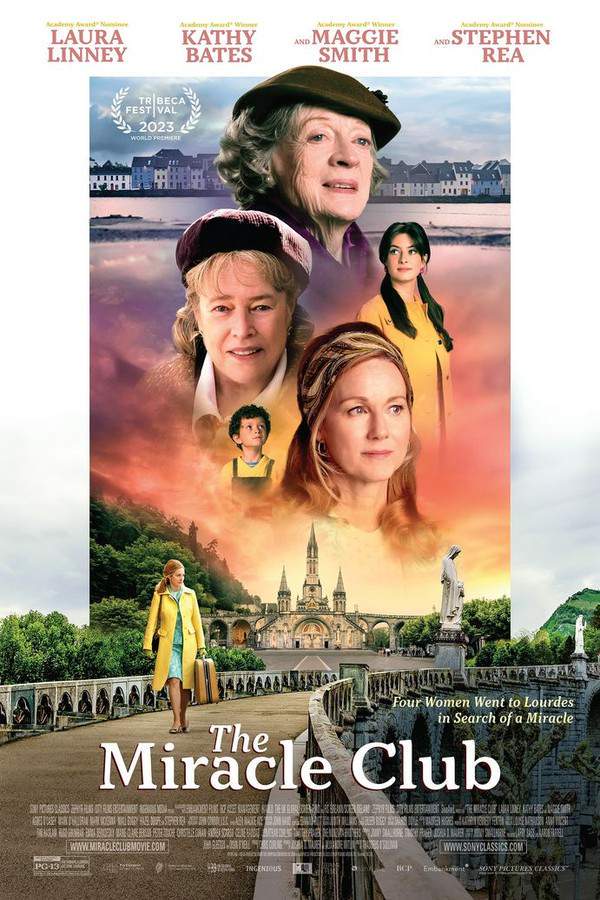
The Miracle Club (2023) Film Overview & Timeline
The Third Miracle (1999) Story Summary & Characters
The Miracle (1000) Plot Summary & Ending Explained
Miracle (2017) Ending Explained & Film Insights
The Miracle (1991) Full Summary & Key Details
Miracle (1982) Film Overview & Timeline
The Miracle Man (1919) Complete Plot Breakdown
Miracle in Bethlehem, PA (2023) Full Movie Breakdown
The Girl Who Believes in Miracles (2021) Full Summary & Key Details
Miracle in the Rain (1956) Story Summary & Characters
The Bells of Cockaigne (1953) Spoiler-Packed Plot Recap
Miracle on Main Street (1939) Plot Summary & Ending Explained
The Miracle (1959) Spoiler-Packed Plot Recap
The Bells of St. Mary’s (1945) Movie Recap & Themes
The Miracle Woman (1931) Complete Plot Breakdown