Plot Explained Spoilers guaranteed!
Plot Explained

Browse by genre

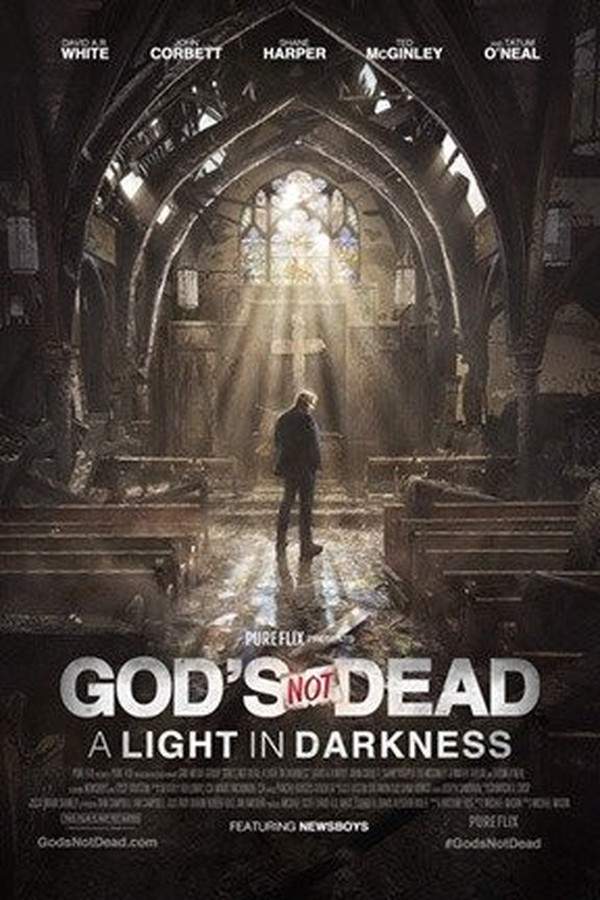
God's Not Dead: A Light in Darkness (2018) movie poster

Plot Summary

God's Not Dead: A Light in Darkness (2018) Plot Summary Explained

Release, runtime and language
2018 · 105 min · English
Echo score 45
Loading streaming availability…
Directed by
Michael Mason
Starring
John Corbett, Mark Sivertsen, Jennifer Taylor, Tatum O'Neal, Cissy Houston, David Maldonado
Budget
$5.7M

This inspirational drama centers on Pastor Dave, who confronts devastating loss when his church is destroyed. Facing resistance from university officials who deny his rebuilding plans, Dave remains steadfast in his faith. He embarks on a journey to rebuild, demonstrating compassion and respect for those around him. Along the way, he unexpectedly finds an ally in his estranged brother Pearce, an atheist who gradually finds himself inspired by Dave's unwavering belief.

On this page (6)
  1. 1 Where to watch
  2. 2 What happens: full plot
  3. 3 Plot questions answered
  4. 4 Movie threads
  5. 5 Movies like God's Not Dead: A Light in Darkness
  6. 6 Every angle
Loading streaming availability…

Full plot summary · contains spoilers

What Happens in God's Not Dead: A Light in Darkness: Full Plot Summary

The whole story of God's Not Dead: A Light in Darkness (2018) explained, from the opening scene to the final frame: every key event, every twist and what it all adds up to. Read it as a quick recap before the sequel, to check a scene you missed, or to finally understand what really happened.

As Rev. David Hill emerges from his prison sentence, a storm of controversy brews around St. James Church, nestled on the grounds of a college. The church's abrupt closure in favor of a new student center incites outrage from Dave and his close companion Jude. Together, they set out to launch a legal campaign to protect their cherished place of worship. However, their mission faces unexpected hurdles due to the reckless actions of a troubled college student, Adam Richertson, who is struggling with the fallout from his breakup with his skeptical girlfriend, Keaton Young. In a moment of misguided frustration, Adam throws a brick at the church, inadvertently starting a fire that tragically claims Jude's life and threatens the very essence of St. James.

As legal battles against the college commence, Dave finds himself in conflict with his estranged brother, Pearce Hill, a pragmatic attorney who cautions him to reconsider his crusade. However, Dave remains resolute, believing that he is fighting for a higher calling. The situation escalates when Adam anonymously confesses to Dave about being responsible for the church fire. This revelation sends shockwaves through their community, triggering a violent response from Dave and ultimately jeopardizing his lawsuit.

The repercussions of Adam's actions ripple throughout the community; public sentiment turns against Dave's cause, and criminal charges are soon levied against the troubled student. As events unfold, Pearce pulls away from Dave, lamenting how his brother's righteousness has blinded him to the harm he is inflicting upon others.

In a moment of self-reflection, Dave seeks spiritual guidance through prayer at St. James. It is here that he realizes his relentless pursuit of justice may have only intensified the turmoil. Acknowledging that St. James may not be the right platform to manifest God’s will, Dave decides to abandon his lawsuit and pursue an out-of-court agreement with the college.

Amid Adam's expressions of regret and Jude's family searching for closure, Dave takes an unexpected step: he petitions to have the charges against Adam dropped and shares his vision of establishing a new church in a nearby area. This courageous act fosters a measure of peace in the community, even as it marks a farewell to the era of St. James.

In a poignant post-credits scene, Michael Tait, a member of the renowned Christian music group Newsboys, delivers a stirring message, urging audiences to spread their faith and continue the God’s Not Dead movement by texting #Godsnotdead.

Last updated: November 19, 2024 at 11:35

Was this helpful?

Plot questions answered

God's Not Dead: A Light in Darkness Plot Explained: Your Questions Answered

The questions people ask most about God's Not Dead: A Light in Darkness (2018): what happens in the confusing scenes, why the characters do what they do, the twists, hidden details and what the ending means. Each answer contains spoilers.

Q1

Why did Adam throw a brick at St. James Church?

Adam threw the brick in a moment of misguided frustration after breaking up with his girlfriend Keaton. Unable to cope with his personal turmoil, he lashed out at the church, not intending for his action to cause the devastating fire that followed.

Foreshadowing: Earlier scenes establish Adam's emotional instability and struggle to process rejection, hinting at his capacity for reckless action.

  • adam richertson
  • brick
  • church fire
  • breakup
  • keaton young
Q2

How did Jude die in the fire?

Jude died when Adam's brick struck the church and accidentally started a fire. The blaze quickly consumed the building, trapping Jude inside and claiming his life during the incident.

Foreshadowing: The timeline shows Jude as a central figure in the legal campaign, making his tragic death a pivotal emotional turning point.

  • jude
  • death
  • church fire
  • adam richertson
Q3

Why did Dave decide to drop the lawsuit against the college?

After praying at St. James, Dave realized his relentless pursuit of justice had only intensified the turmoil in the community. He concluded that St. James was no longer the right platform to manifest God's will and that an out-of-court agreement would bring more peace.

Foreshadowing: Dave's earlier determination to fight creates tension with Pearce's warnings about the harm his crusade was causing.

  • dave hill
  • lawsuit
  • dropped
  • college
  • st james church
Q4

Why did Dave petition to have the charges against Adam dropped?

Dave chose compassion over vengeance, wanting to foster healing in the community. Rather than seeing Adam punished, he sought to help the troubled student find redemption and give Jude's family a sense of closure through forgiveness.

Foreshadowing: This decision follows Dave's spiritual reflection at St. James, where he recognized the destructive cycle his anger was perpetuating.

  • adam richertson
  • charges dropped
  • forgiveness
  • dave hill
  • compassion
Q5

Why did public sentiment turn against Dave after Adam confessed?

When Adam anonymously confessed to Dave about causing the fire, the revelation eventually became public. This shifted perception, people viewed Dave's legal fight as harmful rather than righteous, especially as criminal charges were pressed against Adam and the community blamed Dave for pursuing a case that seemed to damage everyone involved.

Foreshadowing: Pearce had warned Dave that his crusade was hurting others, foreshadowing this public reversal.

  • public opinion
  • adam confession
  • community
  • lawsuit
Q6

Why did Pearce distance himself from Dave during the legal battle?

Pearce, Dave's estranged brother and an atheist attorney, initially cautioned Dave about his crusade. As the situation escalated and public sentiment turned against Dave, Pearce pulled away completely, believing his brother's pursuit of righteousness had blinded him to the harm he was inflicting on others.

Foreshadowing: Their earlier conflict establishes the tension between Pearce's pragmatic worldview and Dave's unwavering faith.

  • pearce hill
  • brother
  • estranged
  • atheist
  • dave hill
Q7

How did the church fire actually start?

The fire started when Adam, frustrated over his breakup with Keaton, threw a brick at St. James Church. The brick struck the building and accidentally ignited the fire that would destroy the church and kill Jude.

Foreshadowing: Adam's emotional state after the breakup directly links to his reckless action.

  • church fire
  • arson
  • adam richertson
  • st james
Q8

Why did Adam confess anonymously to Dave about the fire?

Adam was burdened by guilt over causing Jude's death. He chose to anonymously confess to Dave specifically because he valued their friendship and couldn't live with the secret, though he feared the consequences of a public confession.

Foreshadowing: Adam's earlier troubled behavior establishes his internal struggle with the fallout from his breakup.

  • adam richertson
  • anonymous confession
  • guilt
  • fire
Q9

Why did Dave decide to establish a new church after St. James was lost?

After dropping the lawsuit and finding peace through forgiveness, Dave envisioned creating a new church in a nearby area. This represented his commitment to hope and redemption, a fresh start for the community rather than clinging to what was lost.

Foreshadowing: Dave's decision to abandon the lawsuit and show compassion directly leads to his vision for renewal.

  • new church
  • dave hill
  • redemption
  • hope
  • community
Q10

What was the conflict between Dave and his brother Pearce?

Dave and Pearce were estranged brothers who disagreed about Dave's legal battle to save St. James Church. Pearce, a pragmatic atheist attorney, believed Dave's righteous crusade was causing more harm than good. Their conflict embodied the film's theme of faith versus pragmatism.

Foreshadowing: The film's description notes that Pearce, an atheist, would eventually be inspired by Dave's unwavering belief.

  • pearce hill
  • brother
  • estranged
  • conflict
  • attorney

Movie threads

More Movies Like God's Not Dead: A Light in Darkness, by Mood & Story

Curated lists built around what makes God's Not Dead: A Light in Darkness tick: the same mood, the same kind of story or the same emotional payoff. Each list explains why these movies belong together.

Movies about Crisis of Faith like God's Not Dead: A Light in Darkness

Stories of characters whose beliefs are challenged by tragedy, leading to renewed conviction. Explore films similar to God's Not Dead: A Light in Darkness, where a profound personal or community crisis forces a re-examination of faith. These movies share a hopeful tone and a narrative of finding strength and purpose through adversity, often involving themes of forgiveness and community rebuilding.

  • spiritual
  • inspiring
  • dramatic
  • introspective
  • serious
  • uplifting
  • Tone: hopeful, inspirational, serious
  • Pacing: steady, reflective
Why these movies?

The story pattern: Stories in this thread typically begin with a triggering event—a loss, a conflict, or a betrayal—that shakes the foundation of a character's worldview. The central conflict revolves around maintaining their beliefs in the face of overwhelming evidence or pressure to abandon them. The arc resolves with the character not just returning to their faith, but often understanding it on a deeper, more mature level, leading to reconciliation and positive action.

Why they belong together: These films are grouped together because they share a core narrative structure of challenge, perseverance, and spiritual victory. They offer a viewing experience centered on hope, emotional resilience, and the triumph of conviction over cynicism, providing uplifting stories for audiences seeking inspirational dramas.

Movies about Community Healing like God's Not Dead: A Light in Darkness

Narratives where a broken group finds healing by coming together for a common cause. Discover movies like God's Not Dead: A Light in Darkness that focus on a community coming together after a crisis. These stories highlight how collective action to rebuild or overcome a challenge leads to personal reconciliation, forgiveness, and a restored sense of belonging.

  • inspiring
  • dramatic
  • heartwarming
  • serious
  • uplifting
  • collaborative
  • Tone: hopeful, dramatic, uplifting
  • Pacing: steady, character-driven
Why these movies?

The story pattern: The narrative pattern involves an external event that damages a community, creating internal strife and highlighting existing fractures. The protagonist often takes a leadership role in the rebuilding effort, which forces interactions with estranged individuals or opposing groups. Through the shared labor and common goal, characters confront their differences, leading to reconciliation and a stronger, more unified community by the end.

Why they belong together: These movies are united by their focus on collective healing. The central conflict is resolved not just through individual effort, but through the power of community. They share a steady pacing that allows for character development within the group and a hopeful, satisfying conclusion that emphasizes unity and renewal.

If you liked this

Movies Like God's Not Dead: A Light in Darkness

Similar movies to God's Not Dead: A Light in Darkness: the same genre, themes or kind of story. Each one comes with its own plot summary, timeline and ending explained.

Browse all movie summaries

Every angle

God's Not Dead: A Light in Darkness (2018) Explained: Plot, Timeline & Characters

Everything about God's Not Dead: A Light in Darkness in one place: what happens in the plot summary, the timeline in chronological order, the characters and meaning and a spoiler-free summary. What's After the Movie adds the cast, box office and post-credit scenes.

Coming soon on iOS and Android

The Plot Explained Movie Summary App

Plot summaries, endings explained and timelines on your phone. Catch up on any movie in minutes, save your favorites and never miss a twist again.

Be the first to know when we launch. Your email stays private, always.

Learn more about the app