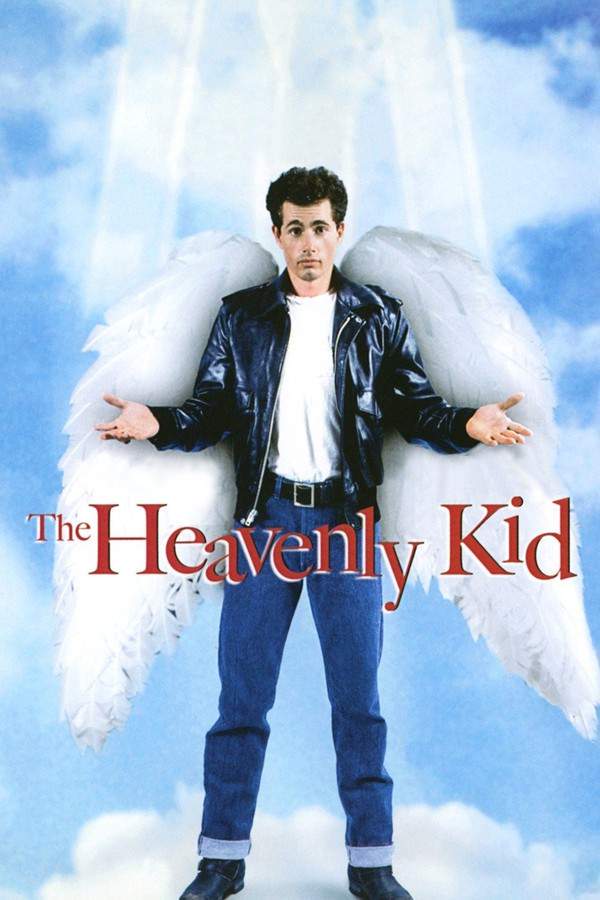
In Vatican intrigue and Glasgow classrooms, faith and doubt collide in a story that follows belief, teaching, and the limits of miracles.
At the Vatican, Father Cobb from Blessed Edith Semple School in Glasgow pushes for Blessed Edith’s elevation to sainthood, presenting evidence that emphasizes healing rather than outright miracles. A wary Vatican official sends the “little father” back to Scotland, yet Father Cobb continues to lead prayers that ask for Edith’s intercession to heal the sick, including the child Alice McKenzie who is crippled. The tension between official doctrine and personal faith threads through every scene as the church grapples with signs that some interpret as miracles and others dismiss as coincidence.
Across town, the rational, no-nonsense approach of the classroom becomes a counterpoint to the mysticism surrounding the case. Vic Mathews is a remedial teacher who does not subscribe to miracle theories, instead placing trust in his students and their capacity to learn. He is drawn to Ruth Chancellor, Ruth Chancellor, a new music teacher whose cool, skeptical demeanor clashes with his earnest, often awkward, charm. When Vic collapses after a bus-stop faint, he is rushed to the hospital, where doctors reveal a fatal brain tumour—though the full gravity of his condition is kept from him.
Meanwhile, the school’s headmaster complains to the teachers’ union representative, Jeff Jeffries, about Vic’s letter-writing campaign to keep Stevie Deans, Stevie Deans, from being shunted into a special school. Convinced he can reach the withdrawn student, Vic refuses to yield to the headmaster’s judgments. A late-night card game at Vic’s apartment becomes a turning point: after a few drinks, Jeff persuades Vic to ease up on the campaign. Yet even as the adults debate, a strange moment occurs—Vic’s stereo seems to play by itself, an eerie hint that something beyond the ordinary may be at work.
The next day, Vic discovers a surprising talent: he can teach essential math more effectively by using gambling-world examples, and Stevie responds with a spark of understanding that reveals him to be far from unintelligent. When Vic reports his progress, the headmaster seizes on the apparent miracle surrounding little Alice McKenzie, while Ruth offers quiet support. That night, Ruth drives home with Vic after a pub visit, and the next day in church she prays for him, as his relentless teaching begins to unlock new breakthroughs with other “special” students. The dynamic shifts from skepticism to cautious possibility, even as Vic remains wary about labeling any outcome a miracle.
A dramatic rooftop rescue tests Vic’s resolve. He saves a student who is trapped on an adjacent roof, leaping across to intervene, but both he and the boy slip. The boy suffers two broken legs, while Vic escapes with only minor scrapes. Father Cobb calls it a miracle; Vic refuses to concede, but hospital x-rays surprisingly show his brain tumour has vanished. The hospital administrator tries to destroy the images, yet the radiologist keeps hold of them, deepening the mystery.
News outlets pick up on Vic’s survival and the reported dramatic improvement in Stevie Deans. The bishop arrives, discordant with the sensational headlines about miracles, and Stevie is hurried away on a retreat to shield him from the media glare. School officials insist there were no miracles—only better teaching and a more engaged student body. Ruth helps Vic confront the possibility of miracles in everyday life, guiding him to see the nuance between coincidence and belief. She even shows him other stories of unfounded miracles in the press, inviting a more careful reading of sensational claims.
A television interview captures Vic’s skeptical stance, prompting the radiologist to deliver the x-rays to Father Cobb as “definitive proof” of a miracle—the complete healing of an inoperable brain tumour. Father Cobb weighs the legal implications, then burns the evidence, declaring, >We don't need proof—we believe.< The moment crystallizes the central conflict: belief without proof versus proof that may still be unassailable to faith.
As the story unfolds in the media, Vic grapples with the label of being “special,” and he wrestles with how to help Robbie—who longs to be seen as a special student too. They return to the rooftop to re-create Vic’s leap, hoping to demonstrate that the event was not magical, just possible through skill and teaching. Jeff then reveals Stevie Deans’ whereabouts, and Vic heads to the railway station to bring the student back.
Ruth asks Robbie to help locate Vic, and the two hurry toward the station, where Ruth and Vic share a tender embrace as reporters capture the moment with a global audience. In a moment of poignant irony, Robbie steps into a crowd and is swept onto a red carpet as Princess Diana arrives, with photographers framing the scene. Vic and Ruth depart by train, ready to bring another “special” student back to school, continuing a journey that tests belief, sparks new hope in the classroom, and questions what it really means to be extraordinary.
This is a story where teaching becomes a form of faith, and faith is tested by the measurable, the miraculous, and the everyday choices of people who refuse to give up on every child.