Plot Explained Spoilers guaranteed!
Plot Explained

Browse by genre

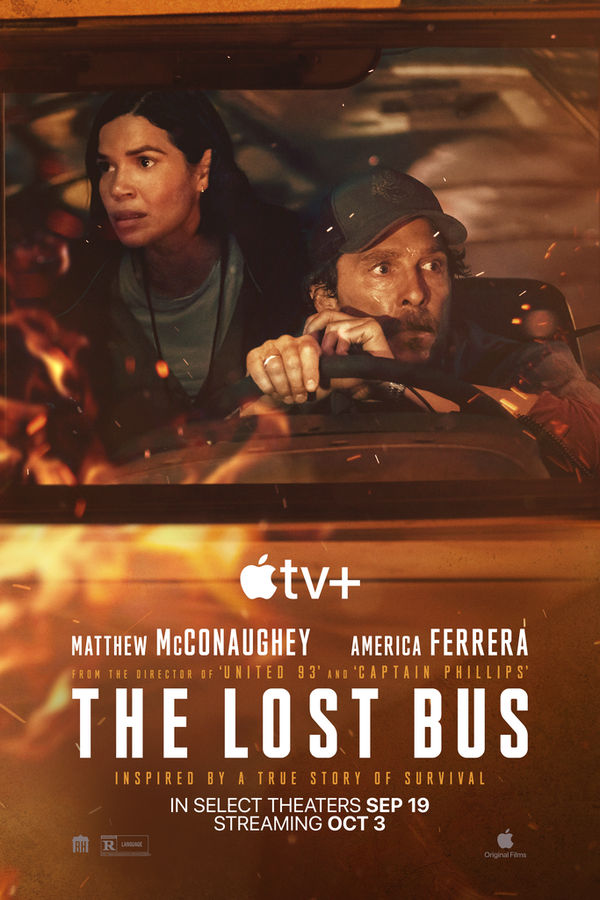
The Lost Bus (2025) movie poster

Plot Summary

The Lost Bus (2025) Plot Summary & Ending Explained

Release, runtime and language
2025 · 2 h 9 m · English
Echo score 71
Loading streaming availability…
Directed by
Paul Greengrass
Starring
Matthew McConaughey, Danny McCarthy, America Ferrera, Ashlie Atkinson, Yul Vazquez, Spencer Watson
Budget
$90M

Amid one of America’s deadliest wildfires, a reckless school bus driver (Matthew McConaughey) and a devoted teacher (America Ferrera) race against a raging inferno to evacuate 22 frightened children, confronting scorching heat, collapsing roads and split‑second decisions in a desperate fight for survival.

On this page (7)
  1. 1 Where to watch
  2. 2 What happens: full plot
  3. 3 Plot questions answered
  4. 4 How it ends
  5. 5 Movie threads
  6. 6 Movies like The Lost Bus
  7. 7 Every angle
Loading streaming availability…

Full plot summary · contains spoilers

What Happens in The Lost Bus: Full Plot Summary

The whole story of The Lost Bus (2025) explained, from the opening scene to the final frame: every key event, every twist and what it all adds up to. Read it as a quick recap before the sequel, to check a scene you missed, or to finally understand what really happened.

On November 18, 2018, high winds and bone-dry conditions push a spark from a Pacific Gas & Electric transmission line into a rapidly growing blaze that becomes the Camp Fire, devastating Paradise, California. Firefighters rush to respond, but the fire outpaces containment. Fire chief Chief Martinez orders evacuations for the town and surrounding areas, yet a computer glitch prevents the alert from reaching everyone in time, leaving many families unaware as flames close in.

Kevin McKay is a steady bus driver in Paradise who carries the weight of a difficult family life on his shoulders: his disabled mother Sherry depends on him, and his relationship with his teenage son Shaun has grown distant. On the morning of the fire, he completes his usual school route, then turns back toward the depot for scheduled maintenance, only to be pulled into a more urgent mission. His boss, transportation director Ruby Bishop, harshly critiques his delays and questions why he paused for Shaun’s medication. After a tense call with Shaun’s mother, Linda, Kevin makes a bold choice: he will deliver the medicine to Shaun himself, stepping away from the depot to help his family.

Far from the depot, 22 children at Ponderosa Elementary School, along with their teacher Mary Ludwig, are stranded inside the evacuation zone as the fire intensifies. Ruby calls for a bus to remove the kids, and Kevin agrees to take on the dangerous rescue mission, hoping that this dangerous task will mend the rough patch with Ruby. The situation grows more desperate as traffic thickens, radio contact falters, and power lines remain dangerously active. Chief Martinez orders the town’s power to be cut to curb the spread, but the digital warning fails to reach all corners of Paradise, complicating the evacuation.

With the situation deteriorating, Kevin detours to avoid gridlock and vows to get the children out safely. He argues with Mary over the best route, and, once contact with the depot is lost, he and Mary must improvise their plan to reach safety. They improvise a route to evacuate the bus toward Chico, hoping to place the kids somewhere safer while Kevin consoles a frightened student named Toby who, like Shaun, struggles with his father. The journey becomes a brutal test of nerves: navigating through smoke, falling power lines, and the relentless heat as the fire presses in on all sides.

The group faces additional danger when armed looters ambush them, but they manage to escape onto a side road. Heat, thirst, and smoke threaten the passengers, with the air conditioning failing as vents cough smoke into the bus. Mary leaves to fetch water, narrowly avoiding an exploding propane tank on the way back. Back at the evacuation point, Ruby speaks with the families, expressing faith in Kevin to shepherd the children to safety. As the fire tightens its grip, Chief Martinez halts firefighting efforts at times to prioritize saving lives, and officials warn the public about the scale of the disaster.

Inside the bus, visibility is near zero and the vehicle creaks under the stress of the terrain. Kevin tries to find an escape route when the road ends, but they are boxed in by flames and impassable terrain. He urges Mary not to abandon the children, and the pair must improvise again, sealing vents and using air filters to breathe. They reconcile their regrets about life in Paradise—Mary yearning for new experiences abroad, Kevin reflecting on his fraught relationship with Shaun—while the heat closes in around them. In a critical moment, the bus finally starts again after a stubborn repair, and the two drivers press on, driving directly through fire to reach safety.

Eventually, the bus arrives at a quiet evacuation point in Chico, where the children are joyfully reunited with their families. The ordeal prompts reconciliations: Ruby and Kevin make amends, and Kevin, after seeing his destroyed home, discovers that Linda has Shaun with her and that his family is alive. A text epilogue notes that the Camp Fire became California’s deadliest wildfire, with PG&E pleading guilty to involuntary manslaughter and paying $13.5 billion in compensation to wildfire victims. In the aftermath, Kevin trains as a teacher in Chico, while Mary continues teaching in Paradise and makes ongoing trips overseas, carrying the memory of the disaster into a hopeful, though changed, future.
Last updated: February 05, 2026 at 07:36

Was this helpful?

Plot questions answered

The Lost Bus Plot Explained: Your Questions Answered

The questions people ask most about The Lost Bus (2025): what happens in the confusing scenes, why the characters do what they do, the twists, hidden details and what the ending means. Each answer contains spoilers.

Q1

Why does Kevin leave his route to deliver medication to his son?

Kevin decides to deliver his son Shaun's medication after receiving a tense call from Shaun's mother Linda. Despite being behind schedule and facing criticism from his supervisor Ruby, Kevin prioritizes his family because Shaun is ill at home and his disabled mother Sherry depends on him. This choice reflects Kevin's internal conflict between his professional responsibilities and his family obligations, setting up his character arc of trying to mend his fractured relationship with his son.

Foreshadowing: Kevin's early decision to prioritize family foreshadows his ultimate choice to risk his life saving other children, demonstrating that his desire to protect the vulnerable stems from his guilt about being distant from his own son.

  • kevin mckay
  • shaun
  • medication
  • family
  • paradise bus driver
Q2

Why is Ruby so harsh with Kevin about his delays?

Ruby Bishop, the transportation director, criticizes Kevin for his delays because she is under immense pressure to coordinate the evacuation of dozens of children during an escalating wildfire crisis. Her harshness comes from the high-stakes situation and her responsibility for getting all buses deployed safely. However, their conflict is later resolved when Kevin successfully completes the rescue mission, and Ruby admits she always believed in him.

Foreshadowing: Ruby's initial criticism contrasts with her later expression of faith in Kevin, showing how crisis can strain professional relationships but also reveal deeper trust.

  • ruby bishop
  • kevin
  • criticism
  • supervisor
  • transportation director
Q3

How did the evacuation alert system fail during the Camp Fire?

Fire Chief Martinez ordered evacuations for Paradise and surrounding areas, but a computer glitch prevented the digital alert from reaching everyone in time. This technical failure left many families unaware that flames were rapidly approaching their homes. The breakdown in communication added to the chaos as people tried to evacuate while roads became gridlocked with traffic.

Foreshadowing: The early warning system failure highlights a key theme of the movie: how infrastructure failures compound natural disasters and put lives at risk.

  • evacuation
  • alert
  • computer glitch
  • paradise
  • fire chief martinez
Q4

Why does Kevin agree to rescue the students from Ponderosa Elementary?

Kevin agrees to take on the dangerous rescue mission partly because his boss Ruby calls for help and no other drivers are available, but also because he hopes that completing this heroic task might help repair his strained relationship with Ruby and prove himself as someone who can be counted on. His motivation is a mix of professional duty and personal redemption.

Foreshadowing: Kevin's willingness to risk his life for strangers reflects his deeper desire to make amends for being absent from his own son's life, making the rescue both an act of duty and self-redemption.

  • kevin mckay
  • rescue mission
  • ponderosa elementary
  • mary ludwig
  • evacuation
Q5

Why did some power lines remain active despite the order to cut electricity?

Chief Martinez ordered PG&E to cut power to Paradise to prevent the fire from spreading through electrical lines, but the order was not fully executed in time. Some power lines remained active throughout the evacuation, creating additional danger as falling lines and live electricity threatened evacuees and rescue teams. This failure contributed to the chaos and hazards faced by Kevin and Mary during their escape.

Foreshadowing: The incomplete power shutoff adds to the movie's portrayal of systemic failures during the disaster, showing how multiple breakdowns combined to worsen the crisis.

  • power lines
  • pge
  • electricity
  • fire chief
  • paradise evacuation
Q6

Were the looters in the movie based on real events?

The movie depicts armed looters ambushing the bus as it attempts to evacuate the children, representing the lawlessness that can emerge during natural disasters when emergency services are overwhelmed. While this scene adds dramatic tension, it serves as a narrative device to show the additional human dangers Kevin and Mary faced beyond the wildfire itself.

Foreshadowing: The looter encounter underscores the desperation of the situation and forces Kevin to take an alternate route, demonstrating how obstacles continued to pile up during the evacuation.

  • looters
  • ambush
  • armed
  • bus evacuation
  • california wildfire
Q7

Why does the bus break down and how does Kevin fix it?

The bus breaks down due to the extreme heat, smoke, and strain of navigating through the wildfire-affected terrain. After the vehicle fails to start, Kevin performs urgent repairs under intense pressure while the flames close in around them. His mechanical skills prove crucial in getting the bus running again so they can escape through the fire to reach safety.

Foreshadowing: The breakdown occurs at the most critical moment when visibility is near zero and escape seems impossible, creating one of the movie's most tense sequences before the successful repair allows their escape.

  • bus breakdown
  • repair
  • kevin
  • fire
  • escape
  • 坏了
Q8

Why does Mary leave the bus to get water during the evacuation?

Mary leaves the bus to fetch water for the children because the passengers are suffering from heat, thirst, and smoke inhalation as the air conditioning fails and vents begin coughing smoke into the cabin. Her dangerous trip to find water nearly costs her life when she narrowly avoids an exploding propane tank, but she returns with supplies that help sustain the children until rescue.

Foreshadowing: Mary's willingness to risk her life for the children demonstrates the selflessness that defines her character throughout the rescue mission.

  • mary ludwig
  • water
  • bus
  • propane tank
  • children
  • smoke
Q9

Does Kevin's son Shaun survive the Camp Fire?

Yes, Kevin's son Shaun survives the Camp Fire. After the evacuation, Kevin discovers that Shaun was with his mother Linda during the fire and both are alive. Their reunion, though occurring amid the devastation of Kevin's destroyed home, marks an emotional turning point that begins healing their strained relationship.

Foreshadowing: Kevin's earlier choice to deliver medication to Shaun, which put him behind schedule, takes on added emotional weight when Shaun's survival is confirmed.

  • shaun
  • kevin mckay
  • son
  • survived
  • camp fire
  • reunion
Q10

What happens to Kevin's home in the Camp Fire?

Kevin's home in Paradise is completely destroyed by the Camp Fire. After successfully evacuating the children to Chico and reuniting with his family, Kevin returns to find his house reduced to ruins. However, the destruction is tempered by the relief that his family, his wife Sherry and son Shaun, survived, allowing them to begin rebuilding their lives together.

Foreshadowing: The destruction of Kevin's home while he saved others creates a bittersweet resolution that mirrors the real Camp Fire's devastation while honoring the heroism of the actual rescue.

  • kevin home
  • destroyed
  • paradise
  • camp fire
  • ruins
Q12

What happens to Kevin and Mary after the evacuation?

After the evacuation, Kevin trains as a teacher and begins working in Chico, while Mary returns to teaching in Paradise and continues making overseas trips. The experience transforms both characters: Kevin finds a new purpose through education, while Mary carries the memory of the disaster into a changed but hopeful future.

Foreshadowing: Their post-movie paths reflect the healing process after trauma, Kevin redirecting his life toward what matters, Mary embracing new experiences while honoring what she survived.

  • kevin
  • mary
  • future
  • teacher
  • chico
  • paradise
  • new beginning

Ending explained

What Happens at the End of The Lost Bus?

How The Lost Bus (2025) ends, in short: the final scene, the last twist and what it means for the characters. The full ending explained, with every spoiler, lives on its own page.

Read the full ending explained

Kevin finally decides to answer the radio call for help, not because he has time to spare, but because he can’t stand by while the children are left to fend for themselves. He rushes the school bus to Ponderosa Elementary, loads the 23 kids and their teacher Mary Ludwig, and then battles clogged roads, choking smoke and an advancing blaze to the alternate drop‑off at Paradise Elementary. When the school is already ablaze, Ruby’s message to divert the children to the Chico fairground never reaches him, and the frightened youngsters panic, convinced their families have perished. Mary steadies them and, together with Kevin, they press on toward the main evacuation center.

Inside the smoldering bus, Kevin and Mary improvise makeshift filters from shirts and tape the vents, while Kevin fights a small fire with the lone extinguisher on board. The engine sputters, the heat presses in, and for a breath‑less moment Kevin could abandon the bus and die. Instead, his desperate need to prove himself to his son Shaun fuels a stubborn resolve; he drags the bus forward through a wall of flame, repairs the engine on the fly, and finally bursts out of the inferno into the cool, bright air of the Chico evacuation zone. The children, terrified but alive, pour out to reunite with waiting parents, and the crowd’s sigh of relief is palpable.

Continue reading the ending (2 more paragraphs)

At the center Kevin learns his own mother has already been brought in by a neighbor, but his son is still missing. The wrecked house he returns to is a shell of memories, yet he finds a framed photograph of him and Shaun, clutches it, and rides out in a car that turns out to be driven by Shaun himself. Shaun, accompanied by his mother, finally meets his father—not with anger, but with the quiet acknowledgment that his dad risked everything for strangers and for the chance to be there for him. The gesture mends the deep rift between them, suggesting forgiveness and a new start.

The film closes on Kevin’s quiet determination: after the fire he completes his teacher training and returns to the community as an educator at Fair View School in Chico. His act of daring bravery not only saves the children that day, but also redeems his sense of purpose and restores his bond with his son, leaving the audience with a bittersweet blend of relief and hope.

The Lost Bus ending explained in full

Movie threads

More Movies Like The Lost Bus, by Mood & Story

Curated lists built around what makes The Lost Bus tick: the same mood, the same kind of story or the same emotional payoff. Each list explains why these movies belong together.

Fast-paced survival thrillers like The Lost Bus

Stories where characters face imminent, escalating danger and must make split-second decisions. If you enjoyed the relentless urgency of The Lost Bus, explore these other movies like it. This collection features high-stakes survival stories with fast pacing and constant tension, perfect for fans of desperate races against overwhelming natural or man-made disasters.

  • tense
  • urgent
  • gripping
  • desperate
  • anxious
  • chaotic
  • Tone: tense, desperate
  • Pacing: fast, relentless
Why these movies?

The story pattern: These narratives are typically linear and straightforward, focusing on a clear, immediate goal: escape, survive, or rescue. The plot is driven by a series of escalating obstacles that the protagonists must overcome under extreme pressure, leaving little room for subplots or complex character backstory.

Why they belong together: Movies are grouped here based on their shared FAST pacing and HIGH intensity. They create a similar viewing experience defined by a palpable sense of urgency, desperate heroism, and the constant threat of an imminent catastrophe.

Bittersweet disaster dramas like The Lost Bus

Stories where survival comes at a great personal cost, blending victory with profound loss. For viewers who appreciated the emotional depth and bittersweet ending of The Lost Bus, this list features similar movies. These films explore themes of survival, heroism, and community in crisis, where triumph is intertwined with tangible loss and emotional scars.

  • harrowing
  • hopeful
  • traumatic
  • resilient
  • somber
  • emotional
  • Tone: bittersweet, harrowing
  • Pacing: steady, intense
Why these movies?

The story pattern: The narrative arc typically involves a group or individual overcoming a massive external threat, such as a natural disaster or societal collapse. The resolution acknowledges the heroes' success but also forces them to confront what was lost—lives, homes, or innocence—resulting in an ending that is hopeful yet somber.

Why they belong together: These films share a BITTERSWEET ending feel and a HEAVY emotional weight. They are united by their exploration of trauma and recovery, where the focus is not just on surviving the event, but on grappling with its lasting emotional aftermath.

If you liked this

Movies Like The Lost Bus

Similar movies to The Lost Bus: the same genre, themes or kind of story. Each one comes with its own plot summary, timeline and ending explained.

Browse all movie summaries

Every angle

The Lost Bus (2025) Explained: Plot, Ending, Timeline & Characters

Everything about The Lost Bus in one place: what happens in the plot summary, the timeline in chronological order, the characters and meaning, the ending explained and a spoiler-free summary. What's After the Movie adds the cast, box office and post-credit scenes.

Coming soon on iOS and Android

The Plot Explained Movie Summary App

Plot summaries, endings explained and timelines on your phone. Catch up on any movie in minutes, save your favorites and never miss a twist again.

Be the first to know when we launch. Your email stays private, always.

Learn more about the app