









Plot Explained Spoilers guaranteed!
Plot Explained

Browse by genre

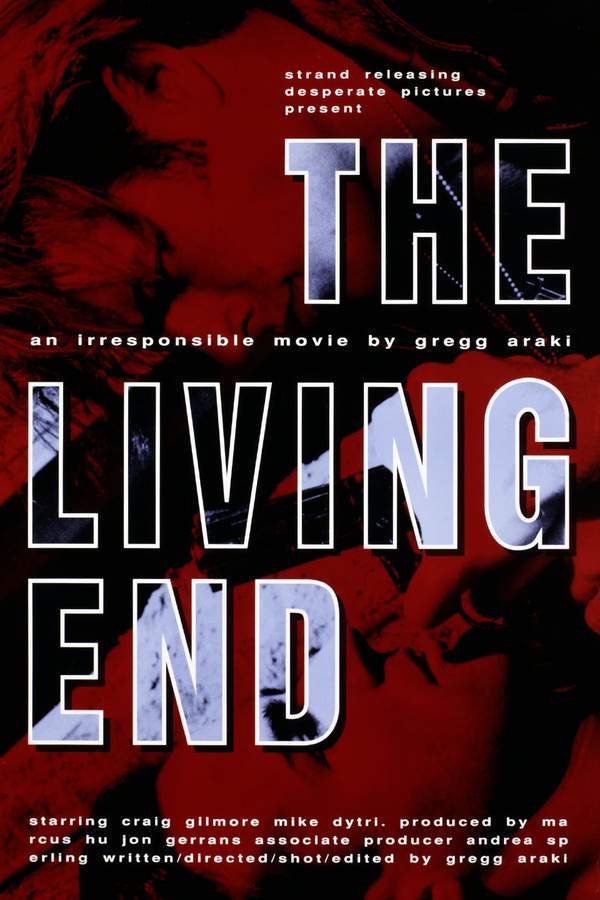
The Living End (1992) movie poster

Timeline

The Living End (1992) Timeline Explained – Every Event in Order

Release, runtime and language
1992 · 81 min · English
Directed by
Gregg Araki
Starring
Mary Woronov, Brett Vail, Craig Gilmore, Darcy Marta, Johanna Went, Mark Finch

A restless wanderer and a sharp-witted film critic, both living with HIV, forge an unexpected bond and set off on a journey of self-discovery. As they travel the open road, they experience the joys and challenges of life, confronting personal demons and finding an unconventional path to love and acceptance along the way.

On this page (6)
  1. 1 Where to watch
  2. 2 Events in order (15)
  3. 3 Timeline questions answered
  4. 4 Movie threads
  5. 5 Movies like The Living End
  6. 6 Every angle

Where to watch

Where to Watch The Living End (1992)

Where can you watch The Living End? Stream, rent or buy it in the US, including on Metrograph, MUBI and Kanopy: current JustWatch availability with up-to-date prices.

Streaming availability powered by JustWatch

15 events in order · contains spoilers

The Living End Timeline: Events in Chronological Order

Every key event of The Living End (1992) in order, scene by scene, with when and where it takes place. Use it to untangle flashbacks, time jumps and parallel storylines, to refresh your memory before the sequel or to find the exact scene you are thinking of.

  1. Jon is diagnosed with HIV in Los Angeles

    Jon, a withdrawn young film critic, struggles with depression after being diagnosed with HIV. This event establishes his emotional state and sets the tone for his journey. The diagnosis marks a pivotal moment in his life, prompting reflection and a sense of vulnerability.

    Where
    Los Angeles
  2. Luke hitches a ride and steals a car

    Reckless drifter Luke is picked up by a pair of lesbians, Fern and Daisy. When they stop for a bathroom break, Luke steals their car amidst a tense confrontation. He resumes hitchhiking after a flat tire leaves him stranded.

  3. Luke is picked up by Ken and has sex

    That night, Luke is picked up by Ken, who takes him to his home. They engage in sexual activity, which introduces Luke’s complex relationships and behavior. Things take a dark turn when Ken's wife Barbie catches them and kills Ken in a fit of rage.

  4. Luke flees after Ken's murder

    Following Barbie's murder of Ken, Luke escapes the scene, becoming a fugitive. His flight signifies a turning point as he tries to evade authorities and confront his chaotic life, emphasizing his reckless behavior.

  5. Luke is attacked by gay bashers and shot

    Luke is assaulted by three gay bashers with baseball bats. Using the stolen gun, he defends himself by shooting them, highlighting his violent and desperate response to threats. His survival marks a violent confrontation with his environment.

  6. Jon picks up Luke and they discover they are both HIV-positive

    Jon, a reluctant stranger, picks up Luke and invites him to stay the night. They learn they share the same HIV status, which deepens their connection. Their emotional vulnerability leads to a sexual relationship.

  7. Jon and Luke go shopping and encounter homophobic slurs

    After their night together, Jon and Luke go shopping with a stolen credit card. They face homophobic slurs from a neo-Nazi, prompting Luke to violently attack and kill him. This incident underscores the violence and hatred surrounding them.

  8. Jon throws Luke out and struggles with his feelings

    Nervous about Luke's violent temper, Jon ejects him from his house. Despite this, Jon confides in his friend Darcy about his persistent thoughts of Luke, revealing his internal conflict and attachment.

  9. Luke confronts Jon, shares suicidal thoughts, and they travel to California

    Luke, disturbed and suicidal, threatens to shoot himself. He urges Jon to leave with him, and they embark on a road trip to Northern California in search of Luke's friend. Their journey becomes an exploration of desperation and connection.

  10. Luke's friend rejects him in San Francisco

    In San Francisco, Luke’s friend rejects him without explanation, forcing Luke and Jon to keep searching for refuge. This rejection leaves Luke feeling isolated and intensifies their unstable situation.

    Where
    San Francisco
  11. Luke and Jon continue their road trip, using stolen credit cards

    The duo continues traveling, paying for motels with stolen credit cards. During the trip, Luke nearly shoots a police officer after receiving a parking ticket, revealing his impulsive and volatile nature.

  12. Jon wishes he had never met Luke; Luke seeks to die

    Tensions rise as Jon expresses regret about their relationship, wishing he had never met Luke. In response, Luke proposes that Jon kill him, sharing his desire to die, which highlights the depth of his despair and emotional turmoil.

  13. Luke robs a bank after falling ill

    Luke becomes sick, coughing heavily, and in a tormented state, he robs a bank at gunpoint with Jon. This act of desperation underscores his downward spiral and increasing recklessness.

  14. Jon plans to leave; Luke threatens and rapes him

    Jon decides to return to Los Angeles, but Luke, holding a gun, threatens Jon and their relationship reaches a breaking point. Luke then forces Jon into a sexual assault while holding the gun to his own head, symbolizing the destructive nature of their bond.

  15. Luke's gun misfires, and the film ends with their complicated relationship

    Luke attempts to shoot himself, but the gun misfires, leaving him alive. He unties Jon, who eventually leaves after punching Luke. Later, Luke leans on Jon, and they share a moment of ambiguous intimacy at sunset, ending the story on a complex note.

Last updated: August 19, 2025 at 05:13

Was this helpful?

Timeline questions answered

The Living End Timeline Explained: Your Questions Answered

When does it happen, and why in that order? The questions people ask about the chronology of The Living End (1992): time jumps, flashbacks, cause and effect between scenes and the correct order of events, each answered with spoilers.

Q1

Why does Luke steal the car from Fern and Daisy?

Luke steals the car because he's a reckless drifter who sees an opportunity. When Fern and Daisy stop for a bathroom break, Luke takes advantage of the situation to hijack their vehicle. The theft is impulsive and sets in motion his trajectory as a fugitive, demonstrating his characteristic disregard for consequences and willingness to take what he wants.

Foreshadowing: This early act of carjacking establishes Luke's pattern of impulsive, lawless behavior that escalates throughout the film.

  • luke
  • car theft
  • fern
  • daisy
  • hitchhiking
Q2

Why does Barbie kill Ken?

Barbie kills Ken after discovering him in bed with Luke. When she returns home and finds her husband with another man, she flies into a rage and stabs Ken to death. The murder is a violent, jealous reaction to infidelity, though Barbie herself is also implicated in the film's themes of destructive sexuality and violence.

Foreshadowing: This first murder establishes that Luke's encounters frequently result in lethal violence for others.

  • barbie
  • ken
  • murder
  • wife
  • infidelity
Q3

Why does Luke kill the neo-Nazi with the cassette player?

Luke kills the neo-Nazi after the man verbally assaults them with homophobic slurs. Unlike Jon, who tries to walk away, Luke's response is immediate and violent, he strikes the man dead with a large portable cassette player. This killing demonstrates Luke's inability to contain his rage against homophobia and his escalating willingness to use lethal force.

Foreshadowing: This murder marks a turning point where Jon begins to see Luke as a danger he can no longer associate with.

  • neo-nazi
  • cassette player
  • murder
  • homophobia
  • slurs
Q4

Why does Jon keep returning to Luke despite his violence?

Jon returns to Luke because despite his violence, he feels a deep connection to someone who shares his HIV status. Both men are living with a terminal diagnosis, creating an intimacy that Jon cannot find elsewhere. Luke's assertion that they have "nothing to lose" resonates with Jon's own despair. Even after Luke threatens and rapes him, Jon still returns at the end, showing the complicated, co-dependent nature of their bond.

Foreshadowing: Early in their relationship, Luke's claim that their shared infection means they have nothing to lose plants the seeds for their destructive intimacy.

  • jon
  • luke
  • relationship
  • hiv
  • connection
  • dependence
Q5

What does Luke mean by 'nothing to lose' because of HIV?

When Luke tells Jon that their shared HIV status means they have nothing to lose, he's expressing the film's central philosophy, that living with a terminal diagnosis removes conventional moral constraints. Both men face shortened futures, so Luke reasons they can act without fear of long-term consequences. This nihilistic worldview drives their reckless behavior, from using stolen credit cards to committing murder.

Foreshadowing: This philosophy foreshadows the escalating violence and desperation that defines their road trip.

  • hiv
  • nothing to lose
  • diagnosis
  • terminal
  • nihilism
Q6

Why does Luke want to die during sex?

Luke expresses his desire to die during sex as the ultimate expression of his "nothing to lose" philosophy. He sees it as a way to experience maximum pleasure at the moment of death, free from the fear and uncertainty of his declining health. Luke asks Jon to be the one to kill him, revealing his death wish and his desire for a meaningful, even romanticized end rather than dying slowly from AIDS.

Foreshadowing: This wish foreshadows the climax where Luke attempts suicide with the gun.

  • luke
  • death wish
  • suicide
  • sex
  • die during sex
Q7

Why does Luke rape Jon at the end?

Luke rapes Jon during the film's climax while holding a gun to his own head. His grip on reality has completely slipped, he's severely ill with a harsh cough and has just robbed a bank. The rape appears to be an act of desperate connection or control, an attempt to force intimacy when all other aspects of their relationship have deteriorated. It's a moment of ultimate powerlessness turned violent, showing how broken Luke has become.

Foreshadowing: Earlier hints of Luke's instability, the nearly shooting a police officer, the bank robbery, his deteriorating health, all build to this breaking point.

  • luke
  • rape
  • jon
  • sexual assault
  • gun
  • climax
Q8

Why does the gun misfire at the end of The Living End?

The gun misfires when Luke puts it in his own mouth and pulls the trigger. The weapon is empty, he has used all his bullets throughout the film. This anticlimactic failure creates a darkly ironic moment: Luke's death wish is thwarted not by conscience or salvation, but by simple mechanical emptiness. The misfire allows the film to end on its ambiguous note rather than with a suicide.

Foreshadowing: Luke's history of using the gun throughout the film, the bashers, the neo-Nazi, the bank robbery, threatening Jon, establishes he's been firing it frequently, making an empty chamber plausible.

  • gun
  • misfire
  • ending
  • suicide
  • empty
  • bullet
Q9

Why does Jon come back to Luke at the end?

Jon returns to Luke after escaping because despite everything, being threatened, pistol-whipped, and raped, he still feels emotionally bound to him. Their relationship is profoundly unhealthy but also deeply intimate. Jon leaning on Luke's shoulder at sunset shows that love and trauma can coexist. He's unable to fully leave someone who understands his experience of living with HIV, even when that person has hurt him severely.

Foreshadowing: Jon told Darcy he couldn't stop thinking about Luke even after throwing him out, establishing his inability to break free emotionally.

  • jon
  • luke
  • ending
  • return
  • sunset
  • love
Q10

Why does Luke's friend reject him in San Francisco?

Luke's friend in San Francisco turns him away without explanation or even a word. The friend likely knows Luke's criminal history or senses the danger he brings. The rejection leaves Luke and Jon stranded and underscores Luke's isolation, no one in his past wants anything to do with him anymore. This abandonment deepens Luke's desperation and contributes to his downward spiral.

Foreshadowing: This rejection highlights that Luke has burned all his bridges before the film even begins.

  • san francisco
  • friend
  • reject
  • luke
  • isolation
Q11

Why does Luke rob a bank in The Living End?

Luke robs a bank at gunpoint while visibly ill with a heavy cough. His health is deteriorating from HIV complications, and his mental state is unraveling. The robbery represents his final descent into desperate, self-destructive behavior, he's no longer rational enough to simply withdraw cash and instead demands money at gunpoint. It's an act of escalation that accelerates the film's climax.

Foreshadowing: Earlier, Luke nearly shot a police officer during a traffic stop, showing his impulse control had already collapsed.

  • bank
  • robbery
  • luke
  • illness
  • desperation
  • gun
Q12

What causes Luke's escalating violence throughout the film?

Luke's violence escalates due to multiple factors: his nihilistic worldview shaped by HIV, his underlying mental instability, and the accumulation of traumatic events. Each violent encounter, from Ken's murder to the gay bashing to the neo-Nazi killing, seems to unlock more capacity for aggression. His illness likely causes neurological effects, and the constant fleeing removes any social constraints. By the end, he's shooting at police, robbing banks, and assaulting Jon.

Foreshadowing: The sequence of violence is relentless, with each event triggering the next in a chain reaction.

  • luke
  • violence
  • escalation
  • hiv
  • mental state
  • trauma

Movie threads

More Movies Like The Living End, by Mood & Story

Curated lists built around what makes The Living End tick: the same mood, the same kind of story or the same emotional payoff. Each list explains why these movies belong together.

Fugitive Road Trip Movies like The Living End

Outlaw couples on the run, where the open road offers no real escape. If you liked the raw, chaotic journey in The Living End, explore more movies about desperate characters on the run. These films feature volatile partnerships, high-stakes travel, and a sense of impending doom, all set against the backdrop of the open road.

  • desperate
  • volatile
  • unsettling
  • rebellious
  • anxious
  • raw
  • Tone: dark, volatile
  • Pacing: fast, relentless
Why these movies?

The story pattern: The narrative follows characters who become fugitives, either from the law or their own tragic circumstances. Their journey is a series of escalating confrontations and fleeting moments of connection, driven by a pace that rarely slows and a plot where each stop could be their last.

Why they belong together: These movies are grouped together by their shared structure of a desperate, mobile narrative. They mix the freedom of the road with the claustrophobia of being hunted, creating a unique tension between outward movement and inward collapse.
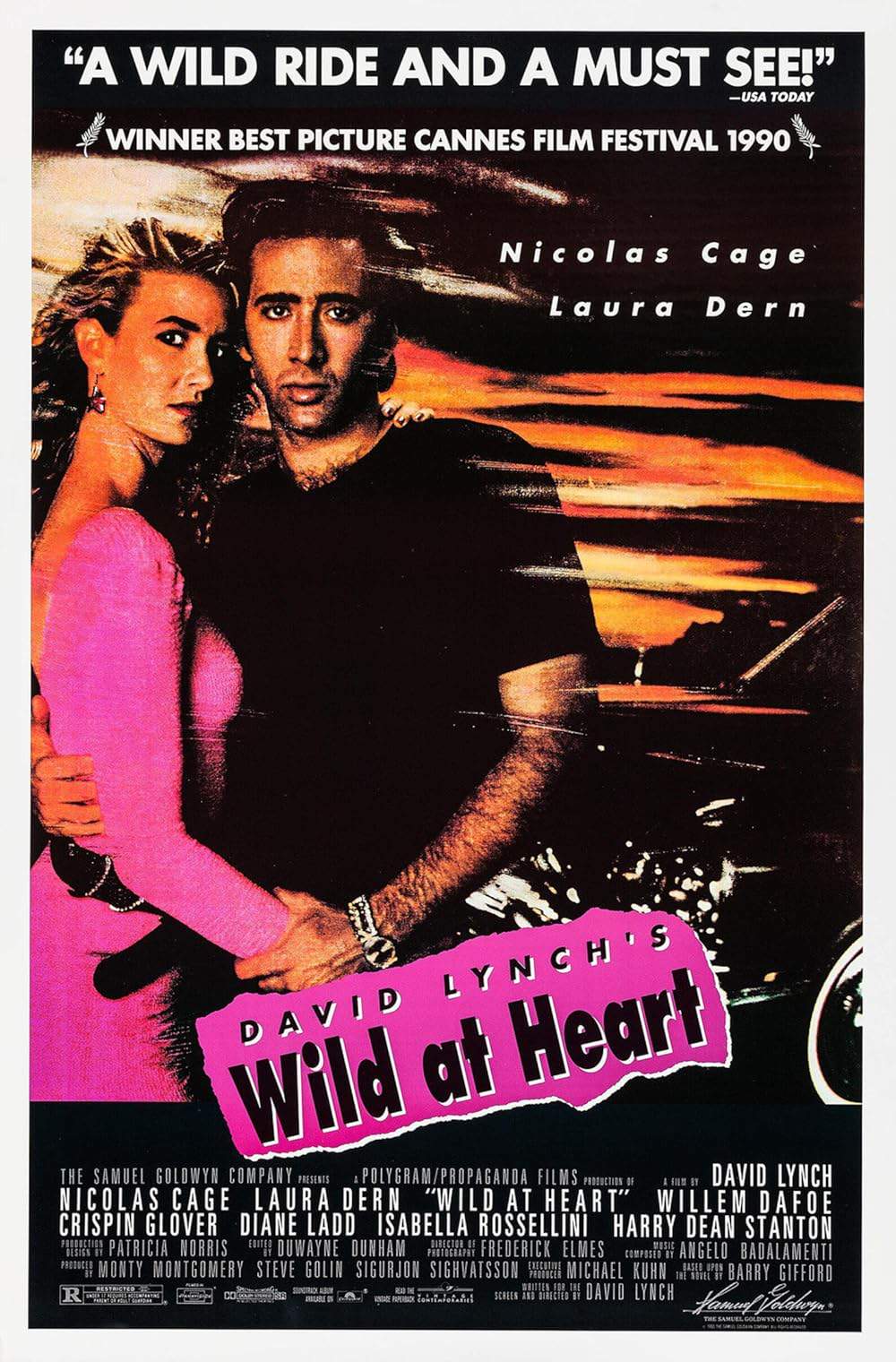
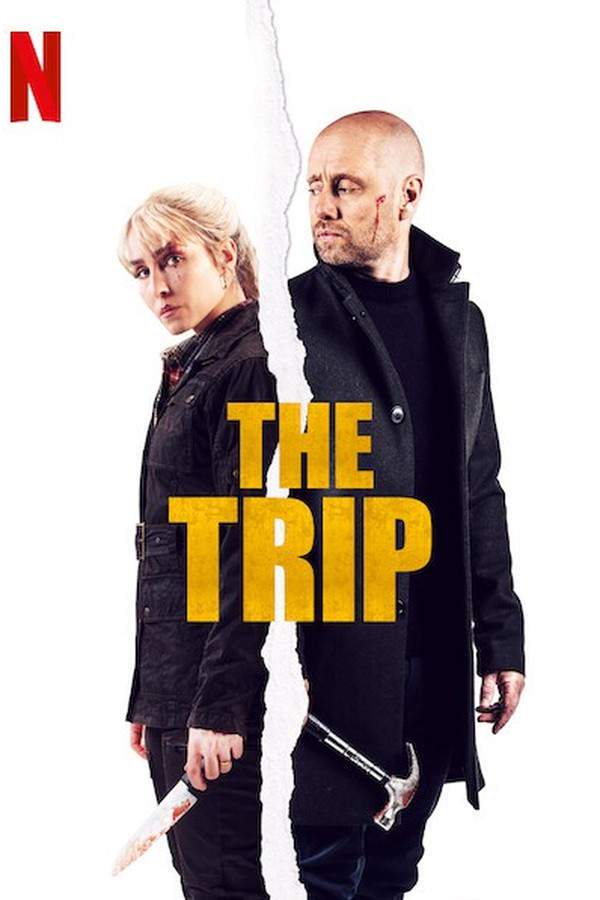
Movies about Defiant Love like The Living End

Relationships that are forged in crisis and defined by their fierce, messy resistance. For viewers who appreciated the intense, rebellious bond in The Living End, this section features movies where love emerges as a form of defiance. These stories explore volatile partnerships that provide meaning and rebellion in the shadow of death, illness, or societal collapse.

  • melancholic
  • desperate
  • raw
  • rebellious
  • unsettling
  • existential
  • Tone: dark, bittersweet
  • Pacing: variable, character-driven
Why these movies?

The story pattern: The central relationship develops under the shadow of a shared, imminent threat. Their love is not traditionally romantic but is a messy, often self-destructive force that becomes their primary weapon against despair. The journey is emotional and psychological, leading to a bittersweet or bleak resolution that affirms the power of their connection, however flawed.

Why they belong together: These films are united by their focus on love as a radical response to hopelessness. The tone is heavy and raw, the emotional weight is significant, and the character dynamics prioritize authentic, painful connection over sentimental comfort.

If you liked this

Movies Like The Living End

Similar movies to The Living End: the same genre, themes or kind of story. Each one comes with its own plot summary, timeline and ending explained.

Browse all movie summaries

Every angle

The Living End (1992) Explained: Plot, Timeline & Characters

Everything about The Living End in one place: what happens in the plot summary, the timeline in chronological order, the characters and meaning and a spoiler-free summary. What's After the Movie adds the cast, box office and post-credit scenes.

Coming soon on iOS and Android

The Plot Explained Movie Summary App

Plot summaries, endings explained and timelines on your phone. Catch up on any movie in minutes, save your favorites and never miss a twist again.

Be the first to know when we launch. Your email stays private, always.

Learn more about the app