Plot Explained Spoilers guaranteed!
Plot Explained

Browse by genre

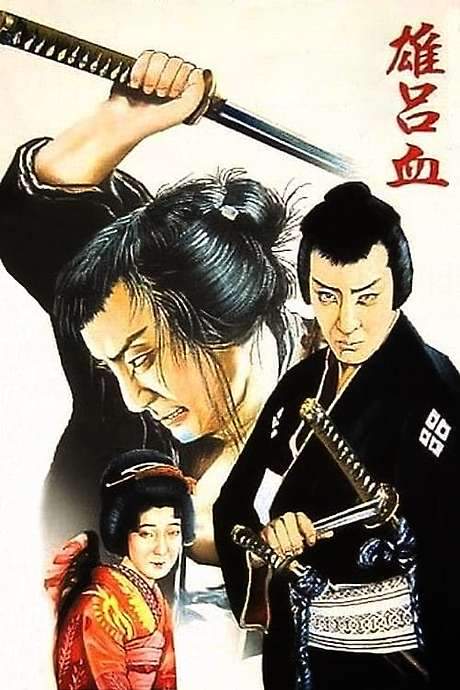
The Legend of the White Serpent (1956) movie poster

Plot Summary

The Legend of the White Serpent (1956) Plot Summary Explained

Release, runtime and language
1956 · 103 mins · Japanese
Directed by
Shirō Toyoda
Starring
Nijiko Kiyokawa, Eijirô Tôno, Ryô Ikebe, Yoshio Kosugi, Bokuzen Hidari, Haruo Tanaka

Lavish Japanese-Chinese coproduction based on an ancient Chinese legend about a man who falls in love with a snake goddess in human form.

On this page (5)
  1. 1 What happens: full plot
  2. 2 Plot questions answered
  3. 3 Movie threads
  4. 4 Movies like The Legend of the White Serpent
  5. 5 Every angle

Full plot summary · contains spoilers

What Happens in The Legend of the White Serpent: Full Plot Summary

The whole story of The Legend of the White Serpent (1956) explained, from the opening scene to the final frame: every key event, every twist and what it all adds up to. Read it as a quick recap before the sequel, to check a scene you missed, or to finally understand what really happened.

During the Song dynasty in Hangzhou, Ryô Ikebe portrays Xu Xian, an apprentice at his brother's medicine shop, who crosses paths with Yoshiko Yamaguchi as Bai-niang, a mysterious woman, and her companion Kaoru Yachigusa as Xiao-qing while they ride a ferry in the rain. A chance encounter unfolds when Xu Xian lends them his parasol, and the next day he goes to the Bai manor to return it. Bai-niang, touched by the gesture, gifts Xu Xian a red scarf and 500 pieces of silver, though Xiao-qing has secretly stolen the money from the local treasury on her mistress's orders. When the theft is discovered, Xu Xian's family and the local officials confront him at the abandoned Bai manor, and Bai-niang vanishes in a plume of smoke.

Xu Xian is sent to Suzhou to work under Wang Ming, an innkeeper and moneylender. Bai-niang and Xiao-qing reappear as guests, and Xu Xian rekindles a romance with his former mistress, entering a new relationship that stirs tension around the arrangements of Wang Ming. Wang Ming tries to press Bai-niang for his own gain, but Xiao-qing steps in to shield her mistress from exploitation. A Taoist monk from Mount Ji arrives, believing Xu Xian is bewitched and offering talismans to protect him. Bai-niang urges Xiao-qing to poison the local waters so Xu Xian’s family can sell medicine to treat the illness, prioritizing Xu Xian’s happiness over moral concerns.

When the monk attempts to enforce the talismans, Bai-niang reverses their power, leaving him paralyzed. The Xian family scrambles to repay Wang Ming by selling medicine, and Bai-niang demonstrates her growing magical prowess by trapping the monk atop a temple steeple. Wang Ming invites Xu Xian and the two women to his manor to celebrate, intending to use Bai-niang for his own ends with a poisonous Realgar wine. During the revelry, Xiao-qing accidentally spills the wine on herself and transforms into a green snake, and Bai-niang is forced to drink as well, soon revealing her true form as a white snake. Xu Xian dies of fright, but Bai-niang pleads with Heaven for a magical herb to revive him. Although the Bodhisattva initially denies the request, Bai-niang relinquishes her power for Xu Xian’s sake, and he awakens while the monk takes credit for the revival. Xiao-qing, not wanting to be exposed, tries to reveal the truth, and Xu Xian, feeling betrayed, curses Bai-niang as the trio heads toward the Gold Mountain temple.

At the temple, Bai-niang and Xiao-qing showcase their power by summoning a flood, compelling the high monk to acknowledge the White Lady’s magical abilities. Bai-niang halts the spell to rescue Xu Xian, which infuriates Xiao-qing and drives her to abandon her mistress at the lake’s edge. On the road home, Xu Xian experiences visions of Bai-niang and the white snake. Confronted by the temple’s high monk, he comes to understand his deep love for her and accepts her true nature. Choosing love over fear, Xu Xian decides to follow Bai-niang into Heaven. In the end, Xu Xian and Bai-niang die together and ascend to Heaven, united in their enduring love.

Last updated: October 07, 2025 at 09:58

Was this helpful?

Plot questions answered

The Legend of the White Serpent Plot Explained: Your Questions Answered

The questions people ask most about The Legend of the White Serpent (1956): what happens in the confusing scenes, why the characters do what they do, the twists, hidden details and what the ending means. Each answer contains spoilers.

Q1

Why did Bai-niang have Xiao-qing steal money from the local treasury?

Bai-niang wanted to give Xu Xian a generous gift to show her affection for him. She instructed Xiao-qing to steal 500 pieces of silver from the local treasury, but when the theft was discovered, it put Xu Xian in danger and forced Bai-niang to flee. This act, though motivated by love, directly leads to Xu Xian's family and officials confronting him at the abandoned Bai manor.

Foreshadowing: The theft sets up the pattern of Bai-niang's magic causing unintended consequences for Xu Xian throughout the film.

  • bai-niang
  • xiao-qing
  • theft
  • treasury
  • silver
  • gift
Q2

Why did Bai-niang order Xiao-qing to poison the local water supply?

Bai-niang asked Xiao-qing to poison the local waters so that Xu Xian's family could sell medicine to treat the resulting illness, ensuring they would profit and be happy. This demonstrates how Bai-niang prioritizes Xu Xian's happiness over moral considerations, willing to harm innocent people to secure his wellbeing.

Foreshadowing: This willingness to act amorally for love foreshadows her later sacrifice of giving up her powers entirely.

  • bai-niang
  • poison
  • water
  • medicine
  • xiao-qing
  • xian family
Q3

What is Realgar wine and why does it reveal Bai-niang's true form?

Realgar wine is a poisonous alcoholic drink that Wang Ming deliberately served at his banquet to expose and kill Bai-niang and Xiao-qing. When Xiao-qing accidentally spills the wine on herself, she transforms into a green snake, revealing their supernatural nature. Bai-niang is then forced to drink the wine and reveals her white snake form, causing Xu Xian to die of fright from the shock.

Foreshadowing: The Taoist monk's earlier warnings about Xu Xian being bewitched by a demon foreshadow this moment of revelation.

  • realgar wine
  • poison
  • white snake
  • green snake
  • transformation
  • wang ming
Q4

Why did Bai-niang give up her magical powers to revive Xu Xian?

After Xu Xian dies of fright upon seeing her true form, Bai-niang pleads with Heaven for a magical herb to revive him. The Bodhisattva initially denies her request, so Bai-niang relinquishes all her magical power in exchange for Xu Xian's life. This extreme sacrifice demonstrates the depth of her love, showing she values his life above her own supernatural existence.

Foreshadowing: This act of sacrifice mirrors earlier moments where she chose love over moral constraints.

  • bai-niang
  • power
  • sacrifice
  • revival
  • bodhisattva
  • heaven
  • love
Q5

Why does Xiao-qing abandon Bai-niang at the lake after the flood?

At Gold Mountain temple, Bai-niang halts the magical flood she and Xiao-qing summoned to rescue Xu Xian from drowning, prioritizing his life over demonstrating their power to the monks. This angers Xiao-qing, who feels her mistress chose a human over their cause and abandons her at the lake's edge. The betrayal reflects the growing tension between their differing priorities, Xiao-qing's pride versus Bai-niang's love.

Foreshadowing: Xiao-qing's protective nature throughout the film makes her abandonment more impactful as a turning point.

  • xiao-qing
  • abandon
  • flood
  • lake
  • gold mountain temple
  • betrayal
Q6

Why does Xu Xian curse Bai-niang after being revived?

When Xu Xian awakens, he learns that the Taoist monk has claimed credit for reviving him rather than revealing the truth about Bai-niang's sacrifice. Xiao-qing tries to tell Xu Xian what really happened, but he feels betrayed by the deception and curses Bai-niang, unable to accept that his lover sacrificed everything to save him while he was kept in the dark.

Foreshadowing: The monk's earlier arrival and his claims about protecting Xu Xian from bewitchment set up this misunderstanding.

  • xu-xian
  • curse
  • revival
  • monk
  • betrayal
  • misunderstanding
Q7

How does Xu Xian overcome his fear and accept Bai-niang's true nature?

After leaving Gold Mountain temple, Xu Xian experiences visions of Bai-niang and the white snake while journeying home. He is confronted by the temple's high monk, who challenges him to confront his feelings. Through this ordeal, Xu Xian comes to understand his deep love for Bai-niang and chooses to accept her true nature, deciding that love is more important than his fear of her supernatural form.

Foreshadowing: The visions serve as a spiritual reckoning that completes Xu Xian's character arc from fear to acceptance.

  • xu-xian
  • visions
  • acceptance
  • love
  • fear
  • white snake
  • high monk
Q8

Why do Xu Xian and Bai-niang ascend to Heaven at the end?

After Xu Xian accepts Bai-niang despite knowing her true form, they choose to follow each other into Heaven. Because their love transcends mortal fear and societal prejudice, and because Bai-niang sacrificed her powers to save Xu Xian, the couple dies together and achieves spiritual unity. Their ascension represents the triumph of love over death and the transcendence of their forbidden relationship.

Foreshadowing: The entire narrative builds toward this transcendent ending where love conquers all obstacles.

  • ascension
  • heaven
  • love
  • death
  • unity
  • transcendence
Q9

Why does Bai-niang paralyze and trap the Taoist monk?

The Taoist monk from Mount Ji arrives believing Xu Xian is bewitched and tries to force protective talismans on him. Bai-niang counters by reversing the talismans' power, leaving the monk paralyzed. Later, she demonstrates her growing magical prowess by trapping him atop a temple steeple. This showcases her determination to protect her relationship with Xu Xian from anyone who threatens it, even religious authorities.

Foreshadowing: This conflict establishes the ongoing tension between supernatural and mortal authorities throughout the film.

  • taoist monk
  • talismans
  • paralysis
  • trap
  • temple steeple
  • magic
Q10

What is Wang Ming's scheme with the Realgar wine?

Wang Ming, the innkeeper and moneylender in Suzhou, attempts to exploit Bai-niang for his own gain throughout their stay. At his banquet, he serves Realgar wine poisoned specifically to kill supernatural beings like Bai-niang and Xiao-qing. His intention is to use Bai-niang for his own purposes, and the poisoned wine is his final attempt to eliminate or control her powers.

Foreshadowing: Wang Ming's earlier attempts to profit from Bai-niang foreshadow his murderous intent at the banquet.

  • wang ming
  • realgar wine
  • poison
  • plot
  • exploitation
  • banquet
Q11

Why does Bai-niang vanish in a plume of smoke when confronted?

When Xu Xian's family and local officials confront him at the abandoned Bai manor about the stolen treasury money, Bai-niang uses her supernatural powers to vanish in a plume of smoke. This is her snake goddess ability to escape mortal danger, but it also abandons Xu Xian to face the consequences alone, creating the first major rift in their relationship.

Foreshadowing: This pattern of using magic to escape problems rather than facing them directly recurs throughout the story.

  • bai-niang
  • vanish
  • smoke
  • escape
  • confrontation
  • officials

Movie threads

More Movies Like The Legend of the White Serpent, by Mood & Story

Curated lists built around what makes The Legend of the White Serpent tick: the same mood, the same kind of story or the same emotional payoff. Each list explains why these movies belong together.

Mythical Tragedies of Forbidden Love like The Legend of the White Serpent

Stories where mortals fall for deities or spirits, facing a tragic, transcendent fate. If you enjoyed the tragic, transcendent romance in The Legend of the White Serpent, explore more movies like it. These films feature forbidden love between mortals and supernatural beings, blending fantasy, deep romance, and bittersweet endings in a mythical, emotionally resonant way.

  • tragic romance
  • mythical
  • melancholic
  • transcendent
  • fatalistic
  • supernatural
  • Tone: bittersweet, melancholic, tragic
  • Pacing: steady, character-driven
Why these movies?

The story pattern: The narrative follows a mortal protagonist who enters a deep, transformative romance with a divine or magical entity. The central conflict arises from the inherent impossibility of the union, often involving societal taboos, supernatural laws, or a fatal price for the love. The journey typically culminates in a bittersweet resolution, where love transcends physical separation through sacrifice or spiritual ascension.

Why they belong together: Movies are grouped here by their core premise of a supernatural-mortal romance that is intrinsically tragic. They share a melancholic, magical mood, a steady pacing focused on emotional revelation, and a tone that balances romantic idealism with the heavy cost of forbidden love, resulting in a deeply moving and transcendent experience.

Melancholic Fantasies of Sacrifice like The Legend of the White Serpent

Emotional journeys where love and magic lead to a costly, redemptive sacrifice. Discover movies similar to The Legend of the White Serpent that explore themes of sacrifice and redemption within a magical world. These melancholic fantasies feature steady pacing, medium emotional intensity, and a bittersweet tone, perfect for viewers who appreciate emotionally weighty, character-driven supernatural stories.

  • melancholic
  • magical
  • sacrificial
  • redemptive
  • tragic
  • transcendent
  • Tone: bittersweet, melancholic, transcendent
  • Pacing: steady, builds to emotional climax
Why these movies?

The story pattern: The narrative pattern revolves around a protagonist whose love or sense of duty forces them to make a great personal sacrifice. This act, often supernatural or magical in nature, serves as the story's emotional climax. While the outcome is tinged with sadness and loss, it ultimately brings about a form of redemption, peace, or transcendental unity, leaving a lasting, poignant impression.

Why they belong together: These films are united by their focus on the theme of sacrifice as a catalyst for emotional resolution. They share a melancholic and magical atmosphere, a steady pacing that builds towards an emotional climax, and a bittersweet tone that finds beauty and meaning in loss, creating a coherent vibe of tragic beauty.

If you liked this

Movies Like The Legend of the White Serpent

Similar movies to The Legend of the White Serpent: the same genre, themes or kind of story. Each one comes with its own plot summary, timeline and ending explained.

Browse all movie summaries

Every angle

The Legend of the White Serpent (1956) Explained: Plot, Timeline & Characters

Everything about The Legend of the White Serpent in one place: what happens in the plot summary, the timeline in chronological order, the characters and meaning and a spoiler-free summary. What's After the Movie adds the cast, box office and post-credit scenes.

Coming soon on iOS and Android

The Plot Explained Movie Summary App

Plot summaries, endings explained and timelines on your phone. Catch up on any movie in minutes, save your favorites and never miss a twist again.

Be the first to know when we launch. Your email stays private, always.

Learn more about the app