Plot Explained Spoilers guaranteed!
Plot Explained

Browse by genre

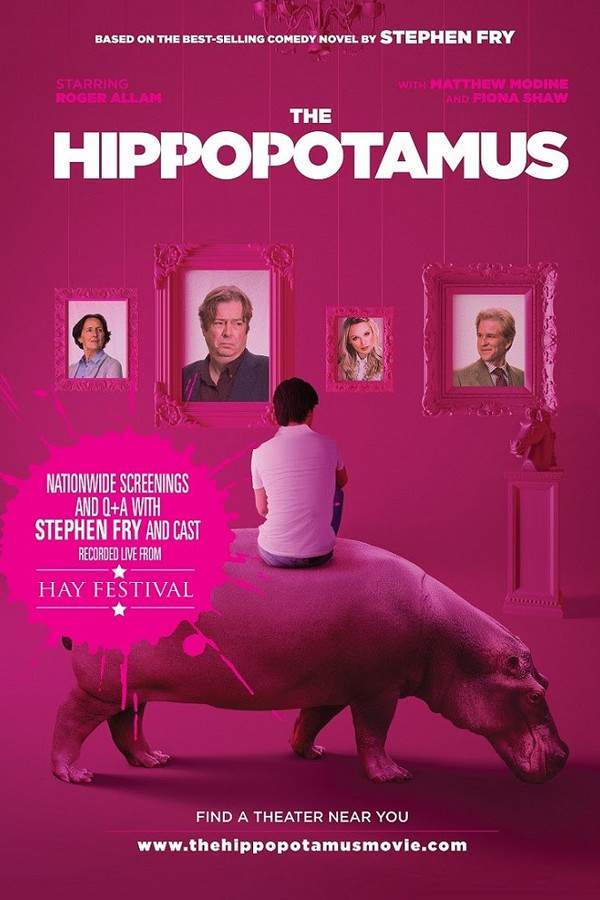
The Hippopotamus (2017) movie poster

Plot Summary

The Hippopotamus (2017) Plot Summary Explained

Release, runtime and language
2017 · 89 min · English
Echo score 49
Loading streaming availability…
Directed by
John Jencks
Starring
Roger Allam, Andrew Alexander, Russell Tovey, Adrian Bouchet, Amanda Holt, Amy Marchant

A cynical writer is sent to investigate unusual recoveries occurring at a grand estate. He finds a teenage phenomenon whose unconventional techniques have charmed the family. Tasked with uncovering the truth, the writer grapples with skepticism and humor as he tries to understand the source of the miraculous events and the impact they're having on everyone involved.

On this page (6)
  1. 1 Where to watch
  2. 2 What happens: full plot
  3. 3 Plot questions answered
  4. 4 Movie threads
  5. 5 Movies like The Hippopotamus
  6. 6 Every angle
Loading streaming availability…

Full plot summary · contains spoilers

What Happens in The Hippopotamus: Full Plot Summary

The whole story of The Hippopotamus (2017) explained, from the opening scene to the final frame: every key event, every twist and what it all adds up to. Read it as a quick recap before the sequel, to check a scene you missed, or to finally understand what really happened.

Edward "Ted" Wallace is a disillusioned writer and former poet, now in the twilight of his life. After a long creative drought that has lasted since 1987, he finds himself reduced to critiquing trivial stage productions, spending his days wallowing in a bath and indulging in excessive drinking. His life takes an unexpected turn when he loses his job due to heckling a lackluster performance. This misfortune leads him to cross paths with his goddaughter Jane, who offers him a generous payment to uncover the mystery behind a series of miracles that seem to have coincided with her surprising recovery from leukaemia.

Ted's investigation leads him to a lavish manor owned by his old friend, Michael, Lord Logan. There, he meets his sixteen-year-old godson, David, an inquisitive boy with a peculiar interest in both sex and nature. Alongside him are David's brother Simon, their aging friend Oliver who is troubled by angina and is searching for funding for his theatrical ambitions, an awkward Frenchwoman named Clara Richmond, and her affluent mother Valerie, who has her sights set on acquiring a horse named Lilac from the estate for her daughter.

As Ted settles into life at the manor, his cynical demeanor clashes with the upbeat attitudes of the others, thereby creating a palpable tension. Throughout this turbulent stay, he engages in conversations with David, who expresses lofty ambitions of becoming a poet himself, weaving together aspirations of creativity and self-exploration.

Strange occurrences begin when Lilac, the horse, apparently falls gravely ill from ragwort poisoning, although the plant is not native to the region. In the midst of the group's anguish over the potential euthanasia of Lilac, Ted uncovers the truth behind the miracles he was sent to investigate. It appears that David, through his astonishing abilities, has healed his mother's acute asthma attack with just a touch, and later, he miraculously cures Jane's cancer in a similar fashion over several days.

As the days progress, David performs further feats, restoring Lilac’s health and alleviating Oliver's heart condition, garnering Valerie's interest in hopes of enhancing Clara's appearance by association. However, as David and Clara venture into the woods for a secret meeting, a frantic search ensues when they go missing. Ted finds Clara in a compromising position with David, leading to unforeseen chaos. After a confrontation that results in Clara biting David, Ted navigates the complicated emotions of their predicament, ultimately driving a wounded David to the hospital.

David's belief that his healing gifts stem from moral purity and a spiritual bond with nature is dismissed by Ted as mere fantasy, leading to a rift between the two and leaving David heartbroken. Meanwhile, Ted faces harsh criticism from Rebecca, Michael's sister, who harbors resentment towards him for a past humiliation. This culminates in a ruinous night filled with self-pity for Ted, as he confesses that Lilac’s poisoning was merely a hangover from his neglect.

When the truth finally surfaces, exposing the actual causes of the supposed miracles, the manor's residents are outraged, particularly at the implications of David's misguided confidence in his powers, culminating in a grim revelation when Jane's leukaemia returns. The narrative takes a poignant pause, allowing time to pass as life resumes at the manor, yet the echoes of that summer linger.

At Jane's funeral, a now matured David reflects on his journey and the hard work that comprises his new life. In a cathartic moment, Ted finds solace and inspiration from his experiences during that transformative summer, emerging from his creative slumber with five new poems to his name. With renewed hope and reflection, he raises a glass in solitude, proclaiming a toast "to miracles," marking the resurgence of his artistic spirit against the backdrop of life's harsh realities.
Last updated: September 18, 2026 at 08:59

Was this helpful?

Plot questions answered

The Hippopotamus Plot Explained: Your Questions Answered

The questions people ask most about The Hippopotamus (2017): what happens in the confusing scenes, why the characters do what they do, the twists, hidden details and what the ending means. Each answer contains spoilers.

Q1

What were the supposed miracles happening at the manor?

In The Hippopotamus, the supposed miracles at the manor centered on the sixteen-year-old David, who was credited with healing his mother's acute asthma attack with a single touch and curing his godmother Jane's leukaemia over several days. He was also believed to have restored the health of Lilac, the family horse, and alleviated Oliver's angina. The manor's residents came to treat David's touch as a near-magical gift, which is exactly what drew Ted there to investigate.

Foreshadowing: Early in the film, David's unusual mix of spiritual self-confidence and fascination with nature subtly hints at the faith-healer persona he later embodies.

  • miracles
  • david healing
  • jane leukaemia
  • lilac horse
  • manor
Q2

Why did David believe he had healing powers?

David's belief in his powers stemmed from a conviction that moral purity and a spiritual bond with nature gave him the ability to heal others. He had convinced himself that his touch carried a quasi-religious force, and the grateful reactions of the people around him reinforced that delusion. Ted ultimately exposes this belief as fantasy, which devastates David because his entire sense of identity rests on it.

Foreshadowing: David tells Ted early on that he wants to become a poet, revealing the romantic, idealistic worldview that later feeds his faith in his own gifts.

  • david powers
  • moral purity
  • spiritual healing
  • delusion
Q3

How did Jane's leukaemia actually go into remission?

Jane's initial recovery from leukaemia was a natural remission, not the result of David's touch. When Ted investigates the circumstances more carefully, he determines that there was no medical basis for the supposed miracle cure. This revelation is what makes Jane's later death so devastating: the cancer was always going to return because nothing supernatural had ever stopped it.

Foreshadowing: Jane herself is the one who pays Ted to investigate, hinting that even she may privately suspect her cure has a less miraculous explanation.

  • jane leukaemia
  • natural remission
  • fake miracle
  • cancer
Q4

What actually made the horse Lilac sick?

Lilac was never poisoned by ragwort at all, because the plant does not grow anywhere near the estate. In The Hippopotamus, Ted eventually realizes that the horse's illness was caused by his own negligence during a bout of heavy drinking, when he accidentally smashed his whisky bottle. The 'poisoning' had been another manufactured miracle in a chain of coincidences that everyone around him chose to read as divine.

Foreshadowing: Ted's constant drinking is established from his very first scene, priming the audience to look at every unexplained event through the lens of his alcoholism.

  • lilac horse
  • ragwort poisoning
  • ted drinking
  • fake miracle
Q5

Why did Clara bite David in the woods?

Clara and David sneak off into the woods together for a secret encounter that quickly turns exploitative. Ted discovers them in a compromising position and, in the chaos of being interrupted, Clara bites David hard enough to draw serious blood. The bite forces Ted to rush a bleeding David to the hospital and becomes the physical turning point that exposes how disturbed David's 'romantic' life has become.

Foreshadowing: David's early, unnervingly specific questions about sex foreshadow the inappropriate encounter with Clara that follows.

  • clara
  • david woods
  • woods encounter
  • hospital
Q6

Why did David attempt to bury himself alive?

After Ted publicly explains that David's supposed miracles have mundane explanations and that his healing philosophy is fantasy, David is left emotionally destroyed. His entire identity, his moral self-image, and his relationship with the family all collapse at once. Overwhelmed and feeling abandoned, he attempts to bury himself alive on the manor grounds, a desperate act that exposes just how psychologically fragile he really was.

Foreshadowing: David's repeated insistence that his gifts come from moral purity foreshadows how completely he will unravel when that belief is taken from him.

  • david suicide
  • burial attempt
  • ted lecture
  • breakdown
Q7

Why was Ted able to write poetry again after 30 years?

Ted's creative drought, which began in 1987, finally breaks after the emotional crucible of the summer at the manor. Watching David's innocence collapse, being forced to confront his own alcoholism, and witnessing Jane's death give him exactly the kind of raw material he had stopped feeling. By the end of The Hippopotamus, he has written five new poems and raises a glass 'to miracles,' rediscovering the poetic voice he thought he had lost forever.

Foreshadowing: Ted's early conversations with David about poetry plant the seed that a teenager's passion for words will eventually reignite his own.

  • ted poetry
  • creative drought
  • poems
  • artistic rebirth
Q8

Why did Jane's leukaemia come back if David had healed her?

David never healed Jane in the first place, because her original remission was natural. Once Ted exposes this truth, the tragic implication is unavoidable: the cancer had only ever been in temporary retreat, and there was no supernatural safeguard in place to stop it from returning. Jane's death is the film's cruelest confirmation that the 'miracles' at the manor were never real.

Foreshadowing: The fact that Jane, of all people, hires an outside investigator to look into her own cure hints that the miracle may not be as solid as everyone wants to believe.

  • jane death
  • cancer returns
  • leukaemia relapse
  • fake cure
Q9

Why was Rebecca so hostile to Ted at the manor?

Rebecca, Michael's sister, has nursed a long-standing grudge against Ted over a past public humiliation he caused her, details of which are never fully spelled out. That old wound resurfaces the moment Ted sets foot in her family's home. Her hostility compounds Ted's already fragile state and contributes to the ruinous night of self-pity that pushes him to confront what he has really done at the estate.

Foreshadowing: Rebecca's cold glares and pointed silences during Ted's early days at the manor hint at a buried grievance long before she names it.

  • rebecca
  • ted grudge
  • michael sister
  • hostility
Q10

How does Ted's drinking connect to the supposed miracles?

Ted's chronic alcoholism is not just a character trait in The Hippopotamus; it is the direct cause of at least one of the so-called miracles. His drunken carelessness is what makes Lilac sick, which the household misreads as another act of divine healing by David. When he finally smashes his whisky bottle and pieces the truth together, his own addiction is revealed as the mundane engine behind events everyone else has been treating as proof of the miraculous.

Foreshadowing: Ted is introduced soaking in a bath with a drink in hand, establishing his alcoholism as a literal presence in the story from frame one.

  • ted alcoholism
  • drinking
  • whisky bottle
  • lilac
Q11

Why did Ted agree to investigate the miracles at the manor?

Ted only takes the job because he has just been fired for heckling a bad play and is at his lowest ebb, creatively and financially. His goddaughter Jane offers him generous payment to look into the strange recoveries at her family's estate, and Ted, despite his cynicism, accepts because he has no better options. The job also gives him an excuse to reconnect with his old friend Michael and escape the wreckage of his daily life.

Foreshadowing: Ted's outburst at the theatre, which costs him his career, is the domino that pushes every later event into motion.

  • ted job loss
  • jane offer
  • heckling
  • manor investigation

Movie threads

More Movies Like The Hippopotamus, by Mood & Story

Curated lists built around what makes The Hippopotamus tick: the same mood, the same kind of story or the same emotional payoff. Each list explains why these movies belong together.

Crumbling manors and sardonic outsiders like The Hippopotamus

Cynical guests arrive at decaying estates where eccentricity masks deeper rot beneath. Movies like The Hippopotamus where cynical outsiders wander through grand estates full of eccentric aristocrats, sharp British wit, and quiet decay. These dark comedies blend biting satire with melancholy, finding absurdity and tragedy in equal measure among faded nobility and crumbling country houses.

  • sardonic
  • british
  • aristocratic
  • cynical
  • darkly comic
  • brooding
  • Tone: dark, sardonic, bittersweet
  • Pacing: steady, character-driven
Why these movies?

The story pattern: A sardonic protagonist is drawn into a faded aristocratic world, usually by a commission, invitation, or reluctant obligation. They clash with the estate's eccentric residents, whose polished surfaces crack under the protagonist's probing gaze. Through observation, conversation, and small scandals, darker truths emerge, not always supernatural, but always deeply human. The outsider is changed by what they find, even when they resist it, and the estate's decline mirrors their own unraveling.

Why they belong together: Shared DNA includes British dark comedy, aristocratic or upper-class settings, sardonic narration or voice, outsider-versus-establishment dynamics, and an undercurrent of decline, illness, addiction, or family dysfunction that gives the comedy genuine emotional stakes and a bittersweet edge.

Skeptics investigating miracles like The Hippopotamus

Cynical investigators chase impossible events, only to find something human and far more troubling. If you liked The Hippopotamus, these movies follow cynical investigators sent to expose supposed miracles, healings, or supernatural claims. From faith healers to haunted houses, these stories peel back the miraculous to reveal the messy human truths underneath, including delusion, exploitation, grief, and sometimes genuine wonder.

  • skeptical
  • mysterious
  • contemplative
  • dark
  • investigative
  • brooding
  • Tone: dark, contemplative, morally ambiguous
  • Pacing: steady, investigative
Why these movies?

The story pattern: A skeptic with personal baggage is summoned to investigate extraordinary claims at a remote or closed-off location. They arrive expecting fraud or theater, only to encounter genuine belief, suffering, and ambiguity. As they probe, they uncover not supernatural forces but the human mechanisms, con artistry, psychological need, desperate hope, that create the appearance of miracles. The investigator's own faith, in art, love, sobriety, or meaning, becomes the real question the story is asking.

Why they belong together: Shared patterns include an outsider protagonist with personal flaws, a mystery structure built around unusual events, sustained tension between rationalism and belief, and a resolution that complicates easy answers about what is real, miraculous, or merely desperately believed. The tone is investigative and contemplative rather than sensational.

If you liked this

Movies Like The Hippopotamus

Similar movies to The Hippopotamus: the same genre, themes or kind of story. Each one comes with its own plot summary, timeline and ending explained.

Browse all movie summaries

Every angle

The Hippopotamus (2017) Explained: Plot, Timeline & Characters

Everything about The Hippopotamus in one place: what happens in the plot summary, the timeline in chronological order, the characters and meaning and a spoiler-free summary. What's After the Movie adds the cast, box office and post-credit scenes.

Coming soon on iOS and Android

The Plot Explained Movie Summary App

Plot summaries, endings explained and timelines on your phone. Catch up on any movie in minutes, save your favorites and never miss a twist again.

Be the first to know when we launch. Your email stays private, always.

Learn more about the app