Plot Explained Spoilers guaranteed!
Plot Explained

Browse by genre

The Great War of Archimedes (2019) movie poster

Timeline

The Great War of Archimedes (2019) Timeline Explained – Every Event in Order

Release, runtime and language
2019 · 130 mins · Japanese
Echo score 78
Directed by
Takashi Yamazaki
Starring
Min Tanaka, Jun Kunimura, Masaki Suda, Fumiyo Kohinata, Tasuku Emoto, Minami Hamabe

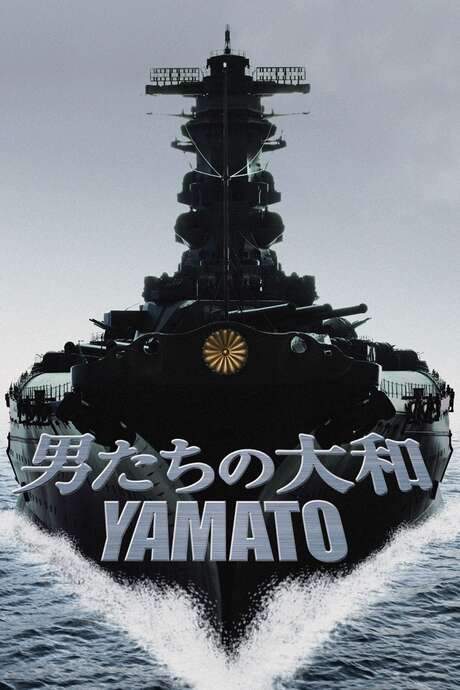
In the early 1930s, the Japanese Imperial Navy embarks on an ambitious project to build the Yamato, the world’s largest battleship. Admiral Yamamoto Isoroku questions the plan and enlists the help of Tadashi Kai, a young mathematics expert. Kai’s analysis reveals significant discrepancies between the official cost estimates and the true figures, leading them to uncover a dangerous conspiracy within the navy.

On this page (5)
  1. 1 Events in order (12)
  2. 2 Timeline questions answered
  3. 3 Movie threads
  4. 4 Movies like The Great War of Archimedes
  5. 5 Every angle

12 events in order · contains spoilers

The Great War of Archimedes Timeline: Events in Chronological Order

Every key event of The Great War of Archimedes (2019) in order, scene by scene, with when and where it takes place. Use it to untangle flashbacks, time jumps and parallel storylines, to refresh your memory before the sequel or to find the exact scene you are thinking of.

  1. Shimada and Hirayama propose a super-battleship

    Rear Admiral Shimada and Vice Admiral Hirayama present the plan to build a massive new battleship for the IJN. The proposal aims to strengthen Japan's naval power in a looming conflict. The idea sets the stage for a clash among navy factions over strategy and ideology.

    Where
    IJN Headquarters, Japan
  2. Yamamoto and Nagano seek out Tadashi Kai to test the plan

    Admirals Yamamoto and Nagano recruit Tadashi Kai to find faults with the proposal. Kai is described as an autistic mathematics prodigy obsessed with geometry, making him a rational counterpoint to the plan. His recruitment signals the Navy's interest in data-driven scrutiny that could derail or reshape the project.

    Where
    Navy offices
  3. Kai's recruitment and focus

    Kai is brought in to test the proposal by the pro-battleship faction. He employs copied blueprints, extrapolations from the Nagato design, and procurement data gathered through personal connections to scrutinize the project. His role becomes the hinge on which the ship's fate will turn.

    Where
    Kai's workshop
  4. Kai exposes cost doubling

    Kai demonstrates that the steel for the new battleship will cost twice Hirayama's estimate. His analysis pulls back the curtain on the hidden costs driving the project. The finding throws into question the feasibility of the plan.

    Where
    Design review room
  5. Hirayama admits misreporting the cost

    Hirayama admits to misreporting the cost to secure approval. He explains a plan to compensate shipbuilders by overpaying on future cruisers. The admission exposes political maneuvering behind the project and strains his credibility.

    Where
    Hirayama's office
  6. Hirayama withdraws the battleship proposal

    Kai's discovery leads Hirayama to withdraw the proposal. The formal battleship project is halted, at least temporarily, as the top leadership reassesses. The decision marks a setback for the plan but does not erase the strategic ambitions at play.

    Where
    Navy offices
  7. An aircraft carrier path is approved instead

    Meanwhile, Yamamoto's faction secures approval for an aircraft carrier instead of a battleship. The shift demonstrates the Navy's evolving emphasis toward air power. The decision redirects funding and attention away from the Yamato concept.

    Where
    Navy decision meeting
  8. Hirayama reveals the motive behind the project

    Hirayama reveals the deeper motive behind the project: militarism makes war inevitable, and the battleship should embody Japan's collective spirit. He believes making the loss of such a ship so traumatic will spur surrender before invasion. Kai, a pacifist, contends with the moral implications of turning design into a political weapon.

    Where
    Hirayama's office
  9. Kai reluctantly agrees to perfect the design

    Despite his pacifist leanings, Kai reluctantly agrees to perfect the battleship design to realize the strategic aim. He applies his rigorous, geometrical thinking to ensure the vessel reflects the desired symbolic power. The collaboration continues, shaped by Kai's moral conflict.

    Where
    Kai's workshop
  10. Kai attends Yamamoto's inspection of Yamato

    Two months after Pearl Harbor, Kai attends Yamamoto's inspection of Yamato. He witnesses the ship with foreknowledge of its sacrificial fate yet participates in the ceremonial moment. The scene marks validation for the project despite Kai's internal misgivings.

    When
    Two months after Pearl Harbor
    Where
    Yamato's shipyard / inspection site
  11. Kai cannot celebrate the ship's sacrificial fate

    Knowing the ship's doomed role, Kai cannot join in the jubilation. His pacifist conscience stands in stark contrast to the nationalistic pride around Yamato. The moment deepens the personal and moral conflict that defines his character.

    When
    Two months after Pearl Harbor
    Where
    Yamato's inspection site
  12. The design becomes the Yamato-class battleship

    The design evolves into the Yamato-class battleship, a behemoth intended to symbolize Japan's resolve. Kai's precise mathematical work influences the ship's form even as he questions the human cost. The ship's ultimate fate foreshadows the heavy toll of militarism and the personal struggle at the story's core.

    Where
    Japanese shipyards

Last updated: February 20, 2026 at 12:22

Was this helpful?

Timeline questions answered

The Great War of Archimedes Timeline Explained: Your Questions Answered

When does it happen, and why in that order? The questions people ask about the chronology of The Great War of Archimedes (2019): time jumps, flashbacks, cause and effect between scenes and the correct order of events, each answered with spoilers.

Q1

Why did Admiral Yamamoto recruit Tadashi Kai to analyze the battleship proposal?

Yamamoto recruited Kai because he needed an objective, mathematically rigorous expert to find flaws in the battleship plan. As an autistic mathematics prodigy obsessed with geometry, Kai could provide data-driven analysis that would either strengthen the proposal or expose its weaknesses, helping Yamamoto's faction make an informed decision about naval strategy.

Foreshadowing: The recruitment sets up Kai's role as a rational counterpoint to the political maneuvering surrounding the project.

  • admiral yamamoto
  • tadashi kai
  • mathematics
  • recruit
  • battleship proposal
Q2

What did Tadashi Kai discover about the battleship cost estimates?

Kai discovered that the steel required for the new battleship would cost twice as much as Vice Admiral Hirayama's initial estimate. By analyzing copied blueprints, Nagato-class extrapolations, and procurement data, he exposed a significant financial flaw in the project that had been deliberately hidden.

Foreshadowing: This discovery pulls back the curtain on the hidden costs driving the project.

  • tadashi kai
  • steel cost
  • budget
  • estimates
  • discrepancies
Q3

Why did Vice Admiral Hirayama admit to misreporting the cost of the battleship?

Hirayama admitted to misreporting the cost because Kai's analysis proved the figures were incorrect. Rather than continue defending false numbers, Hirayama confessed and proposed an alternative strategy: compensating shipbuilders by overpaying on future cruiser orders to make the battleship project financially viable.

Foreshadowing: The admission exposes the political maneuvering behind the project.

  • hirayama
  • misreporting
  • cost
  • admission
  • shipbuilders
Q4

What was Vice Admiral Hirayama's true motive for pursuing the battleship?

Hirayama revealed that he believed Japanese militarism made war inevitable. He pushed for the battleship as a symbol of Japan's collective spirit, reasoning that losing such an enormous ship would be so traumatic it could force surrender before enemy invasion, essentially using the vessel as a strategic tool for a sacrificial end to the war.

Foreshadowing: This reveals the ideological motivation behind the seemingly economic debate.

  • hirayama
  • militarism
  • symbol
  • sacrifice
  • surrender
  • strategy
Q5

Why was the battleship proposal withdrawn after Kai's analysis?

The proposal was withdrawn because Kai identified a fundamental flaw in the design itself, not just the cost. Combined with the exposed financial discrepancies and Hirayama's admission of misreporting, the leadership decided the project could not proceed in its current form, leading to its temporary halt.

Foreshadowing: Kai's technical critique goes beyond economics to challenge the ship's viability.

  • battleship proposal
  • withdrawn
  • design flaw
  • kai analysis
Q6

How did the aircraft carrier initiative gain approval instead of the battleship?

After the battleship proposal was withdrawn, Yamamoto's faction, which had supported the aircraft carrier alternative, secured approval for their preferred project. The shift in funding and strategic emphasis moved away from the massive battleship concept toward naval air power.

Foreshadowing: This marks a strategic shift in Japanese naval policy.

  • aircraft carrier
  • approval
  • yamamoto faction
  • naval strategy
Q7

Why did Tadashi Kai agree to help perfect the battleship design despite his pacifist beliefs?

Despite being a pacifist, Kai reluctantly agreed because Hirayama's argument convinced him that war was inevitable and the battleship could serve a greater purpose, becoming a symbol traumatic enough to end the war quickly through national resolve rather than prolonged invasion. Kai chose to participate to potentially save more lives in the long run.

Foreshadowing: This decision reflects Kai's moral conflict between personal principles and perceived strategic necessity.

  • tadashi kai
  • pacifist
  • perfect design
  • moral conflict
  • agreement
Q8

Why couldn't Kai celebrate during Yamamoto's inspection of Yamato?

Kai couldn't celebrate because he knew the ship's destined role as a sacrificial vessel, intended to be sunk in a way that would traumatically inspire national resolve. His foreknowledge of this doomed fate stood in stark contrast to the jubilation surrounding the ship's ceremonial inspection.

Foreshadowing: This moment validates the entire moral journey Kai has undergone.

  • kai
  • yamamoto
  • inspection
  • celebrate
  • sacrificial fate
  • foreknowledge
Q10

What was the intended sacrificial role of the Yamato battleship?

The Yamato was intended to serve as a national sacrifice, a massive symbol whose loss would be so devastating to Japanese morale that it would force surrender before enemy forces could invade the homeland. This was Hirayama's strategy to end the war quickly through psychological impact rather than prolonged combat.

Foreshadowing: The ship's ultimate historical fate mirrors this tragic intended purpose.

  • yamato
  • sacrificial
  • surrender
  • morale
  • national sacrifice
Q11

How did Kai's autism and mathematical abilities affect his role in the investigation?

Kai's autism, specifically his obsessive focus on geometry and patterns, gave him the ability to analyze complex blueprints and procurement data with exceptional precision. His mathematical mindset allowed him to detect discrepancies that others missed, making him the ideal person to expose the financial and design flaws in the battleship proposal.

Foreshadowing: This unique perspective is what makes Kai invaluable to both factions.

  • kai
  • autism
  • mathematics
  • geometry
  • prodigy
  • analysis
Q12

What happened to the Yamato battleship after the proposal was withdrawn?

Despite the initial withdrawal, the design was eventually completed and evolved into the Yamato-class battleship, the world's largest. Kai, after learning Hirayama's motives, reluctantly agreed to perfect the design, and the ship was built in Japanese shipyards, later becoming legendary for its size and tragic fate during the war.

Foreshadowing: This connects the early design work to the ship's historical reality.

  • yamato-class
  • built
  • shipyard
  • completed
  • design

Movie threads

More Movies Like The Great War of Archimedes, by Mood & Story

Curated lists built around what makes The Great War of Archimedes tick: the same mood, the same kind of story or the same emotional payoff. Each list explains why these movies belong together.

Movies about uncovering historic conspiracies like The Great War of Archimedes

Methodical investigations into dangerous truths buried by institutions. If you enjoyed the investigative plot of The Great War of Archimedes, you'll appreciate these movies where characters methodically expose dangerous truths and institutional corruption. Discover similar historical dramas and thrillers centered on uncovering conspiracies.

  • conspiratorial
  • methodical
  • tense
  • intellectual
  • historical
  • somber
  • Tone: tense, intellectual, somber
  • Pacing: steady, methodical
Why these movies?

The story pattern: Narratives in this thread typically follow an expert or investigator who, through intellectual rigor and persistence, uncovers evidence of a cover-up or fraudulent plan by a government, military, or corporate entity. The plot is driven by clue-gathering, analysis, and confronting powerful adversaries, often leading to morally complex resolutions.

Why they belong together: These movies are grouped by their shared focus on the process of discovery against systemic opposition. They create a specific kind of tension rooted in intellectual pursuit and the sobering weight of revealing an inconvenient truth that challenges the status quo.

Movies with bittersweet wartime dilemmas like The Great War of Archimedes

Emotionally heavy stories of impossible choices during times of conflict. Fans of the heavy emotional weight and moral conflict in The Great War of Archimedes will find more films exploring the grey areas of duty and sacrifice. These movies offer similar bittersweet endings and contemplative looks at the human cost of war.

  • somber
  • reflective
  • bittersweet
  • historical
  • heavy
  • pensive
  • Tone: bittersweet, somber, reflective
  • Pacing: steady, deliberate
Why these movies?

The story pattern: Stories in this thread explore the internal and external conflicts of individuals caught in the machinery of war. Characters are forced to make difficult choices where there are no clear good options, often culminating in an ending that is neither a clear victory nor a total defeat, but a somber reflection on sacrifice and consequence.

Why they belong together: They are united by a shared tone of somber reflection and a focus on the emotional and ethical burden of wartime decisions. The viewing experience is characterized by a heavy emotional weight and a steady, thoughtful pacing that allows the moral complexities to resonate.

If you liked this

Movies Like The Great War of Archimedes

Similar movies to The Great War of Archimedes: the same genre, themes or kind of story. Each one comes with its own plot summary, timeline and ending explained.

Browse all movie summaries

Every angle

The Great War of Archimedes (2019) Explained: Plot, Timeline & Characters

Everything about The Great War of Archimedes in one place: what happens in the plot summary, the timeline in chronological order, the characters and meaning and a spoiler-free summary. What's After the Movie adds the cast, box office and post-credit scenes.

Coming soon on iOS and Android

The Plot Explained Movie Summary App

Plot summaries, endings explained and timelines on your phone. Catch up on any movie in minutes, save your favorites and never miss a twist again.

Be the first to know when we launch. Your email stays private, always.

Learn more about the app