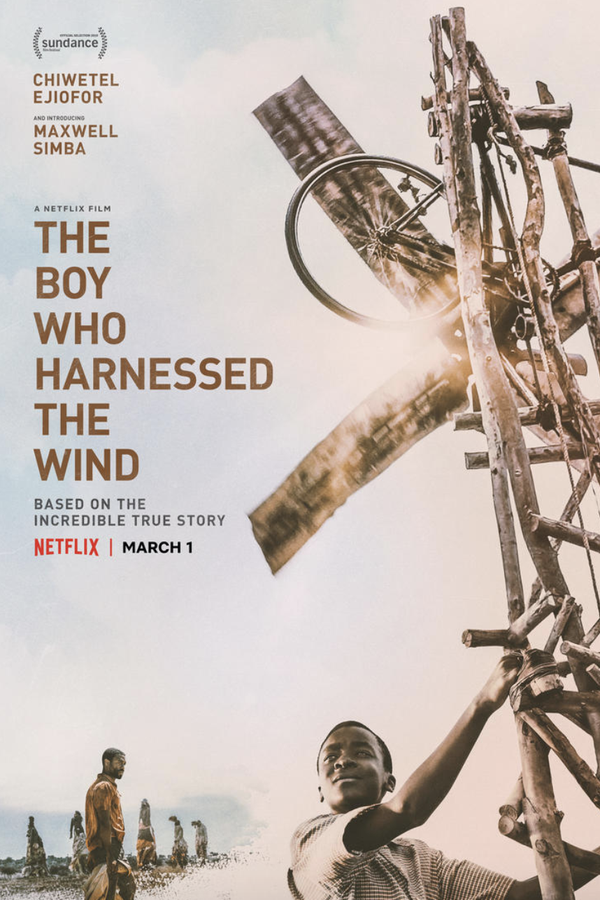
Driven by a desperate need to save his family and village from starvation, a determined 13-year-old boy is forced to leave school due to his family's poverty. Seeking knowledge and a way to help, he finds solace in the local library where he learns about the power of wind. With ingenuity and perseverance, he sets out to build a wind turbine, hoping to bring life back to his drought-stricken community and restore hope for the future.
Find where to stream, rent, or buy The Boy Who Harnessed the Wind (2019) in the US with current JustWatch availability, up-to-date pricing, and platform listings for subscription, rental, and digital purchase options.
Warning: spoilers below!
Haven’t seen The Boy Who Harnessed the Wind yet? This summary contains major spoilers. Bookmark the page, watch the movie, and come back for the full breakdown. If you're ready, scroll on and relive the story!
Read the complete plot breakdown of The Boy Who Harnessed the Wind (2019), including all key story events, major twists, and the ending explained in detail. Discover what really happened, and what it all means.
Born in Kasungu, Malawi, William Kamkwamba is a bright young schoolboy hailing from a family of farmers in the nearby village of Wimbe. With a knack for tinkering, he enjoys fixing radios for friends and neighbors, often scavenging through the local junkyard for useful electronic parts. However, his studies take a hit when he is expelled from school due to his parents’ inability to afford tuition. In a clever twist, he manages to leverage his science teacher, Mike Kachigunda, who is secretly dating William’s sister, to continue attending classes and gain access to the school’s library. This allows him to delve into the realms of electrical engineering and energy production.
As the mid-2000s approach, the family’s crops suffer a devastating drought, leading to famine that strikes the village of Wimbe. The resultant chaos leads to riots over government rationing, and William’s family finds themselves robbed of their meager food supplies. Amid this turmoil, members of the community begin to flee, with William’s sister deciding to elope with Kachigunda to lighten the family burden, leaving behind a component from his bicycle that William had requested.
In a desperate bid to save his village from catastrophic drought conditions, William envisions a plan to construct a windmill that could reignite the dormant water pump serving the town. His small prototype shows promise; however, to create a larger version, he needs his father, Trywell Kamkwamba, to approve using the family’s solitary bicycle for parts—something his father initially dismisses as a waste of effort. In a fit of frustration, Trywell destroys the working prototype, insisting that William focus on manual labor in the fields instead.
The situation grows dire when William’s loyal dog, Khamba, succumbs to starvation, plunging William into despair. Yet, hope is reignited when William’s mother, Agnes, steps in, urging Trywell to revisit his decision. After a poignant moment of reconciliation following Khamba’s burial, William rallies his friends and the few remaining villagers to help realize his vision. With the salvaged component from Kachigunda’s bicycle and a collective spirit, they successfully construct a full-sized windmill, paving the way for a bountiful harvest and renewed hope for their community.
Last updated: November 16, 2024 at 14:59
Explore frequently asked questions about The Boy Who Harnessed the Wind (2019) with spoiler-rich answers covering the full plot summary, major story beats, character motivations, hidden details, and ending meaning. This movie summary FAQ helps explain confusing scenes, plot twists, and narrative decisions in clear, searchable detail.
William was expelled from school because his family couldn't afford to pay his tuition fees. Despite being a bright student who loved learning, the financial burden of school costs became too much for his family to bear during the difficult economic conditions in their village.
This expulsion sets the stage for William's self-directed learning journey in the library.
William leveraged his sister secretly dating science teacher Mike Kachigunda. He asked Kachigunda to let him continue attending classes and using the school library, which allowed him to study electrical engineering and energy production on his own.
His access to the library becomes crucial for researching wind energy.
The severe drought destroyed all crops in Wimbe, leaving families without food. With no harvest to eat or sell, the village faced starvation. The government's rationing system couldn't support everyone, leading to riots and further chaos.
The drought is introduced early as an inevitable force the community must face.
William's sister chose to elope with Kachigunda to reduce the family's burden during the famine. With food supplies already stolen and starvation looming, one less person to feed helped the family survive the crisis.
Her departure is signaled by the increasing desperation in the village.
William's father, Trywell, dismissed the windmill idea as a waste of time and effort. With the family struggling to survive the famine, he believed William should focus on manual farm labor rather than chasing what seemed like an impossible dream. In his frustration, he destroyed the prototype.
Earlier scenes show Trywell's skepticism toward Western ideas and his focus on traditional farming.
Khamba died from starvation, just like many other animals and people in the village during the famine. The severe food shortage affected all living creatures, and the loyal dog succumbed to the harsh conditions.
Earlier scenes show the family's diminishing food portions, hinting at the dog's fate.
William's mother, Agnes, intervened after Khamba's death, urging Trywell to reconsider his stance. She recognized William's determination and believed in his vision. After the emotional moment of burying Khamba, she helped facilitate reconciliation between father and son.
Agnes has been a quiet but supportive presence throughout William's struggles.
William used the chain and sprocket from Kachigunda's bicycle (which his sister left behind after eloping) as the core mechanical component. This part connected the windmill's blades to the generator, allowing the rotational energy to be converted into electrical power.
William specifically requested this component from his sister before she left.
The windmill generated electricity that powered the village's dormant water pump. This allowed farmers to draw water from underground sources and irrigate their fields, bypassing the failed rains and enabling crops to grow despite the ongoing drought.
William's initial research in the library focused on how wind energy could generate electricity.
The construction succeeded because William gained his father's approval and the entire community's support. With more hands helping and resources from the salvaged bicycle parts combined with salvaged materials, they could build a full-sized version that worked.
William's mother played a key role in changing his father's mind.
The windmill ended the famine by enabling irrigation and a bountiful harvest. It restored hope to a community that had been facing starvation and displacement. The success demonstrated that ingenuity and perseverance could overcome seemingly hopeless situations.
The narrative builds toward this moment as the culmination of William's journey.
Still wondering what the ending of The Boy Who Harnessed the Wind (2019) really means? Here’s a spoiler-heavy breakdown of the final scene, major twists, and the deeper themes that shape the film’s conclusion.
The film concludes with William successfully harnessing the power of the wind to generate electricity by building a makeshift wind turbine. This innovation transforms his small village, providing a new source of energy and hope. As William stands proudly beside his windmill, he gazes out over his community, realizing that his determination and ingenuity have the potential to change lives. The ending underscores that even in the face of overwhelming odds and societal obstacles, one person’s belief and perseverance can spark significant change. William’s act of creating a wind turbine is not just about innovation but also a testament to the power of hope, resilience, and standing against despair. His success symbolizes a broader message that with knowledge and courage, individuals can challenge the status quo and bring about positive transformation, no matter how difficult the circumstances may seem. The film leaves viewers inspired by William’s journey, emphasizing that even the smallest actions driven by conviction can create ripples of change in the world.
Last updated: June 25, 2025 at 08:44
Discover curated groups of movies connected by mood, themes, and story style. Browse collections built around emotion, atmosphere, and narrative focus to easily find films that match what you feel like watching right now.
Hopeful stories where intelligence and perseverance overcome desperate circumstances.Explore movies like The Boy Who Harnessed the Wind, where characters use intellect and determination to overcome immense challenges. These inspiring true stories and fictional tales focus on innovation, perseverance, and the hope that emerges when a single idea can change a community's destiny.
Stories in this thread typically begin with a significant problem or crisis that seems insurmountable. The protagonist, often an underdog, discovers a potential solution through research or unconventional thinking. The plot then follows the arduous process of building, testing, and perfecting their invention, facing skepticism and failure, before culminating in a hard-won, uplifting success that transcends the initial conflict.
These films share a core focus on problem-solving as the primary driver of the plot. They blend heavy emotional stakes with an ultimately hopeful and satisfying conclusion, celebrating resourcefulness and the impact one person can have. The tone balances the gravity of the situation with the inspirational arc of creation.
Emotionally weighty stories that ultimately affirm resilience and human spirit.If you liked the balanced tone of The Boy Who Harnessed the Wind, this collection features movies that tackle serious themes like poverty and survival while maintaining a hopeful heart. These character-driven dramas are emotionally heavy but ultimately uplifting, focusing on resilience and the strength of the human spirit.
The narrative pattern involves a protagonist or community facing a devastating external threat, such as poverty, natural disaster, or social injustice. The story spends significant time depicting the grim reality and emotional toll of the situation. However, a central thread of determination and a belief in a better future drives the characters forward, leading to a climax that, while not erasing the pain, offers a meaningful and hopeful resolution.
Movies are grouped here based on their unique tonal blend. They do not shy away from depicting hardship and emotional weight, but their defining characteristic is an unwavering undercurrent of hope. The pacing is typically steady, allowing for deep character immersion, and the endings provide a sense of earned optimism rather than easy escapism.
Don't stop at just watching - explore The Boy Who Harnessed the Wind in full detail. From the complete plot summary and scene-by-scene timeline to character breakdowns, thematic analysis, and a deep dive into the ending - every page helps you truly understand what The Boy Who Harnessed the Wind is all about. Plus, discover what's next after the movie.
Track the full timeline of The Boy Who Harnessed the Wind with every major event arranged chronologically. Perfect for decoding non-linear storytelling, flashbacks, or parallel narratives with a clear scene-by-scene breakdown.
Discover the characters, locations, and core themes that shape The Boy Who Harnessed the Wind. Get insights into symbolic elements, setting significance, and deeper narrative meaning - ideal for thematic analysis and movie breakdowns.
What really happened at the end of The Boy Who Harnessed the Wind? This detailed ending explained page breaks down final scenes, hidden clues, and alternate interpretations with expert analysis and viewer theories.
Discover movies like The Boy Who Harnessed the Wind that share similar genres, themes, and storytelling elements. Whether you’re drawn to the atmosphere, character arcs, or plot structure, these curated recommendations will help you explore more films you’ll love.
The Boy Who Harnessed the Wind (2019) Scene-by-Scene Movie Timeline
The Boy Who Harnessed the Wind (2019) Movie Characters, Themes & Settings
The Boy Who Harnessed the Wind (2019) Ending Explained & Theories
The Boy Who Harnessed the Wind (2019) Spoiler-Free Summary & Key Flow
Movies Like The Boy Who Harnessed the Wind – Similar Titles You’ll Enjoy
Brothers of the Wind (2018) Story Summary & Characters
Storm Boy (2019) Full Summary & Key Details
This Boy's Life (1993) Story Summary & Characters
Little Boy (2015) Ending Explained & Film Insights
The Boy Who Could Fly (1986) Plot Summary & Ending Explained
The Boy Who Saw the Wind (2000) Spoiler-Packed Plot Recap
The Wind (1982) Full Summary & Key Details
Scent of Wind (2022) Movie Recap & Themes
Storm Boy (1976) Complete Plot Breakdown
WindRunner (1994) Full Summary & Key Details
Wind Dancer (1993) Detailed Story Recap
Children in the Wind (1937) Complete Plot Breakdown
Boy of Two Worlds (1959) Detailed Story Recap
Who Has Seen the Wind (1977) Film Overview & Timeline
City of Wind (2023) Full Summary & Key Details