Plot Explained Spoilers guaranteed!
Plot Explained

Browse by genre

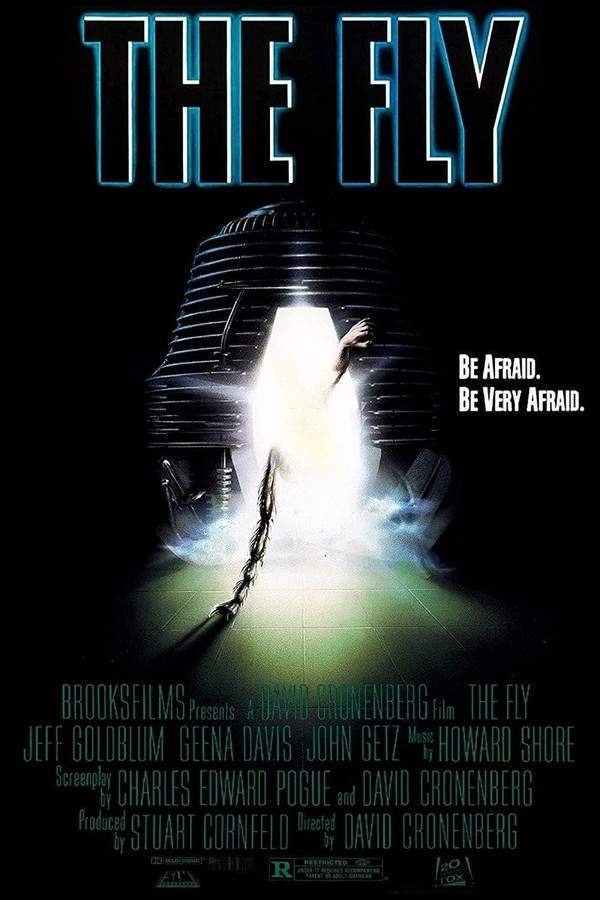
The Fly (1958) movie poster

Characters & Themes

The Fly (1958) Characters, Setting & Themes Explained

Release, runtime and language
1958 · 94 min · English
Loading streaming availability…
Directed by
Kurt Neumann
Starring
Vincent Price, Betty Lou Gerson, Charles Herbert, David Hedison, Eugene Borden, George Calliga

A scientist's experiment involving teleportation goes horribly wrong when a fly contaminates the process. Industrialist François Delambre becomes increasingly disturbed by his brother André's bizarre behavior and physical changes. As André undergoes a horrifying transformation, merging with the insect, François must confront a terrifying reality and uncover the truth behind the gruesome events threatening their family.

On this page (7)
  1. 1 Where to watch
  2. 2 Characters explained (6)
  3. 3 Where & when it takes place
  4. 4 Themes & meaning (4)
  5. 5 Character & meaning questions
  6. 6 Movie threads
  7. 7 Every angle
Loading streaming availability…

6 main characters · contains spoilers

The Fly Characters Explained: Who Is Who

The main characters of The Fly (1958), heroes and villains: what drives them, how they change over the course of the story and what each of them reveals about the film's bigger ideas.

  • André Delambre

    played by Vincent Price

    A driven scientist who pushes the boundaries of physics with a matter-transporter. He tests the device first on small objects, then on living beings, and ultimately attempts a human transfer. His determination to perfect the invention leads to a catastrophic fusion of his head and arm with a fly, while the fly gains a human-like head and arm. Despite the transformation, his human mind remains, fueling a desperate effort to reverse the process.

    • 🔬 Scientist
    • 🧠 Genius
    • ⚠️ Obsessive
  • Hélène Delambre

    played by Patricia Owens

    André’s wife, who becomes entangled in the chaos of the experiments. She confesses to the crime but withholds a motive, and her behavior grows increasingly obsessive as she searches for answers about the white-headed fly. Her mental state deteriorates under the strain of the secret and the frightening consequences of the science at work.

    • 💞 Spouse
    • 🧠 Turmoil
    • 🕵️ Witness
  • François Delambre

    played by David Hedison

    André’s brother who lies to protect his sister-in-law and to maintain the illusion surrounding André’s death. He facilitates the investigation’s misdirection and collaborates with Charas to keep the truth from surfacing publicly. He embodies pragmatism and loyalty, choosing to shield the family from scandal and danger.

    • 🧭 Brother
    • 🗝️ Deception
    • 🕵️‍♂️ Witness
  • Philippe Delambre

    played by Charles Herbert

    The Delambre family’s young son, a symbol of innocence amid the scientific turmoil. He witnesses aspects of the tension within the household and later encounters the extraordinary aftermath of the experiment. His curiosity and perspective provide a human anchor to the mounting horror.

    • 👶 Child
    • 🧠 Curious
    • 🕵️‍ Witness
  • Inspector Charas

    played by Herbert Marshall

    The police inspector assigned to the case who initially views Hélène with suspicion. He becomes entangled in the moral complexities of the Delambre family’s predicament and ultimately agrees to a cover-up to avoid exposing the unsettling truth. He embodies the pragmatic, sometimes compromising approach to justice in the face of extraordinary events.

    • 👮‍♂️ Police
    • 🕵️ Investigator
    • 🌀 Mystery
  • Housemaid

    played by Kathleen Freeman

    The Delambre household staff member who is part of the domestic sphere disrupted by the scientific affair. She participates in the familiar routine while the family confronts a crisis that disrupts everyday life. Her presence helps ground the story in a lived-in, domestic setting during the unraveling events.

    • 🏡 Household
    • 🕵️ Witness
    • 🧹 Support

Last updated: October 04, 2025 at 08:09

Was this helpful?

Setting

Where and When Does The Fly Take Place?

The setting of The Fly (1958): the year and time period, the places and locations, and how they shape the characters, the mood and the tension of the story.

Time period

1950s

The story unfolds in the late 1950s, a period marked by post-war optimism tempered by fears about rapid scientific progress. The era’s sleek laboratories and practical effects contribute to a sense of clinical danger surrounding groundbreaking experiments. This context amplifies the horror of a scientist pushing beyond humane boundaries in pursuit of truth.

Location

Montreal, Quebec, Canada

Montreal serves as the urban backdrop for a scientific tragedy. The action centers on a basement laboratory and later a factory setting where a matter-transporter experiment spirals out of control. The city’s modern, cold atmosphere heightens the tension around a crime and its unstable consequences.

  • 🏙️ City
  • 🧪 Lab
  • 🗺️ Montreal

Last updated: October 04, 2025 at 08:09

Was this helpful?

4 major themes

The Fly Meaning: Themes & Message Explained

What is The Fly (1958) really about? The emotional, social and philosophical themes the film keeps returning to, its symbolism and the message beneath the surface.

  • Science and Hubris

    André Delambre's disintegrator-integrator embodies the potential and danger of unchecked scientific ambition. The experiments progress from inanimate objects to living beings, revealing how curiosity can outpace moral judgment. The narrative treats science as a powerful force that demands ethical restraint. The pursuit to reverse the accident drives the characters toward dangerous, irreversible choices.

  • Transformation

    André's head and arm fuse with a fly, while the fly inherits a fragment of his consciousness. The story juxtaposes rational intellect with baser instincts as the hybrid creature struggles for control. This transformation serves as a stark allegory for losing humanity to scientific tampering. The motif asks what it means to be human when the body betrays the mind.

  • Love and Guilt

    Hélène's confession and ensuing instability reveal the emotional toll of living with a dangerous secret. The family’s loyalty clashes with the desire for truth, pushing them toward protection over disclosure. The tragedy centers on how love can mask accountability and complicate moral judgments. The ending underscores the fragility of relationships under the weight of fear.

  • Truth vs Deception

    Despite the apparent horror, François and Charas opt to bury the full truth to shield Hélène, illustrating how fear and loyalty influence justice. The fly-and-spider web motif symbolizes how truth can be entangled and ultimately suppressed. The film suggests that pursuing truth can be as dangerous as the original accident. In the end, social order is preserved at the expense of transparency.

Last updated: October 04, 2025 at 08:09

Was this helpful?

Character & theme questions

The Fly Characters & Meaning: Your Questions Answered

The questions people ask about The Fly (1958): who the characters really are, their relationships, what the symbols mean, where it takes place and what the movie is really about. Each answer contains spoilers.

Q1

Where is The Fly set?

The film takes place in Montreal, Quebec, Canada. The story centers on a basement laboratory in the Delambre home and later moves to a factory setting where the matter-transporter experiment takes place. The urban, modern atmosphere of 1950s Montreal provides a cold, clinical backdrop that heightens the tension surrounding the scientific tragedy.

Foreshadowing: The choice of Montreal, a modern city, emphasizes the contrast between scientific progress and the horror that unfolds.

  • montreal
  • setting
  • location
  • lab
  • factory
Q2

When does The Fly take place?

The story is set in the late 1950s, during a period marked by post-war optimism but also growing fears about rapid scientific progress. This era of sleek laboratories and cutting-edge physics experiments contributes to a sense of clinical danger, amplifying the horror of a scientist pushing beyond ethical boundaries in pursuit of discovery.

  • 1950s
  • time period
  • era
  • setting
  • post-war
Q3

What are the main themes of The Fly?

The Fly explores several interconnected themes: Science and Hubris examines the dangers of unchecked scientific ambition; Transformation deals with losing humanity through scientific tampering; Love and Guilt focuses on family loyalty versus the pursuit of truth; and Truth vs Deception addresses how fear and loyalty can lead to covering up uncomfortable realities.

  • themes
  • science
  • hubris
  • transformation
  • love
  • guilt
  • truth
  • deception
Q4

What does the Science and Hubris theme mean in The Fly?

André Delambre's matter-transporter represents the potential and danger of unchecked scientific ambition. The experiments progress from inanimate objects to living beings, revealing how curiosity can outpace moral judgment. The narrative treats science as a powerful force that demands ethical restraint, as André's desperate pursuit to reverse his transformation leads to dangerous, irreversible choices.

  • science
  • hubris
  • ambition
  • matter-transporter
  • experiment
Q5

What does the transformation theme represent in The Fly?

André's head and arm fuse with a fly while the fly inherits a fragment of his consciousness. This transformation juxtaposes rational intellect with baser instincts as the hybrid creature struggles for control. The change serves as an allegory for losing humanity to scientific tampering, exploring what it means to be human when the body betrays the mind.

  • transformation
  • fly
  • hybrid
  • humanity
  • body
  • mind
Q6

Who is André Delambre in The Fly?

André Delambre is a driven scientist who invents a matter-transporter, pushing the boundaries of physics. He tests the device on objects and living beings before attempting human transfer, which results in his catastrophic fusion with a fly. Despite the horrifying transformation, his human mind remains intact, fueling a desperate attempt to reverse the process.

  • andre delambre
  • scientist
  • matter-transporter
  • fly
  • transformation
Q7

Who is Hélène Delambre in The Fly?

Hélène Delambre is André's wife who becomes entangled in the chaos of his experiments. She confesses to a crime but withholds a motive, and her behavior grows increasingly obsessive as she searches for answers about the white-headed fly. Her mental state deteriorates under the strain of keeping the secret and confronting the frightening consequences of the science at work.

  • helene delambre
  • wife
  • confession
  • obsession
  • secret
Q8

Who is François Delambre in The Fly?

François Delambre is André's brother who lies to protect his sister-in-law and maintain the illusion surrounding André's death. He facilitates the investigation's misdirection and works with Inspector Charas to keep the truth from surfacing. He embodies pragmatism and loyalty, choosing to shield the family from scandal and danger.

  • francois delambre
  • brother
  • loyalty
  • protection
  • cover-up
Q9

What is the Truth vs Deception theme in The Fly?

Despite the apparent horror, François and Charas choose to bury the full truth to protect Hélène. The fly-and-spider web motif symbolizes how truth becomes entangled and ultimately suppressed. The film suggests that pursuing truth can be as dangerous as the original accident, and social order is preserved at the expense of transparency.

  • truth
  • deception
  • cover-up
  • justice
  • secret
Q10

What is Inspector Charas's role in The Fly?

Inspector Charas is the police inspector assigned to investigate the case, initially viewing Hélène with suspicion. He becomes entangled in the moral complexities of the Delambre family's predicament and ultimately agrees to a cover-up to avoid exposing the unsettling truth. He represents the pragmatic, sometimes compromising approach to justice when facing extraordinary events.

  • inspector charas
  • police
  • investigation
  • justice
  • moral compromise

Movie threads

More Movies Like The Fly, by Mood & Story

Curated lists built around what makes The Fly tick: the same mood, the same kind of story or the same emotional payoff. Each list explains why these movies belong together.

Sci-Fi Horror Movies About Science Gone Wrong Like The Fly

Stories where groundbreaking experiments lead to catastrophic and monstrous consequences. If you liked The Fly, explore more movies about unethical experiments and scientific ambition leading to terrifying consequences. These similar sci-fi horror stories feature groundbreaking discoveries that backfire, creating monsters and unleashing chaos on their creators and loved ones.

  • horrifying
  • tense
  • dread-filled
  • macabre
  • suspenseful
  • desperate
  • Tone: dark, horrifying
  • Pacing: steady, escalating
Why these movies?

The story pattern: The narrative pattern follows a brilliant but obsessive scientist who pushes boundaries without considering the ethical costs. Their experiment, often involving the human body or nature, fails spectacularly, triggering a chain of horrific events. The story becomes a desperate struggle to contain the disaster, often involving grotesque physical transformations and profound moral crises.

Why they belong together: Movies in this thread are grouped by their shared thematic core: the cautionary tale of science overstepping its limits. They share a dark tone, high intensity from the visceral horror of the consequences, and a heavy emotional weight as characters face the ruin of their own making.

Body Horror Transformation Movies With Dread Like The Fly

A terrifying and gradual physical metamorphosis that erodes one's humanity. Fans of The Fly's horrifying metamorphosis will find more movies like it in this thread. These films focus on gruesome bodily changes, where a character's physical form becomes a source of terror, suspense, and tragic loss, creating a deeply unsettling viewing experience.

  • body horror
  • dread-filled
  • grotesque
  • suspenseful
  • unsettling
  • tragic
  • Tone: dark, macabre, suspenseful
  • Pacing: steady, methodical build
Why these movies?

The story pattern: The central journey is one of physical and mental decay. A protagonist, often through an accident or experiment, begins an irreversible transformation. The narrative builds suspense by methodically revealing the worsening physical changes and the corresponding psychological toll, leading to a climax of horrific revelation and often a bittersweet or tragic resolution.

Why they belong together: These films are united by the core experience of body horror—the fear of physical violation and loss of self. They share a steady, dreadful pacing that lets the horror sink in, a dark tone, and a heavy emotional weight centered on tragedy and the fragility of the human form.

Every angle

The Fly (1958) Explained: Plot, Timeline & Characters

Everything about The Fly in one place: what happens in the plot summary, the timeline in chronological order, the characters and meaning and a spoiler-free summary. What's After the Movie adds the cast, box office and post-credit scenes.

Coming soon on iOS and Android

The Plot Explained Movie Summary App

Plot summaries, endings explained and timelines on your phone. Catch up on any movie in minutes, save your favorites and never miss a twist again.

Be the first to know when we launch. Your email stays private, always.

Learn more about the app