Plot Explained Spoilers guaranteed!
Plot Explained

Browse by genre

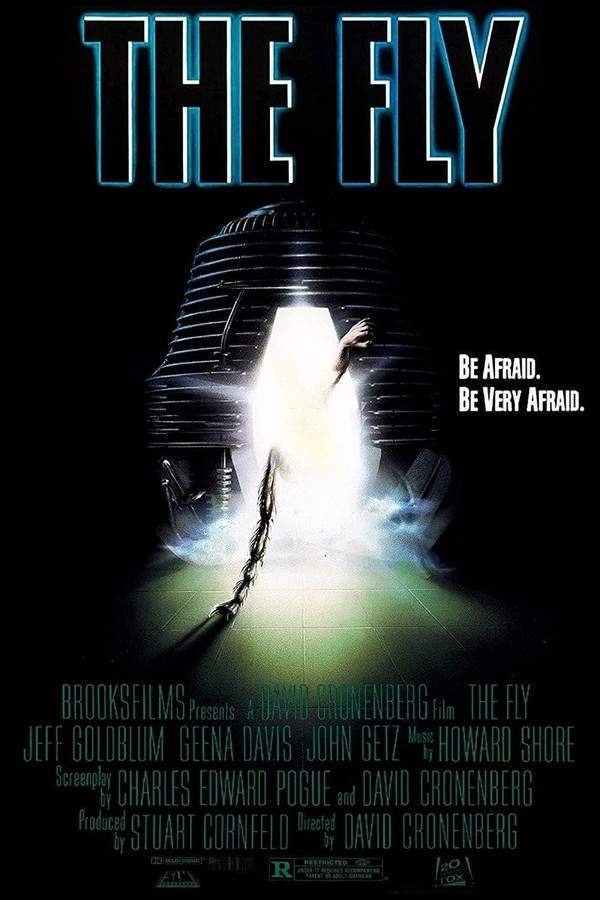
The Fly (1958) movie poster

Plot Summary

The Fly (1958) Plot Summary Explained

Release, runtime and language
1958 · 94 min · English
Loading streaming availability…
Directed by
Kurt Neumann
Starring
Vincent Price, Betty Lou Gerson, Charles Herbert, David Hedison, Eugene Borden, George Calliga

A scientist's experiment involving teleportation goes horribly wrong when a fly contaminates the process. Industrialist François Delambre becomes increasingly disturbed by his brother André's bizarre behavior and physical changes. As André undergoes a horrifying transformation, merging with the insect, François must confront a terrifying reality and uncover the truth behind the gruesome events threatening their family.

On this page (5)
  1. 1 Where to watch
  2. 2 What happens: full plot
  3. 3 Plot questions answered
  4. 4 Movie threads
  5. 5 Every angle
Loading streaming availability…

Full plot summary · contains spoilers

What Happens in The Fly: Full Plot Summary

The whole story of The Fly (1958) explained, from the opening scene to the final frame: every key event, every twist and what it all adds up to. Read it as a quick recap before the sequel, to check a scene you missed, or to finally understand what really happened.

In Montreal, the scientist André Delambre Vincent Price is found dead with his head and left arm crushed inside a hydraulic press, and his wife Hélène Patricia Owens confesses to the crime while refusing to offer a motive. Her behavior grows increasingly odd, driven by an unusual fixation on flies, including a supposedly white-headed fly. André's brother, François, pretends to know what happened but keeps key details to himself, prompting Hélène to urge François to bring the inspector in charge, Inspector Charas, so she can lay out the circumstances in a way that might expose the truth.

The story pivots to a gripping flashback that reveals a once-happy family dynamic: André, Hélène, and their young son Philippe Delambre Charles Herbert are shown living with a groundbreaking invention. André has been toying with a matter-transporter device—the disintegrator-integrator—first tested on inanimate objects, like a newspaper, to prove its feasibility. Encouraging results lead to bolder experiments involving living beings: a family cat that initially seems to vanish and reappear under the wrong conditions, followed by a guinea pig, all of which heighten the tension as the tests grow more ambitious.

With the tests approaching human scale, André constructs a man-sized pair of chambers and makes a startling confession. He explains, through typed notes and careful signaling, that a fly became trapped in the transport chamber along with him during an attempt to transfer himself. The outcome is extraordinary and terrifying: André’s head and left arm morph into those of a fly, while the insect acquires a miniature replica of his head and left arm—yet André still retains his human mind. This bizarre fusion creates a race against time as André realizes the fly may develop its own animal-driven instincts and threaten to overpower his humanity.

To reverse the process, André needs Helene to capture the transformed creature. The pair—and their house staff—spend endless hours scouring their home and the surrounding grounds for the elusive fly and its human-headed counterpart. The search leads Helene to a window crack where the fly escapes once more, and a creeping dread settles in as the fly’s supremacy grows, compelling André to act. Desperate, he guides Helene to the factory, and there he sets the hydraulic press in motion, signaling Helene to press the button and seal his fate. As the machine descends, André’s arm slips free, and in a harrowing moment, Helene tries to avert the catastrophe by lifting the press, replacing the arm, and restarting the apparatus in a doomed bid to salvage both lives and the truth.

Back in the present, Inspector Charas condemns Helene as insane and guilty of murder. Yet hope arrives in the form of Philippe, who reports a strange sight in the garden: a fly trapped in a spider’s web, carrying both André’s head and arm. François escorts Charas to witness the creature himself, and they behold the shocking sight: the fly with the fused human parts. A lurking spider approaches as Philippe’s details ring true, and Charas, in a final act of grim practicality, crushes both the fly and the spider to prevent any chance of belief in this extraordinary tragedy.

Faced with the impossibility of convincing the world, François and Charas resolve to declare André’s death a suicide, sparing Helene from a jury that would not accept the truth. The family’s fragile routine resumes: Helene, François, and Philippe carry on with their lives, the memory of the tragedy tempered by the quiet, stubborn pull of the truth they all shared in the shadows of the laboratory.

Sometime later, Philippe and Helene share a moment of croquet in the yard, while François arrives to take his nephew to the zoo. When Philippe asks about his father’s death, François answers with a somber reflection on the nature of discovery: He was searching for the truth. He almost found a great truth, but for one instant, he was careless. The search for the truth is the most important work in the whole world and the most dangerous. The scene closes with Helene guiding her son and François away, leaving the house to its tense, unspoken memories and the unresolved questions that linger long after the credits roll.
Last updated: October 09, 2025 at 15:41

Was this helpful?

Plot questions answered

The Fly Plot Explained: Your Questions Answered

The questions people ask most about The Fly (1958): what happens in the confusing scenes, why the characters do what they do, the twists, hidden details and what the ending means. Each answer contains spoilers.

Q1

Why did André ask Hélène to use the hydraulic press on him?

André begged Hélène to activate the hydraulic press because he was losing his humanity to fly instincts. As the transformation progressed, he feared he would completely lose his human mind and become fully insect, so he chose a swift, deliberate death to spare himself that fate and to end the horror for his family.

Foreshadowing: Earlier, André warns Hélène that the fly's animal instincts are starting to take over his mind.

  • andre delambre
  • hydraulic press
  • suicide
  • transformation
  • fly instincts
Q2

How did the fly end up inside the teleportation chamber with André?

A fly became trapped in the chamber at the exact moment André initiated the transfer. The exact source of the fly is never determined, but the device's design allowed the insect to enter unnoticed before the process began, resulting in atomic mixing between André and the insect.

Foreshadowing: André had been testing the device on smaller creatures, increasing the pressure to attempt human teleportation.

  • fly
  • teleportation
  • disintegrator
  • experiment
  • atomic mixing
Q3

What happened to the fly that had André's head and arm?

After the failed teleportation, the fly escaped with André's miniature head and left arm fused to its body. The creature was eventually found trapped in a spider's web in the garden, where Inspector Charas crushed both the fly and spider to prevent anyone from discovering the truth.

Foreshadowing: Hélène had been obsessively searching for a white-headed fly throughout the house.

  • fused fly
  • andre delambre
  • inspector charas
  • spider web
  • garden
Q4

Why did François lie about catching the white-headed fly?

François lied to protect Hélène and the family reputation. When he saw how distressed Hélène was over the fly, he fabricated the lie to comfort her and buy time, not knowing that the fly actually existed or that it contained his brother's remains.

Foreshadowing: François pretends to know more than he lets on from the moment he arrives at the house.

  • francois delambre
  • white-headed fly
  • lie
  • deception
  • helene
Q5

What happened to the family cat after André teleported it?

André tested the disintegrator-integrator on the family cat first. The cat failed to reintegrate properly, its meows could be heard somewhere in the house, but it never fully reassembled, foreshadowing the disaster that would later happen to André himself.

Foreshadowing: The failed cat experiment showed the device was not ready for human use, yet André proceeded anyway.

  • cat
  • teleportation
  • failed experiment
  • disintegrator
  • family pet
Q6

Why did André destroy his notes and equipment?

André destroyed everything because he realized the world was not ready for his discovery. As his fly instincts took over, he smashed the laboratory equipment and burned his research notes so no one else would attempt to replicate his dangerous experiment.

Foreshadowing: André tells Hélène that the fly's instincts are beginning to dominate his human thoughts.

  • andre delambre
  • notes
  • equipment
  • destroyed
  • discovery
  • scientific discovery
Q7

Why did Inspector Charas declare André's death a suicide?

Charas ruled it suicide because the truth was too impossible to prove. After witnessing the fused fly in the garden, he understood what had happened but knew no court would believe such an extraordinary story, so he and François agreed to call it suicide to protect Hélène from murder charges.

Foreshadowing: Charas initially condemns Hélène as insane and guilty of murder before seeing the proof.

  • inspector charas
  • suicide
  • cover-up
  • trial
  • truth
Q8

Why did Hélène become obsessed with flies after André's death?

Hélène's fixation on flies stemmed from guilt and the desperate hope of finding the fused creature. She believed that if she could capture the fly carrying André's remains, there might be a way to reverse the transformation, leading her to search obsessively for the white-headed fly.

Foreshadowing: From the moment she confesses, Hélène displays unusual behavior around flies.

  • helene
  • flies
  • obsession
  • guilt
  • search
  • white-headed fly
Q9

What caused André's personality to change after the transformation?

André's human mind began deteriorating because the fly's insect brain was slowly overtaking his consciousness. He explained to Hélène through typed notes that the fly's animal instincts were gaining control, which is why he became desperate to end his life before he lost his humanity completely.

Foreshadowing: André admits he can feel the fly's impulses starting to influence his decisions.

  • andre delambre
  • personality
  • fly instincts
  • mind
  • human consciousness
  • transformation
Q10

What did Hélène do when the hydraulic press nearly saved André?

When the first press crushed André's arm free from the fused mass, Hélène desperately tried to save him by raising the press, repositioning his arm, and restarting the machine, hoping to reintegrate him properly. However, the second press completed the fatal crushing, making her intervention futile.

Foreshadowing: The first press only partially activated, giving Hélène a moment of false hope.

  • helene
  • hydraulic press
  • arm
  • rescue attempt
  • failed
Q11

What did Inspector Charas discover in the garden?

Charas discovered the fly with André's head and left arm fused to its body, trapped in a spider's web in the garden. Philippe had spotted it, and when Charas approached, he saw the horrifying creature firsthand before destroying both it and the spider to keep the secret hidden.

Foreshadowing: Philippe reports seeing a strange sight in the garden with both a fly and a spider.

  • inspector charas
  • garden
  • fly
  • andre head
  • spider
  • discovery

Movie threads

More Movies Like The Fly, by Mood & Story

Curated lists built around what makes The Fly tick: the same mood, the same kind of story or the same emotional payoff. Each list explains why these movies belong together.

Sci-Fi Horror Movies About Science Gone Wrong Like The Fly

Stories where groundbreaking experiments lead to catastrophic and monstrous consequences. If you liked The Fly, explore more movies about unethical experiments and scientific ambition leading to terrifying consequences. These similar sci-fi horror stories feature groundbreaking discoveries that backfire, creating monsters and unleashing chaos on their creators and loved ones.

  • horrifying
  • tense
  • dread-filled
  • macabre
  • suspenseful
  • desperate
  • Tone: dark, horrifying
  • Pacing: steady, escalating
Why these movies?

The story pattern: The narrative pattern follows a brilliant but obsessive scientist who pushes boundaries without considering the ethical costs. Their experiment, often involving the human body or nature, fails spectacularly, triggering a chain of horrific events. The story becomes a desperate struggle to contain the disaster, often involving grotesque physical transformations and profound moral crises.

Why they belong together: Movies in this thread are grouped by their shared thematic core: the cautionary tale of science overstepping its limits. They share a dark tone, high intensity from the visceral horror of the consequences, and a heavy emotional weight as characters face the ruin of their own making.

Body Horror Transformation Movies With Dread Like The Fly

A terrifying and gradual physical metamorphosis that erodes one's humanity. Fans of The Fly's horrifying metamorphosis will find more movies like it in this thread. These films focus on gruesome bodily changes, where a character's physical form becomes a source of terror, suspense, and tragic loss, creating a deeply unsettling viewing experience.

  • body horror
  • dread-filled
  • grotesque
  • suspenseful
  • unsettling
  • tragic
  • Tone: dark, macabre, suspenseful
  • Pacing: steady, methodical build
Why these movies?

The story pattern: The central journey is one of physical and mental decay. A protagonist, often through an accident or experiment, begins an irreversible transformation. The narrative builds suspense by methodically revealing the worsening physical changes and the corresponding psychological toll, leading to a climax of horrific revelation and often a bittersweet or tragic resolution.

Why they belong together: These films are united by the core experience of body horror—the fear of physical violation and loss of self. They share a steady, dreadful pacing that lets the horror sink in, a dark tone, and a heavy emotional weight centered on tragedy and the fragility of the human form.

Every angle

The Fly (1958) Explained: Plot, Timeline & Characters

Everything about The Fly in one place: what happens in the plot summary, the timeline in chronological order, the characters and meaning and a spoiler-free summary. What's After the Movie adds the cast, box office and post-credit scenes.

Coming soon on iOS and Android

The Plot Explained Movie Summary App

Plot summaries, endings explained and timelines on your phone. Catch up on any movie in minutes, save your favorites and never miss a twist again.

Be the first to know when we launch. Your email stays private, always.

Learn more about the app