Year: 1978
Runtime: 159 mins
Language: Japanese
Director: Kinji Fukasaku
Set in 1701‑2, the film dramatizes the legend of the Forty‑Seven Ronin. After Lord Asano is provoked into drawing his sword in the shogun’s palace—a capital offense—his clan loses lands and titles, leaving thousands of samurai and retainers destitute. Determined to avenge their master, forty‑seven ronin plot and execute a daring retaliation against Lord Kira, the official who engineered Asano’s disgrace.
Warning: spoilers below!
Haven’t seen The Fall of Ako Castle yet? This summary contains major spoilers. Bookmark the page, watch the movie, and come back for the full breakdown. If you're ready, scroll on and relive the story!
Trace every key event in The Fall of Ako Castle (1978) with our detailed, chronological timeline. Perfect for unpacking nonlinear stories, spotting hidden connections, and understanding how each scene builds toward the film’s climax. Whether you're revisiting or decoding for the first time, this timeline gives you the full picture.
Last updated: October 09, 2025 at 12:34
Find frequently asked questions about the The Fall of Ako Castle (1978) timeline, including chronological order, nonlinear jumps, cause-and-effect links, and scene sequence clarifications. This timeline FAQ helps explain when key events happen, how moments connect, and why the story unfolds in that specific order.
Asano was provoked by Kira, a court official who hurled insults at him during a formal ceremony. The cumulative humiliation and the insult directed at Asano caused him to draw his sword in a rare display of defiance. However, fellow officials intervened and prevented him from striking Kira, which ultimately did not save him from the consequences of the act itself.
Earlier in the ceremony, the Imperial Sword was presented to memorialize power and propriety, establishing the rigid honor codes that would condemn Asano's impulsive act.
The ronin were bound by the code of loyalty (bushido) and a deep sense of moral duty to their master. Their motivation was not solely revenge but restoring honor to Asano's name and fulfilling their oath as samurai. They believed that dying for their lord was more honorable than living in shame as masterless ronin.
The vow to avenge Asano was taken at a formal ceremony where the Imperial Sword was presented, symbolizing the very honor codes that would ultimately demand their lives.
Oishi deliberately distanced his family to protect them from the consequences of the planned revenge. By divorcing his wife and sending her with their younger children to her father's house, he ensured they would not be associated with the conspiracy or punished as his relatives. He kept only his eldest son Chikara, whom he intended to carry on the family line as the heir.
Oishi's decision reflects the calculated, strategic mindset required to lead a years-long conspiracy while ensuring some form of family continuity.
Hashimoto was crippled by a bad leg that prevented him from participating in the raid, leaving him consumed by shame and frustration. When Jujiro arrived with the warning that the raid would happen the next night, Hashimoto flew into a reckless fury and drew his sword on Jujiro. His wife stabbed him to stop his rampage, and he retaliated by killing her before taking his own life, making his tragic end a result of unbearable pride and helplessness.
Earlier, Hashimoto and Horibe had acted impulsively with an aborted ambush attempt, establishing his tendency toward rash action despite his injury.
Fuwa Kazuemon was a ronin living in the woods near Oishi's former home. When three assassins sent by Yanagisawa attacked Oishi's residence, Fuwa intervened and killed them, saving Oishi and his son Chikara. Though once a retainer of the Asano clan, he had become a hermit-like figure. His intervention was driven by remaining loyalty to his old lord and his personal sense of justice in protecting the conspirators.
Fuwa's later role in the raid itself, where he confronts and defeats Kobayashi, confirms his enduring commitment to the ronin's cause.
Although the ronin achieved their goal of killing Kira, the shogunate viewed their act as a direct challenge to governmental authority. Yanagisawa interpreted the raid as an attack on the shogunate's infallibility and the established order. Rather than celebrate the ronin's loyalty, the authorities sentenced all forty-seven to seppuku to demonstrate that no one, not even wronged samurai, could take the law into their own hands without consequence.
The initial punishment of Asano and the confiscation of his clan's assets already established the shogunate's absolute authority and zero tolerance for defiance.
Hashimoto Heizaemon and Yasubei Horibe hastily planned to intercept Kira as he was being relocated to Yonezawa. Their impulsive ambush was thwarted by spies and other clan members who opposed the premature action. The failure resulted from poor planning, lack of secrecy, and the timing of Kira's relocation, which caught the conspirators off guard.
This failed attempt forced the ronin to adopt a more patient, coordinated approach that would span over a year.
Kobayashi Heihachiro, Kira's attendant, was sent to locate and kill Oishi. However, he made a critical error by entering the wrong room and murdered a man who was merely sleeping there. Later, when he visited Hashimoto to offer 50 ryō for information about Oishi's location, Hashimoto refused the bribe and attacked Kobayashi, though Kobayashi escaped and gathered intelligence that Oishi was in Edo.
Kobayashi's failure set the stage for his eventual confrontation with Fuwa during the raid itself.
After the verdict against Asano, Kira retired from court life and was dispatched to Yonezawa on orders from Lord Yanagisawa. This relocation moved Kira away from the center of power in Edo and increased the difficulty for Asano's followers to reach him. The distance forced the ronin to wait for the right moment and plan a more sophisticated attack rather than act impulsively.
The eventual raid takes place in Edo, confirming that Kira eventually returned from Yonezawa, making the timing of the conspiracy critical.
Oishi retained his eldest son Chikara as his heir to ensure the family line would continue after the raid. While he sent his wife and younger children to safety, keeping Chikara served a dual purpose: the son could inherit any remaining family honor and represent the Oishi lineage. This decision reflected Oishi's belief that some continuity was necessary even in self-destruction.
Chikara's presence during the attack on Oishi's house, when Fuwa saves them, confirms his role as the chosen successor.
The raid was triggered when Oishi learned that Kira was moving toward the Uesugi mansion in Sakurada after a tea ceremony, placing him at a known location. Oishi informed the clan that the raid would take place the following night, and the message was delivered to all conspirators. This combination of intelligence about Kira's location and the certainty that he was sleeping at the inn made the timing optimal.
Kobayashi's earlier intelligence gathering had already revealed Oishi was in Edo, tightening the net around the planned assault.
After the ronin killed Kira, the shogunate abolished his name from the records, mirroring the earlier erasure of Asano's name. This symbolic act was intended to appease the political balance and prevent the incident from becoming a larger controversy. By erasing both names, the authorities sought to minimize the remembered injustice and present a unified narrative of state authority.
The shogunate's initial punishment of Asano already included erasing his name, establishing the pattern of historical erasure as a tool of political control.
Discover curated groups of movies connected by mood, themes, and story style. Browse collections built around emotion, atmosphere, and narrative focus to easily find films that match what you feel like watching right now.
Stories where duty demands a patient, tragic path of retribution.If you liked the patient, tragic revenge plot of The Fall of Ako Castle, you'll find similar stories here. These movies feature characters driven by duty and honor, engaging in methodical quests for vengeance that often carry a heavy emotional and moral cost, similar to the journey of the forty-seven ronin.
These narratives follow a clear arc: a profound dishonor or loss sets a group or individual on a path of vengeance dictated by a strict code. The plot unfolds with deliberate pacing, focusing on strategy, loyalty, and the personal sacrifices required. The climax achieves the goal, but the resolution is typically tragic or bittersweet, reinforcing the high cost of adhering to an absolute code.
Movies are grouped here because they share a central theme of revenge driven by duty rather than simple anger. They feature a similar emotional tone of grim determination, a steady pacing that builds tension through planning, and a narrative structure where success is inextricably linked with sacrifice.

Grim period stories where allegiance leads to inevitable sorrow.Fans of The Fall of Ako Castle will appreciate these similarly bleak historical dramas. These films capture the solemn mood and heavy emotional weight of stories where characters are bound by duty, leading to tragic sacrifices within richly detailed historical settings, much like the tale of the forty-seven ronin.
The narrative pattern involves individuals or groups whose fates are sealed by the societal structures they inhabit. The story is a slow, inevitable march towards a tragic outcome, emphasizing the cost of loyalty and the brutality of the era. Character arcs are defined by their acceptance of a sorrowful destiny for the sake of principle, family, or nation.
These films are connected by their shared bleak tone, heavy emotional weight, and historical setting. They offer a similar viewing experience: a steady, immersive journey into a past where honor codes and political forces create narratives of inescapable tragedy and profound sacrifice.
Don't stop at just watching - explore The Fall of Ako Castle in full detail. From the complete plot summary and scene-by-scene timeline to character breakdowns, thematic analysis, and a deep dive into the ending - every page helps you truly understand what The Fall of Ako Castle is all about. Plus, discover what's next after the movie.
Read a complete plot summary of The Fall of Ako Castle, including all key story points, character arcs, and turning points. This in-depth recap is ideal for understanding the narrative structure or reviewing what happened in the movie.
Discover the characters, locations, and core themes that shape The Fall of Ako Castle. Get insights into symbolic elements, setting significance, and deeper narrative meaning - ideal for thematic analysis and movie breakdowns.
Discover movies like The Fall of Ako Castle that share similar genres, themes, and storytelling elements. Whether you’re drawn to the atmosphere, character arcs, or plot structure, these curated recommendations will help you explore more films you’ll love.
The Fall of Ako Castle (1978) Plot Summary & Movie Recap
The Fall of Ako Castle (1978) Scene-by-Scene Movie Timeline
The Fall of Ako Castle (1978) Spoiler-Free Summary & Key Flow
Movies Like The Fall of Ako Castle – Similar Titles You’ll Enjoy
Harakiri (1964) Plot Summary & Ending Explained
47 Ronin (2013) Film Overview & Timeline
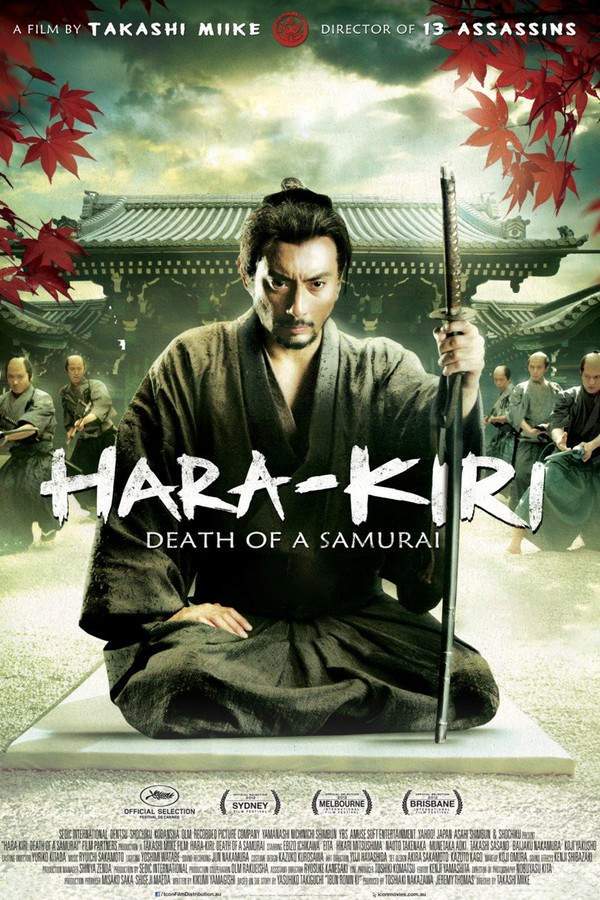
Hara-Kiri: Death of a Samurai (2012) Movie Recap & Themes
The 47 Rōnin in Debt (2019) Movie Recap & Themes
Castle of Owls (1963) Full Movie Breakdown
Mission: Iron Castle (1970) Plot Summary & Ending Explained
Castle Under Fiery Skies (2009) Complete Plot Breakdown
The Shogun Assassins (1979) Movie Recap & Themes
Samurai Assassin (1965) Full Movie Breakdown
Eleven Samurai (1967) Film Overview & Timeline
Rise Against the Sword (1966) Film Overview & Timeline
Owls’ Castle (1999) Full Movie Breakdown
The Loyal 47 Ronin (1958) Full Movie Breakdown
The 47 Ronin (1941) Plot Summary & Ending Explained
Samurai Vendetta (1959) Movie Recap & Themes