






Plot Explained Spoilers guaranteed!
Plot Explained

Browse by genre

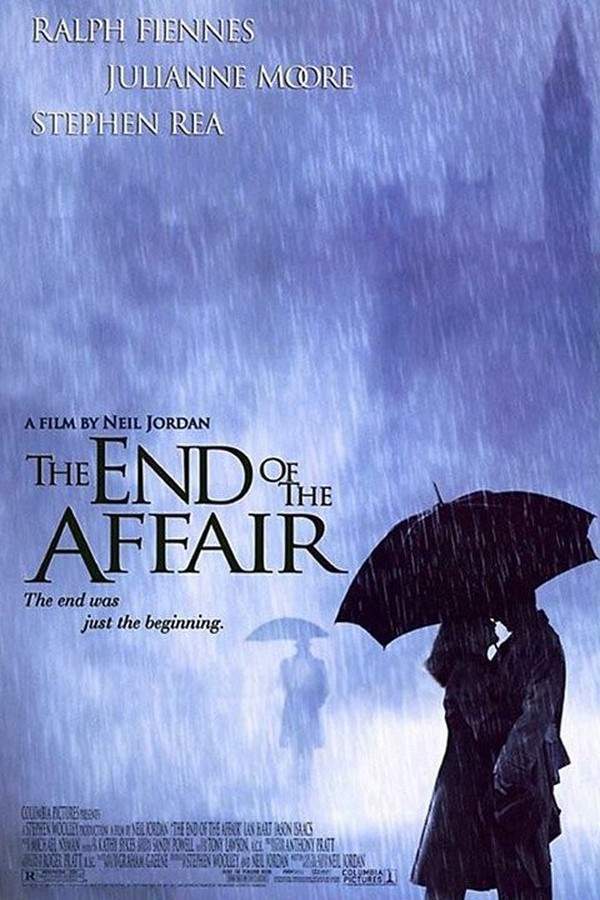
The End of the Affair (1999) movie poster

Characters & Themes

The End of the Affair (1999) Characters, Setting & Themes Explained

Release, runtime and language
1999 · 102 min · English
Directed by
Neil Jordan
Starring
Ralph Fiennes, Julianne Moore, Stephen Rea
Budget
$23M

In post-war London, writer Maurice Bendrix finds his feelings for Sarah resurface when her husband, Henry, suspects infidelity. A detective’s investigation into Sarah’s movements further complicates matters, drawing Maurice deeper into a passionate and deceitful relationship. As secrets and longing intertwine, the lives of Maurice, Sarah, and Henry become increasingly entangled in a complex web of emotional turmoil and hidden truths.

On this page (9)
  1. 1 Where to watch
  2. 2 Characters explained (3)
  3. 3 Where & when it takes place
  4. 4 Themes & meaning (3)
  5. 5 Character & meaning questions
  6. 6 The book behind the movie
  7. 7 Movie threads
  8. 8 Movies like The End of the Affair
  9. 9 Every angle

Where to watch

Where to Watch The End of the Affair (1999)

Where can you watch The End of the Affair? Stream, rent or buy it in the US, including on Tubi TV, Amazon Video and Apple TV Store: current JustWatch availability with up-to-date prices.

Streaming availability powered by JustWatch

3 main characters · contains spoilers

The End of the Affair Characters Explained: Who Is Who

The main characters of The End of the Affair (1999), heroes and villains: what drives them, how they change over the course of the story and what each of them reveals about the film's bigger ideas.

  • Maurice Bendrix (Ralph Fiennes)

    Maurice is a deeply passionate and conflicted novelist whose love for Sarah consumes his thoughts and actions. His journey through jealousy and obsession reveals a vulnerable side as he navigates the complexities of love and loss. He is driven by a desperate need to reconcile his feelings and confront the truth about his relationship.

    • ✍️ Novelist
    • 💔 Heartbroken
    • 🔍 Obsessed
  • Sarah (Julianne Moore)

    Sarah is a complex woman torn between her love for Bendrix and her commitment to her husband, Henry. Her emotional struggles reflect the difficult choices faced by many in the aftermath of love and loss. As she grapples with her feelings, her vulnerability is poignantly portrayed, especially in the face of terminal illness.

    • ❤️ Torn
    • 🙏 Devout
    • 🌪️ Emotional
  • Henry Miles (Stephen Rea)

    Henry is a seemingly oblivious husband who remains unaware of Sarah's affair. While he represents the stability of marital life, his blindness to the turmoil around him highlights the theme of betrayal. His earnest nature contrasts sharply with Bendrix's passionate approach to love, creating a tension between loyalty and desire.

    • 🧔 Naive
    • 💔 Unaware
    • 🔒 Loyal

Last updated: October 22, 2024 at 22:50

Was this helpful?

Setting

Where and When Does The End of the Affair Take Place?

The setting of The End of the Affair (1999): the year and time period, the places and locations, and how they shape the characters, the mood and the tension of the story.

Time period

1946, 1939

The film is set in the aftermath of World War II, a time characterized by uncertainty and the struggle for emotional healing. Flashbacks to 1939 reveal the vibrant yet tumultuous love affair between Bendrix and Sarah, contrasting sharply with the bleakness of their current realities. This dual timeline emphasizes the transient nature of love against the backdrop of a war-torn world.

Location

London

London serves as the somber backdrop for the film, capturing the post-war atmosphere of 1946. Known for its rich history and resilience, it grapples with the scars of World War II while providing a poignant setting for love and despair. The dreary weather mirrors the emotional turmoil of the characters.

  • 🏙️ City
  • ⛈️ War-torn

Last updated: October 22, 2024 at 22:50

Was this helpful?

3 major themes

The End of the Affair Meaning: Themes & Message Explained

What is The End of the Affair (1999) really about? The emotional, social and philosophical themes the film keeps returning to, its symbolism and the message beneath the surface.

  • Love & Loss

    The film explores the complexities of love through the lens of a passionate affair marred by betrayal and sorrow. As Bendrix grapples with intense longing and heartache, viewers witness how love can both uplift and devastate. The profound connection between Bendrix and Sarah is tested by external forces, reflecting the fragility of human relationships.

  • Obsession

    Bendrix's obsession with Sarah is a driving force in the narrative, showcasing the destructive power of unrequited love. His relentless pursuit of understanding her choices leads to chaotic confrontations and a deep sense of paranoia. This theme encapsulates the intertwining of passion and anguish that defines their relationship.

  • Faith & Doubt

    The role of faith emerges prominently, especially through Sarah's internal struggles with her beliefs. As Bendrix's jealousy and despair clash with his search for spiritual understanding, the film delves into how religion influences their lives. The priest's presence amplifies these themes, reflecting the complexity of love intertwined with faith.

Last updated: October 22, 2024 at 22:50

Was this helpful?

Character & theme questions

The End of the Affair Characters & Meaning: Your Questions Answered

The questions people ask about The End of the Affair (1999): who the characters really are, their relationships, what the symbols mean, where it takes place and what the movie is really about. Each answer contains spoilers.

Q1

Where is the movie set and how does the setting affect the story?

The film is set in post-war London in 1946, a city still bearing the scars of World War II. The dreary weather and somber atmosphere mirror the emotional turmoil of the characters, reflecting their grief, longing, and the general sense of loss permeating society after the war. London becomes more than just a backdrop, it embodies the emotional state of its characters.

  • london
  • setting
  • post-war
  • britain
  • 1940s
Q2

When does the story take place and what is the significance of the dual timeline?

The film is set primarily in 1946, with flashbacks to 1939, showing the beginning of the affair. The dual timeline contrasts the vibrant, passionate love affair of 1939 with the bleak, emotionally drained realities of post-war London. This structure emphasizes how the war transformed the characters and their relationships, showing love against the backdrop of a war-torn world.

  • 1946
  • 1939
  • flashbacks
  • world war ii
  • time period
Q3

What is the main theme of love and loss in the movie?

The film explores how love can both uplift and devastate, following Maurice Bendrix's intense longing and heartache after his affair with Sarah ends. The profound connection between Bendrix and Sarah is tested by external forces, reflecting the fragility of human relationships. Their love story is marred by betrayal and sorrow, making loss central to the narrative.

  • love
  • loss
  • affair
  • passion
  • heartbreak
Q4

How does obsession drive the story?

Maurice Bendrix's obsession with Sarah is the driving force of the narrative, showcasing the destructive power of unrequited love. His relentless pursuit of understanding her choices leads to chaotic confrontations and deep paranoia. This theme encapsulates the intertwining of passion and anguish that defines their relationship throughout the film.

  • obsession
  • jealousy
  • passion
  • destruction
  • pursuit
Q5

What role does faith play in the film?

Faith emerges prominently through Sarah's internal struggles with her beliefs as she copes with terminal illness. Bendrix's jealousy and despair clash with his own search for spiritual understanding. The presence of a priest amplifies these themes, reflecting the complexity of love intertwined with faith and doubt. The characters grapple with questions of belief while facing mortality and loss.

  • faith
  • doubt
  • religion
  • belief
  • priest
  • spirituality
Q6

Who is Maurice Bendrix and what drives him?

Maurice Bendrix is a deeply passionate and conflicted novelist whose love for Sarah consumes his thoughts and actions. His journey through jealousy and obsession reveals a vulnerable side as he navigates the complexities of love and loss. He is driven by a desperate need to reconcile his feelings and confront the truth about their relationship.

  • maurice bendrix
  • novelist
  • protagonist
  • passion
  • jealousy
Q7

Who is Sarah and what is her internal conflict?

Sarah is a complex woman torn between her love for Bendrix and her commitment to her husband Henry. Her emotional struggles reflect the difficult choices faced in the aftermath of love and loss. Her vulnerability is poignantly portrayed as she grapples with both her feelings and a terminal illness, making her one of the film's most tragic figures.

  • sarah
  • affair
  • marriage
  • conflict
  • illness
Q8

What role does Henry Miles play in the story?

Henry Miles is Sarah's seemingly oblivious husband who remains unaware of her affair with Bendrix. While he represents the stability of marital life, his blindness to the turmoil around him highlights the theme of betrayal. His earnest nature contrasts sharply with Bendrix's passionate approach to love, creating tension between loyalty and desire.

  • henry miles
  • husband
  • marriage
  • betrayal
  • innocence
Q9

What is the overall tone and emotional feel of the film?

The film has a consistently melancholic tone, steeped in longing and regret. The story focuses relentlessly on obsessive love, profound jealousy, and the trauma of terminal illness, creating an emotionally intense experience. There is no humor in this somber tale, only bittersweet reflections on love, loss, and the struggle to find meaning through grief.

  • tone
  • melancholy
  • sad
  • grief
  • atmosphere
  • intense
Q10

How does the film's narrative structure work?

The film uses a reflective, diary-like structure that dwells on emotional states and memories rather than quick plot turns. The pacing is slow, mirroring the introspective nature of the story. Flashbacks and the crucial reveal of Sarah's diary provide a pivotal shift in perspective, allowing viewers to understand events from different angles.

  • flashbacks
  • narrative
  • structure
  • diary
  • pacing

Movie threads

More Movies Like The End of the Affair, by Mood & Story

Curated lists built around what makes The End of the Affair tick: the same mood, the same kind of story or the same emotional payoff. Each list explains why these movies belong together.

Movies about tragic love affairs like The End of the Affair

Intense, illicit romances that end with profound loss and a bittersweet peace. If you were moved by the intense, melancholic romance in The End of the Affair, you'll find similar stories here. This collection features movies about passionate, doomed relationships, heavy with emotion and ending in a bittersweet mixture of grief and acceptance.

  • tragic
  • yearning
  • devastating
  • obsessive
  • melancholic
  • somber
  • Tone: melancholic, tragic, yearning
  • Pacing: slow, reflective
Why these movies?

The story pattern: Stories in this thread follow a pattern of intense romantic connection fraught with external or internal obstacles, leading to an inevitable and painful separation. The narrative often dwells on the aftermath, exploring grief, memory, and the slow, painful process of coming to terms with a profound loss.

Why they belong together: Movies are grouped here for their shared focus on the full, devastating cycle of a tragic romance—from obsessive passion to heart-wrenching loss. They share a heavy emotional weight, a melancholic tone, and a pacing that allows the sorrow to resonate deeply with the viewer.

Slow, melancholic dramas with hidden truths like The End of the Affair

Character-driven stories where painful secrets are gradually uncovered through reflection. For viewers who appreciated the slow, reflective pace and the devastating reveal of the diary in The End of the Affair. These movies are similarly character-focused, using a gradual unraveling of secrets to deliver a powerful, emotionally heavy experience.

  • slow burn
  • reflective
  • somber
  • melancholic
  • revealing
  • claustrophobic
  • Tone: reflective, somber, melancholic
  • Pacing: slow, deliberate
Why these movies?

The story pattern: The narrative pattern involves a patient, often non-linear, unfolding of a story. Key information is withheld or presented through a specific narrative device (like a diary), leading to a major perspective shift. The journey is more about internal emotional states than external action, culminating in a deeply felt, typically somber, conclusion.

Why they belong together: These films are connected by their shared slow pacing, which allows melancholic moods to fully saturate the story, and their use of narrative revelation as a core emotional engine. They prioritize emotional depth and psychological realism over plot speed.

If you liked this

Movies Like The End of the Affair

Similar movies to The End of the Affair: the same genre, themes or kind of story. Each one comes with its own plot summary, timeline and ending explained.

Browse all movie summaries

Every angle

The End of the Affair (1999) Explained: Plot, Timeline & Characters

Everything about The End of the Affair in one place: what happens in the plot summary, the timeline in chronological order, the characters and meaning and a spoiler-free summary. What's After the Movie adds the cast, box office and post-credit scenes.

Coming soon on iOS and Android

The Plot Explained Movie Summary App

Plot summaries, endings explained and timelines on your phone. Catch up on any movie in minutes, save your favorites and never miss a twist again.

Be the first to know when we launch. Your email stays private, always.

Learn more about the app