















Plot Explained Spoilers guaranteed!
Plot Explained

Browse by genre

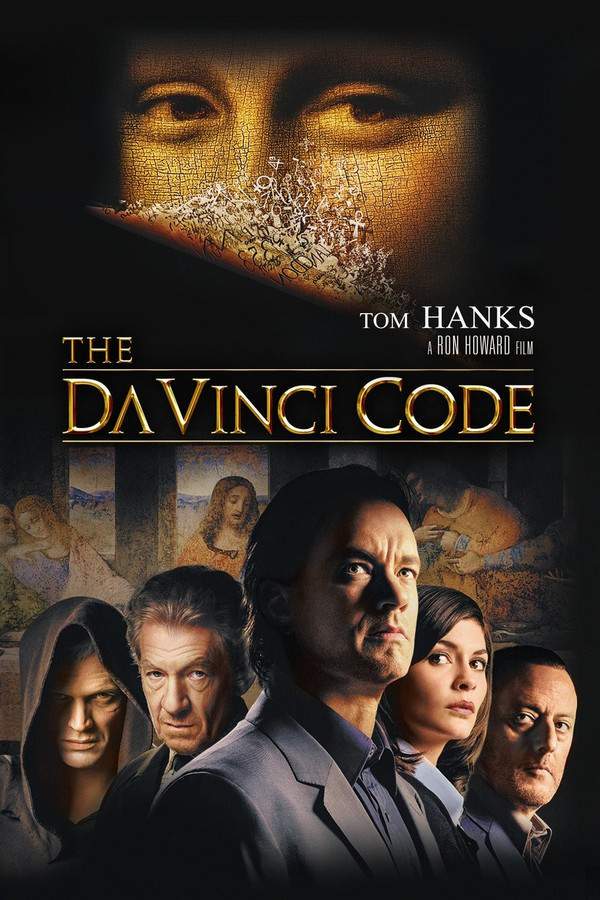
The Da Vinci Code (2006) movie poster

Timeline

The Da Vinci Code (2006) Timeline Explained – Every Event in Order

Release, runtime and language
2006 · 149 min · English
JustWatch #363 21
Directed by
Ron Howard
Starring
Tom Hanks, Audrey Tautou, Jean Reno
Budget
$125M

A brutal murder at the Louvre Museum in Paris sets a symbologist on a dangerous quest. Following a trail of cryptic clues concealed within Leonardo da Vinci's iconic paintings, he uncovers a centuries-old mystery connected to the Holy Grail. The investigation leads him through a labyrinth of secrets and deception, challenging established religious beliefs and historical narratives, and placing him in the path of powerful adversaries determined to protect the truth.

On this page (7)
  1. 1 Where to watch
  2. 2 Events in order (13)
  3. 3 Timeline questions answered
  4. 4 The book behind the movie
  5. 5 Movie threads
  6. 6 Movies like The Da Vinci Code
  7. 7 Every angle

Where to watch

Where to Watch The Da Vinci Code (2006)

Where can you watch The Da Vinci Code? Stream, rent or buy it in the US, including on fuboTV, Netflix and Netflix Standard: current JustWatch availability with up-to-date prices.

Streaming availability powered by JustWatch

13 events in order · contains spoilers

The Da Vinci Code Timeline: Events in Chronological Order

Every key event of The Da Vinci Code (2006) in order, scene by scene, with when and where it takes place. Use it to untangle flashbacks, time jumps and parallel storylines, to refresh your memory before the sequel or to find the exact scene you are thinking of.

  1. Chase in the Louvre

    Jacques Saunière is being chased by a hooded figure named Silas in the Grand Gallery of the Louvre, Paris. The tension escalates as Saunière reveals critical information about the location of a keystone before Silas fatally shoots him.

    Where
    Louvre, Paris
  2. Discovery of the Crime Scene

    American Symbologist Robert Langdon arrives at the Louvre to examine the crime scene where Saunière's body is positioned in a mysterious tableau. Captain Bezu Fache urges Langdon to analyze the scene, noting the clues that tie it to Leonardo Da Vinci's 'Vitruvian Man.'

    Where
    Louvre, Paris
  3. Meeting with Sophie Neveu

    Sophie Neveu, a cryptologist, discreetly contacts Langdon at the Louvre. She informs him that he is being monitored and implicates him in the investigation due to a message found near Saunière's body.

    Where
    Louvre, Paris
  4. Decoding the Blood Message

    Langdon and Sophie discover a blood message on Saunière's body, leading them to the realization that it contains a cryptic anagram. They decode it to reveal names associated with Da Vinci's art, including 'The Mona Lisa' and 'Madonna of the Rocks.'

    Where
    Louvre, Paris
  5. Escape to Bois De Boulogne

    With the police closing in, Langdon and Sophie escape to the Bois De Boulogne to investigate a key with an address inscribed on it. This leads them to make plans to travel to Zurich to uncover the secrets hidden in a safety deposit box.

    Where
    Bois De Boulogne, Paris
  6. Accessing the Deposit Box

    Langdon and Sophie reach the Depository Bank of Zurich, successfully accessing Saunière's deposit box with a Fibonacci sequence. Inside, they find a rosewood container that houses a Cryptex, which holds secrets vital to their quest.

    Where
    Depository Bank of Zurich
  7. Fleeing from Authorities

    As they investigate the deposit box, a security guard alerts the police, forcing them to escape. The bank manager assists them in fleeing in an armored van, but their escape is perilous and fraught with danger.

    Where
    Zurich
  8. Help from Leigh Teabing

    Teabing, a friend of Langdon, offers his expertise regarding the Cryptex and the Holy Grail's secrets. He shares his radical theory that the Grail is not merely a cup but tied to the lineage of Mary Magdalene, complicating their pursuit further.

    Where
    Teabing's estate
  9. Clue Under Newton's Tomb

    Onboard Teabing's private jet, Langdon and Sophie decode a message hinting at 'a knight a pope interred.' This revelation directs them to Sir Isaac Newton’s tomb located in Westminster Abbey as a significant landmark in their quest.

    Where
    Westminster Abbey, London
  10. Betrayal by Teabing

    In a shocking turn of events, Teabing is revealed to be 'The Teacher,' a figure orchestrating the chaos surrounding the Cryptex. A climactic confrontation ensues, resulting in the destruction of the Cryptex but unveiling crucial pieces of their search.

    Where
    Teabing's private jet
  11. Final Quest to Rosslyn Chapel

    The group sets off for Rosslyn Chapel in Scotland, believed to safeguard the remains of Mary Magdalene. Sophie discovers her own lineage linked to Magdalene, presenting her as a vital figure in a web of religious secrets and history.

    Where
    Rosslyn Chapel, Scotland
  12. Langdon's Revelation in Paris

    Back in Paris, a moment of reflection while shaving leads Langdon to consider the Rose Line. This insight allows him to uncover hidden truths beneath the Louvre’s iconic pyramid, connecting historical faith and secrets in a profound manner.

    Where
    Louvre, Paris
  13. Entanglement in Faith and Truth

    As Langdon kneels before the resting place of Mary Magdalene, he contemplates the intricate history intertwining faith, mystery, and the pursuit of truth. This realization embodies the eternal quest for knowledge in the shadows of powerful beliefs.

    Where
    Louvre, Paris

Last updated: October 28, 2024 at 08:26

Was this helpful?

Timeline questions answered

The Da Vinci Code Timeline Explained: Your Questions Answered

When does it happen, and why in that order? The questions people ask about the chronology of The Da Vinci Code (2006): time jumps, flashbacks, cause and effect between scenes and the correct order of events, each answered with spoilers.

Q1

Why did Jacques Saunière tell Silas where the keystone was hidden?

Saunière revealed the location under duress while being tortured by Silas, who was threatening to kill him. He gave a false lead, telling Silas to look 'beneath the Rose' at Saint-Sulpice, as a way to buy time and potentially lead his pursuers away from the real keystone. The information was partially true but incomplete, serving as a trap.

Foreshadowing: Earlier in the chase, Saunière had time to arrange his body in a symbolic position and leave coded messages, showing he was thinking strategically even as he was being hunted.

  • Jacques Saunière
  • keystone
  • Silas
  • torture
  • Saint-Sulpice
Q2

What is the keystone and why is it so important?

The keystone is a Cryptex, a cylindrical password-protected device containing a scroll. It holds the location of the Holy Grail and was guarded by the Priory of Sion. The keystone is a map that leads to the Grail's resting place. If opened correctly, it reveals a message directing seekers to Rosslyn Chapel in Scotland.

Foreshadowing: Silas kills four Priory guardians to find the keystone, showing its critical importance to both Opus Dei and the Priory.

  • Cryptex
  • keystone
  • Priory of Sion
  • Holy Grail
  • Rosslyn Chapel
Q3

Why is Sophie Neveu involved in the investigation?

Sophie Neveu is Jacques Saunière's granddaughter and a cryptologist with the French police. Her grandfather deliberately involved her by leaving a message meant for her at the crime scene. The note 'P.S. find Robert Langdon' was his way of enlisting her help to complete his work and protect the secret.

Foreshadowing: Saunière's body was positioned like Da Vinci's Vitruvian Man, possibly a message to his granddaughter who would recognize the symbolic significance.

  • Sophie Neveu
  • Jacques Saunière
  • granddaughter
  • cryptologist
  • message
Q4

Why does Silas torture himself with a Cilice?

Silas is a devoted member of Opus Dei who practices extreme asceticism. The Cilice is a metal chain worn around the thigh with spikes that dig into the skin, intended as self-punishment for atonement. He whips himself with a discipline to achieve spiritual purification and prove his devotion to God.

Foreshadowing: This behavior establishes Silas as a fanatical true believer willing to commit murder for his faith.

  • Silas
  • Opus Dei
  • Cilice
  • self-flagellation
  • devotion
Q5

Why was Leigh Teabing revealed as 'The Teacher'?

Leigh Teabing orchestrated the entire operation to recover the keystone. As an outsider obsessed with the Holy Grail, he used Silas and Opus Dei as pawns, feeding them information and directing them to kill the Priory guardians while he remained hidden. He needed the keystone to find the Grail before anyone else could.

Foreshadowing: Teabing conveniently appears as the expert who can solve all their puzzles, which raises questions about his sudden expertise.

  • Leigh Teabing
  • Teacher
  • betrayal
  • Opus Dei
  • orchestration
Q6

What is the Rose Line that Langdon discovers beneath the Louvre?

The Rose Line refers to the Paris Meridian, an imaginary line running through Paris that was used for navigation. Langdon realizes the Louvre's glass pyramid was built directly on this line. Beneath it lies a hidden chamber containing the tomb of Mary Magdalene, which Saunière had secretly placed there as the final resting place of the Holy Grail.

Foreshadowing: This explains why Saunière was so determined to protect the secret at the Louvre, the Grail was literally hidden under his watch.

  • Rose Line
  • Paris Meridian
  • Louvre pyramid
  • Mary Magdalene
  • tomb
Q7

What does 'beneath the Rose' mean in the clue?

The phrase 'beneath the Rose' is misleading. Saunière gave this location to Silas under torture, but it was a partial truth. At Saint-Sulpice, Silas finds 'JOB 38:11' written on the floor, which refers to a Bible verse about the 'waves' of the sea, another reference to the Rose Line (the French word for rose is 'ros,' similar to the rose in rose window and rose line). The real keystone was never there.

Foreshadowing: Saunière's body position and the Fibonacci sequence were both deliberate misdirections designed to protect the true path.

  • beneath the Rose
  • Saint-Sulpice
  • JOB 38:11
  • rose line
  • misdirection
Q8

What is the Holy Grail according to Leigh Teabing's theory?

Teabing argues the Grail is not a cup but refers to Mary Magdalene herself, specifically her bloodline. He claims Jesus and Mary were married and had children, and the Priory of Sion was formed to protect her descendants. The Grail represents both Mary and the royal bloodline she carried, hidden for centuries.

Foreshadowing: This radical theory explains why the Catholic Church would go to such extremes to suppress the truth.

  • Holy Grail
  • Mary Magdalene
  • bloodline
  • Priory of Sion
  • Jesus marriage
Q9

Why does Sophie Neveu discover she is related to Mary Magdalene?

At Rosslyn Chapel, Sophie learns through the chapel's artwork that she is a descendant of Mary Magdalene's bloodline, the secret the Priory of Sion was protecting. This explains why her grandfather involved her in the quest and why she was specifically targeted by the antagonists.

Foreshadowing: The Priory's purpose was to protect Magdalene's descendants, making Sophie part of the very lineage she was trying to understand.

  • Sophie Neveu
  • Mary Magdalene
  • bloodline
  • Rosslyn Chapel
  • descendant
Q10

Why does Robert Langdon throw the Cryptex in the air?

Langdon throws the Cryptex during the confrontation with Teabing to force him to catch it rather than destroy it. By catching it, Teabing must crack the code to save what's inside, preventing him from simply destroying it to keep the secret. This gambit reveals the password and ultimately leads to the discovery of the message inside.

Foreshadowing: The Cryptex's mechanism, breaking if handled roughly, becomes central to the climax, turning its vulnerability into a weapon.

  • Cryptex
  • password
  • Teabing confrontation
  • throw
  • final message
Q11

How does the Fibonacci sequence open the deposit box?

Saunière encoded the Fibonacci sequence (1, 1, 2, 3, 5, 8, 13, 21) as 1123581321 in the blood message. This number is the combination to his safety deposit box at the Depository Bank of Zurich. Using this sequence, Langdon and Sophie successfully access the box containing the rosewood Cryptex container.

Foreshadowing: The Fibonacci sequence appears twice in the clues, once in the number itself and once embedded in the painting arrangements.

  • Fibonacci sequence
  • deposit box
  • Zurich
  • 1123581321
  • combination
Q12

Why does Opus Dei want to find the Holy Grail?

Opus Dei, an ultra-conservative Catholic organization, believes the Grail secret threatens the Church's authority. If Mary Magdalene's role and her bloodline were revealed, it would undermine the Church's claim about Jesus's divinity and the succession of papal authority. They believe suppressing this truth protects the faith.

Foreshadowing: Silas's blind devotion and willingness to kill show how far the organization will go to protect their interpretation of doctrine.

  • Opus Dei
  • Catholic Church
  • Grail secret
  • Mary Magdalene
  • suppress truth

Movie threads

More Movies Like The Da Vinci Code, by Mood & Story

Curated lists built around what makes The Da Vinci Code tick: the same mood, the same kind of story or the same emotional payoff. Each list explains why these movies belong together.

High-Stakes Conspiracy Thrillers like The Da Vinci Code

Race against time to uncover a world-altering secret before it's too late. If you enjoyed the urgent puzzle-solving and historical revelations of The Da Vinci Code, you'll love these movies. This section features thrilling stories where characters race to expose world-altering conspiracies, blending intellectual mystery with high-stakes action and tense escapes from powerful enemies.

  • urgent
  • suspenseful
  • thought-provoking
  • clandestine
  • gripping
  • anxious
  • Tone: tense, paranoid
  • Pacing: fast, relentless
Why these movies?

The story pattern: The narrative typically begins with an inciting incident—like a murder or a discovered artifact—that reveals a fragment of a larger, hidden truth. The protagonist, often an expert in a specific field, is thrust into a quest to connect the dots, facing escalating danger and deception as they get closer to a secret powerful enough to shake society's foundations.

Why they belong together: These films are grouped by their shared engine of a high-pressure investigation into a massive conspiracy. They deliver a consistent vibe of urgency, intellectual challenge, and paranoia, where the thrill comes from both physical escapes and the mental cracking of complex puzzles that have profound implications.

Intellectual Mystery Movies with Heavy Themes like The Da Vinci Code

Journeys where solving a puzzle forces a confrontation with profound truths. For viewers who loved the theological and historical challenges in The Da Vinci Code, this section collects movies where a complex mystery unravels to reveal profound, often burdensome, truths. These stories blend intricate puzzles with heavy emotional and philosophical consequences, making you question what you know.

  • thought-provoking
  • heavy
  • complex
  • philosophical
  • unsettling
  • revealing
  • Tone: thought-provoking, heavy
  • Pacing: steady to fast, driven by discovery
Why these movies?

The story pattern: The plot revolves around deciphering a complex mystery—be it a code, an ancient artifact, or a series of enigmatic events. The process of discovery forces characters to challenge their own beliefs and confront powerful institutions. The climax often involves a bittersweet revelation; the truth is uncovered, but its full impact cannot be publicly known, leaving a lasting emotional and intellectual residue.

Why they belong together: These films share a focus on the emotional and intellectual gravity of the quest itself. The similarity lies in the blend of a complex, clue-based narrative with themes that carry significant weight, resulting in a thought-provoking experience that lingers long after the immediate mystery is solved.

If you liked this

Movies Like The Da Vinci Code

Similar movies to The Da Vinci Code: the same genre, themes or kind of story. Each one comes with its own plot summary, timeline and ending explained.

Browse all movie summaries

Every angle

The Da Vinci Code (2006) Explained: Plot, Timeline & Characters

Everything about The Da Vinci Code in one place: what happens in the plot summary, the timeline in chronological order, the characters and meaning and a spoiler-free summary. What's After the Movie adds the cast, box office and post-credit scenes.

Coming soon on iOS and Android

The Plot Explained Movie Summary App

Plot summaries, endings explained and timelines on your phone. Catch up on any movie in minutes, save your favorites and never miss a twist again.

Be the first to know when we launch. Your email stays private, always.

Learn more about the app