Plot Explained Spoilers guaranteed!
Plot Explained

Browse by genre

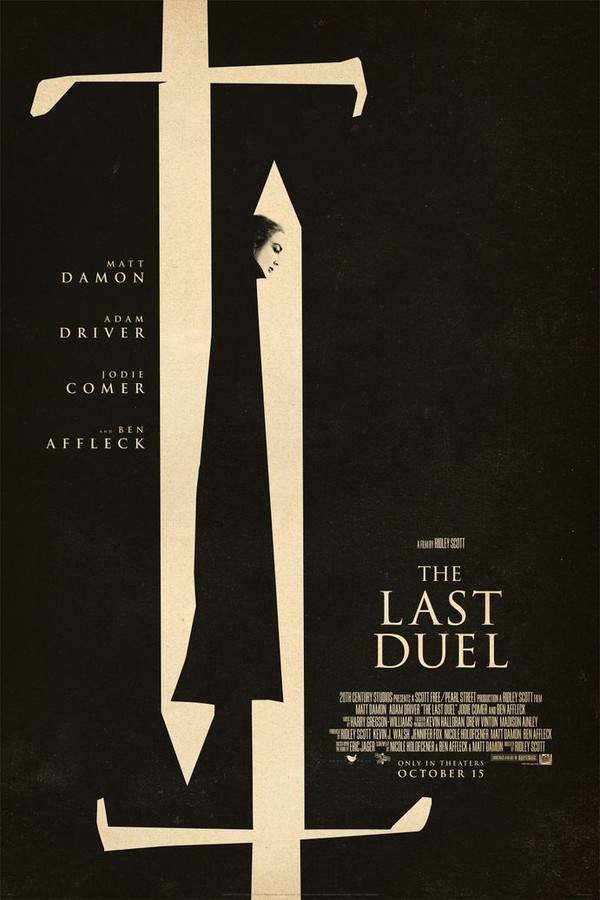
The Last Duel (2021) movie poster

Plot Summary

The Last Duel (2021) Plot Summary & Ending Explained

Release, runtime and language
2021 · 152 min · English
Echo score 75
JustWatch #2,336 11
Directed by
Ridley Scott
Starring
Matt Damon, Ben Affleck, Adam Driver, Jodie Comer, Ian Pirie, Sam Hazeldine
Budget
$100M

In 14th-century France, a bitter dispute erupts between Jean de Carrouges and Jacques Le Gris, once close companions. The conflict escalates when Carrouges' wife, Marguerite, accuses Le Gris of a heinous crime, leading to a trial and ultimately, a challenge to settle the matter through a trial by combat. Both men must fight to defend their reputations and seek justice in a brutal duel that will determine their fates and leave only one survivor.

On this page (9)
  1. 1 Where to watch
  2. 2 What happens: full plot
  3. 3 Plot questions answered
  4. 4 How it ends
  5. 5 The book behind the movie
  6. 6 Movie threads
  7. 7 Movies like The Last Duel
  8. 8 Categories
  9. 9 Every angle

Where to watch

Where to Watch The Last Duel (2021)

Where can you watch The Last Duel? Stream, rent or buy it in the US, including on fuboTV, FXNow and YouTube TV: current JustWatch availability with up-to-date prices.

Streaming availability powered by JustWatch

Full plot summary · contains spoilers

What Happens in The Last Duel: Full Plot Summary

The whole story of The Last Duel (2021) explained, from the opening scene to the final frame: every key event, every twist and what it all adds up to. Read it as a quick recap before the sequel, to check a scene you missed, or to finally understand what really happened.

Chapter One: The narrative unfolds through the perspective of Jean de Carrouges, portrayed by Matt Damon. Following his service in the Caroline War, Jean and his friend, the squire Jacques Le Gris (played by Adam Driver), swear loyalty to Count Pierre d'Alençon, whose authority is recognized by King Charles VI (as depicted by Alex Lawther). Tensions rise when Jacques reveals that Pierre has ordered his new vassals to contribute to war levies, leading Jean to seek leniency due to his financial struggles. To resolve his monetary issues, Jean marries Marguerite de Thibouville (portrayed by Jodie Comer), receiving a generous dowry and inheriting several valuable estates. However, Pierre has already bestowed one of Jean's inheritance pieces upon Jacques, which sparks a legal dispute. Jean’s pleas for the land are dismissed by the King, and in a twist of fate, Pierre promotes Jacques to captain of a fort historically held by Jean's lineage. Subsequently, Jean's valiant efforts in a Scottish campaign earn him knighthood but leave him in dire financial straits. Upon returning home, Marguerite confides in Jean that Jacques has violated her while she was alone, which propels Jean into a fierce resolve to challenge Jacques to a duel to the death—an appeal granted by King Charles VI.

Chapter Two: As we shift to Jacques's point of view, we discover how he gains Pierre d'Alençon’s (played by Ben Affleck) confidence through his adeptness in managing finances, paving his way into the court’s inner circle. Jacques becomes infatuated with Marguerite, persuaded by her moments of kindness that she may reciprocate his feelings. With Jean away, Jacques manipulates circumstances to find himself alone with Marguerite, using a ruse involving a servant to gain entry to her chambers. He ardently professes his love, but Marguerite, steadfast in her marriage, insists they leave. Defying her wishes, Jacques pursues her into her bedroom, where he forcibly engages with her, believing her compliance to be consensual. After their encounter, he warns Marguerite to keep silent about the event. Later on, word of Jean's accusations against Jacques regarding Marguerite reaches the count, but even as Pierre tries to dismiss the claims, Jean seeks an audience with King Charles and insists on a duel.

Chapter Three: The perspective shifts once more to Lady Marguerite de Thibouville. As her marriage faces trials due to her inability to conceive, Marguerite reveals her true intentions for being kind to Jacques—primarily to secure favor at court. Despite Jean's strict orders to remain in the castle, his mother contravenes them, taking the servants on errands. Jacques seizes this opportunity, once again entering the castle to impose himself on Marguerite. He brazenly declares his affection, ultimately committing a violent act against her. Following her husband’s return, Marguerite discloses the assault, prompting Jean’s mother to pressure her to retract her claims for the family's sake. The tension escalates when Marguerite learns she is pregnant amidst the ongoing trial against Jacques, yet she stands firm in her revelation. King Charles VI permits the duel to proceed. Marguerite is confronted by Jean, who neglects to inform her of the dire consequences she may face if he loses; shortly thereafter, she gives birth just days before the fateful duel. The confrontation escalates to ferocious jousting between Jean and Jacques, eventually transitioning to a gruesome hand-to-hand battle. Jean is wounded but ultimately overpowers Jacques and demands a confession or face condemnation. Jacques maintains his innocence until the bitter end, and Jean, in a moment of triumph, ends Jacques's life. While Jean revels in his victory, Marguerite follows quietly behind, burdened by her ordeal.

In a somber epilogue, we learn that Jean met his end while fighting in the Crusades a few years later. Meanwhile, Marguerite persevered, managing the estate and living a tranquil life for the next thirty years, choosing never to remarry again.
Last updated: November 03, 2024 at 21:47

Was this helpful?

Plot questions answered

The Last Duel Plot Explained: Your Questions Answered

The questions people ask most about The Last Duel (2021): what happens in the confusing scenes, why the characters do what they do, the twists, hidden details and what the ending means. Each answer contains spoilers.

Q1

Why does Jean de Carrouges challenge Jacques Le Gris to a duel?

Jean challenges Jacques to a duel after his wife Marguerite reveals that Jacques forcibly assaulted her while Jean was away fighting. Though Jean had existing grievances against Jacques over a land dispute and professional rivalry, the assault becomes the primary catalyst for his demand for trial by combat. King Charles VI grants the request, allowing Jean to defend his honor and Marguerite's through battle.

Foreshadowing: Earlier scenes show Jacques manipulating opportunities to be alone with Marguerite, setting up the assault that triggers the duel.

  • jean de carrouges
  • jacques le gris
  • duel
  • trial by combat
  • Marguerite assault
Q2

How does the film show the assault differently through each perspective?

The film uses a Rashomon structure where Chapter 2 (Jacques's perspective) portrays the encounter as consensual, Jacques sees Marguerite's kindness as reciprocation and believes she welcomes his advances. Chapter 3 (Marguerite's perspective) reveals the truth: she was merely politicking at court to secure favor, never encouraged Jacques, and he violently forced himself upon her when she refused. This contrast exposes how perpetrators can rationalize assault.

Foreshadowing: Marguerite's perspective reveals her true intentions for being kind to Jacques were strategic, not romantic, hinting at the gap between his perception and reality.

  • marguerite de thibouville
  • jacques le gris
  • assault
  • perspectives
  • rashomon structure
Q3

Why does King Charles VI allow the duel to proceed?

In 14th-century France, a duel was a legally recognized method of resolving disputes, especially when honor and accusation of a crime were involved. When Jean formally accused Jacques of the heinous crime and demanded trial by combat, the King was obligated to grant it as a matter of feudal justice. The outcome was believed to reflect divine judgment, whichever man won was presumed to have been telling the truth.

Foreshadowing: Jean directly appeals to the King for justice, framing the duel as the only acceptable resolution to such a serious accusation.

  • king charles vi
  • trial by combat
  • duel
  • justice
  • feudal law
Q4

What motivates Jacques Le Gris according to his version of events?

From Jacques's perspective, he genuinely believes Marguerite returns his affection. He interprets her politeness at court as romantic interest and feels justified in pursuing her when Jean is away. After the assault, Jacques warns her to stay silent, not from malice but from a distorted sense of protecting both their reputations. His perspective never acknowledges the assault as such, he sees it as a consensual encounter that went wrong.

Foreshadowing: Jacques becomes infatuated with Marguerite and persuades himself that her courtesies are declarations of love.

  • jacques le gris
  • motivation
  • perspective
  • obsession
  • court politics
Q5

Why is Marguerite's pregnancy significant to the story?

Marguerite discovers she is pregnant amid the trial tensions, which adds enormous stakes to her accusation. If Jacques is found innocent and Jean loses the duel, Marguerite would face social ruin, not only would her rapist go unpunished, but she would be left unprotected with a child potentially conceived through assault. Despite this pressure, she maintains her accusation, showing remarkable courage in a society that routinely discredits women who report sexual violence.

Foreshadowing: The pregnancy is revealed as the trial against Jacques unfolds, heightening the consequences of the upcoming duel.

  • marguerite pregnancy
  • trial
  • consequences
  • social ruin
  • accusation
Q6

What is the purpose of showing events from three different perspectives?

The three-perspective structure forces viewers to actively assess truth and motive. Each chapter reveals new information that recontextualizes previous scenes. Jacques's version makes his actions understandable (if not justifiable), while Marguerite's perspective exposes the reality of what he reframed as consensual. This structure explores how truth can be twisted, how assaulters rationalize their behavior, and how women were silenced when reporting crimes.

Foreshadowing: The differing accounts gradually reveal the gap between Jacques's self-perception and reality.

  • three perspectives
  • rashomon
  • truth
  • narrative structure
  • unreliable narrator
Q7

What happens to Jean and Marguerite after the duel ends?

Jean wins the brutal duel, killing Jacques, but the victory is hollow. While Jean celebrates his vindication, Marguerite follows behind quietly, visibly burdened by her trauma. The epilogue reveals Jean dies in the Crusades a few years later, leaving Marguerite alone. She manages the estate and lives peacefully for thirty years but never remarries, her life marked permanently by the ordeal.

Foreshadowing: The film foreshadows this outcome through the somber tone and the weight Marguerite carries even in victory.

  • jean death
  • marguerite life after
  • crusades
  • epilogue
  • survivor
Q8

Why does Jacques maintain his innocence even at death?

Jacques never admits guilt because he genuinely believes what happened was consensual from his perspective. Even when Jean defeats him and demands confession or damnation, Jacques maintains he did nothing wrong. This reflects the film's central tragedy, his warped perception of reality allows him to die conviction-free, while his victim carries the trauma forward.

Foreshadowing: Jacques's perspective chapter establishes his unwavering belief that Marguerite welcomed his advances.

  • jacques innocence
  • confession
  • death
  • denial
  • guilt
Q9

What role does the land dispute play in the conflict between Jean and Jacques?

The financial and territorial dispute between Jean and Jacques predates the assault and fuels much of their rivalry. Count Pierre gave Jean's inheritance to Jacques, dismissed Jean's legal claims, and promoted Jacques to a position traditionally held by Jean's family. These grievances create deep resentment, though the assault becomes the immediate cause of the duel. The dispute illustrates how personal and professional conflicts layered atop each other in medieval feudal society.

Foreshadowing: Early scenes establish Pierre's favoritism toward Jacques and Jean's growing resentment over lost lands.

  • land dispute
  • inheritance
  • count pierre
  • feudal
  • rivalry
Q10

Why does Marguerite's position in society matter to the story?

As a woman in 14th-century France, Marguerite has little power to independently accuse a nobleman of assault. Her credibility depends entirely on male advocates, her husband Jean and ultimately God via the duel. Jean's mother pressures her to retract accusations for family honor, showing how women were expected to protect male reputations even when victimized. Marguerite's persistence in speaking despite these pressures is portrayed as extraordinary.

Foreshadowing: Jean warns Marguerite of the consequences she may face if he loses, highlighting her vulnerable position.

  • marguerite position
  • women medieval
  • societal pressure
  • credibility
  • honor
Q11

Does the duel result in true justice for Marguerite?

The duel provides Jean with victory but does not truly deliver justice for Marguerite. While Jacques is dead and Jean vindicated, the film presents this as a flawed system, justice determined by combat skill rather than evidence. Marguerite must live with the trauma regardless, and her story afterward is marked by endurance rather than triumph. The film suggests the duel served male honor more than female justice.

Foreshadowing: Marguerite's quiet, burdened walk behind Jean after victory foreshadows the incomplete nature of her justice.

  • justice
  • duel outcome
  • male honor
  • system flaws
  • marguerite

Ending explained

What Happens at the End of The Last Duel?

How The Last Duel (2021) ends, in short: the final scene, the last twist and what it means for the characters. The full ending explained, with every spoiler, lives on its own page.

Read the full ending explained

The ending of The Last Duel leaves the audience questioning the nature of truth and justice. After the brutal duel, Jean de Carrouges emerges victorious over Jacques Le Gris, and Jacques, despite pleading innocence till his last breath, is killed in the fight. The story suggests that while Jean’s victory may have restored some sense of honor, it also highlights the tragic flaws within the medieval justice system, where a life was sometimes decided by combat rather than evidence.

The film hints that Marguerite’s testimony, which incited the duel, might have been motivated by more complex feelings and circumstances—be it fear, shame, or even a desire to protect her own honor. Interestingly, the narrative explores multiple theories about what truly happened that day. Some suggest Marguerite might have falsely accused Jacques to cover her own secrets, or that there was a mistaken identity, especially since witnesses like Adam Louvel were hesitant to speak openly. Others believe the matter was simply a tragic miscarriage of justice, with innocent people suffering because of societal and legal flaws.

Continue reading the ending (1 more paragraphs)

The film ends on a somber note, emphasizing that the truth is often elusive and that stories are shaped by perspective and bias. Marguerite’s suffering, whether justified or not, underscores how women’s voices were silenced or dismissed during that era. Ultimately, The Last Duel challenges viewers to reflect on the corrupting influence of power and the destructive nature of injustice—where even the victorious may carry the burden of doubt and ambiguity. The story leaves us with the lingering question of whether justice was truly served or if it was just the outcome of a brutal, biased system.

The Last Duel ending explained in full

Movie threads

More Movies Like The Last Duel, by Mood & Story

Curated lists built around what makes The Last Duel tick: the same mood, the same kind of story or the same emotional payoff. Each list explains why these movies belong together.

Movies with multiple perspectives like The Last Duel

Stories where the truth is fractured through competing personal accounts. If you were fascinated by the Rashomon-style narrative of The Last Duel, you'll find similar depth in these films. This collection features movies like Rashomon, Gone Girl, and Vantage Point, where the story is unraveled through competing viewpoints, creating complex and thrilling narratives that challenge perception.

  • complex
  • ambiguous
  • psychological
  • thought-provoking
  • unreliable narrator
  • non-linear
  • Tone: complex, ambiguous, serious
  • Pacing: deliberate, structured
Why these movies?

The story pattern: The narrative unfolds by repeatedly revisiting a key event or period, but each time through the eyes of a different character. This structure deliberately creates ambiguity, forcing viewers to question the reliability of each narrator and engage deeply with the themes of truth, memory, and subjectivity.

Why they belong together: These films are grouped together because they share a specific and compelling storytelling device. The experience is defined by intellectual engagement, moral complexity, and the slow revelation of character motivations, making the viewer a detective in a puzzle of human nature.

Grim historical justice dramas like The Last Duel

Bleak period dramas centered on brutal struggles against systemic injustice. For viewers who appreciated the dark, intense atmosphere and heavy themes of justice in The Last Duel, this thread collects similar grim historical dramas. Explore movies like The Crucible, Amistad, and The Promise, where characters endure immense hardship to challenge corrupt systems.

  • grim
  • oppressive
  • tense
  • brutal
  • somber
  • serious
  • Tone: dark, somber, serious
  • Pacing: steady, methodical
Why these movies?

The story pattern: The journey follows a protagonist, often an underdog, who challenges a powerful and unjust system—be it legal, social, or political. The conflict is brutal and the emotional weight is heavy, depicting the immense personal sacrifice required to seek a semblance of justice in a world stacked against them.

Why they belong together: This thread connects films through their shared setting, tone, and central conflict. They create a cohesive experience of immersion in a difficult past, generating tension and emotional investment through stories of arduous, high-stakes fights for righteousness against overwhelming odds.

If you liked this

Movies Like The Last Duel

Similar movies to The Last Duel: the same genre, themes or kind of story. Each one comes with its own plot summary, timeline and ending explained.

Browse all movie summaries

Categories

Movie Lists Featuring The Last Duel

The Last Duel appears in these hand-built movie categories. Each one groups movies by a specific mood, theme or story type, with their plot summaries and endings explained.

View all movie categories

Every angle

The Last Duel (2021) Explained: Plot, Ending, Timeline & Characters

Everything about The Last Duel in one place: what happens in the plot summary, the timeline in chronological order, the characters and meaning, the ending explained and a spoiler-free summary. What's After the Movie adds the cast, box office and post-credit scenes.

Coming soon on iOS and Android

The Plot Explained Movie Summary App

Plot summaries, endings explained and timelines on your phone. Catch up on any movie in minutes, save your favorites and never miss a twist again.

Be the first to know when we launch. Your email stays private, always.

Learn more about the app