Plot Explained Spoilers guaranteed!
Plot Explained

Browse by genre

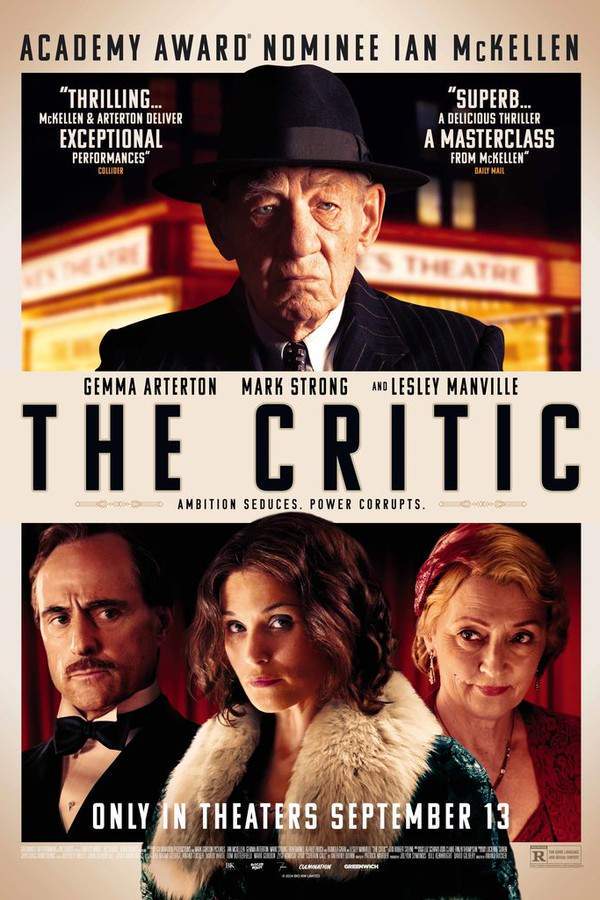
The Critic (2024) movie poster

Timeline

The Critic (2024) Timeline Explained – Every Event in Order

Release, runtime and language
2024 · 1 h 35 m · English
Echo score 69
Loading streaming availability…
Directed by
Anand Tucker
Starring
Mark Strong, Gemma Arterton, Ian McKellen, Lesley Manville, Jay Simpson, Pearce Quigley

A celebrated London theatre critic's power and influence lead him to manipulate a struggling young actress, drawing her into a perilous web of deceit. Their dangerous game unfolds with unforeseen and tragic consequences.

On this page (6)
  1. 1 Where to watch
  2. 2 Events in order (12)
  3. 3 Timeline questions answered
  4. 4 Movie threads
  5. 5 Movies like The Critic
  6. 6 Every angle
Loading streaming availability…

12 events in order · contains spoilers

The Critic Timeline: Events in Chronological Order

Every key event of The Critic (2024) in order, scene by scene, with when and where it takes place. Use it to untangle flashbacks, time jumps and parallel storylines, to refresh your memory before the sequel or to find the exact scene you are thinking of.

  1. Erskine's reign as theatre critic in 1934 London

    In 1934 London, Jimmy Erskine is the theatre critic for The Daily Chronicle. The paper is now owned by Viscount David Brooke after his father's death. Erskine revels in savage, vitriolic reviews that he believes uphold high standards, despite Brooke's pleas to soften his tone.

    When
    1934
    Where
    London
  2. Arrest and dismissal of Erskine and Turner

    Erskine and his secretary Tom Turner are arrested on charges of homosexuality. Brooke dismisses him and other aging staff in the wake of the scandal. The purge clears the way for new leadership at the Chronicle while igniting Erskine's vendetta.

    When
    1934
    Where
    The Daily Chronicle offices
  3. Erskine lays a Faustian trap for Brooke

    To exact revenge, Erskine recruits Nina Land, a young actress, into a Faustian plot. He convinces her to seduce Brooke, who already loves her, in exchange for future glowing reviews. The plan weaponizes Brooke's affection against him.

    When
    1934
    Where
    London
  4. Nina Land seduces Brooke and deepens the trap

    Nina Land begins her affair with Brooke, heightening his vulnerability to the plot. Brooke, consumed by love, becomes a pliable instrument in Erskine's scheme. The threat of ruin and renewed favor drives the manipulation forward.

    When
    1934
    Where
    Brooke's residence
  5. Erskine blackmails Brooke into reinstating him

    Using the emotional leverage, Erskine blackmails Brooke into restoring him to his old post. Brooke complies, hoping to regain control of his life and the paper's direction. The power shift cements Erskine's influence behind the scenes.

    When
    1934
    Where
    Brooke's residence / The Chronicle offices
  6. Brooke's discovery and suicide

    Brooke discovers that Land is also the lover of his son-in-law, Stephen Wyley. Overwhelmed by the double betrayal, he takes his own life. The theatre world and The Chronicle reel from this shocking consequence.

    When
    1934
    Where
    Brooke's residence
  7. Nina Land's guilty withdrawal and murder by Erskine

    Guilt consumes Nina Land after her role in the scheme, and she visits Erskine while drunk. Fearing exposure, Erskine drowns her in a bath to silence the truth. The murder further entangles the pair in a web of lies.

    When
    1934
    Where
    Erskine's home
  8. Turner and Erskine dispose of Land's body

    Erskine convinces Turner to help dispose of Land's body, moving the crime out of sight. When Land's death is discovered, it is treated as suicide rather than murder. The investigation tightens around Erskine and Turner.

    When
    1934
    Where
    undisclosed location
  9. Turner contemplates confessing to the new owner

    Turner goes to see The Chronicle's new owner, Brooke's daughter, and contemplates confessing his role. He weighs the risk of exposure against protecting others and preserving his career. The moral dilemma deepens as the net tightens.

    When
    1934
    Where
    The Chronicle offices
  10. Turner confesses to the new owner

    Turner explicitly confesses to the new owner, detailing the plot and the roles of Erskine and Land. The confession triggers investigations and marks the downfall of the conspirators. The Chronicle braces for a reckoning.

    When
    1934
    Where
    The Chronicle offices
  11. Erskine is arrested and jailed

    News of the confession reaches law enforcement, and Erskine is arrested and jailed for his central role in the scheme. The collapse of his career follows quickly as the press and public lose faith in him. The scandal ripples through The Chronicle and the literary world.

    When
    1934
    Where
    London police
  12. Turner becomes The Chronicle's new theatre critic

    With Erskine's arrest, Tom Turner steps into the vacancy left by the fallen critic. He accepts the role and begins writing for The Chronicle, now reeling from the scandal. Turner's ascent marks the start of a new era for the paper.

    When
    1934
    Where
    The Chronicle offices

Last updated: February 05, 2026 at 07:36

Was this helpful?

Timeline questions answered

The Critic Timeline Explained: Your Questions Answered

When does it happen, and why in that order? The questions people ask about the chronology of The Critic (2024): time jumps, flashbacks, cause and effect between scenes and the correct order of events, each answered with spoilers.

Q1

Why does Erskine recruit Nina Land for his revenge plot?

Erskine chooses Nina Land because she is a young actress whom Viscount David Brooke already loves. After being dismissed by Brooke following his arrest for homosexuality, Erskine sees an opportunity to manipulate Brooke through his emotional vulnerability. By recruiting Nina to seduce Brooke, Erskine can gain leverage over the viscount and orchestrate his return to The Daily Chronicle through blackmail.

Foreshadowing: Erskine's earlier vitriolic reviews and his willingness to destroy those who offend him hint at his capacity for ruthless manipulation.

  • Jimmy Erskine
  • Nina Land
  • revenge
  • manipulation
  • theatre critic
Q2

Why does David Brooke kill himself?

Brooke discovers that Nina Land, the woman he loves, is also having an affair with his own son-in-law Stephen Wyley. This double betrayal, being manipulated by the woman he loves while his family is betrayed, overwhelms him emotionally. Unable to cope with the humiliation and loss, he takes his own life.

Foreshadowing: Brooke's desperation to maintain control over The Chronicle and his emotional investment in Nina foreshadow his vulnerability to devastating news.

  • David Brooke
  • suicide
  • betrayal
  • Stephen Wyley
  • Nina Land
Q3

Why does Erskine drown Nina Land?

After Brooke's suicide, Nina Land visits Erskine while drunk and overwhelmed with guilt over her role in the manipulation scheme. Erskine fears she will expose their entire plot to the new owners of The Chronicle, so he drowns her in a bath to silence her and prevent the truth from coming out.

Foreshadowing: Erskine's calculated manipulation of Brooke establishes his willingness to eliminate anyone who threatens his schemes.

  • Jimmy Erskine
  • Nina Land
  • murder
  • guilt
  • silencing
Q4

What happens to Tom Turner after Erskine's arrest?

After Erskine is arrested for his role in the murder scheme, Tom Turner, the former secretary who helped dispose of Nina's body, becomes the new theatre critic for The Daily Chronicle. He takes over Erskine's old position, transforming the paper's voice and rising to power despite his complicity in the crimes.

Foreshadowing: Turner's initial role as Erskine's loyal secretary establishes his position to eventually inherit the critic's seat.

  • Tom Turner
  • theatre critic
  • The Daily Chronicle
  • promotion
Q5

How does Erskine blackmail Brooke into reinstating him?

Erskine uses Nina Land's affair with Brooke as leverage. By controlling the relationship through his influence over Nina, Erskine gathers enough information to threaten Brooke's reputation and emotional stability. Brooke, desperate to maintain some control over the situation and hoping to salvage his relationship with Nina, agrees to restore Erskine's position at The Chronicle.

Foreshadowing: Erskine's earlier demands for Brooke to soften his reviews hint at his willingness to exploit the viscount's weaknesses.

  • blackmail
  • manipulation
  • power
  • David Brooke
  • theatre world
Q6

Why does Turner help Erskine dispose of Nina's body?

Turner assists Erskine because he is deeply entangled in the conspiracy and fears exposure. Having helped orchestrate the initial plot and now complicit in murder, Turner feels he has no choice but to assist. His loyalty to Erskine, combined with his own fear of ruin, compels him to help conceal the crime.

Foreshadowing: Turner's position as Erskine's secretary and lover establishes both his access to information and his complicity in Erskine's schemes.

  • Tom Turner
  • Jimmy Erskine
  • body disposal
  • conspiracy
  • complicity
Q7

Why does Turner confess to the new Chronicle owner?

Turner confesses to Brooke's daughter, the new owner of The Chronicle, because guilt overwhelms him. After participating in the murder cover-up and living with the weight of the conspiracy, he chooses to reveal everything, detailing Erskine's plot, Nina's role, and his own involvement. The confession marks his attempt at moral redemption despite the consequences.

Foreshadowing: Turner's internal struggle throughout the timeline hints at his eventual decision to unburden himself.

  • Tom Turner
  • confession
  • guilt
  • Brooke's daughter
  • redemption
Q8

Why are Erskine and Turner arrested?

Erskine and his secretary Tom Turner are arrested on charges of homosexuality, which was illegal in 1930s Britain. This arrest provides Viscount David Brooke with the opportunity to dismiss Erskine and other older staff members from The Daily Chronicle, clearing the way for new leadership, and triggering Erskine's elaborate revenge.

Foreshadowing: The historical setting of 1934 London establishes the legal dangers facing gay men at the time.

  • homosexuality
  • arrest
  • 1934
  • Jimmy Erskine
  • Tom Turner
  • The Daily Chronicle
Q9

What motivates Nina Land to participate in Erskine's scheme?

Nina Land agrees to seduce Brooke in exchange for Erskine's promise of glowing theatre reviews that would advance her acting career. As a struggling young actress, the prospect of positive critical attention from London's most powerful theatre critic represents a significant opportunity, though she becomes increasingly entangled in the dangerous moral consequences.

Foreshadowing: Nina's ambition as a young actress seeking recognition establishes her vulnerability to Erskine's offer.

  • Nina Land
  • actress
  • seduction
  • career
  • ambition
  • manipulation
Q10

What is Stephen Wyley's role in the story?

Stephen Wyley is Brooke's son-in-law who is also having an affair with Nina Land. His secret relationship with Nina becomes crucial when Brooke discovers the double betrayal, that his lover and his daughter's husband are involved together. This revelation destroys Brooke emotionally and directly triggers his suicide.

Foreshadowing: Wyley's position as Brooke's family member intensifies the personal nature of the betrayal.

  • Stephen Wyley
  • affair
  • betrayal
  • David Brooke
  • family

Movie threads

More Movies Like The Critic, by Mood & Story

Curated lists built around what makes The Critic tick: the same mood, the same kind of story or the same emotional payoff. Each list explains why these movies belong together.

Moral corruption dramas like The Critic

Stories of corruption where ambition leads to a tragic, inescapable downfall. If you liked the story of a powerful man's manipulative downfall in The Critic, explore more movies about Faustian bargains and moral decay. These films feature characters who trade their integrity for influence, leading to tragic consequences in settings ranging from high society to the criminal underworld.

  • corrupt
  • treacherous
  • grim
  • suspenseful
  • tragic
  • deceitful
  • Tone: dark, tragic, morally complex
  • Pacing: steady, deliberate
Why these movies?

The story pattern: Narratives in this thread follow a clear trajectory of corruption. A character, often initially respected, makes a choice to exploit another for personal gain. This sets off a chain of deceit, blackmail, and betrayal that spirals out of control, stripping the protagonist of their humanity and leading to an inevitably bleak or sad ending.

Why they belong together: These films are grouped by their shared focus on the destructive nature of unchecked ambition and the abuse of power. They create a grim, suspenseful atmosphere and deliver a heavy emotional impact by exploring themes of guilt, revenge, and the tragic cost of moral compromise.


Period thrillers with a tense atmosphere like The Critic

Thrillers where a historical setting amplifies a creeping sense of dread. Fans of the oppressive, 1930s London setting in The Critic will enjoy these movies where the historical period is key to the suspense. Discover similar crime and mystery stories where the era's social rules and aesthetics create a unique, steady-burning tension and a grim mood.

  • suspenseful
  • oppressive
  • grim
  • melancholic
  • atmospheric
  • deceitful
  • Tone: dark, suspenseful, oppressive
  • Pacing: steady, atmospheric
Why these movies?

The story pattern: The narratives are often character-driven mysteries or thrillers that unfold at a steady pace. The era's specific social hierarchies, technologies, and morals create unique obstacles and amplify the consequences of deceit and scandal. The plot leverages the setting to build a palpable, atmospheric pressure that culminates in dramatic, often tragic, revelations.

Why they belong together: These movies are united by their masterful use of a historical period to craft a specific, immersive mood of suspense. The pacing is seldom rushed, allowing the atmosphere and social tensions of the era to simmer, resulting in a viewing experience that is both intellectually engaging and emotionally gripping.

If you liked this

Movies Like The Critic

Similar movies to The Critic: the same genre, themes or kind of story. Each one comes with its own plot summary, timeline and ending explained.

Browse all movie summaries

Every angle

The Critic (2024) Explained: Plot, Ending, Timeline & Characters

Everything about The Critic in one place: what happens in the plot summary, the timeline in chronological order, the characters and meaning, the ending explained and a spoiler-free summary. What's After the Movie adds the cast, box office and post-credit scenes.

Coming soon on iOS and Android

The Plot Explained Movie Summary App

Plot summaries, endings explained and timelines on your phone. Catch up on any movie in minutes, save your favorites and never miss a twist again.

Be the first to know when we launch. Your email stays private, always.

Learn more about the app