Plot Explained Spoilers guaranteed!
Plot Explained

Browse by genre

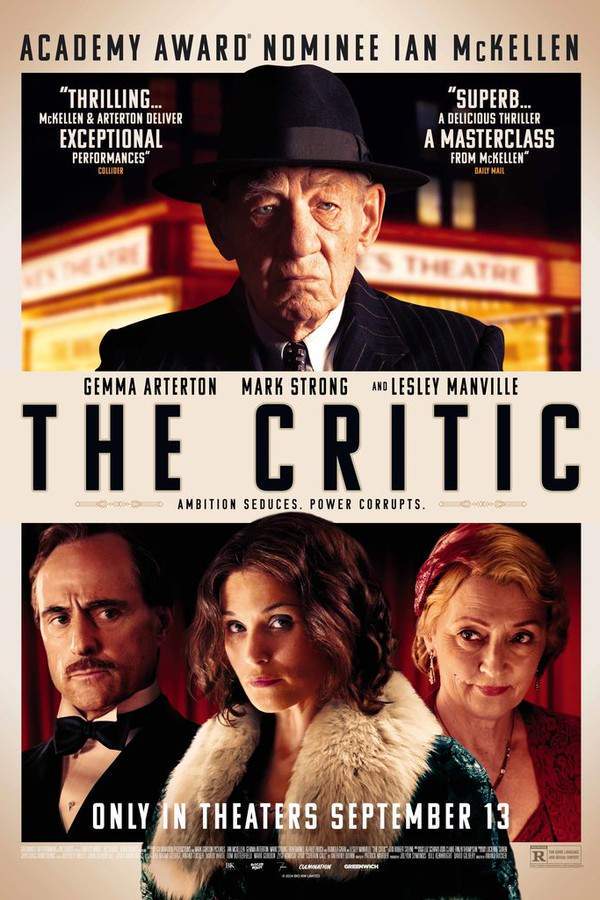
The Critic (2024) movie poster

Ending Explained

The Critic (2024) Ending Explained – Final Scene & Meaning

Release, runtime and language
2024 · 1 h 35 m · English
Echo score 69
Loading streaming availability…
Directed by
Anand Tucker
Starring
Mark Strong, Gemma Arterton, Ian McKellen, Lesley Manville, Jay Simpson, Pearce Quigley

A celebrated London theatre critic's power and influence lead him to manipulate a struggling young actress, drawing her into a perilous web of deceit. Their dangerous game unfolds with unforeseen and tragic consequences.

On this page (7)
  1. 1 Where to watch
  2. 2 What happens at the end
  3. 3 Final events in order
  4. 4 Ending questions answered
  5. 5 Movie threads
  6. 6 Movies like The Critic
  7. 7 Every angle
Loading streaming availability…

Ending explained · contains spoilers

What Happens at the End of The Critic?

How The Critic (2024) ends, what the final scene means, which earlier moments set it up and how to read the ending if the film leaves it open. The full ending explained, with every spoiler.

Jimmy Erskine's relentless pursuit of power and survival ultimately leads him down a dark and tragic path. Throughout the film, he manipulates those around him, using Nina to blackmail Brooke and desperately scheming to regain his position as a critic. His cunning extends to murdering Nina in a desperate act of self-preservation after she threatens to expose him, revealing his complete lack of remorse or humanity. The film concludes with Jimmy's arrest, showing that his schemes catch up with him, but his character remains cold and unrepentant. Despite his downfall, Jimmy's attitude underscores a nihilistic view that obsession with power and self-interest can lead to destruction. Meanwhile, Tom, who witnesses Jimmy’s heinous act, recognizes the depth of Jimmy’s moral corruption and chooses not to follow in his footsteps. Jimmy's fate highlights the tragic consequences of obsession and moral decay, emphasizing that in the end, those who manipulate and kill for personal gain often end up alone and broken, even if they escape justice temporarily. The ending leaves viewers with a stark reflection on the corrupting influence of ambition and the destructive nature of an unfeeling obsession with self-preservation.

Last updated: June 25, 2025 at 08:44

Was this helpful?

The last 4 events

How The Critic Ends: The Final Events in Order

The last events of The Critic (2024) in chronological order, the run-up to the ending explained above. The complete timeline has all 12 events, scene by scene.

Open the full timeline
  1. Turner contemplates confessing to the new owner

    Turner goes to see The Chronicle's new owner, Brooke's daughter, and contemplates confessing his role. He weighs the risk of exposure against protecting others and preserving his career. The moral dilemma deepens as the net tightens.

    When
    1934
    Where
    The Chronicle offices
  2. Turner confesses to the new owner

    Turner explicitly confesses to the new owner, detailing the plot and the roles of Erskine and Land. The confession triggers investigations and marks the downfall of the conspirators. The Chronicle braces for a reckoning.

    When
    1934
    Where
    The Chronicle offices
  3. Erskine is arrested and jailed

    News of the confession reaches law enforcement, and Erskine is arrested and jailed for his central role in the scheme. The collapse of his career follows quickly as the press and public lose faith in him. The scandal ripples through The Chronicle and the literary world.

    When
    1934
    Where
    London police
  4. Turner becomes The Chronicle's new theatre critic

    With Erskine's arrest, Tom Turner steps into the vacancy left by the fallen critic. He accepts the role and begins writing for The Chronicle, now reeling from the scandal. Turner's ascent marks the start of a new era for the paper.

    When
    1934
    Where
    The Chronicle offices

Ending questions answered

The Critic Ending: Your Questions Answered

The questions people ask most about the ending of The Critic (2024): what the final scene means, how the twist works, what happens to each character and how to read the ending. Each answer contains spoilers.

Q1

Why does Jimmy Erskine kill Nina at the end of the film?

Jimmy murders Nina because she threatens to expose his manipulation schemes after he had already pushed her into a dangerous situation with Brooke. When Nina realizes she has been used and decides to go to the police, Jimmy kills her in a desperate act of self-preservation, demonstrating his complete willingness to eliminate anyone who threatens his survival.

Foreshadowing: Earlier scenes show Jimmy's ruthless manipulation of Nina, establishing that he views people as expendable tools.

  • jimmy erskine
  • nina
  • murder
  • self-preservation
  • manipulation
Q2

Does Jimmy Erskine get arrested at the end of The Critic?

Yes, Jimmy is arrested at the end of the film. His schemes catch up with him after the murder, and he faces legal consequences for his crimes. The arrest represents the ultimate downfall of someone who believed he could manipulate everyone around him without consequence.

  • jimmy erskine
  • arrest
  • consequences
  • downfall
Q3

Why does Tom choose not to follow Jimmy after witnessing the murder?

Tom witnesses Jimmy's cold-blooded murder of Nina and recognizes the depth of Jimmy's moral corruption. This moment serves as a turning point for Tom, who decides he cannot become like Jimmy despite having been drawn into his world. Tom's rejection represents the film's moral counterpoint, showing that even in a corrupt environment, some people choose a different path.

Foreshadowing: Throughout the film, Tom is shown as conflicted about Jimmy's methods, suggesting he was never fully comfortable with the moral compromises required.

  • tom
  • jimmy
  • moral corruption
  • witness
  • choice
Q4

What is the meaning or message of The Critic's ending?

The ending delivers a stark warning about the corrupting nature of power obsession and moral decay. Jimmy's complete lack of remorse even as he faces arrest underscores the film's nihilistic view, that those who manipulate and kill for personal gain end up alone and broken. The film suggests that obsession with power leads inevitably to destruction, with Tom's moral choice providing the only counterweight to this bleak outlook.

  • meaning
  • message
  • power
  • corruption
  • moral decay
  • nihilism
Q5

What happens to Brooke in the ending of The Critic?

Brooke is a victim of Jimmy's manipulation throughout the film, being blackmailed by Nina at Jimmy's direction. While the exact details of Brooke's fate after the film's events are not fully specified, she was drawn into Jimmy's scheme against her will and suffered the consequences of his manipulations.

  • brooke
  • blackmail
  • victim
  • manipulation
Q6

Why does Jimmy use Nina to blackmail Brooke?

Jimmy orchestrates the blackmail scheme to regain power and influence after being dismissed from his position as a theatre critic. He manipulates the vulnerable Nina into carrying out the blackmail against Brooke, using both women as pawns in his revenge plot while remaining safely in the background.

  • jimmy
  • nina
  • brooke
  • blackmail
  • revenge
  • manipulation
Q7

What does Jimmy Erskine's lack of remorse reveal about his character?

Jimmy's complete lack of remorse, even when arrested for murder, reveals a deeply nihilistic character who views other people purely as tools for his advancement. His coldness underscores the film's exploration of moral corruption, he has descended so far into self-interest that he cannot recognize the humanity of those he has destroyed.

  • jimmy erskine
  • remorse
  • character
  • nihilism
  • moral corruption
Q8

What are the tragic consequences of Jimmy's ambition in The Critic?

Jimmy's relentless pursuit of power leads to multiple tragic consequences: he destroys Nina's life by manipulating her into a dangerous situation, murders her when she threatens to expose him, and ultimately brings about his own downfall through arrest. His obsession with self-preservation leaves him alone and broken, fulfilling the film's message that those who sacrifice others for personal gain face inevitable destruction.

  • ambition
  • tragedy
  • consequences
  • power
  • destruction

Movie threads

More Movies Like The Critic, by Mood & Story

Curated lists built around what makes The Critic tick: the same mood, the same kind of story or the same emotional payoff. Each list explains why these movies belong together.

Moral corruption dramas like The Critic

Stories of corruption where ambition leads to a tragic, inescapable downfall. If you liked the story of a powerful man's manipulative downfall in The Critic, explore more movies about Faustian bargains and moral decay. These films feature characters who trade their integrity for influence, leading to tragic consequences in settings ranging from high society to the criminal underworld.

  • corrupt
  • treacherous
  • grim
  • suspenseful
  • tragic
  • deceitful
  • Tone: dark, tragic, morally complex
  • Pacing: steady, deliberate
Why these movies?

The story pattern: Narratives in this thread follow a clear trajectory of corruption. A character, often initially respected, makes a choice to exploit another for personal gain. This sets off a chain of deceit, blackmail, and betrayal that spirals out of control, stripping the protagonist of their humanity and leading to an inevitably bleak or sad ending.

Why they belong together: These films are grouped by their shared focus on the destructive nature of unchecked ambition and the abuse of power. They create a grim, suspenseful atmosphere and deliver a heavy emotional impact by exploring themes of guilt, revenge, and the tragic cost of moral compromise.

Period thrillers with a tense atmosphere like The Critic

Thrillers where a historical setting amplifies a creeping sense of dread. Fans of the oppressive, 1930s London setting in The Critic will enjoy these movies where the historical period is key to the suspense. Discover similar crime and mystery stories where the era's social rules and aesthetics create a unique, steady-burning tension and a grim mood.

  • suspenseful
  • oppressive
  • grim
  • melancholic
  • atmospheric
  • deceitful
  • Tone: dark, suspenseful, oppressive
  • Pacing: steady, atmospheric
Why these movies?

The story pattern: The narratives are often character-driven mysteries or thrillers that unfold at a steady pace. The era's specific social hierarchies, technologies, and morals create unique obstacles and amplify the consequences of deceit and scandal. The plot leverages the setting to build a palpable, atmospheric pressure that culminates in dramatic, often tragic, revelations.

Why they belong together: These movies are united by their masterful use of a historical period to craft a specific, immersive mood of suspense. The pacing is seldom rushed, allowing the atmosphere and social tensions of the era to simmer, resulting in a viewing experience that is both intellectually engaging and emotionally gripping.

If you liked this

Movies Like The Critic

Similar movies to The Critic: the same genre, themes or kind of story. Each one comes with its own plot summary, timeline and ending explained.

Browse all movie summaries

Every angle

The Critic (2024) Explained: Plot, Ending, Timeline & Characters

Everything about The Critic in one place: what happens in the plot summary, the timeline in chronological order, the characters and meaning, the ending explained and a spoiler-free summary. What's After the Movie adds the cast, box office and post-credit scenes.

Coming soon on iOS and Android

The Plot Explained Movie Summary App

Plot summaries, endings explained and timelines on your phone. Catch up on any movie in minutes, save your favorites and never miss a twist again.

Be the first to know when we launch. Your email stays private, always.

Learn more about the app