












Plot Explained Spoilers guaranteed!
Plot Explained

Browse by genre

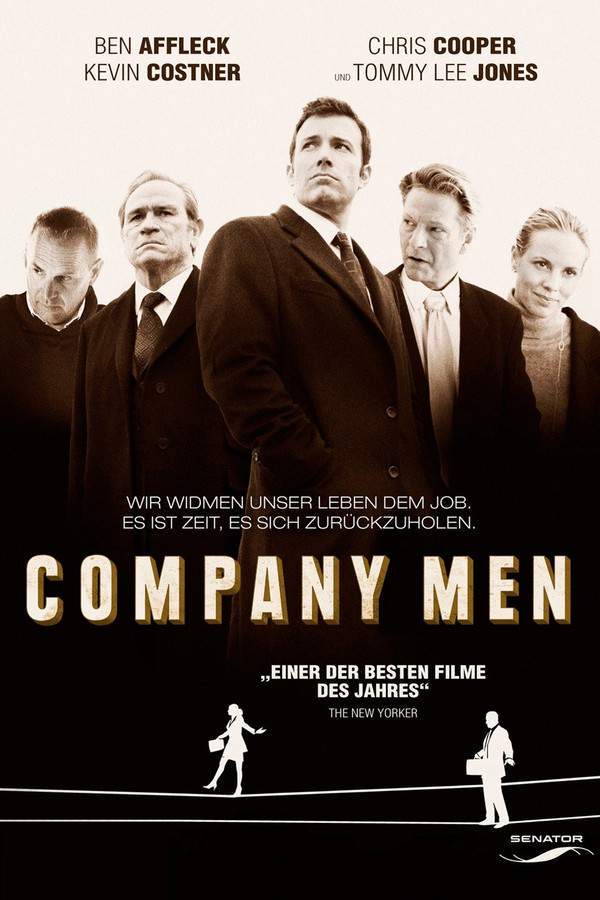
The Company Men (2011) movie poster

Timeline

The Company Men (2011) Timeline Explained – Every Event in Order

Release, runtime and language
2011 · 109 min · English
JustWatch #3,264 13
Directed by
John Wells
Starring
Ben Affleck, Tommy Lee Jones, Chris Cooper
Budget
$15M

When corporate layoffs disrupt their careers, Bobby Walker, Phil Woodward, and Gene McClary find themselves grappling with questions of identity, family, and purpose. Forced to reassess their lives and careers, they navigate the challenges of unemployment and the changing definition of success, confronting difficult choices and redefining what it means to be a man, a husband, and a father during times of economic uncertainty.

On this page (6)
  1. 1 Where to watch
  2. 2 Events in order (12)
  3. 3 Timeline questions answered
  4. 4 Movie threads
  5. 5 Movies like The Company Men
  6. 6 Every angle

Where to watch

Where to Watch The Company Men (2011)

Where can you watch The Company Men? Stream, rent or buy it in the US, including on Amazon Prime Video, fuboTV and Lionsgate+ Amazon Channels: current JustWatch availability with up-to-date prices.

Streaming availability powered by JustWatch

12 events in order · contains spoilers

The Company Men Timeline: Events in Chronological Order

Every key event of The Company Men (2011) in order, scene by scene, with when and where it takes place. Use it to untangle flashbacks, time jumps and parallel storylines, to refresh your memory before the sequel or to find the exact scene you are thinking of.

  1. Downsizing at GTX

    Global Transportation Systems (GTX) announces a significant downsizing due to the recession, leaving many employees without jobs. This decision impacts the financial stability and morale of the firm's workforce, leading to a series of personal crises for those affected.

    When
    During the recession
    Where
    Global Transportation Systems Headquarters
  2. Bobby Walker's Layoff

    Bobby Walker, once a successful six-figure salary earner, finds himself laid off as part of the company's downsizing efforts. The abrupt loss of his job sends him spiraling into a world of financial uncertainty and emotional distress, as he grapples with the abrupt shift in his lifestyle.

  3. Selling Luxuries

    As Bobby's financial situation worsens, he is forced to sell his elegant Porsche and give up his cherished country club membership. Eventually, he sells his luxurious home, moving his family back into his parents' house, which marks a significant downturn in his family's standard of living.

  4. Struggles with Job Searching

    Despite receiving outplacement services from GTX, Bobby struggles to find a new job, facing multiple rejections. This job search becomes a source of frustration and anxiety, further affecting his relationship with his family and his self-worth.

  5. Manual Labor Role

    Eventually, Bobby is compelled to accept a manual labor position working under his blue-collar brother-in-law, Jack Dolan. This role starkly contrasts with his previous white-collar lifestyle, driving home the harsh realities of the economic downturn.

  6. Tensions in Management

    As layoffs continue, tensions within GTX management escalate. Gene McClary, the Executive Vice President, challenges CEO James Salinger about the ethics of lavish spending against the backdrop of layoffs, highlighting a deepening divide in leadership perspectives.

    Where
    GTX Corporate Office
  7. Phil Woodward's Termination

    Phil Woodward, a senior manager with over 30 years at GTX, finds himself unexpectedly laid off. His situation reflects the broader trend of unceremonious dismissals in the company, as McClary learns that even his intervention cannot save Phil from termination.

  8. Phil's Tragic Decision

    Struggling to adapt to life after losing his job, Phil faces the harsh reality of age discrimination in the job market. Overwhelmed by despair, he takes a tragic step that has a profound impact on his family and colleagues, underlining the severe consequences of the layoffs.

  9. Gene's Turnaround

    Despite his anger over the layoffs and the impact on his colleagues, Gene McClary profits from his GTX stock as the company's value increases. Guided by a sense of guilt and determination, he decides to leave GTX and pursue a new opportunity in the maritime shipbuilding industry.

  10. New Beginnings in Maritime Industry

    Gene McClary embarks on a new venture in the maritime shipbuilding industry, marking a fresh start after leaving GTX. He aims to create a place where former colleagues can reclaim their dignity and worth in the professional world.

  11. Bobby Joins McClary

    Bobby Walker is invited by Gene McClary to be the first hire in his new company. This opportunity signifies a crucial turning point for Bobby, as he strives to rebuild his career and life alongside his former boss and mentor.

  12. Hope in Bare Offices

    The newly established company resonates with hope as former GTX employees gather in bare offices. Each individual yearns for a chance to reclaim their professional identities and rebuild their lives after the devastating layoffs they experienced.

Last updated: November 08, 2024 at 02:57

Was this helpful?

Timeline questions answered

The Company Men Timeline Explained: Your Questions Answered

When does it happen, and why in that order? The questions people ask about the chronology of The Company Men (2011): time jumps, flashbacks, cause and effect between scenes and the correct order of events, each answered with spoilers.

Q1

Why does Phil Woodward commit suicide?

Phil Woodward, a senior manager with over 30 years at GTX, commits suicide after facing relentless job rejections due to age discrimination. Despite his extensive experience, potential employers view him as too old and expensive. Overwhelmed by despair and unable to secure any position, he takes his own life, highlighting the devastating psychological toll of prolonged unemployment on older workers.

Foreshadowing: Earlier in the film, Phil is shown struggling with the humiliation of job interviews where he is clearly dismissed because of his age, setting up the tragic outcome.

  • phil woodward
  • suicide
  • age discrimination
  • job loss
  • unemployment
Q2

Why does Gene McClary start a new maritime company?

Gene leaves GTX after learning he will also be terminated, despite being an executive who questioned the ethics of the layoffs. He profits from his GTX stock as the company's value rises due to downsizing, but he feels guilty about profiting while former colleagues suffer. Determined to make amends, he starts a new shipbuilding company to provide jobs for his former coworkers and reclaim the industry's dignity.

Foreshadowing: Gene's earlier confrontation with CEO James Salinger about lavish spending while laying off employees establishes his moral conflict and eventual decision to distance himself from GTX.

  • gene mccalary
  • new company
  • maritime
  • shipbuilding
  • guilt
  • redemption
Q3

Why does Bobby Walker take a manual labor job?

After being laid off from GTX, Bobby struggles for months to find another white-collar position. His six-figure salary and lifestyle become unsustainable as he sells his Porsche, gives up his country club membership, and eventually loses his house. With no other options and a family to support, Bobby accepts a construction job working under his brother-in-law Jack Dolan, representing the humbling reality many professionals face during economic downturns.

Foreshadowing: Bobby's initial refusal to accept lower-paying jobs and his pride in his professional identity foreshadow the severity of his eventual fall.

  • bobby walker
  • manual labor
  • construction
  • job loss
  • pride
  • downward spiral
Q4

Why does GTX's stock value increase after the layoffs?

CEO James Salinger orders massive layoffs specifically to boost profits and stabilize the stock value, driven by fears of a hostile takeover. The company reduces costs significantly by eliminating thousands of jobs, which improves financial metrics and appeases investors. This is why Gene McClary profits from his stock despite being angered by the human cost of the cuts.

Foreshadowing: Salinger's justification to Gene that 'this is what the numbers require' establishes that the layoffs are driven by financial optimization rather than company survival.

  • gtx stock
  • layoffs
  • profits
  • hostile takeover
  • james salinger
Q5

Why does Gene McClary leave his wife and start an affair?

After witnessing the devastation caused by the layoffs and learning he will also be terminated, Gene McClary leaves his wife and begins a relationship with his mistress Sally Wilcox. This represents his complete break from his old life at GTX, including the suburban existence and corporate identity that defined him.

Foreshadowing: Gene's earlier tension with his wife and his growing disillusionment with GTX set up his eventual departure from both his marriage and the company.

  • gene mccalary
  • wife
  • affair
  • sally wilcox
  • divorce
  • leaving
Q6

Why can't Bobby Walker find a new job?

Despite receiving outplacement services from GTX, Bobby cannot secure a new position because he represents an expensive six-figure salary in a market flooded with equally qualified candidates willing to work for less. His previous high salary becomes a liability, and companies view him as overqualified or likely to leave for a better offer. This reflects the harsh reality that experienced professionals often struggle to re-enter the workforce after layoffs.

Foreshadowing: Bobby's initial confidence that he will quickly find another job, combined with his refusal to consider lower-paying positions, establishes his eventual struggle.

  • bobby walker
  • job search
  • rejection
  • overqualified
  • outplacement
Q7

Why does James Salinger order so many layoffs?

CEO James Salinger orders massive layoffs at GTX to boost profits and protect the stock value amid fears of a hostile takeover. He believes the cuts are necessary to keep the company competitive and satisfy investors. While Gene McClary challenges the ethics of this decision, Salinger insists it is purely a financial calculation to ensure the company's survival and maintain shareholder value.

Foreshadowing: Salinger's earlier decisions to build lavish corporate headquarters while preparing layoffs establish his prioritization of image and investor confidence over employee welfare.

  • james salinger
  • ceo
  • layoffs
  • hostile takeover
  • profits
  • stock value
Q8

Why does Bobby Walker move his family into his parents' house?

Bobby is forced to sell his luxurious home after exhausting his savings and being unable to maintain mortgage payments without income. With nowhere else to go, he moves his wife and children into his parents' house, representing the complete reversal of his success and the painful return to dependency after years of financial independence.

Foreshadowing: The gradual selling of his Porsche and giving up of country club membership foreshadows the ultimate loss of his home.

  • bobby walker
  • parents house
  • selling home
  • financial ruin
  • family
Q9

Why does Phil Woodward face age discrimination in his job search?

Phil encounters age discrimination because employers view him as too expensive, having built a career over 30 years with corresponding salary expectations. Companies prefer hiring younger candidates who can be paid less and are seen as more adaptable. Despite his experience and qualifications, Phil represents a financial liability to potential employers, making it nearly impossible for him to find equivalent work.

Foreshadowing: Phil's conversations with younger interviewers who dismiss him as 'overqualified' establish the ageist barriers he faces.

  • phil woodward
  • age discrimination
  • older workers
  • job market
  • unemployment
Q10

How does Bobby Walker end up working for Gene McClary again?

After starting a new maritime shipbuilding company, Gene McClary hires Bobby Walker as his first employee, offering him a chance to rebuild his career in a new venture. This represents a second opportunity for Bobby and a form of redemption for Gene, who feels responsible for the plight of his former colleagues. The bare offices full of hopeful former GTX employees symbolize their collective attempt to reclaim their professional dignity.

Foreshadowing: Gene's guilt over profiting from the layoffs and his desire to help former coworkers foreshadows his decision to hire Bobby.

  • bobby walker
  • gene mccalary
  • new company
  • hire
  • redemption
  • maritime
Q11

What do the bare offices at the end represent?

The ending shows Gene McClary's new company filled with former GTX employees working in sparsely furnished offices. The bare setting represents both the modest beginnings of a new venture and the hope of rebuilding professional identities after devastating job losses. While the ending offers a bittersweet note of cautious optimism, it is tempered by the memory of Phil's suicide and the widespread damage caused by the layoffs.

Foreshadowing: Gene's earlier departure from GTX and his desire to create a better workplace environment foreshadow this hopeful but understated conclusion.

  • ending
  • bare offices
  • hope
  • new beginning
  • former gtx employees

Movie threads

More Movies Like The Company Men, by Mood & Story

Curated lists built around what makes The Company Men tick: the same mood, the same kind of story or the same emotional payoff. Each list explains why these movies belong together.

Movies about economic hardship and identity like The Company Men

Character-driven stories about personal crisis and rebuilding after professional downfall. If you liked The Company Men, explore these similar dramas about characters grappling with job loss and a shattered sense of self. These films focus on the emotional and personal rebuilding required after a professional downfall, offering a reflective look at identity crises and finding new purpose.

  • somber
  • anxious
  • reflective
  • gritty
  • hopeful
  • melancholic
  • Tone: melancholic, somber, reflective
  • Pacing: steady, deliberate
Why these movies?

The story pattern: Stories in this thread often follow characters, typically professionals or breadwinners, who experience a sudden and devastating professional downfall. The narrative charts their emotional freefall, strained relationships, and the slow, painful process of confronting their core identity and rebuilding a meaningful life from the wreckage.

Why they belong together: These films are grouped together because they share a heavy emotional weight centered on themes of identity crisis, economic anxiety, and the realistic, often melancholic, process of personal redemption. The pacing is steady and character-driven, prioritizing emotional depth over plot twists.


Bittersweet dramas about rebuilding like The Company Men

Stories where hope is hard-won and tempered by the scars of past tragedies. Find more movies like The Company Men that feature a bittersweet ending. These films involve characters overcoming heavy personal and professional setbacks, where the final note of hope is realistically tempered by the lasting impact of their struggles and losses.

  • bittersweet
  • somber
  • hopeful
  • reflective
  • melancholic
  • redemptive
  • Tone: bittersweet, melancholic, hopeful
  • Pacing: steady, methodical
Why these movies?

The story pattern: The narrative pattern involves a central, heavy conflict—such as financial ruin, personal failure, or death—that casts a long shadow over the characters. The story builds towards a resolution that offers a new beginning or personal victory, but this hope is intentionally undercut by the lingering emotional weight and irrevocable changes caused by the central tragedy.

Why they belong together: These movies are united by their specific emotional trajectory: they build towards a resolution that is neither fully happy nor bleak. The dominant tone is bittersweet, blending melancholic reflection with cautious optimism. The pacing allows the emotional weight of the loss to fully settle before offering a realistic, hard-earned sense of hope.

If you liked this

Movies Like The Company Men

Similar movies to The Company Men: the same genre, themes or kind of story. Each one comes with its own plot summary, timeline and ending explained.

Browse all movie summaries

Every angle

The Company Men (2011) Explained: Plot, Timeline & Characters

Everything about The Company Men in one place: what happens in the plot summary, the timeline in chronological order, the characters and meaning and a spoiler-free summary. What's After the Movie adds the cast, box office and post-credit scenes.

Coming soon on iOS and Android

The Plot Explained Movie Summary App

Plot summaries, endings explained and timelines on your phone. Catch up on any movie in minutes, save your favorites and never miss a twist again.

Be the first to know when we launch. Your email stays private, always.

Learn more about the app