Plot Explained Spoilers guaranteed!
Plot Explained

Browse by genre

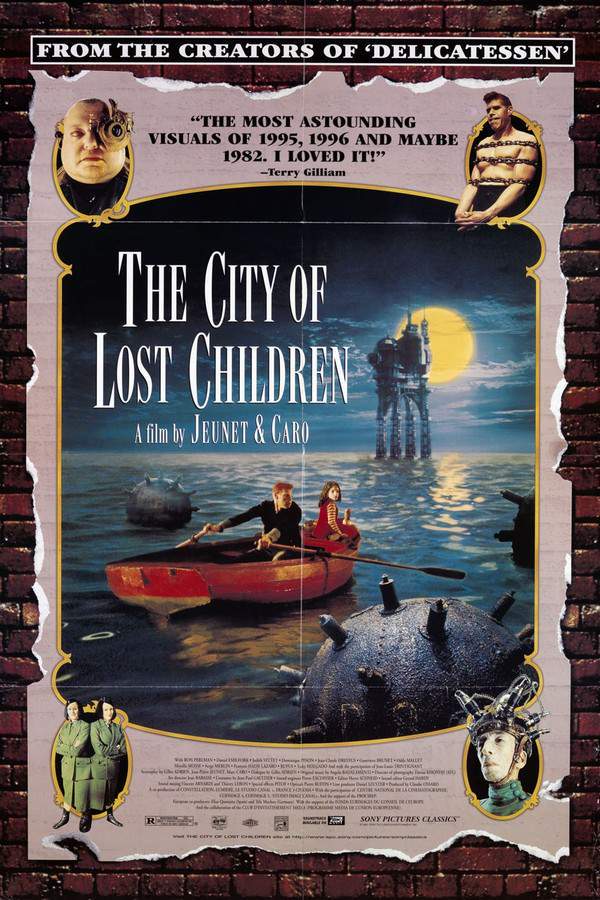
The City of Lost Children (1995) movie poster

Characters & Themes

The City of Lost Children (1995) Characters, Setting & Themes Explained

Release, runtime and language
1995 · 112 min · French
Loading streaming availability…
Directed by
Jean-Pierre Jeunet, Marc Caro
Starring
Ron Perlman, Daniel Emilfork
Budget
$18M

In a strange, dystopian future, the aged and ailing Krank seeks a way to achieve immortality by stealing the dreams of children. He kidnaps the young Denree, prompting a courageous father and his clever young companion to embark on a perilous journey. They must confront Krank’s legion of identical enforcers and unravel the secrets behind his twisted scheme to save Denree and stop his quest for eternal life.

On this page (8)
  1. 1 Where to watch
  2. 2 Characters explained (4)
  3. 3 Where & when it takes place
  4. 4 Themes & meaning (3)
  5. 5 Character & meaning questions
  6. 6 Movie threads
  7. 7 Movies like The City of Lost Children
  8. 8 Every angle
Loading streaming availability…

4 main characters · contains spoilers

The City of Lost Children Characters Explained: Who Is Who

The main characters of The City of Lost Children (1995), heroes and villains: what drives them, how they change over the course of the story and what each of them reveals about the film's bigger ideas.

  • Krank

    played by Daniel Emilfork

    Krank is a sinister figure, characterized by his aloof demeanor and insatiable desire to extract dreams, which highlights his own inability to dream. His intellect is both a gift and a curse, leading to his rapid aging and obsessive nature.

    • 🧠 Genius
    • ☠️ Antagonist
  • One

    played by Ron Perlman

    One is the carnival's muscleman, defined by his loyalty and fierce determination to rescue his young brother, Denrée. Though initially caught up in a life of crime, his character arc reveals a deeper sense of empathy and moral duty.

    • 💪 Strongman
    • ❤️ Protector
  • Miette

    Miette is a clever and resourceful orphan who becomes One's ally. Her bravery and quick thinking prove vital in their quest, showcasing her strong will and innate courage, especially when facing the surreal challenges within the dreamscape.

    • 👧 Orphan
    • 🦸‍♀️ Heroine
  • Irvin

    Irvin is a unique character, a brain preserved in a vat, who serves as a guiding voice amidst the chaos. His insights and manipulations highlight the significance of thought and creativity in overcoming one's limitations.

    • 🧠 Brain
    • 💡 Mentor

Last updated: October 22, 2024 at 21:43

Was this helpful?

Setting

Where and When Does The City of Lost Children Take Place?

The setting of The City of Lost Children (1995): the year and time period, the places and locations, and how they shape the characters, the mood and the tension of the story.

Time period

The film's surreal and fantastical elements create an ambiguous backdrop that does not adhere to a specific historical timeline. Instead, it immerses viewers in a timeless world where advanced technologies and dream manipulation coexist with a carnival-like setting.

Location

Oil Rig, Nearby Port City

The movie is set primarily on a decrepit oil rig that serves as the lair of Krank, filled with bizarre inventions and eerie atmosphere. Additionally, the story connects to a nearby port city where children are abducted, highlighting a stark contrast between the vibrant life of the city and the dark undertones of the oil rig.

  • 🏭 Location
  • 🌊 Waterfront

Last updated: October 22, 2024 at 21:43

Was this helpful?

3 major themes

The City of Lost Children Meaning: Themes & Message Explained

What is The City of Lost Children (1995) really about? The emotional, social and philosophical themes the film keeps returning to, its symbolism and the message beneath the surface.

  • Loss

    The theme of loss is omnipresent, as many characters grapple with the absence of loved ones and the consequences of their actions. One's quest to rescue Denrée emphasizes the emotional toll of abandonment, while Krank's inability to dream reflects a deeper sense of existential loss.

  • Dreams

    Dreams play a central role in the narrative, serving as both a source of power and a battleground. Krank's obsession with extracting dreams from children highlights the darker side of desire, as characters navigate the blurred lines between reality and the dreamscape.

  • Friendship

    The bond between One and Miette illustrates the importance of companionship in overcoming adversity. Their relationship grows stronger as they face challenges together, ultimately demonstrating that friendship can spark courage and resilience in the face of danger.

Last updated: October 22, 2024 at 21:43

Was this helpful?

Character & theme questions

The City of Lost Children Characters & Meaning: Your Questions Answered

The questions people ask about The City of Lost Children (1995): who the characters really are, their relationships, what the symbols mean, where it takes place and what the movie is really about. Each answer contains spoilers.

Q1

Where does the story primarily take place?

The City of Lost Children is set primarily on a decrepit oil rig that serves as the lair of Krank, filled with bizarre inventions and an eerie atmosphere. The story also connects to a nearby port city where children are abducted, highlighting a stark contrast between the vibrant life of the city and the dark undertones of the oil rig.

Foreshadowing: The opening scenes establish the gloomy waterfront before revealing the rig.

  • oil rig
  • port city
  • setting
  • location
  • waterfront
Q2

When does the movie take place?

The film creates an ambiguous backdrop that does not adhere to a specific historical timeline. Instead, it immerses viewers in a timeless world where advanced technologies and dream manipulation coexist with a carnival-like setting, defying conventional era classification.

  • time period
  • era
  • timeless
  • future
  • ambiguous
Q3

Why does Krank steal children's dreams?

Krank is a sinister figure characterized by his aloof demeanor and insatiable desire to extract dreams, which highlights his own inability to dream. His intellect is both a gift and a curse, leading to his rapid aging and obsessive nature to achieve immortality through the dreams of others.

Foreshadowing: Early shots of Krank's aging process hint at his desperation.

  • Krank
  • villain
  • dreams
  • immortality
  • motivation
Q4

Who is One and what is his role?

One is the carnival's muscleman, defined by his loyalty and fierce determination to rescue his young brother, Denrée. Though initially caught up in a life of crime, his character arc reveals a deeper sense of empathy and moral duty within the narrative of The City of Lost Children.

Foreshadowing: One's strength is established early to contrast with his emotional vulnerability.

  • One
  • hero
  • muscleman
  • Denrée
  • rescue
Q5

What is Miette's contribution to the story?

Miette is a clever and resourceful orphan who becomes One's ally during their perilous journey. Her bravery and quick thinking prove vital in their quest, showcasing her strong will and innate courage, especially when facing the surreal challenges within the dreamscape.

Foreshadowing: Miette's introduction highlights her street smarts immediately.

  • Miette
  • orphan
  • ally
  • courage
  • dreamscape
Q6

What role do dreams play in the narrative?

Dreams play a central role in the narrative, serving as both a source of power and a battleground for the characters. Krank's obsession with extracting dreams from children highlights the darker side of desire, as characters navigate the blurred lines between reality and the dreamscape in The City of Lost Children.

Foreshadowing: Visual motifs of sleep and machinery appear throughout the first act.

  • dreams
  • power
  • reality
  • dreamscape
  • theme
Q7

How does the theme of loss appear in the film?

The theme of loss is omnipresent, as many characters grapple with the absence of loved ones and the consequences of their actions. One's quest to rescue Denrée emphasizes the emotional toll of abandonment, while Krank's inability to dream reflects a deeper sense of existential loss.

Foreshadowing: Empty beds and missing children are shown early in the port city.

  • loss
  • abandonment
  • existential
  • emotion
  • theme
Q8

What defines the relationship between One and Miette?

The bond between One and Miette illustrates the importance of companionship in overcoming adversity. Their relationship grows stronger as they face challenges together, ultimately demonstrating that friendship can spark courage and resilience in the face of danger.

Foreshadowing: Their initial friction slowly melts into cooperation.

  • friendship
  • bond
  • One
  • Miette
  • companionship
Q9

What is the visual tone of the movie?

The tone is predominantly dark, established by the dystopian setting, the villain's horrific dream-stealing scheme, and the grotesque supporting cast. However, it is punctuated by whimsical elements from its steampunk-fantasy aesthetic, creating a unique visual identity for The City of Lost Children.

  • tone
  • visual
  • steampunk
  • dark
  • whimsical
Q10

What does the title refer to?

The title refers to the children who are abducted and taken to Krank's lair, effectively becoming lost to the world. It also symbolizes the loss of innocence and the dreamless state of the villain, framing the entire story around what has been taken away.

  • title
  • meaning
  • children
  • lost
  • symbolism
Q11

Who is Irvin in the story?

Irvin is a unique character, a brain preserved in a vat, who serves as a guiding voice amidst the chaos. His insights and manipulations highlight the significance of thought and creativity in overcoming one's limitations within the complex world of the film.

Foreshadowing: Scientific paraphernalia hints at his existence before his reveal.

  • Irvin
  • brain
  • vat
  • guide
  • creativity
Q12

Is the world realistic or fantastical?

The film's surreal and fantastical elements create an ambiguous backdrop that does not adhere to real-world logic. It immerses viewers in a timeless world where advanced technologies and dream manipulation coexist with a carnival-like setting, defying conventional realism.

  • world
  • fantastical
  • surreal
  • reality
  • context

Movie threads

More Movies Like The City of Lost Children, by Mood & Story

Curated lists built around what makes The City of Lost Children tick: the same mood, the same kind of story or the same emotional payoff. Each list explains why these movies belong together.

Darkly Whimsical Dystopian Movies like The City of Lost Children

Quirky and sinister adventures through grotesque, broken worlds. If you enjoyed the unique blend of sinister dread and quirky fantasy in The City of Lost Children, explore more movies like it. These films share a similar feel of bleak yet imaginative worlds, often involving desperate journeys through strange societies with a distinct visual style.

  • dystopian
  • grotesque
  • melancholic
  • quirky
  • sinister
  • dreamlike
  • Tone: dark, whimsical, sinister
  • Pacing: variable, atmospheric
Why these movies?

The story pattern: Narratives often follow an outsider or a small group on a mission through a bizarre, hierarchical society. The journey is as much about navigating the strange logic of the world as it is about achieving a concrete goal, encountering grotesque characters and surreal obstacles along the way.

Why they belong together: These films are grouped by their signature tonal mix: a dark, often melancholic or oppressive core atmosphere, balanced by eccentric humor, fantastical elements, and a highly stylized visual aesthetic that makes the bleakness enchanting rather than purely grim.

Found Family Rescue Stories like The City of Lost Children

Unlikely allies bond while facing a sinister, powerful foe. For viewers who loved the heartfelt dynamic between the strongman and the clever orphan in The City of Lost Children, this list finds similar movies. These stories focus on the powerful theme of found family forming under duress to combat a sinister antagonist.

  • found family
  • sinister
  • anxious
  • melancholic
  • hopeful
  • perilous
  • Tone: dark, bittersweet, hopeful
  • Pacing: variable, character-driven
Why these movies?

The story pattern: The plot is driven by a central, high-stakes conflict, typically a rescue or a fight for survival against a cunning adversary. The emotional core is the development of the central relationship, which grows from necessity into genuine loyalty and love, often culminating in a sacrifice for the greater good.

Why they belong together: These movies share a focus on the emotional arc of building a family unit in the face of adversity. They combine high emotional weight with complex antagonists, creating a narrative where personal connection is the key to overcoming a bleak world.

If you liked this

Movies Like The City of Lost Children

Similar movies to The City of Lost Children: the same genre, themes or kind of story. Each one comes with its own plot summary, timeline and ending explained.

Browse all movie summaries

Every angle

The City of Lost Children (1995) Explained: Plot, Timeline & Characters

Everything about The City of Lost Children in one place: what happens in the plot summary, the timeline in chronological order, the characters and meaning and a spoiler-free summary. What's After the Movie adds the cast, box office and post-credit scenes.

Coming soon on iOS and Android

The Plot Explained Movie Summary App

Plot summaries, endings explained and timelines on your phone. Catch up on any movie in minutes, save your favorites and never miss a twist again.

Be the first to know when we launch. Your email stays private, always.

Learn more about the app