Year: 1964
Runtime: 89 min
Language: English
Director: Anton Leader
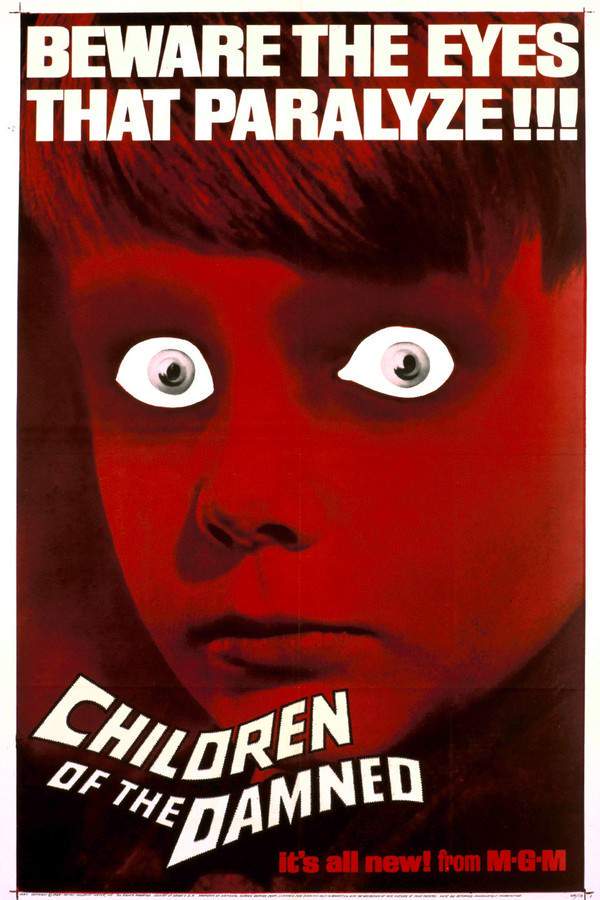
Six children, born without fathers and displaying remarkable intelligence, are gathered at an old London church following a worldwide survey. As their extraordinary abilities develop, a government agency considers eliminating them. Psychologist and Colonel Tom Lewellin believes in their potential and fights to protect the children from those who fear their powers, leading to a tense confrontation between science, fear, and the unknown.
Warning: spoilers below!
Haven’t seen Children of the Damned yet? This summary contains major spoilers. Bookmark the page, watch the movie, and come back for the full breakdown. If you're ready, scroll on and relive the story!
Read the complete plot breakdown of Children of the Damned (1964), including all key story events, major twists, and the ending explained in detail. Discover what really happened—and what it all means.
In a revolutionary exploration, a team of UNESCO researchers uncovers six extraordinary children hailing from diverse parts of the globe - specifically China, India, Nigeria, the Soviet Union, the United States, and the United Kingdom. These remarkable youths possess cognitive abilities that seem to defy rational explanation. They demonstrate an uncanny ability to solve a complex puzzle made of bricks with striking uniformity.
Leading the investigation is British psychologist Tom Lewellyn alongside geneticist David Neville. Their attention is particularly drawn to Paul, a boy from London whose mysterious mother, Diana, nurtures a profound resentment towards him. Initially dismissed as mere hysteria, Diana’s claim of never having been touched by a man emerges as something far more serious.
As the researchers probe into the children’s extraordinary talents, they uncover an astonishing connection that binds them together: each child has grown up without a father figure. Furthermore, these gifted individuals exhibit a rare form of telepathy, enabling them to communicate with one another on a subconscious level.
The United Nations team gathers these six prodigies in London to undertake a thorough examination of their remarkable capabilities. However, as the children acclimatize to their new environment, they decide to break free from their assigned embassies, ultimately congregating in a dilapidated church in Southwark, London. In this forgotten sanctuary, they intermittently tap into Paul’s aunt’s mental energy to sustain themselves.
Simultaneously, a fierce debate unfolds within the British Army and Intelligence Services regarding the potential risks that these extraordinary children may pose to national security. It becomes increasingly evident that the children possess telekinetic abilities, enabling them to create an intricate device capable of harnessing sonic waves as a means of self-defense—a weapon that ultimately results in casualties among government officials and soldiers. Yet, it is clear that the children only wield their powers in response to threats against them.
As the tension escalates, Tom Lewellyn passionately implores the group to return to their embassies, a plea they reluctantly heed. However, this moment of peace is fleeting; the children retaliate against the embassy and military personnel before retreating once again to their sanctuary.
In a poignant discovery, Lewellyn’s team notes a stark difference between the blood cells of an ordinary person and those of one of the extraordinary children, leading to shocking speculations about their true nature. This revelation hints that these prodigious youngsters may not be of this world, presenting a grave challenge to humanity’s fundamental existence and igniting a complex moral quandary with implications that could last for generations.
As authorities endeavor to regain control over the extraordinary children, they are compelled to take desperate measures to preserve their own survival. This fraught standoff escalates toward a climactic showdown between the military and the enigmatic children. Amidst the chaos, one scientist advances a groundbreaking theory: the children’s alien nature may have been misinterpreted, and their blood might instead signify human DNA that has inexplicably evolved over a million years. The children themselves arrive at a profound realization—that their existence is wholly incompatible with humanity’s comparative primitiveness. Consequently, they prepare to lower their defenses and submit to fate.
However, the military commander experiences an epiphany and opts to withdraw the impending assault. Yet, fate takes a grim turn when an ordinary screwdriver—a basic tool of humanity—accidentally triggers a catastrophic chain of events, ultimately resulting in the destruction of the church and the tragic end of these extraordinary children.
Last Updated: November 18, 2024 at 20:54
Discover curated groups of movies connected by mood, themes, and story style. Browse collections built around emotion, atmosphere, and narrative focus to easily find films that match what you feel like watching right now.
Narratives where fear and paranoia lead to the unnecessary destruction of the unknown.If you were captivated by the fatal confrontation in Children of the Damned, explore more movies where fear leads to a tragic siege of the misunderstood. These films, often in the sci-fi or thriller genres, share a heavy emotional weight and a bleak commentary on human nature, perfect for viewers who appreciate thought-provoking and somber endings.
Stories in this thread typically begin with the discovery of something extraordinary or alien. Initial curiosity quickly curdles into suspicion and fear from the established order, leading to an inevitable, tense containment and eventual violent confrontation. The climax is not a victory but a devastating loss, underscoring the tragedy of the conflict.
These movies are grouped by their shared narrative arc of a fatal misunderstanding and their deeply pessimistic tone. They explore similar themes of otherness, fear of the unknown, and the destructive power of paranoia, resulting in an emotionally heavy viewing experience with a consistently tense atmosphere and a sad conclusion.
Thrillers where superhuman intellect creates an atmosphere of creeping dread and moral panic.For viewers who enjoyed the chilling premise of superhuman children in Children of the Damned, this section collects similar movies about ominous intelligence. These films share a steady, tense pace, a high-stakes mood, and explore the frightening implications of confronting a mind that is alienly superior, often within a sci-fi or psychological horror framework.
The narrative follows a investigation or study into a form of intelligence that challenges human superiority. The story unfolds methodically, ratcheting up tension as the full, often frightening, potential of this intelligence is revealed. The central conflict is cerebral, pitting human fear and morality against cold, logical, or alien thought processes.
These films are united by their core premise: intelligence as an active, unsettling force. They share a specific mood blend of ominous tension, thought-provoking themes, and a sense of the uncanny. The pacing is typically steady, allowing the dread to build, and the tone remains serious and tense throughout.
Don't stop at just watching — explore Children of the Damned in full detail. From the complete plot summary and scene-by-scene timeline to character breakdowns, thematic analysis, and a deep dive into the ending — every page helps you truly understand what Children of the Damned is all about. Plus, discover what's next after the movie.
Track the full timeline of Children of the Damned with every major event arranged chronologically. Perfect for decoding non-linear storytelling, flashbacks, or parallel narratives with a clear scene-by-scene breakdown.
Discover the characters, locations, and core themes that shape Children of the Damned. Get insights into symbolic elements, setting significance, and deeper narrative meaning — ideal for thematic analysis and movie breakdowns.
Get a quick, spoiler-free overview of Children of the Damned that covers the main plot points and key details without revealing any major twists or spoilers. Perfect for those who want to know what to expect before diving in.
Visit What's After the Movie to explore more about Children of the Damned: box office results, cast and crew info, production details, post-credit scenes, and external links — all in one place for movie fans and researchers.
Discover movies like Children of the Damned that share similar genres, themes, and storytelling elements. Whether you’re drawn to the atmosphere, character arcs, or plot structure, these curated recommendations will help you explore more films you’ll love.
Children of the Damned (1964) Scene-by-Scene Movie Timeline
Children of the Damned (1964) Movie Characters, Themes & Settings
Children of the Damned (1964) Spoiler-Free Summary & Key Flow
Movies Like Children of the Damned – Similar Titles You’ll Enjoy
The Innocents (2022) Movie Recap & Themes
Children of Men (2006) Film Overview & Timeline
Village of the Damned (1995) Ending Explained & Film Insights
Village of the Damned (1960) Full Movie Breakdown
Children of the Corn (1984) Plot Summary & Ending Explained
Freaks (2019) Story Summary & Characters
Children of the Corn II: The Final Sacrifice (1993) Film Overview & Timeline
The Child Remains (2019) Detailed Story Recap
School of the Damned (2019) Spoiler-Packed Plot Recap
Children of the Living Dead (2001) Story Summary & Characters
Children of Camp Blood (2020) Film Overview & Timeline
The Child (1977) Spoiler-Packed Plot Recap
Children of the Stones (1000) Spoiler-Packed Plot Recap
The Space Children (1958) Ending Explained & Film Insights
The Damned (1962) Film Overview & Timeline