Plot Explained Spoilers guaranteed!
Plot Explained

Browse by genre

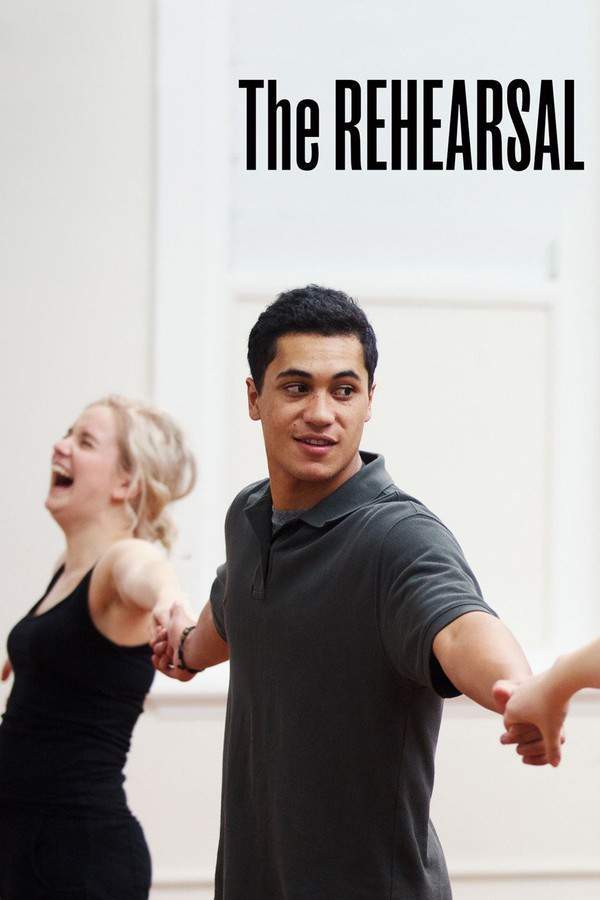
The Rehearsal (2017) movie poster

Plot Summary

The Rehearsal (2017) Plot Summary Explained

Release, runtime and language
2017 · 102 min · English
Echo score 60
Directed by
Alison Maclean
Starring
James Rolleston, Kerry Fox, Alice Englert, Ella Edward, Evan Fenemor, George Phillips

A tender first love develops between Stanley, a naive drama student, and Isolde, a captivating young woman. Their sweet romance is complicated when Hannah, the charismatic Head of Acting, encourages Stanley to explore his potential. As the year-end show progresses, a scandalous revelation involving Isolde's sister, a tennis star, creates inner turmoil and threatens Stanley’s ambition and newfound emotions.

On this page (5)
  1. 1 What happens: full plot
  2. 2 Plot questions answered
  3. 3 Movie threads
  4. 4 Movies like The Rehearsal
  5. 5 Every angle

Full plot summary · contains spoilers

What Happens in The Rehearsal: Full Plot Summary

The whole story of The Rehearsal (2017) explained, from the opening scene to the final frame: every key event, every twist and what it all adds up to. Read it as a quick recap before the sequel, to check a scene you missed, or to finally understand what really happened.

The film follows Stanley, a shy, newly admitted student at a New Zealand drama school, as he navigates the demanding world of acting under a roster of powerful teachers and a circle of fellow students. From his first day, the instructors push him to move beyond a reserved presence and to draw from real life experiences to fuel authentic performances. Hanna, one of the teachers, presses him hard when he struggles to inject emotion into his lines, while another mentor, Livia, urges him to “dig deeper” and to go all the way in his craft. In the midst of the classroom drills, Stanley meets two roommates, William and Theo, and the dynamic of the dormitory becomes part of his education as much as the syllabus.

As the school year unfolds, a high-profile sex scandal rocks the world outside the studio: a married tennis pro, George Saladin, is exposed alongside his star pupil Victoria. The fallout echoes through the school as Stanley crosses paths with Isolde, and the two exchange phone numbers, beginning a connection that will complicate his professional and personal life. Stanley is then assigned to a five-member acting project, a challenge that leads him to more tense interactions with Hanna. When Stanley shares lunch with his psychologist father, he rehearses a scene where he plays his dad who tells bad jokes; this performance becomes a turning point, as his father makes it clear he doesn’t want his son to pursue acting. Hanna responds with encouragement, leaving Stanley with a gift—a book from her library—and a stark reminder that acting demands risk and total commitment. Her insistence on depth and perseverance marks the moment when Stanley begins to truly take acting to heart.

Meanwhile, the scandal’s ripple effects touch Victoria and Isolde, who discuss the affair and the nature of the publicity. Isolde reveals she likes Stanley, and later she discloses that she had observed Saladin with her sister, clarifying that the encounter they’d heard about was not forced and seemed consensual. The group decides to mine the scandal as their upcoming project, a decision Stanley has not yet disclosed to Isolde, a secret that weighs on him as his friends remind him of honesty.

The class moves on to a different kind of vulnerability: delivering an intimate scene. William recounts an Easter dinner in which his father humiliates his mother, a tale Hanna criticizes not for its sensationalism but for its avoidance of true intimacy—she insists that real intimacy requires the actor to bear his soul and to trust the audience and fellow performers. William confesses that this class feels like the last place where he would willingly expose such private pain. In parallel, Frankie seeks background for their project by talking to the coach associated with Saladin at a coffee shop, while Isolde invites Stanley and William to a barbecue, where ordinary family moments become material for their performances. William plays with the family dog, a moment that underscores the blurring line between private life and stagecraft.

Victoria, meanwhile, secretly borrows Stanley’s phone to reach out to her coach, and William again pushes Stanley to level with Isolde about their project. Yet Stanley stumbles, reluctant to reveal everything, until a phone call from the coach shifts the course of events: Victoria’s coach reveals he has decided to stay with his wife, a turn that intensifies the tangled web of loyalties and secrets surrounding the group.

Hanna, who has heard of Stanley’s girlfriend, cautions him to steer clear of a schoolgirl crush that could embarrass the institute. A tense moment arises when Stanley asks Isolde for back his book, and she counters with a provocative offer: if he can find a private place, she will show him much more. The chemistry between them blooms into a physical relationship, and the pair find themselves in love, even as the school’s ongoing debate about the scandal mocks the line between teacher-student power dynamics and artistic risk. The drama within the school intensifies when, in Perry’s class, the faculty announce that William has died in a car crash, a devastating turn that shocks the entire community.

William’s memorial service is a turning point: Stanley discovers Isolde kissing another girl, and Isolde apologizes as he walks away. Later, at a rehearsal, the tension resurfaces when Marnie asks whether Stanley dropped Isolde because of the other girl or because of their play. He asserts that he left Isolde because she was too young, a line that signals the growing rifts within the cohort. A student assembly dissolves into dissent, with Dean Livia siding with the students and accusing Hanna Bauer of prioritizing the theatre over their wellbeing. Hanna ultimately walks out, and in the parking lot she frames the scandal as a powerful narrative subject and even “agent bait,” convincing Isolde that the school’s audience and media would bite on such a story. Isolde returns to the school, only to sense a breach in trust when she discovers the set decorations for the proposed play and feels betrayed by the people she trusted.

Stanley must confront the fallout head-on by going to Isolde’s home and explaining the project to her family. Her father, Stephen, cannot believe that their private life would become stage material and insists that they leave; the performance is cancelled, and a deeply personal conflict becomes a clause in the school’s moral narrative. Yet Stanley’s declaration of love to Isolde lingers in the air. On the night of what would have been the performance, the curtain opens to reveal a minimalist staging: a small opening in the curtain, the music swells, and the house lights rise. The audience waits in quiet anticipation as Frankie walking down the aisle signals a bewildering echo of the performance’s air of boundary-crossing art. Then another woman steps into the aisle, and finally Stanley and Isolde walk along separate paths toward the curtain before joining again, heralding a moment of collective participation as the set invites more and more audience members onto the stage through the curtain. The climactic visual—shared space, shared narrative, shared risk—embodies the First Follow Technique and culminates in a final convergence that leaves the audience on the stage with them, a bold, communal gesture that marks the end of their journey through risk, desire, and the search for authentic performance.
Last updated: October 09, 2025 at 16:15

Was this helpful?

Plot questions answered

The Rehearsal Plot Explained: Your Questions Answered

The questions people ask most about The Rehearsal (2017): what happens in the confusing scenes, why the characters do what they do, the twists, hidden details and what the ending means. Each answer contains spoilers.

Q1

Why does Stanley's father oppose his acting career?

Stanley performs a scene playing his father telling bad jokes, which reveals his father as a controlling figure who uses humor to mask deeper issues. When Stanley's father realizes his son is using real family dynamics for authentic performance, he explicitly tells Stanley he doesn't want him to pursue acting. This opposition stems from his inability to accept Stanley's artistic independence and his discomfort with his own flaws being exposed through Stanley's craft.

  • stanley father acting career opposition psychologist
Q2

What was the tennis scandal used for in the students' project?

The group decided to use the real-life sex scandal involving married tennis pro George Saladin and his star pupil Victoria as the basis for their acting project. The scandal had become public knowledge and echoed through the school, making it a compelling contemporary subject for dramatic exploration. However, Stanley kept this choice secret from Isolde, who was connected to Victoria through her sister, creating a significant ethical dilemma.

  • tennis scandal george saladin victoria project play
Q3

Why did William die in the car crash?

The film does not explain why William died in the car crash, it simply announces during Perry's class that William has died in a car accident, shocking the entire school community. This sudden, unexplained death serves as a devastating turning point that shakes the characters and intensifies the emotional weight of the final scenes, but the specific circumstances of the crash remain ambiguous.

  • william death car crash accident drama school
Q4

What was the First Follow Technique?

The First Follow Technique appears to be a directing or performance philosophy that emphasizes audience participation and breaking the fourth wall. In the final performance, the actors walk down separate aisles toward the curtain, and then more and more audience members are invited onto the stage through the curtain opening. This technique represents the culmination of the school's teaching about risk, authenticity, and shared narrative space between performers and audience.

  • first follow technique audience participation performance final scene
Q5

Why did Isolde kiss another girl at William's memorial?

At William's memorial service, Stanley discovers Isolde kissing another girl. The kiss occurs during a moment of emotional vulnerability following William's sudden death. When Stanley walks away, Isolde apologizes, but the reason appears to be tied to grief, confusion, and the turbulent emotional atmosphere of the memorial. This moment adds to Stanley's emotional turmoil and contributes to the growing rifts within the group.

  • isolde kiss anotherforeshadowing girl memorial william death
Q6

Why did Hanna leave the drama school?

Hanna walks out of the school after a student assembly dissolves into dissent, with Dean Livia siding with the students and accusing Hanna of prioritizing theatre over their wellbeing. The tension had been building as students felt manipulated by faculty who encouraged them to use their personal traumas and secrets for artistic material. Hanna's departure represents the institutional failure to balance artistic ambition with student welfare.

  • hanna leaves drama school dean livia student protest
Q7

Why was Stanley reluctant to tell Isolde about their project?

Stanley struggled to tell Isolde about using the Saladin scandal as their project because Isolde was connected to Victoria, her sister was the tennis star involved in the scandal. Stanley feared that using this personal, public scandal for their play would betray Isolde's trust and expose her family's private pain. William reminded Stanley of the need for honesty, but Stanley's reluctance created a growing secret that ultimately damaged their relationship.

Foreshadowing: Earlier, William reminds Stanley that honesty with Isolde about their project matters, foreshadowing the trust breakdown.

  • stanley isolated secret project honesty scandal
Q8

What happened on the final night of the performance?

On what would have been the performance night, the play was technically cancelled due to Stanley's confrontation with Isolde's family. However, a different kind of finale unfolded: the curtain opened to a small gap, Frankie walked down the aisle, followed by another woman, then Stanley and Isolde entered from opposite aisles and joined at the curtain. The performance evolved into a participatory event where audience members gradually joined the actors on stage, creating a communal experience that embodied the school's teachings about risk and shared narrative.

  • final performance curtain audience joins stage participatory
Q9

Why was the performance initially cancelled?

The performance was cancelled after Stanley confronted Isolde's family about using their private lives as stage material. When Isolde discovered the set decorations for the proposed play, she felt betrayed by those she trusted. Isolde's father Stephen was outraged that their private family matters would become theatrical content, insisting they leave. Stanley's declaration of love to Isolde lingered unresolved as the conflict became a moral issue for the school's narrative.

  • performance cancelled isolated family betrayal stanley love
Q10

What did Hanna mean by 'going all the way' in acting?

Hanna emphasized that acting demands total commitment and risk-taking. After Stanley performed the scene with his father, Hanna gave him a book from her library and told him he must "go all the way" in his craft. This meant using genuine emotional experiences, confronting personal boundaries, and committing fully to authentic performance rather than holding back. Her mentorship pushed Stanley to stop reserving himself and to pour real life experiences into his work.

Foreshadowing: Earlier, instructors push Stanley to draw from real life experiences to fuel authentic performances, establishing the theme of personal sacrifice in art.

  • hanna going all the way acting commitment risk authenticity

Movie threads

More Movies Like The Rehearsal, by Mood & Story

Curated lists built around what makes The Rehearsal tick: the same mood, the same kind of story or the same emotional payoff. Each list explains why these movies belong together.

Artistic Ambition and Moral Compromise like in The Rehearsal

Stories where the pursuit of artistic greatness forces difficult ethical choices. Discover movies like The Rehearsal that explore the tension between artistic drive and personal ethics. These films often feature creators, performers, or students facing intense pressure and making fraught choices that blur the lines between ambition and betrayal.

  • demanding
  • anxious
  • unsettling
  • cathartic
  • introspective
  • vulnerable
  • Tone: tense, demanding
  • Pacing: steady, deliberate
Why these movies?

The story pattern: Narratives in this thread typically follow a dedicated artist or student whose ambition is tested by a charismatic mentor or a high-stakes opportunity. The central conflict arises when their pursuit of excellence requires them to exploit personal relationships or trauma, leading to a crisis of conscience and a bittersweet resolution.

Why they belong together: Movies are grouped here for their shared focus on the ethical dilemmas inherent in creative pursuits. They share a tense tone, medium emotional weight, and a steady pacing that allows for deep exploration of character motivation and the corrosive effects of ambition.

Bittersweet Coming-of-Age Stories like The Rehearsal

Young adults navigate intense worlds of passion, pressure, and painful self-discovery. If you liked The Rehearsal, explore similar movies about young adults coming of age in high-pressure settings like schools or artistic institutions. These dramas blend tender romance with intense personal growth, culminating in emotionally resonant, bittersweet endings.

  • melancholic
  • vulnerable
  • introspective
  • anxious
  • cathartic
  • demanding
  • Tone: tense, melancholic
  • Pacing: steady, character-driven
Why these movies?

The story pattern: The narrative pattern follows a naive protagonist entering a demanding new world (like a school or company). They experience a formative first love and fall under the influence of a powerful mentor. Their idealism is challenged by complex realities and a personal or public scandal, forcing them to mature through loss and disillusionment, ending with a nuanced, not entirely happy, resolution.

Why they belong together: These films are united by their specific blend of the coming-of-age genre with a tense, pressured atmosphere. They share a medium complexity, a steady pacing that builds emotional investment, and a central theme of navigating the painful gap between youthful idealism and adult compromise.

If you liked this

Movies Like The Rehearsal

Similar movies to The Rehearsal: the same genre, themes or kind of story. Each one comes with its own plot summary, timeline and ending explained.

Browse all movie summaries

Every angle

The Rehearsal (2017) Explained: Plot, Timeline & Characters

Everything about The Rehearsal in one place: what happens in the plot summary, the timeline in chronological order, the characters and meaning and a spoiler-free summary. What's After the Movie adds the cast, box office and post-credit scenes.

Coming soon on iOS and Android

The Plot Explained Movie Summary App

Plot summaries, endings explained and timelines on your phone. Catch up on any movie in minutes, save your favorites and never miss a twist again.

Be the first to know when we launch. Your email stays private, always.

Learn more about the app