Plot Explained Spoilers guaranteed!
Plot Explained

Browse by genre

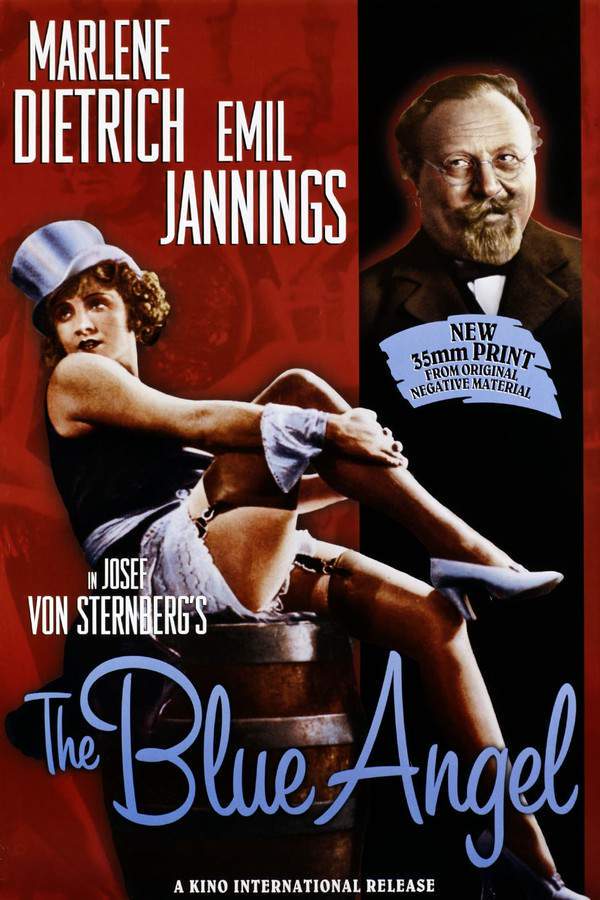
The Blue Angel (1930) movie poster

Plot Summary

The Blue Angel (1930) Plot Summary Explained

Release, runtime and language
1930 · 124 min · German
Directed by
Josef von Sternberg
Starring
Marlene Dietrich, Emil Jannings, Hans Albers, Kurt Gerron, Rosa Valetti

In 1920s Berlin, a disciplined schoolteacher named Immanuel becomes captivated by the alluring cabaret singer Lola Lola. He impulsively leaves his fiancée to marry her, hoping for a life of passion and excitement. However, their relationship proves turbulent, marked by Lola’s manipulative nature and Immanuel’s struggle to reconcile his idealized vision with the harsh realities of their marriage. The story explores themes of desire, obsession, and the clash between dreams and disillusionment.

On this page (6)
  1. 1 Where to watch
  2. 2 What happens: full plot
  3. 3 Plot questions answered
  4. 4 Movie threads
  5. 5 Movies like The Blue Angel
  6. 6 Every angle

Where to watch

Where to Watch The Blue Angel (1930)

Where can you watch The Blue Angel? Stream, rent or buy it in the US, including on Artiflix, Kino Film Collection and Darkroom: current JustWatch availability with up-to-date prices.

Streaming availability powered by JustWatch

Full plot summary · contains spoilers

What Happens in The Blue Angel: Full Plot Summary

The whole story of The Blue Angel (1930) explained, from the opening scene to the final frame: every key event, every twist and what it all adds up to. Read it as a quick recap before the sequel, to check a scene you missed, or to finally understand what really happened.

It is important to note that there were two versions of this film produced: an English-language version filmed concurrently alongside the original German version. Both share a very similar narrative, though they have slight variations. The summary below is primarily grounded in the original German adaptation.

The film begins with the cacophony of a bustling marketplace, where a woman cleaning a shop window finds herself mimicking the pose of Lola, played by Marlene Dietrich, as she views a poster of her. We then transition to a door marked "Prof. Rath," introducing Professor Immanuel Rath, portrayed by Emil Jannings, who is meticulously preparing for his class. As the bell tolls, boys race to class, while the housekeeper tidies up the space, reminding the Professor about breakfast. A poignant moment occurs when he discovers his pet bird has passed away, a loss that is dismissively handled by the caretaker with a blunt remark: “Anyway, he stopped singing long ago.”

In the classroom, we see mischievous boys with one, Angst, played by Rolf Muller, particularly nervous as he is caught trying to deface the Professor's notebook. The Professor, meanwhile, leads the lesson with a famous passage from Hamlet, attempting to correct his students' pronunciation before growing frustrated and assigning them a paper on Julius Caesar. Throughout these encounters, the intrigue surrounding Lola intensifies, especially when the Professor seizes a postcard featuring her, warning there will be consequences.

As the class concludes, the troublemakers lie in wait for Angst, tripping him and revealing his Lola postcards, which causes further tension between him and the Professor. This ultimately leads to the Professor's newfound curiosity about The Blue Angel, a cabaret where Lola performs. Unbeknownst to him, this club will dramatically alter his life.

In vivid scenes, Lola's first performance captivates Prof. Rath as she sings about her desires for a "real man." Their paths intertwine when they meet backstage; Lola's playful seduction of the Professor begins in earnest, leading to humorous yet charged encounters that illustrate his gradual downfall.

As the narrative unfolds, Lola's intentions become clearer as she toys with the Professor's affections, ultimately leading to a relationship filled with intoxication and heartache. The Professor becomes increasingly enamored, culminating in a marriage proposal that draws laughter from Lola, but from a genuine connection, they wed amidst the laughter of their troupe.

However, their initial bliss soon turns sour. The Professor struggles to maintain his former authority, as depicted through a growing collection of postcards that symbolize his deteriorating status within the troupe. He faces an existential crisis, mirroring the mournful clown from earlier.

A pivotal moment is presented as the group arrives in the Professor's hometown, where he is humiliated on stage by the Magician, primarily for the amusement of the others. The once-respected professor is reduced to a mere clown, ultimately leading to a mental breakdown as jealousy overtakes him during a performance when Lola’s affections waver towards others.

As the climax approaches, he leaves the spectacle behind, finding himself back at his former school, desperately clinging to the past as he recalls the echoes of his former life. In this heart-wrenching finale, the heartbreaking sight of the solitary Professor grasping his desk amidst the ringing bells serves as a poignant reminder of lost dreams and shattered identity.

Ende.
Last updated: November 04, 2024 at 05:08

Was this helpful?

Plot questions answered

The Blue Angel Plot Explained: Your Questions Answered

The questions people ask most about The Blue Angel (1930): what happens in the confusing scenes, why the characters do what they do, the twists, hidden details and what the ending means. Each answer contains spoilers.

Q1

Why does Professor Rath abandon his teaching career for Lola?

Professor Rath is drawn to Lola because she represents everything his rigid, orderly life lacks, passion, excitement, and spontaneity. After discovering the cabaret postcards and witnessing Lola's performance, his curiosity turns into obsession. He sees in her a chance to escape his单调 (monotonous) existence and experience genuine feeling, even though he ultimately misunderstands what their relationship truly offers.

Foreshadowing: Earlier, the Professor's bird has died, 'stopped singing long ago', foreshadowing how his own life will lose its purpose.

  • professor rath
  • lola
  • career change
  • obsession
  • midlife crisis
Q2

Why does Lola laugh when Professor Rath proposes?

Lola laughs initially because the situation is absurd, a respected professor proposing to a cabaret performer in front of her troupe. However, she eventually accepts because she genuinely connects with him despite their differences. Her laughter mixes surprise with genuine affection, though her manipulative nature means she never fully commits to the serious, stable relationship he desires.

  • lola
  • proposal
  • marriage
  • acceptance
Q3

Why does the Professor become a clown in the troupe?

After marrying Lola, the Professor has no place in the cabaret hierarchy. He lacks performing skills, so the troupe reduces him to comic roles where his dignity becomes entertainment. His academic authority means nothing in this world, and as his jealousy grows, the performers increasingly mock him, turning his humiliation into a regular part of their act.

Foreshadowing: The students' defiance in class foreshadows his inability to command respect anywhere.

  • professor rath
  • humiliation
  • clown
  • status decline
  • blue angel troupe
Q4

What triggers Professor Rath's mental breakdown?

The Professor's breakdown occurs during a performance when he sees Lola showing interest in other men. His accumulated jealousy, loss of social standing, and realization that his idealized vision of Lola was an illusion overwhelm him. All his suppressed emotions, humiliation, inadequacy, and heartbreak, erupt publicly, shattering whatever remains of his sanity.

  • mental breakdown
  • jealousy
  • lola
  • performance breakdown
Q5

What does the dead bird represent in the opening scene?

The dead bird foreshadows Professor Rath's own fate. Just as the bird 'stopped singing long ago,' Rath's life has become silent and meaningless before he even meets Lola. The housekeeper's casual dismissal mirrors how the world will dismiss Rath once his authority and purpose are stripped away.

  • bird symbolism
  • foreshadowing
  • death
  • loss of purpose
Q6

Why does the magician humiliate the Professor in his hometown?

The magician's public humiliation of Rath in his hometown represents the ultimate reversal of his former respectability. The troupe performs where Rath was once admired, and by reducing him to a laughingstock in front of his own community, the film destroys his last connection to his former identity. This moment solidizes his complete fall from grace.

  • magician
  • humiliation
  • hometown
  • public shame
Q7

Why does Professor Rath return to the school at the end?

Rath returns to the school because it represents his only remaining anchor to identity and purpose. Having lost his wife, his dignity, and his place in the world, he desperately clings to the only environment where he once held authority. The ringing bells symbolize both the passage of time and the echo of his former life calling him back.

  • school
  • return
  • identity loss
  • final scene
Q8

Why does Lola manipulate the Professor?

Lola's manipulation stems from her nature as a performer who thrives on control and attention. She enjoys toying with men's affections because it validates her power. However, her acceptance of Rath's proposal suggests she isn't purely cynical, she finds something appealing in his sincerity, even if she cannot fully reciprocate his emotional needs.

  • lola
  • manipulation
  • motivation
  • seduction
Q9

How does the Professor and Lola's relationship deteriorate so quickly?

Their marriage collapses because they come from fundamentally different worlds with incompatible expectations. Rath wants devotion and respect; Lola wants freedom and excitement. As Rath becomes increasingly jealous and dependent, his neediness repels her, creating a vicious cycle where his desperation drives her further away, confirming his worst fears about his inadequacy.

  • marriage
  • deterioration
  • conflict
  • jealousy
Q10

What does The Blue Angel cabaret represent in the story?

The Blue Angel represents the seductive but destructive world of passion and vice that destroys Rath's orderly existence. It's a place where his intellectual credentials mean nothing and where his emotional vulnerability becomes his weakness. The cabaret functions as both lure and prison, drawing him in before trapping him in his own downfall.

  • blue angel
  • cabaret
  • temptation
  • world
Q11

Why can't the Professor maintain any authority after marrying Lola?

The Professor has no skills relevant to the cabaret world. His knowledge of literature and academia holds no value in performances, so the troupe immediately relegates him to subordinate roles. Additionally, his jealousy makes him emotionally volatile, which his colleagues exploit and mock, further eroding any chance he had of commanding respect.

  • authority
  • skill mismatch
  • status
  • humiliation

Movie threads

More Movies Like The Blue Angel, by Mood & Story

Curated lists built around what makes The Blue Angel tick: the same mood, the same kind of story or the same emotional payoff. Each list explains why these movies belong together.

Movies about ruinous obsession like The Blue Angel

Character-driven tragedies where a single, consuming obsession leads to total self-destruction. If you were captivated by the tragic downfall in The Blue Angel, explore more movies about destructive obsession. These films follow characters whose lives are consumed by a single, overpowering passion, leading to psychological collapse and devastating endings, similar to Professor Rath's story.

  • tragic
  • desperate
  • obsessive
  • downward spiral
  • melancholic
  • psychological
  • Tone: dark, tragic
  • Pacing: steady, character-driven
Why these movies?

The story pattern: Stories in this thread typically follow a clear, downward trajectory. A character, often starting from a position of stability, encounters a person or goal that becomes an obsession. This fixation leads them to abandon their principles, suffer humiliation, and experience a complete loss of self, culminating in a bleak and irreversible finale.

Why they belong together: These movies are grouped by their shared focus on a central, destructive character arc. They possess a dark tone, heavy emotional weight, and a steady pacing that methodically charts the protagonist's fall, creating a cohesive experience of tragic inevitability and psychological drama.

Movies with decadent settings and moral collapse like The Blue Angel

Stories set in opulent, morally ambiguous worlds that lure characters to their ruin. Fans of The Blue Angel's cabaret atmosphere and themes of corruption will find similar movies here. These stories use vibrant, seductive settings like nightclubs or wealthy circles to explore the downfall of characters tempted away from their conventional lives, resulting in dark and heavy dramas.

  • decadent
  • seductive
  • oppressive
  • corrupting
  • melancholic
  • tragic
  • Tone: dark, seductive, oppressive
  • Pacing: steady
Why these movies?

The story pattern: The narrative pattern involves a protagonist from a structured, often repressed world being drawn into a contrasting environment of freedom and sensuality. Initially seduced by the excitement, they soon discover the underlying exploitation and moral decay, finding themselves trapped and stripped of their former identity.

Why they belong together: Movies in this thread share a specific atmospheric vibe: the contrast between order and chaos, restraint and decadence. They utilize their setting as a central character, explore themes of corruption and disillusionment, and maintain a dark, oppressive tone that highlights the destructive power of desire.

If you liked this

Movies Like The Blue Angel

Similar movies to The Blue Angel: the same genre, themes or kind of story. Each one comes with its own plot summary, timeline and ending explained.

Browse all movie summaries

Every angle

The Blue Angel (1930) Explained: Plot, Timeline & Characters

Everything about The Blue Angel in one place: what happens in the plot summary, the timeline in chronological order, the characters and meaning and a spoiler-free summary. What's After the Movie adds the cast, box office and post-credit scenes.

Coming soon on iOS and Android

The Plot Explained Movie Summary App

Plot summaries, endings explained and timelines on your phone. Catch up on any movie in minutes, save your favorites and never miss a twist again.

Be the first to know when we launch. Your email stays private, always.

Learn more about the app