

Plot Explained Spoilers guaranteed!
Plot Explained

Browse by genre

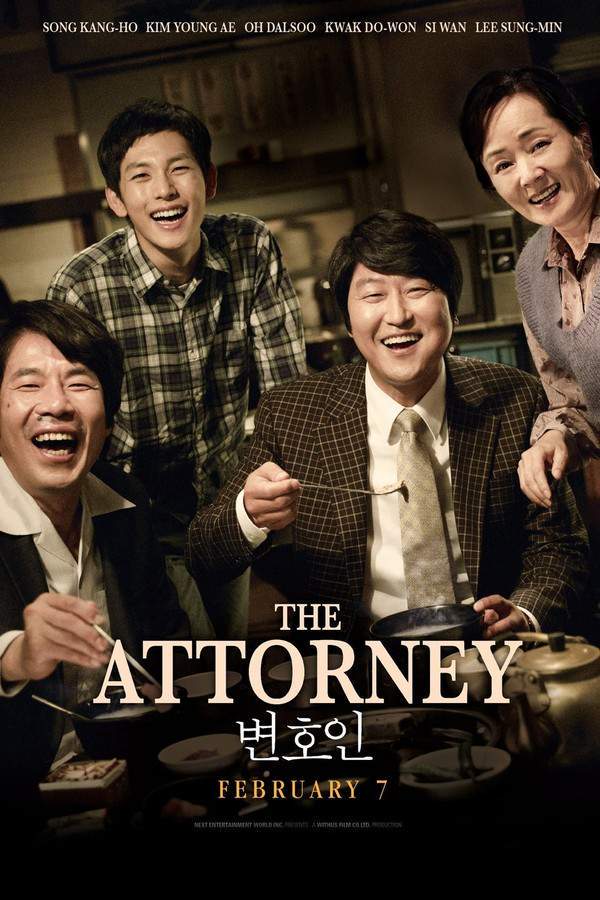
The Attorney (2014) movie poster

Timeline

The Attorney (2014) Timeline Explained – Every Event in Order

Release, runtime and language
2014 · 127 min · Korean
Directed by
Woo-seok Yang

A rising lawyer's impressive career takes an unexpected turn when he uncovers a shocking injustice against a teenager wrongly accused. Haunted by the systemic corruption, Song Woo-seok abandons his comfortable life of power and prestige to defend the young man. He faces significant challenges as he fights to expose the truth and ensure justice prevails, putting his own reputation and safety at risk.

On this page (5)
  1. 1 Where to watch
  2. 2 Events in order (13)
  3. 3 Timeline questions answered
  4. 4 Movie threads
  5. 5 Every angle

Where to watch

Where to Watch The Attorney (2014)

Where can you watch The Attorney? Stream, rent or buy it in the US, including on Amasian TV: current JustWatch availability with up-to-date prices.

Streaming availability powered by JustWatch

13 events in order · contains spoilers

The Attorney Timeline: Events in Chronological Order

Every key event of The Attorney (2014) in order, scene by scene, with when and where it takes place. Use it to untangle flashbacks, time jumps and parallel storylines, to refresh your memory before the sequel or to find the exact scene you are thinking of.

  1. Song Establishes His Law Firm

    In 1978, Song, a former judge, decided to break away from conventional legal practices and established his own law firm in Busan. His unique background and determination were met with skepticism, yet he aimed to tackle high-profile cases that other lawyers shunned.

    When
    1978
    Where
    Busan
  2. Detective Cha's Orders

    Around the same time, Detective Cha received directives from government officials to purge Busan of those suspected of being communist sympathizers. This mission often led him to adopt ruthless methods, utilizing deceit and manipulation to achieve his goals.

    When
    1978
    Where
    Busan
  3. Rise to Prominence

    By 1981, Song's law firm gained a formidable reputation for taking on challenging cases in real estate and taxation. His success allowed him to indulge in personal pursuits, including the purchase of a sailboat for the upcoming Seoul Olympics.

    When
    1981
  4. Confrontation with Journalist

    During a dinner with friends in 1981, Song engaged in a heated debate with journalist Lee about the integrity of mass media. Their discussion was charged with tension as it addressed the ongoing student protests in Busan, foreshadowing greater conflicts ahead.

    When
    1981
    Where
    Restaurant in Busan
  5. Park's Disappearance

    Following the debate, Park, the son of the restaurant owner, mysteriously vanished. This alarming event triggered Choi, Park's distraught mother, to undertake a desperate search lasting nearly two months, ultimately revealing a harrowing truth.

    When
    1981
    Where
    Busan
  6. Trial of the Missing Students

    Choi discovered that her son and other students were facing trial for sedition. Disturbed by the possibility of torture-induced confessions, Song took it upon himself to defend the students, highlighting the severe violations of their rights during the trial.

    When
    1981
    Where
    Courtroom in Busan
  7. Opposition in Court

    During the trial proceedings, Song faced immense resistance from the prosecution, who claimed national security concerns nullified standard legal protections. Their argument against the students stemmed from their study of EH Carr's *What Is History?*, misinterpreted as a sign of communist ideology.

    When
    1981
    Where
    Courtroom in Busan
  8. Cha Testifies

    To Song's dismay, Detective Cha testified that the students' injuries were self-inflicted, denying any state-sponsored torture. This assertion demonstrated the extensive measures the oppressive regime took to protect its image and silence dissent.

    When
    1981
    Where
    Courtroom in Busan
  9. Lt. Yoon's Brave Testimony

    In a pivotal moment, Lieutenant Yoon spoke out in court, providing a detailed account of the horrific torture the students endured. His courageous stand shifted the courtroom dynamic, shedding light on the darker realities of the oppressive regime.

    When
    1981
    Where
    Courtroom in Busan
  10. Consequences for Lt. Yoon

    Tragically, Lt. Yoon's testimony came with severe repercussions. Cha informed his superiors, who created a false narrative to discredit Yoon, resulting in his incarceration and leaving the trial in chaos as the truth continued to be obscured.

    When
    1981
    Where
    Busan
  11. Song's Transformation

    By 1987, Song had evolved into a fervent leader advocating for reform and justice. His journey culminated in his arrest during a protest, where he faced sedition charges, reflecting the struggles for free speech in an oppressive political landscape.

    When
    1987
    Where
    Busan
  12. Solidarity Among Lawyers

    Song's arrest sparked an extraordinary response from the legal community, with 99 out of 142 lawyers in Busan voicing their support. This unprecedented display of unity illustrated the deep-seated commitment to justice among those who witnessed the unfolding atrocities.

    When
    1987
    Where
    Busan
  13. Continued Struggles

    Despite the overwhelming support, the fundamental issues of free speech and the rule of law remained unresolved. The events of the past left a haunting sense of uncertainty looming over Busan, as the quest for truth and transparency persisted in the face of oppression.

    When
    1987
    Where
    Busan

Last updated: November 17, 2024 at 21:17

Was this helpful?

Timeline questions answered

The Attorney Timeline Explained: Your Questions Answered

When does it happen, and why in that order? The questions people ask about the chronology of The Attorney (2014): time jumps, flashbacks, cause and effect between scenes and the correct order of events, each answered with spoilers.

Q1

Why does Song agree to represent the students despite his successful career?

Song decides to defend the students after learning that Park, the restaurant owner's son, has been missing for nearly two months and is facing trial for sedition. When Choi, Park's mother, begs him for help, Song is disturbed by the possibility that the students will be tortured into giving false confessions. His moral conscience compels him to take the case, marking a turning point from his previous focus on profitable real estate and taxation cases to defending political dissidents.

  • song woo-seok
  • students
  • sedition trial
  • lawyer motivation
  • park
Q2

How does studying EH Carr's book become evidence of communism?

The prosecution argues that the students studying EH Carr's book "What Is History?" proves they have communist leanings, since Carr was associated with Marxist historical materialism. Song counters this by presenting a note from the British consulate confirming Carr was a respected historian and diplomat, not a communist ideologue. This reveals how the regime twists ordinary academic work into a假 accusation of subversion.

  • eh carr
  • what is history
  • communism
  • sedition
  • evidence
Q3

Why does Detective Cha testify that the students' injuries were self-inflicted?

Detective Cha testifies that the students' injuries were self-inflicted because he is part of the government apparatus orchestrating the persecution of suspected communist sympathizers. His testimony is a deliberate lie designed to protect the regime from accusations of torture and to ensure the students' confessions appear credible. Cha operates under orders from high-level government officials to purge Busan of dissidents using any means necessary.

  • detective cha
  • torture
  • testimony
  • injuries
  • cover-up
Q4

What happens to Lieutenant Yoon after he testifies about the torture?

After Lt. Yoon provides a courageous courtroom testimony detailing the horrific torture inflicted upon the students, Detective Cha immediately informs his superiors. The regime responds by creating a false narrative that accuses Yoon of desertion, invalidating his testimony and resulting in his immediate incarceration. This eliminates the only credible witness to the torture and leaves the trial in disarray.

  • lieutenant yoon
  • testimony
  • torture
  • imprisonment
  • desertion
Q5

Why does Song become a protest leader by 1987?

By 1987, Song transforms from a successful corporate lawyer into a protest leader because he has witnessed firsthand the systemic corruption, constitutional violations, and injustice perpetrated by the regime against innocent students. His experiences in the 1981 trial, where truth was suppressed and reformers were silenced, ignite in him a passionate desire for political reform and free speech. He channels his legal expertise into advocating for change outside the courtroom.

  • song woo-seok
  • protest leader
  • 1987
  • reform
  • transformation
Q6

What is the significance of 99 lawyers supporting Song's arrest?

When Song is arrested during a 1987 demonstration and charged with sedition, an unprecedented 99 out of 142 lawyers in Busan publicly support him. This massive display of solidarity represents a significant shift in the legal community's willingness to stand against government oppression. It demonstrates that Song's transformation and the events of 1981 have inspired many in the legal profession to reject the regime's tactics and demand justice.

  • 99 lawyers
  • solidarity
  • sedition charges
  • support
  • busan
Q7

How does the regime use national security to override constitutional rights?

During the trial, prosecutors argue that standard constitutional protections do not apply when national security is at stake. They claim the students' alleged communist sympathies justify suspending normal legal procedures, allowing for detention without due process and torture to extract confessions. This reasoning reflects how the authoritarian regime exploits national security concerns to legitimize systematic human rights violations.

  • national security
  • constitutional rights
  • sedition
  • regime
  • oppression
Q8

What happens to the students after the trial ends?

The trial concludes in disarray following Lt. Yoon's imprisonment and the discrediting of his testimony. The students' innocence is permanently tarnished by the atrocities they endured, and they do not receive justice in this courtroom battle. However, the 1987 events show that their struggle and Song's transformation inspire a broader movement toward reform, suggesting their sacrifice was not in vain despite the immediate defeat.

  • students
  • trial outcome
  • innocence
  • fate
  • ending
Q9

Why does Song face skepticism when establishing his law firm?

Song faces skepticism because he is a former judge who chooses to leave the bench and start a private practice in Busan in 1978, a unconventional career move that his peers view with contempt. Additionally, his path to passing the bar exam was non-traditional. Despite the criticism, Song's determination allows him to build a successful firm handling high-profile cases in real estate and taxation, establishing the reputation and resources that later enable him to take on the politically sensitive student defense.

  • song judge
  • law firm
  • background
  • skepticism
  • career
Q10

What is Detective Cha's role in the persecution of students?

Detective Cha receives direct orders from high-level government officials to purge Busan of suspected communist sympathizers using any means necessary. He employs deceit, manipulation, and torture to extract confessions from detainees. During the trial, he lies under oath to deny that students were tortured, instead claiming their injuries were self-inflicted. When Lt. Yoon testifies truthfully, Cha orchestrates his downfall by informing superiors, leading to Yoon's false accusation of desertion.

  • detective cha
  • persecution
  • orders
  • torture
  • government

Movie threads

More Movies Like The Attorney, by Mood & Story

Curated lists built around what makes The Attorney tick: the same mood, the same kind of story or the same emotional payoff. Each list explains why these movies belong together.

Movies about fighting corruption like The Attorney

Ordinary individuals risk everything to expose a corrupt and powerful establishment. If you liked The Attorney's story of a lawyer taking on a corrupt regime, you'll find similar powerful dramas here. This list features movies about moral courage, exposing injustice, and the high-stakes battle against powerful, corrupt systems.

  • principled
  • infuriating
  • urgent
  • tense
  • hopeful
  • uncompromising
  • Tone: tense, urgent, infuriating
  • Pacing: steady, momentum-building
Why these movies?

The story pattern: Stories typically begin with a protagonist living comfortably within or adjacent to a corrupt system. A specific injustice acts as a catalyst, forcing them to abandon their safety and confront the establishment. The narrative follows their increasingly perilous investigation and fight, often involving legal battles, public exposure, and direct threats from those in power.

Why they belong together: These movies are grouped by their central theme of an individual's transformative fight against systemic corruption. They share a tense, urgent tone, heavy emotional weight from the depicted injustice, and a focus on moral courage as the driving force of the plot.
Bittersweet legal dramas like The Attorney

Stories where the fight for justice leaves deep scars but sows the seeds of hope. Fans of The Attorney's emotional ending will appreciate these movies. They feature similar bittersweet conclusions to fights for justice, where the immediate outcome is painful but the act of resistance itself leaves a lasting, hopeful impact.

  • bittersweet
  • grim
  • hopeful
  • heavy
  • principled
  • resilient
  • Tone: bittersweet, grim, hopeful
  • Pacing: steady, character-driven
Why these movies?

The story pattern: The emotional journey is defined by a heavy investment in a cause, leading to a climactic confrontation that results in a pyrrhic or ambiguous victory. The ending acknowledges the high cost paid by the characters—loss, trauma, or systemic failure—while simultaneously highlighting the moral victory, the inspiration sparked in others, or the undeniable progress made through the struggle.

Why they belong together: These films are united by their emotionally complex, bittersweet endings. They balance the gravity of defeat with the power of principled resistance, creating a deeply impactful viewing experience that is both saddening and inspiring. The pacing is often steady, building towards this poignant conclusion.

Every angle

The Attorney (2014) Explained: Plot, Timeline & Characters

Everything about The Attorney in one place: what happens in the plot summary, the timeline in chronological order, the characters and meaning and a spoiler-free summary. What's After the Movie adds the cast, box office and post-credit scenes.

Coming soon on iOS and Android

The Plot Explained Movie Summary App

Plot summaries, endings explained and timelines on your phone. Catch up on any movie in minutes, save your favorites and never miss a twist again.

Be the first to know when we launch. Your email stays private, always.

Learn more about the app