










Plot Explained Spoilers guaranteed!
Plot Explained

Browse by genre

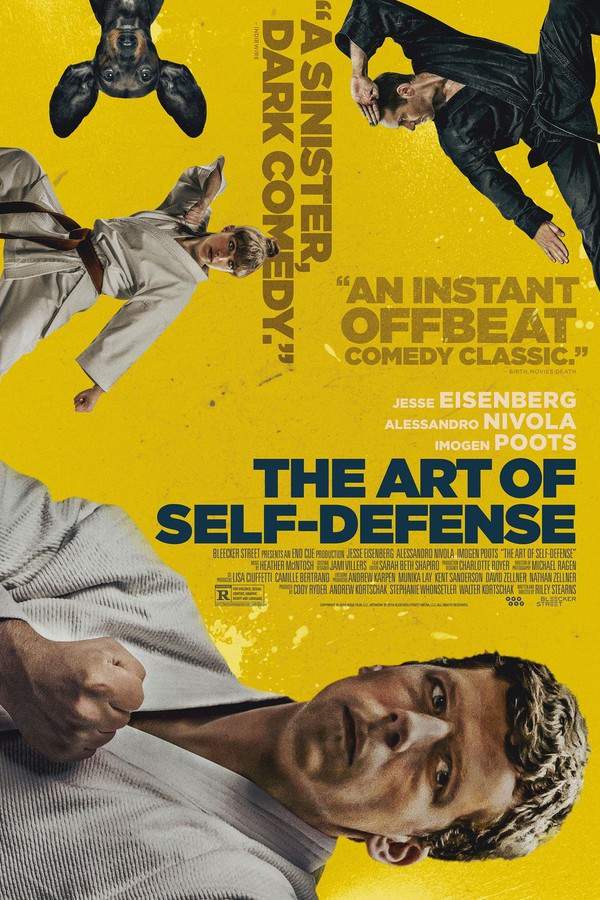
The Art of Self-Defense (2019) movie poster

Ending Explained

The Art of Self-Defense (2019) Ending Explained – Final Scene & Meaning

Release, runtime and language
2019 · 104 min · English
Echo score 67
Directed by
Riley Stearns
Starring
Jesse Eisenberg, Imogen Poots, Alessandro Nivola, Dallas Edwards, Jason Burkey, Josh Fadem
Budget
$1.8M

Following a violent attack, a timid bookkeeper seeks refuge and strength in karate lessons. Guided by a charismatic sensei, he undergoes a remarkable physical and mental transformation, developing confidence and skill. However, as he delves deeper into the world of martial arts, he uncovers a disturbing undercurrent of brutality and must question the true nature of his mentor and the path he's chosen.

On this page (7)
  1. 1 Where to watch
  2. 2 What happens at the end
  3. 3 Final events in order
  4. 4 Ending questions answered
  5. 5 Movie threads
  6. 6 Movies like The Art of Self-Defense
  7. 7 Every angle

Where to watch

Where to Watch The Art of Self-Defense (2019)

Where can you watch The Art of Self-Defense? Stream, rent or buy it in the US, including on Hoopla, Kanopy and Fandango at Home Free: current JustWatch availability with up-to-date prices.

Streaming availability powered by JustWatch

Ending explained · contains spoilers

What Happens at the End of The Art of Self-Defense?

How The Art of Self-Defense (2019) ends, what the final scene means, which earlier moments set it up and how to read the ending if the film leaves it open. The full ending explained, with every spoiler.

In the climax of The Art of Self-Defense, Casey finally takes control by killing Sensei, who was deeply corrupt and violent, revealing that the brutal practices of the dojo were not just sanctioned but encouraged under his direction. When Casey discovers that Sensei, along with Anna and the other students, had initially attacked him as a part of their misguided attempt at enlightenment, he confronts him and shoots him in the face—an act that signifies his rejection of the dojo’s toxic and violent ideology. Afterward, Casey finds out that Sensei’s real name is Leslie and that his plans involve turning his secret recordings of brutal class sessions into a kind of twisted documentary.

Feeling that Sensei cannot be stopped through conversation or moral appeals, Casey challenges him to a duel to the death—a final act to settle the destructive cycle. When the moment arrives, Casey shoots and kills Sensei, leaving his body as a trophy and symbolically ending his reign of violence. He then assumes responsibility for the dojo, vowing to continue the teachings in his way, and appoints Anna as its new leader. This act of violence is complex: it marks a moral compromise, as Casey had to break his own code to eliminate an evil he could no longer ignore. His decision raises questions about whether violence is justified when confronting systemic evil and whether standing up for what’s right sometimes requires morally ambiguous actions. In the end, Casey's act signifies that he has finally taken a stand—though at great personal cost—against the cruelty embodied by Sensei, embodying the film’s dark satire on toxic masculinity and the destructive pursuit of power. His victory is bitter, but it symbolizes the necessity of confronting evil directly, even if it contradicts personal morals. The ending leaves viewers contemplating whether true justice is even achievable and whether sometimes, breaking the rules becomes the only way to bring about change.

Last updated: June 25, 2025 at 08:59

Was this helpful?

The last 4 events

How The Art of Self-Defense Ends: The Final Events in Order

The last events of The Art of Self-Defense (2019) in chronological order, the run-up to the ending explained above. The complete timeline has all 16 events, scene by scene.

Open the full timeline
  1. Confrontation and Fatal Choices

    In a fit of rage after Anna is shot, Casey makes a fateful decision and takes a life, under Sensei's approving gaze. This moment signifies a turning point in his descent into violence.

    Where
    Street
  2. Uncovering the Dojo's Secrets

    Determined to uncover the dojo's dark secrets, Casey finds evidence of a crematorium and a corpse, realizing that Sensei was connected to the gang that attacked him.

    Where
    Restricted Area in the Dojo
  3. Final Duel with Sensei

    Casey confronts Sensei in a climactic duel, escalating their conflict to a dramatic conclusion. In a shocking act, Casey ends Sensei's life, leaving him as the new leader of the dojo.

    Where
    Karate Dojo
  4. A New Philosophy of Combat

    As the new leader, Casey promotes Anna to black belt, enabling her to teach a philosophy rooted in compassion over aggression. He finally finds his purpose in guiding the next generation.

    Where
    Karate Dojo

Ending questions answered

The Art of Self-Defense Ending: Your Questions Answered

The questions people ask most about the ending of The Art of Self-Defense (2019): what the final scene means, how the twist works, what happens to each character and how to read the ending. Each answer contains spoilers.

Q1

Why does Casey kill Sensei at the end of The Art of Self-Defense?

Casey kills Sensei after discovering the full extent of his corruption. He learns that Sensei orchestrated the initial attack on him as part of a misguided attempt at enlightenment, and that Sensei had been secretly recording brutal class sessions to create a twisted documentary. Feeling that Sensei cannot be stopped through conversation or moral appeals, Casey challenges him to a duel to the death, shooting him in the face to reject the dojo's toxic and violent ideology.

  • casey
  • sensei
  • killing
  • dojo
  • violence
Q2

What is Sensei's real name in The Art of Self-Defense?

Sensei's real name is Leslie, which Casey discovers after killing him. This revelation comes alongside the discovery that Sensei had been secretly recording the brutal dojo sessions with plans to turn them into a twisted documentary, exposing the depth of his manipulation and exploitation of his students.

  • sensei
  • leslie
  • real name
  • reveal
Q3

What was Sensei planning to do with the secret recordings?

Sensei planned to turn his secret recordings of the brutal class sessions into a kind of twisted documentary. This reveals that the violence was not just tolerated but actively documented by Sensei, suggesting he viewed the brutal practices as content rather than genuine training.

  • sensei
  • recordings
  • documentary
  • secret
Q4

Why does Casey appoint Anna as the new leader of the dojo?

After killing Sensei, Casey assumes control of the dojo and appoints Anna as its new leader, choosing to continue the teachings in his own way. This represents Casey's attempt to reform the corrupt system from within, empowering someone he believes will lead more ethically while still maintaining the structure of the dojo.

  • anna
  • leader
  • dojo
  • casey
  • appointment
Q5

Is Casey's violence justified in The Art of Self-Defense ending?

The film presents Casey's violence as morally complex. While he breaks his own code to eliminate what he sees as irredeemable evil, the ending raises questions about whether violence is justified when confronting systemic corruption. Casey's victory is described as bitter, he had to compromise his morals to bring about change, leaving the question of whether true justice is achievable through such means.

  • justice
  • morality
  • violence
  • casey
  • ethics
Q6

What happens to the dojo after Sensei is killed?

After killing Sensei, Casey takes over the dojo and vows to continue the teachings in his own way. He leaves Sensei's body as a trophy, symbolically ending Sensei's reign of violence, and appoints Anna as the new leader. The dojo continues under Casey's control, though his leadership is built on violence and a fabricated story about Sensei's fate.

  • dojo
  • sensei
  • casey
  • continues
  • leadership
Q7

What is the meaning of The Art of Self-Defense ending?

The ending serves as dark satire on toxic masculinity and the destructive pursuit of power. Casey's final act signifies his commitment to stand against cruelty, though at great personal moral cost. The bittersweet conclusion suggests that confronting evil sometimes requires morally ambiguous actions, leaving viewers to question whether the ends justify the means and if genuine change is possible within corrupted systems.

  • themes
  • meaning
  • toxic masculinity
  • power
  • satire
Q8

Why does Casey decide to take over the dojo?

Casey takes over the dojo after killing Sensei because he believes he can change the system from within. Rather than walking away or letting the dojo collapse, he chooses to assume responsibility and reshape its teachings. This decision reflects his transformation from the timid victim at the film's start into someone who takes decisive action, though the method, violence and control, raises questions about whether he's truly escaped the toxic culture Sensei created.

  • casey
  • take over
  • dojo
  • control
  • decision
Q9

What is the significance of Casey leaving Sensei's body as a trophy?

By leaving Sensei's body as a trophy, Casey symbolically asserts dominance and marks the end of Sensei's violent reign. However, this act also reveals the darkness in Casey's own transformation, he has adopted the very mentality of conquest and domination that defined Sensei's teachings. The trophy serves as both a declaration of victory and a troubling indicator that Casey may have become similar to the mentor he killed.

  • trophy
  • body
  • victory
  • symbolism
  • dominance
Q10

Is the ending of The Art of Self-Defense happy or sad?

The ending is bittersweet. Casey successfully dismantles the corrupt system and empowers Anna to lead, which represents a form of justice. However, his own path to leadership is built on cold-blooded murder and a fabricated story about what happened to Sensei. His victory is hollow, he has confronted evil but at the cost of his own morality, leaving his future uncertain and morally ambiguous.

  • ending
  • bittersweet
  • victory
  • justice
  • moral

Movie threads

More Movies Like The Art of Self-Defense, by Mood & Story

Curated lists built around what makes The Art of Self-Defense tick: the same mood, the same kind of story or the same emotional payoff. Each list explains why these movies belong together.

Movies about manipulative cults and mentors like The Art of Self-Defense

Stories where a vulnerable person falls under the sway of a charismatic, sinister leader. If you were captivated by the disturbing dynamics between Casey and his Sensei, explore more movies like The Art of Self-Defense. This collection features similar stories of charismatic, corrupt leaders and the psychological descent of their followers in dark, intense thrillers and dramas.

  • unsettling
  • manipulative
  • cult-like
  • toxic
  • paranoid
  • psychological horror
  • Tone: dark, unsettling, tense
  • Pacing: variable, building tension
Why these movies?

The story pattern: The narrative follows a vulnerable protagonist who is drawn into a seemingly beneficial group or relationship, only to uncover a horrifying underbelly of control and brutality. The central conflict becomes escaping or confronting the manipulative system that has ensnared them.

Why they belong together: These films are grouped by their shared focus on the psychological horror of manipulation within closed systems, the charismatic but toxic mentor trope, and an unsettling tone that mixes dread with dark satire about power and belonging.

Darkly comedic social satires with a bleak tone like The Art of Self-Defense

Absurd and violent critiques of society's toxic undercurrents, framed as dark comedy. For viewers who appreciated the darkly comedic critique of toxic masculinity in The Art of Self-Defense, this list curates similar movies. Find other satirical films that blend bleak humor with heavy themes, creating a uniquely unsettling and thought-provoking movie experience.

  • darkly comedic
  • satirical
  • unsettling
  • absurd
  • bleak
  • toxic
  • Tone: dark, satirical, bleakly comedic
  • Pacing: variable, deliberate
Why these movies?

The story pattern: Stories in this thread often follow an ordinary person colliding with an exaggerated, absurd version of a societal norm. The narrative uses this collision to expose the inherent brutality or ridiculousness of the system, leading to a cynical or bittersweet resolution.

Why they belong together: These movies share a specific tonal blend: they are genuinely dark and heavy thematically, but use deadpan humor, absurdity, and irony to frame their social critique, resulting in a uniquely uncomfortable and intellectually stimulating vibe.

If you liked this

Movies Like The Art of Self-Defense

Similar movies to The Art of Self-Defense: the same genre, themes or kind of story. Each one comes with its own plot summary, timeline and ending explained.

Browse all movie summaries

Every angle

The Art of Self-Defense (2019) Explained: Plot, Ending, Timeline & Characters

Everything about The Art of Self-Defense in one place: what happens in the plot summary, the timeline in chronological order, the characters and meaning, the ending explained and a spoiler-free summary. What's After the Movie adds the cast, box office and post-credit scenes.

Coming soon on iOS and Android

The Plot Explained Movie Summary App

Plot summaries, endings explained and timelines on your phone. Catch up on any movie in minutes, save your favorites and never miss a twist again.

Be the first to know when we launch. Your email stays private, always.

Learn more about the app