






Plot Explained Spoilers guaranteed!
Plot Explained

Browse by genre

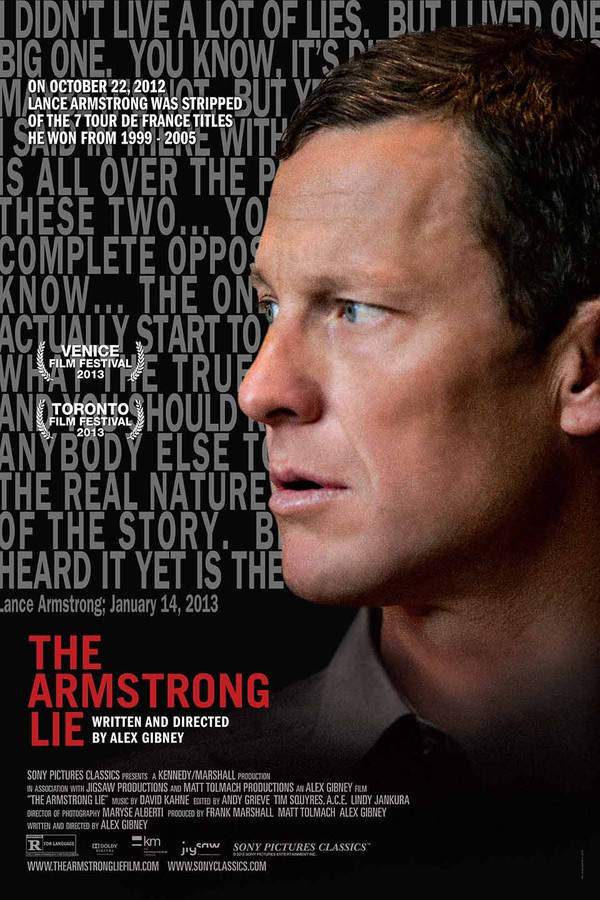
The Armstrong Lie (2013) movie poster

Timeline

The Armstrong Lie (2013) Timeline Explained – Every Event in Order

Release, runtime and language
2013 · 124 min · English
JustWatch #25,369 1
Directed by
Alex Gibney
Starring
Lance Armstrong

This documentary examines the career of cyclist Lance Armstrong, charting his remarkable rise to fame and subsequent dramatic downfall. Through interviews and archival footage, the film explores the complexities of his story, revealing a web of deception and the devastating consequences of his actions. It's a candid look at ambition, redemption, and the darker side of athletic achievement.

On this page (6)
  1. 1 Where to watch
  2. 2 Events in order (15)
  3. 3 Timeline questions answered
  4. 4 Movie threads
  5. 5 Movies like The Armstrong Lie
  6. 6 Every angle

Where to watch

Where to Watch The Armstrong Lie (2013)

Where can you watch The Armstrong Lie? Stream, rent or buy it in the US, including on Amazon Video, Apple TV Store and Fandango At Home: current JustWatch availability with up-to-date prices.

Streaming availability powered by JustWatch

15 events in order · contains spoilers

The Armstrong Lie Timeline: Events in Chronological Order

Every key event of The Armstrong Lie (2013) in order, scene by scene, with when and where it takes place. Use it to untangle flashbacks, time jumps and parallel storylines, to refresh your memory before the sequel or to find the exact scene you are thinking of.

  1. Lance Armstrong's Cancer Diagnosis

    In 1999, Lance Armstrong faced a life-altering testicular cancer diagnosis that significantly impacted his career and personal life. Despite aggressive treatment options, including surgeries and chemotherapy, he triumphed and sought to return to professional cycling with renewed vigor.

    When
    1999
    Where
    UCLA
  2. Return to Cycling

    Following his recovery from cancer, Armstrong made a remarkable return to cycling, reclaiming his spot as a competitor. In 1999, against the odds of being a cancer survivor, he won the Tour de France, showcasing his extraordinary determination and capability.

    When
    1999
    Where
    Tour de France
  3. Cortisol Controversy

    During the 1999 Tour de France, a cortisone drug was detected in Armstrong's urine, raising immediate suspicions. To deflect inquiries, his team presented a surface-level justification that the medication was for a skin condition.

    When
    1999
    Where
    Tour de France
  4. Seven Tour de France Titles

    Over the following years, Lance Armstrong clinched a total of seven consecutive Tour de France titles from 1999 to 2005. Despite the accolades, he faced relentless speculation regarding performance-enhancing drug use throughout his victories.

    When
    1999-2005
  5. Doping Allegations Emerge

    By 2006, a doping scandal erupted involving numerous cyclists, casting a shadow over Armstrong’s career. The implications of the investigation prompted former teammates to come forward, complicating his defense against longstanding allegations.

    When
    2006
  6. 2009 Comeback

    Determined to silence critics, Armstrong announced his return to cycling in 2009. His efforts culminated in participating in the Tour de France, where he competed for a podium finish amidst growing suspicions surrounding his past.

    When
    2009
    Where
    Tour de France
  7. Allegations and Legal Battles

    As the competitive environment grew contentious, Armstrong’s legal team aggressively pushed back against accusations of doping, often leveraging financial resources to suppress testimonies from former associates. This strategy reflected the contentious atmosphere in cycling at the time.

    When
    2009
  8. 2009 Tour Performance

    During the 2009 Tour de France, Armstrong started in 10th position but climbed to second place by stage two. This resurgence, however, was accompanied by increasing scrutiny and doubts regarding the authenticity of his performance.

    When
    2009
    Where
    Tour de France
  9. UCI Strips Titles

    In October 2012, following an extensive investigation, the UCI formally banned Armstrong from cycling and stripped him of all seven Tour de France titles. This decision marked a significant turning point as the earlier suspicions were substantiated by overwhelming evidence against him.

    When
    October 2012
    Where
    UCI
  10. Oprah Winfrey Interview

    On January 14, 2013, mere hours after a much-anticipated interview with Oprah Winfrey, Armstrong reconvened with Gibney to address the misconceptions about his career. During this candid session, he publicly confessed to using performance-enhancing drugs throughout his Tour de France victories.

    When
    January 14, 2013
  11. Legal and Financial Repercussions

    Following his admissions, Armstrong faced severe repercussions, including a $100 million lawsuit from the US Postal Service for fraud and false advertising. This lawsuit was emblematic of the fallout from his deceitful practices, affecting both his reputation and finances.

    When
    2013
  12. Doping Strategies and Ferrari's Role

    Central to Armstrong’s doping narrative was his collaboration with Michele Ferrari, who advised him on drug use strategies that kept his doping under detection limits. Ferrari's influence was critical as they employed methods such as blood transfusions to enhance performance without leaving traces.

    When
    1995-2009
  13. The Armstrong Lie

    A French article titled *The Armstrong Lie* revealed that Armstrong's urine samples from his first Tour de France win in 1999 tested positive for EPO. This exposé contributed to public skepticism and complicity surrounding his career and the cycling sport at large.

    When
    2012
  14. UCI's Complicity in Doping

    Questions arose regarding the UCI's complicity in overlooking Armstrong's doping, with allegations suggesting that the UCI president had vested interests in presenting Armstrong as a clean champion. This aspect of the narrative highlighted systemic issues within professional cycling's regulatory bodies.

  15. Fall from Grace

    Armstrong's gradual uncovering of deception shattered his public image and legacy as a cycling champion. His fall from grace illustrates the complex layers of fame, deceit, and accountability in competitive sports that ultimately altered the landscape of cycling forever.

Last updated: November 04, 2024 at 01:12

Was this helpful?

Timeline questions answered

The Armstrong Lie Timeline Explained: Your Questions Answered

When does it happen, and why in that order? The questions people ask about the chronology of The Armstrong Lie (2013): time jumps, flashbacks, cause and effect between scenes and the correct order of events, each answered with spoilers.

Q1

Why did Lance Armstrong start using performance-enhancing drugs?

Armstrong started using EPO and other performance-enhancing drugs beginning in 1995 to remain competitive, as doping had become widespread in European cycling during the 1980s and 1990s. His team doctor Michele Ferrari convinced him that EPO was necessary because it was undetectable in urine tests at the time, and other top cyclists were already using it. This decision was driven by the belief that he could not win against doped competitors without taking the same substances.

  • lance armstrong
  • ep o
  • doping
  • performance enhancing drugs
  • Michele Ferrari
  • tour de france
Q2

How was Lance Armstrong able to pass drug tests for so long?

Armstrong evaded detection for years through a sophisticated system designed by team doctor Michele Ferrari. Ferrari used methods like micro-dosing EPO to stay below detection thresholds and arranged blood transfusions, removing blood before races and reintroducing it just before competition to boost red blood cell counts without leaving traces. Additionally, Ferrari had connections with UCI's drug testing labs that helped ensure Armstrong's samples remained below suspicion levels.

  • lance armstrong
  • drug tests
  • evasion
  • Michele Ferrari
  • blood transfusion
  • doping detection
Q3

Who was Michele Ferrari and what was his role in Armstrong's doping?

Michele Ferrari was Armstrong's team doctor who designed and administered the doping program from 1995 onward. He created strategies including switching to lower gears in mountains to reduce muscle strain while using EPO to increase oxygen-carrying capacity in blood. Ferrari also helped manipulate drug tests by ensuring Armstrong's use remained below detection thresholds. He was convicted of sports fraud in 2004, yet Armstrong continued working with him and publicly distanced himself.

  • Michele Ferrari
  • team doctor
  • doping program
  • EPO
  • sports fraud
Q4

Why was Lance Armstrong allowed to compete in the 2009 Tour de France?

Despite evidence of Armstrong's doping, his 1999 urine sample had tested positive for EPO, the UCI permitted him to compete in the 2009 Tour de France. This occurred because the UCI leadership, particularly president Hein Verbruggen, had vested financial interests in maintaining Armstrong's image as a clean champion. The UCI had overlooked the 1999 EPO findings and subsequently shielded Armstrong from scrutiny, allowing his comeback despite mounting evidence of misconduct.

  • 2009 tour de france
  • UCI
  • Hein Verbruggen
  • doping evidence
  • competition ban
Q5

What triggered Lance Armstrong's downfall?

Armstrong's downfall was triggered by a combination of factors converging in 2012. Former teammates who had been turned away from his 2009 team began testifying against him, providing firsthand accounts of witnessing his drug use. The French article "The Armstrong Lie" published evidence showing his 1999 urine sample contained EPO. As media scrutiny intensified, Armstrong's legal attempts to silence accusers failed, and the UCI ultimately stripped all seven Tour de France titles and issued a lifetime ban in October 2012.

  • lance armstrong downfall
  • testimony
  • investigation
  • stripping titles
  • 2012
Q6

Why did Lance Armstrong's former teammates testify against him?

Several factors motivated former teammates to testify against Armstrong. Some, like Frankie Andreu, had already testified in 2006 and faced ostracism from the cycling community as a result. Others were turned away from Armstrong's 2009 team when he sought to present a "clean team" image, despite knowing the full extent of his drug use. Betsy, Frankie's wife, became particularly obsessed with exposing Armstrong's deception and rallied other former teammates to form a coalition against him.

  • former teammates
  • testimony
  • Frankie Andreu
  • Betsy Andreu
  • coalition
Q7

What happened to Lance Armstrong after his confession?

Following his 2013 Oprah interview confession, Armstrong faced severe legal and financial consequences. The US Postal Service, his sponsor during his Tour de France wins, filed a $100 million lawsuit for fraud and false advertising. The World Anti-Doping Agency issued a lifetime ban from all sports. His legacy was completely destroyed, with all seven Tour de France titles permanently stripped, and he was left facing massive financial liability and public disgrace.

  • oprah interview
  • confession
  • lawsuit
  • 100 million
  • lifetime ban
  • US Postal Service
Q8

Why did Lance Armstrong return to cycling in 2009?

Armstrong returned in 2009 primarily to silence critics who questioned the legitimacy of his seven Tour de France titles. He wanted to prove he could win clean and validate his earlier accomplishments. However, his comeback ultimately contributed to his downfall, during the 2009 race, a former teammate who had been turned away from his team played a role in exposing the truth, and the scrutiny from that comeback reignited investigations that led to his 2012 confession.

  • 2009 comeback
  • tour de france
  • motivation
  • critics
  • validation
Q9

Was the UCI involved in covering up Armstrong's doping?

Yes, evidence suggests significant UCI complicity in overlooking Armstrong's doping. UCI president Hein Verbruggen had mutual financial interests in maintaining Armstrong's image as a champion. The organization failed to act on the 1999 EPO discovery and allowed Armstrong to compete in 2009 despite mounting evidence. Questions arose about whether Verbruggen's decisions were influenced by financial arrangements that benefited both the UCI and Armstrong's marketability.

  • UCI
  • Hein Verbruggen
  • cover up
  • complicit
  • corruption
  • investigation
Q10

How did Lance Armstrong's cancer diagnosis affect his career?

Armstrong's 1999 testicular cancer diagnosis, which had spread to his lungs and brain, forced him to undergo experimental treatment including testicle removal, brain surgery, and chemotherapy. Surviving this aggressive cancer became the foundation of his inspirational comeback narrative. His 1999 Tour de France victory was remarkable because he had not been recognized as a strong climber before his illness, and his performance as a cancer survivor defied medical expectations, later fueling suspicions about possible doping enhancement.

  • testicular cancer
  • chemotherapy
  • cancer survivor
  • tour de france victory
  • 1999

Movie threads

More Movies Like The Armstrong Lie, by Mood & Story

Curated lists built around what makes The Armstrong Lie tick: the same mood, the same kind of story or the same emotional payoff. Each list explains why these movies belong together.

Documentaries About Public Lies Like The Armstrong Lie

Documentaries and biopics about high-profile deceptions and their inevitable collapse. If you were gripped by the methodical unraveling of Lance Armstrong's story in The Armstrong Lie, you'll find similar tension in these movies. This collection features documentaries and dramas that expose high-stakes deceptions, chronicling the meticulous work of investigators and journalists to bring the truth to light, often with devastating consequences.

  • investigative
  • tense
  • gripping
  • cautionary
  • somber
  • suspenseful
  • Tone: investigative, tense, bleak
  • Pacing: steady, methodical
Why these movies?

The story pattern: These narratives typically follow a steady, investigative structure, starting with a seemingly impeccable public image. Through interviews, evidence, and chronological storytelling, they methodically peel back layers of deception, building towards an inevitable and stark revelation that shatters the carefully constructed facade.

Why they belong together: Movies in this thread share a common DNA of investigative pacing, a dark and tense tone, and a focus on the psychological weight of maintaining a lie. They are united by their bleak, cautionary conclusions and their heavy emotional impact, making for a consistently gripping and thought-provoking viewing experience.

Cautionary Downfall Stories Like The Armstrong Lie

Stories of ambition corrupted, leading to an inevitable and tragic collapse. Fans of The Armstrong Lie's exploration of a spectacular rise and devastating fall will appreciate these movies. This selection features gripping stories about talented individuals whose ambition leads to moral compromise and eventual ruin. They share a dark tone, heavy emotional weight, and a bleak conclusion that leaves a lasting impact.

  • cautionary
  • tense
  • gripping
  • somber
  • melancholic
  • tragic
  • Tone: dark, somber, cautionary
  • Pacing: steady, building dread
Why these movies?

The story pattern: The narrative pattern follows a character's meteoric rise to fame or power, often fueled by a secret flaw like corruption, addiction, or deception. The story builds tension as the secret becomes harder to contain, culminating in a public exposure that results in a complete and total collapse of their world, offering little to no redemption.

Why they belong together: These films are grouped by their shared dark tone, high intensity, and heavy emotional weight. They explore themes of moral corruption, the fragility of reputation, and the destructive power of truth. The pacing is often steady, building dread towards an unequivocally bleak ending that defines the cautionary nature of the story.

If you liked this

Movies Like The Armstrong Lie

Similar movies to The Armstrong Lie: the same genre, themes or kind of story. Each one comes with its own plot summary, timeline and ending explained.

Browse all movie summaries

Every angle

The Armstrong Lie (2013) Explained: Plot, Timeline & Characters

Everything about The Armstrong Lie in one place: what happens in the plot summary, the timeline in chronological order, the characters and meaning and a spoiler-free summary. What's After the Movie adds the cast, box office and post-credit scenes.

Coming soon on iOS and Android

The Plot Explained Movie Summary App

Plot summaries, endings explained and timelines on your phone. Catch up on any movie in minutes, save your favorites and never miss a twist again.

Be the first to know when we launch. Your email stays private, always.

Learn more about the app