










Plot Explained Spoilers guaranteed!
Plot Explained

Browse by genre

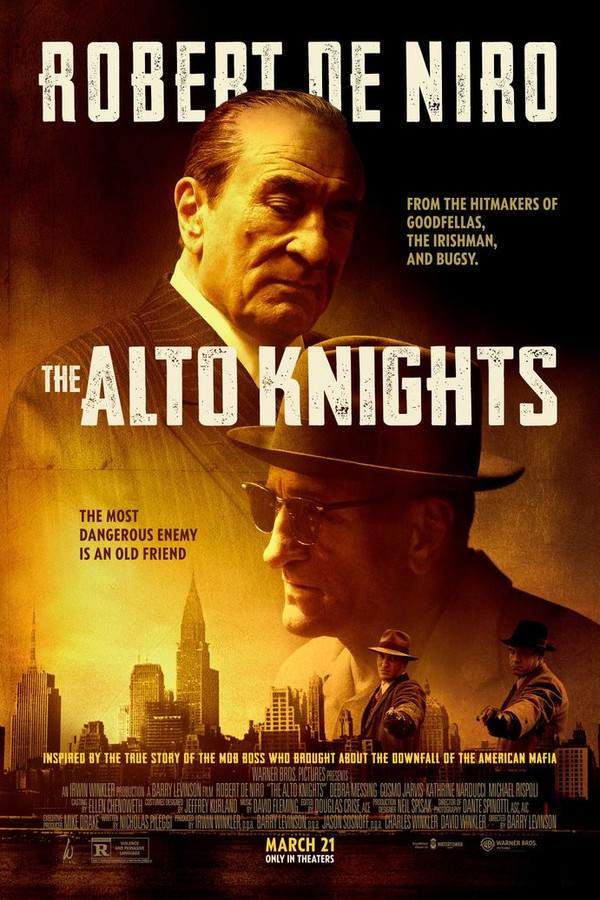
The Alto Knights (2025) movie poster

Timeline

The Alto Knights (2025) Timeline Explained – Every Event in Order

Release, runtime and language
2025 · 2 h · English
Echo score 40
JustWatch #1,176 20
Directed by
Barry Levinson
Starring
Robert De Niro, Michael Rispoli, Cosmo Jarvis, Belmont Cameli, Noah Bain Garret, Ed Amatrudo
Budget
$45M

In 1920s New York City, two of the city's most powerful organized crime bosses, Frank Costello and Vito Genovese, find themselves rivals. Once close friends, escalating tensions and betrayals lead to a dangerous conflict that will have a profound impact on the Mafia and the nation.

On this page (6)
  1. 1 Where to watch
  2. 2 Events in order (13)
  3. 3 Timeline questions answered
  4. 4 Movie threads
  5. 5 Movies like The Alto Knights
  6. 6 Every angle

Where to watch

Where to Watch The Alto Knights (2025)

Where can you watch The Alto Knights? Stream, rent or buy it in the US, including on HBO Max, Amazon Video and Apple TV Store: current JustWatch availability with up-to-date prices.

Streaming availability powered by JustWatch

13 events in order · contains spoilers

The Alto Knights Timeline: Events in Chronological Order

Every key event of The Alto Knights (2025) in order, scene by scene, with when and where it takes place. Use it to untangle flashbacks, time jumps and parallel storylines, to refresh your memory before the sequel or to find the exact scene you are thinking of.

  1. Vito Genovese's Ambitious Plot

    Vito Genovese, the ambitious underboss, orchestrates a failed assassination attempt against Frank Costello, the Luciano family boss. This event marks the beginning of deep-seated distrust and strife between the two.

  2. Costello's Retirement Decision

    Weary of constant bloodshed, Frank Costello decides to inform Genovese of his intention to retire and cede control of the Luciano family. However, this declaration is met with skepticism and distrust from Genovese, who believes Costello is hiding his true intentions.

  3. The Tipping Point

    Genovese's paranoia escalates, leading him to orchestrate the brutal murder of Albert Anastasia, Costello's chosen successor. This shocking act disrupts the tenuous peace and heightens the stakes for Costello and his family.

    Where
    Barber Shop
  4. Confronting Danger

    In the aftermath of Anastasia's murder, Costello realizes that his life, and that of his wife, are in imminent danger. This realization compels him to consider dismantling the empire he has built in order to ensure their safety.

  5. Understanding Genovese's Motives

    Costello recognizes that Genovese's ambition to control the Five Families makes him a target in his own criminal organization. He understands that Genovese views him as a threat due to his perceived mild nature, which belies a potential for vengeful action.

  6. Strategic Planning

    Rather than resorting to murder, Costello devises a sophisticated plan that relies on leveraging the increased scrutiny of the mafia. His goal is to orchestrate Genovese's incarceration while avoiding direct conflict.

  7. The Apalachin Meeting

    Costello's plan hinges on the infamous Apalachin meeting, where powerful mafia figures gather to discuss their operations. Costello subtly tips off law enforcement about the gathering, setting the stage for a pivotal raid.

    Where
    Apalachin, New York
  8. Delaying Tactics

    To facilitate the success of his plan, Costello intentionally delays his arrival at the meeting. He engages in leisurely activities like coffee stops and apple-picking, all while ensuring that law enforcement is alerted in time.

  9. Raiding Apalachin

    Law enforcement arrives just in time to catch the mobsters off guard at the Apalachin meeting. The ensuing panic leads attendees to flee into the woods, leaving a trail of incriminating evidence behind.

    Where
    Apalachin, New York
  10. Legal Consequences

    The raid leads to the arrest and indictment of twenty mafia figures for conspiracy to obstruct justice. The incident exposes the inner workings of the American Mafia to the public and escalates scrutiny on their activities.

  11. Genovese's Downfall

    The fallout from the Apalachin meeting ultimately contributes to Vito Genovese's eventual downfall, as he faces formal charges related to heroin trafficking. This decline marks a significant turning point in the mafia landscape.

  12. Costello's Achievements

    In the wake of these events, Frank Costello achieves his long-desired goal of a peaceful retirement. Having outmaneuvered Genovese, he steps back from the violent life of crime.

  13. Finding Peace

    Frank Costello enjoys the remaining years of his life away from the mafia's violent entanglements. His decision to retire allows him to live out his days as an old man, free from the chaos that once dominated his life.

Last updated: May 12, 2025 at 07:04

Was this helpful?

Timeline questions answered

The Alto Knights Timeline Explained: Your Questions Answered

When does it happen, and why in that order? The questions people ask about the chronology of The Alto Knights (2025): time jumps, flashbacks, cause and effect between scenes and the correct order of events, each answered with spoilers.

Q1

Why did Vito Genovese try to kill Frank Costello?

Vito Genovese orchestrated a failed assassination attempt against Frank Costello because he was ambitious and wanted to take control of the Luciano crime family. Genovese believed that by eliminating Costello, he could seize power and ultimately become the leader of all Five Families. His paranoia and lust for power drove him to turn against his former friend and boss.

Foreshadowing: Earlier, Genovese's growing ambition and distrust of Costello had already created tension within the family hierarchy.

  • vito genovese
  • frank costello
  • assassination
  • mafia boss
  • power struggle
Q2

Why did Vito Genovese kill Albert Anastasia?

Genovese ordered the murder of Albert Anastasia, Costello's chosen heir, to eliminate anyone who could challenge his own ascent to power. By killing Anastasia, Genovese destroyed Costello's intended succession plan and sent a clear message that he would not allow anyone else to take control of the family. This brutal act also served as a warning to Costello himself.

Foreshadowing: Genovese's paranoia had already made him view anyone close to Costello as a potential threat to his ambitions.

  • albert anastasia
  • vito genovese
  • murder
  • crime family
  • succession
Q3

How did Frank Costello plan to bring down Vito Genovese?

Rather than resorting to murder, Costello orchestrated Genovese's arrest by exploiting the Mafia's increased scrutiny. He devised a sophisticated plan centered on the Apalachin meeting, where he subtly tipped off law enforcement about the gathering of major Mafia figures. This strategy allowed Costello to have Genovese incarcerated without getting his own hands dirty or risking retaliation from Genovese's powerful allies.

Foreshadowing: Costello's decision to avoid direct confrontation was foreshadowed by his desire to retire and his recognition that Genovese had surrounded himself with dangerous allies.

  • frank costello
  • vito genovese
  • plan
  • arrest
  • strategy
  • apalachin meeting
Q4

What was the Apalachin meeting and why was it significant?

The Apalachin meeting was a gathering of top Mafia leaders from across the country in Apalachin, New York, where Vito Genovese planned to solidify his status as the new boss of the Luciano family. This meeting was significant because it represented the first time so many high-ranking mobsters were congregated in one place, making it a prime target for law enforcement. The raid that followed exposed the inner workings of the American Mafia to the public and led to major criminal indictments.

Foreshadowing: The meeting was part of Genovese's plan to consolidate power following his attack on Costello.

  • apalachin meeting
  • mafia gathering
  • new york
  • crime families
  • raid
Q5

Why did Frank Costello delay arriving at the Apalachin meeting?

Costello intentionally delayed his arrival at the Apalachin meeting by stopping for coffee and picking apples along the way. This was a calculated tactic to ensure that law enforcement would arrive while the mobsters were still gathered, maximizing the chaos and exposure. By arriving late, he ensured the raid would catch everyone off guard while he himself could claim innocence or deniability.

Foreshadowing: This delay reflected Costello's careful, strategic nature throughout the conflict.

  • frank costello
  • delay
  • apalachin meeting
  • coffee
  • police raid
Q6

What happened during the Apalachin raid?

When law enforcement arrived at the Apalachin meeting, the mobsters panicked and fled into the surrounding woods, desperately trying to escape arrest. This chaotic escape left them trailing incriminating evidence everywhere. Police documented license plate numbers and eventually indicted twenty Mafia figures for conspiracy to obstruct justice, as they had lied about the purpose of their gathering.

Foreshadowing: The raid was the culmination of Costello's carefully orchestrated plan to expose the Mafia.

  • apalachin raid
  • police
  • chaos
  • escape
  • evidence
  • indictment
Q7

How did the Apalachin meeting lead to Vito Genovese's downfall?

The Apalachin raid dramatically increased law enforcement scrutiny on the Mafia, which ultimately made it easier to build cases against top figures. The fallout from the meeting contributed directly to Genovese's eventual arrest and conviction on heroin trafficking charges in later years. While Costello quietly retired, Genovese's increased visibility from the Apalachin meeting made him a primary target for prosecutors.

Foreshadowing: Genovese's ambition had made him the face of the Mafia, which became his undoing.

  • vito genovese
  • downfall
  • drug charges
  • heroin
  • conviction
  • prison
Q8

Why did Frank Costello want to retire from the Mafia?

Costello wanted to retire because he was weary of the constant violence, betrayals, and endless cycle of revenge that defined his criminal life. After surviving Genovese's assassination attempt and witnessing the murder of his chosen heir, Costello realized he wanted to spend his remaining years in peace rather than constantly looking over his shoulder. He wanted to protect himself and his wife from the dangers of the criminal underworld.

Foreshadowing: The violent events that unfolded after his retirement announcement showed exactly why he sought to escape this life.

  • frank costello
  • retirement
  • peace
  • violence
  • mafia
  • wife
Q9

Why did Frank Costello choose to have Genovese arrested instead of killing him?

Costello chose to orchestrate Genovese's arrest rather than murder because Genovese had surrounded himself with influential allies who would have sought immediate revenge against Costello. Additionally, murder would have drawn too much attention and violated the Mafia's code of conduct in a way that could have provoked a war. By using law enforcement, Costello achieved his goal of neutralizing Genovese while maintaining plausible deniability and avoiding direct bloodshed.

Foreshadowing: This strategic approach reflected Costello's calculating nature compared to Genovese's brutal methods.

  • frank costello
  • arrest
  • murder
  • strategy
  • allies
  • revenge
Q10

What happened to Frank Costello after Vito Genovese's downfall?

After orchestrating Genovese's arrest and eventual conviction, Frank Costello achieved his long-desired goal of a peaceful retirement. He successfully outmaneuvered his rivals and lived out his remaining years away from the violence and treachery of the Mafia world. Unlike many crime bosses who met violent ends, Costello passed away as an old man who had managed to escape the lifestyle that had defined his existence.

Foreshadowing: Costello's strategic victory represented the culmination of his careful, patient approach to survival.

  • frank costello
  • retirement
  • peaceful life
  • old age
  • victory

Movie threads

More Movies Like The Alto Knights, by Mood & Story

Curated lists built around what makes The Alto Knights tick: the same mood, the same kind of story or the same emotional payoff. Each list explains why these movies belong together.

Mafia Power Struggles Like in The Alto Knights

Stories of strategic conflict where trust is a liability and power is a trap. If you liked the tense, strategic conflict in The Alto Knights, this list features movies like it. Explore similar gangster stories and crime dramas about calculated rivalries, paranoia, and the heavy price of power within organized crime syndicates and other high-stakes worlds.

  • tense
  • paranoid
  • calculating
  • methodical
  • grim
  • claustrophobic
  • Tone: tense, grim, calculating
  • Pacing: steady, methodical
Why these movies?

The story pattern: The narrative typically follows two or more adversaries engaged in a protracted, cerebral conflict. The plot advances through strategic moves, betrayals, and psychological warfare, often set within a closed, high-pressure system. The journey is one of escalating paranoia, where victory often feels hollow and comes at a great personal cost.

Why they belong together: Movies are grouped here based on their intense, tense atmosphere and their central focus on a methodical, psychology-driven power struggle. They share a grim, calculating mood and explore the themes of ambition, survival, and the moral decay that accompanies the pursuit of absolute control.

Gangster Character Studies Like The Alto Knights

Character studies where the pursuit of power leads to inevitable personal ruin. For viewers who liked the heavy emotional weight and character focus of The Alto Knights, this section collects similar biographical crime dramas. Find movies about the rise and fall of powerful figures, exploring themes of betrayal, moral cost, and the bittersweet nature of success in a violent world.

  • grim
  • melancholic
  • bittersweet
  • heavy
  • character study
  • fall from grace
  • Tone: grim, melancholic, bittersweet
  • Pacing: steady, character-driven
Why these movies?

The story pattern: These stories follow a protagonist's ascent within a morally compromised world, detailing the strategic choices and personal sacrifices made along the way. The narrative is less about external action and more about the internal psychological and moral decay. The climax often involves achieving a goal, but the ending is tinged with melancholy, highlighting the loneliness and ruin that success has wrought.

Why they belong together: These films are united by their heavy emotional weight, steady pacing, and focus on the psychological toll of ambition. They share a melancholic and grim mood, delivering a powerful, bittersweet conclusion that resonates long after the credits roll, making the experience feel profound and tragic.

If you liked this

Movies Like The Alto Knights

Similar movies to The Alto Knights: the same genre, themes or kind of story. Each one comes with its own plot summary, timeline and ending explained.

Browse all movie summaries

Every angle

The Alto Knights (2025) Explained: Plot, Ending, Timeline & Characters

Everything about The Alto Knights in one place: what happens in the plot summary, the timeline in chronological order, the characters and meaning, the ending explained and a spoiler-free summary. What's After the Movie adds the cast, box office and post-credit scenes.

Coming soon on iOS and Android

The Plot Explained Movie Summary App

Plot summaries, endings explained and timelines on your phone. Catch up on any movie in minutes, save your favorites and never miss a twist again.

Be the first to know when we launch. Your email stays private, always.

Learn more about the app