Plot Explained Spoilers guaranteed!
Plot Explained

Browse by genre

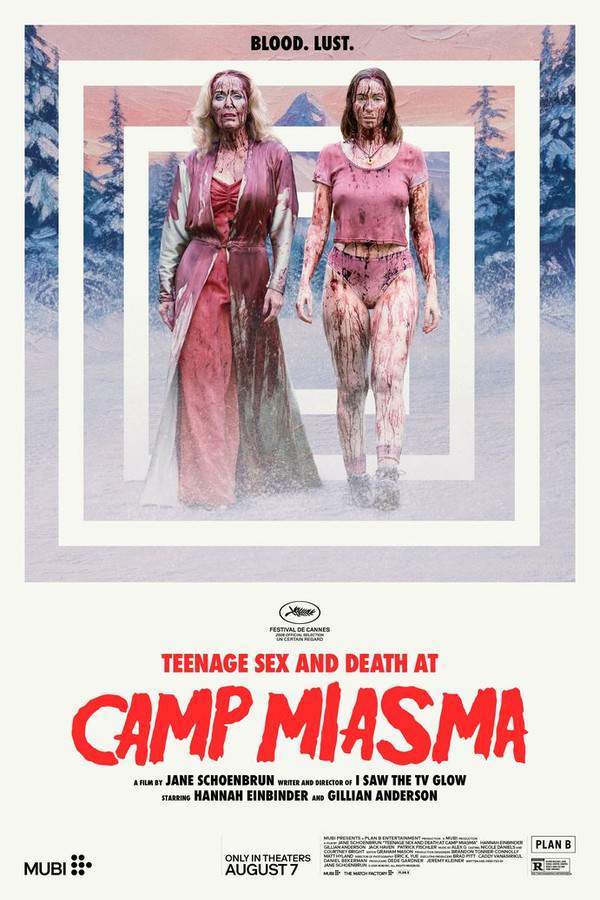
Teenage Sex and Death at Camp Miasma (2026) movie poster

Timeline

Teenage Sex and Death at Camp Miasma (2026) Timeline Explained – Every Event in Order

Release, runtime and language
2026 · 1 h 46 m · English
Echo score 66
Loading streaming availability…
Directed by
Jane Schoenbrun
Starring
Gillian Anderson, Patrick Fischler, Sarah Sherman, Dylan Baker, Hunter Dillon, Zach Cherry
Budget
$10M

After years of hasty sequels, the Camp Miasma series is handed to an eager young director determined to revive it. When she seeks out the original film’s enigmatic, reclusive star, the two women become tangled in a blood‑soaked nightmare of desire, terror and delirium, pulling the new director deep into the franchise’s dark mythology.

On this page (6)
  1. 1 Where to watch
  2. 2 Events in order (14)
  3. 3 Timeline questions answered
  4. 4 Movie threads
  5. 5 Categories
  6. 6 Every angle
Loading streaming availability…

14 events in order · contains spoilers

Teenage Sex and Death at Camp Miasma Timeline: Events in Chronological Order

Every key event of Teenage Sex and Death at Camp Miasma (2026) in order, scene by scene, with when and where it takes place. Use it to untangle flashbacks, time jumps and parallel storylines, to refresh your memory before the sequel or to find the exact scene you are thinking of.

  1. Franchise Origins

    Camp Miasma is established as a slasher franchise in the 1980s, focusing on the ghostly villain known as 'Little Death'. The franchise quickly gains a following due to its chilling premise and haunting atmosphere, setting a cultural backdrop for future horror films.

    When
    1980s
  2. Little Death's Creation

    The backstory of Little Death is revealed, a ghost of a child who was raised as both boy and girl. After being drowned by cruel campers, the spirit rises from the lake to exact revenge on anyone who dares to trespass near Camp Miasma.

    Where
    Camp Miasma
  3. Downward Spiral of Sequels

    Despite the early success of the original films, the Camp Miasma franchise suffers from a series of low-quality sequels, which leads to dwindling profits and interest. This decline leaves the franchise in a state of limbo, struggling to regain its former glory.

  4. Kris Williams Takes the Helm

    Queer filmmaker Kris Williams is hired to reboot Camp Miasma, tasked with modernizing its controversial and transphobic themes. Kris, who has a deep connection to the original films from her childhood, feels both excited and apprehensive about the responsibility of revitalizing the iconic franchise.

  5. Meeting with Billy Presley

    Kris travels to the Pacific Northwest to meet Billy Presley, the actress who played the original final girl and has since retired. Discovering that Billy lives on the abandoned campgrounds, Kris forms a connection with her that rekindles a sense of nostalgia and purpose.

    Where
    Pacific Northwest
  6. Shared Passions

    Kris and Billy bond over their shared history with Camp Miasma while watching the original film together. However, amidst their excitement, Billy appears uneasy, highlighting the nuanced emotions tied to their past experiences with the franchise.

  7. Exploring Sexuality

    Kris and Billy's intimate moment leads to a revealing conversation about their struggles with sexuality. They share personal stories of trauma and how it has shaped their ability to enjoy intimate relationships, highlighting a deeper connection between their characters and the themes of the films.

    Where
    Billy's House
  8. Pitch Meeting Gone Awry

    During a critical pitch meeting, Kris surprises everyone by presenting a radical interpretation of the Camp Miasma story. She argues that Little Death embodies the collective perception of the characters, creating an artful but controversial premise that challenges norms.

    Where
    Studio
  9. Summer Comes Again

    Kris returns to Camp Miasma, where she finds herself in a surreal summer setting. Little Death has unleashed a new wave of terror, and Kris is thrown unexpectedly into a life-and-death struggle that feels both familiar and terrifying.

    Where
    Camp Miasma
  10. Chasing the Final Girl

    As Little Death begins a killing spree, Kris must step into the role of the final girl she idolized. As she witnesses her loved ones fall to the specter, the chilling reality of her situation becomes stark as she fights for survival against the relentless ghost.

    Where
    Camp Miasma
  11. Encounter with Little Death

    In a moment of unexpected intimacy, Kris and Billy find themselves face to face with Little Death. As they embrace their fates, Kris experiences a blurring of reality and fantasy, culminating in a powerful, tragic climax as they succumb to their fears.

    Where
    Cabin
  12. Resurrection

    Miraculously, Kris and Billy revive the next morning, bloodied yet alive. They emerge from the chaos and carnage left by Little Death, symbolizing resilience and a new beginning for the characters in the franchise.

    Where
    Camp Miasma
  13. Back to the Start

    Returning to the gas station where the original Camp Miasma story began, Kris muses over the film's legacy. She repeats iconic lines from the franchise, acknowledging the lingering presence of Little Death and the impact it has left on their lives.

    Where
    Gas Station
  14. A Hopeful Future

    In a moment of shared hope, Kris and Billy walk hand in hand away from the nightmares of Camp Miasma. Their smiles reflect a collective escape from the shadows of the past and an embrace of possibilities yet to come.

Last updated: September 18, 2026 at 08:59

Was this helpful?

Timeline questions answered

Teenage Sex and Death at Camp Miasma Timeline Explained: Your Questions Answered

When does it happen, and why in that order? The questions people ask about the chronology of Teenage Sex and Death at Camp Miasma (2026): time jumps, flashbacks, cause and effect between scenes and the correct order of events, each answered with spoilers.

Q1

Why does Billy Presley still live at the Camp Miasma filming grounds?

Billy Presley has remained living on the desolate grounds where the original Camp Miasma was filmed, even after retiring from acting following her role as the franchise's first final girl. Her decision to stay suggests a deep, unresolved attachment to the location and the mythology of Little Death, which she expresses fascination with. Living there also positions her as a kind of guardian or embodiment of the franchise's history, making her the natural partner for Kris's reboot.

Foreshadowing: Billy's immediate comfort discussing Little Death's mythology hints that her connection to the camp goes far beyond nostalgic curiosity.

  • billy presley
  • camp miasma grounds
  • filming location
  • final girl retirement
Q2

Why does Billy get uncomfortable watching the original Camp Miasma with Kris?

Billy's visible discomfort during their screening of the original Camp Miasma stems from the trauma she experienced while filming its sex scene. She was sexually assaulted during production, and the scenes that follow trigger those buried memories. Her unease foreshadows her later confession and reveals that her connection to the franchise is not purely artistic; it is tangled with personal violation.

Foreshadowing: The sudden power outage that interrupts the screening creates the silence Billy needs to begin processing what she has just seen.

  • billy presley
  • original film
  • sexual assault
  • trauma
Q3

What trauma does Billy Presley reveal to Kris during their intimate moment?

Billy reveals that she was sexually assaulted during the production of the original Camp Miasma, specifically while filming the sex scene. This trauma fundamentally altered her relationship with intimacy and pleasure, leading her to associate arousal with the threat of death. She confesses that she can only experience pleasure by imagining Little Death watching her before approaching to kill her, a fantasy that fuses desire with violence.

Foreshadowing: Kris's hesitation during their encounter creates the emotional space needed for Billy's confession to emerge.

  • billy presley trauma
  • sexual assault
  • camp miasma
  • fantasy
  • little death
Q4

What is the radical pitch Kris presents to the studio executives?

Instead of presenting a conventional storyline, Kris pitches a meta-concept: Little Death does not simply exist beneath the lake as folklore, but rather lives in the perception created by the Camp Miasma films themselves. All the characters, including Kris, are participants inside one of those movies. This pitch reframes the entire reboot as a story about reality and fiction collapsing into each other, and it is this very idea that triggers the franchise's mythology to become real.

Foreshadowing: Billy's earlier dismissal of Kris's overly analytical approach makes Kris double down with an even more extreme interpretation.

  • kris williams pitch
  • meta narrative
  • studio executives
  • little death
Q5

Why does Billy dismiss Kris's analytical interpretation of the Camp Miasma franchise?

Billy rejects Kris's over-intellectualized reading of the films because she has lived through their mythology firsthand rather than studying it as text. Her perspective is emotional and bodily; she was assaulted on those grounds and still feels the pull of Little Death in her fantasies. Billy prefers an intuitive, felt understanding of the horror over the academic framework Kris brings, and this is why she redirects Kris toward embracing the franchise as lived experience instead of critical theory.

Foreshadowing: Their disagreement about interpretation foreshadows the larger tension between analysis and embodiment that drives the third act.

  • billy presley
  • kris williams
  • interpretation
  • camp miasma analysis
Q6

How does Kris's pitch trigger Little Death's killing spree?

Kris's radical pitch argues that Little Death perceives reality through the Camp Miasma films and that everyone involved is already a character inside one. By giving the myth a coherent metaphysical framework and publicly committing to it as the reboot's premise, Kris effectively summons or activates Little Death. Once the idea is spoken and believed, the boundary between the fictional mythology and the real camp collapses, and Little Death's summer killing spree begins as if scripted by the very film Kris is trying to make.

Foreshadowing: The earlier blackout during the screening signals that the camp itself is already responding to their engagement with the mythology.

  • kris pitch
  • killing spree
  • little death
  • meta narrative collapse
Q7

Why does Little Death spear both Kris and Billy in the cabin?

Little Death spears both Kris and Billy because they have become the central figures of his mythology rather than victims fleeing it. By embracing their desires, trauma, and fantasies, Kris and Billy have transformed themselves into the ultimate final girls of a new Camp Miasma film, and Little Death's attack is the ritual fulfillment of that role. Their mutual spearing binds them together as co-protagonists of the franchise's latest chapter rather than sparing one over the other.

Foreshadowing: Kris's confession that she only feels pleasure as a sexualized final girl prefigures the fate she ultimately accepts.

  • little death
  • cabin scene
  • kris williams
  • billy presley
  • spearing
Q8

What does the VHS tape Kris and Billy find under the lake represent?

The VHS tape labeled Teenage Sex and Death at Camp Miasma that Kris and Billy discover in the surreal underwater afterlife represents the film they have just lived through, or perhaps the one they are about to make. Its presence under the lake confirms Kris's pitch that their reality is itself a Camp Miasma movie. The tape also signals that their story has been captured and is now part of the franchise's ongoing mythology, which Little Death can use to perceive the world.

Foreshadowing: The earlier scenes of Kris studying the original film's techniques foreshadow the moment their own experience becomes a recorded film.

  • vhs tape
  • underwater afterlife
  • camp miasma
  • meta narrative
Q9

How do Kris and Billy come back to life after being speared by Little Death?

Kris and Billy awaken the morning after their deaths covered in blood but alive, a resurrection that aligns with Kris's pitch that reality and the films are indistinguishable. Within the logic of the story, their deaths are the climactic scene of the new Camp Miasma film, and like characters in a horror franchise, they survive to appear in the next installment. Their revival also reflects the franchise's recurring structure in which the final girl returns, suggesting they have now truly become part of the mythology.

Foreshadowing: The final scene of every prior Camp Miasma film ends with an implication that the killer will return, priming the audience for a similar resurrection.

  • kris williams
  • billy presley
  • resurrection
  • final girl survival
Q10

Why does Kris recite lines from previous Camp Miasma films at the gas station?

At the gas station where the original story began, Kris recites iconic lines from earlier Camp Miasma films to acknowledge that she and Billy have now been absorbed into the franchise's mythology. The recitation mirrors the cyclical structure of slasher sequels, in which each new installment repeats and remixes the dialogue of its predecessors. It also serves as a quiet confirmation that Little Death is still waiting beneath the lake, ready for the next film to begin.

Foreshadowing: Kris's encyclopedic knowledge of the original film's dialogue throughout the movie makes her final recitation feel like a natural continuation of her obsession.

  • kris williams
  • gas station
  • camp miasma lines
  • franchise mythology
Q11

What does the ending with Kris and Billy walking away covered in blood mean?

The final image of Kris and Billy walking away hand in hand, smiling and covered in blood, signals that they have fully accepted their roles as the new final girls of the Camp Miasma franchise. Their survival and intimacy represent a hopeful reclamation of the mythology that once harmed Billy, transforming trauma into partnership. At the same time, Little Death remains waiting beneath the lake, which means their escape is only temporary and another killing cycle is inevitable.

Foreshadowing: Billy's lifelong fascination with Little Death earlier in the film makes her eventual acceptance of him as part of her identity feel earned.

  • ending explained
  • kris williams
  • billy presley
  • final girl
  • blood
Q12

Why was Kris Williams specifically chosen to reboot the Camp Miasma franchise?

Kris Williams is brought on as director because the studio wants to modernize the franchise and soften its transphobic legacy, a task aligned with Kris's identity as a queer filmmaker. Her childhood connection to the films gives her a personal stake in revitalizing them, while her outsider perspective allows her to reinterpret Little Death's gender-fluid mythology in a more progressive light. This combination of insider nostalgia and outsider critique makes her the ideal choice for a meaningful reboot.

Foreshadowing: Kris's emotional connection to the films explains why she will eventually go further than a typical reboot and merge her life with the franchise.

  • kris williams
  • reboot director
  • transphobic themes
  • queer filmmaker
Q13

Why does Billy fantasize about Little Death watching her before killing her?

Billy's fantasy of Little Death watching her before drawing near to end her life is a coping mechanism born from the sexual assault she experienced on set. By reframing her sexual encounters as moments in which a powerful, otherworldly presence is both witnessing and threatening her, she transforms trauma into a controlled, repeatable fantasy. The fantasy fuses arousal with mortality, allowing her to feel pleasure again while keeping the danger at a symbolic distance she can manage.

Foreshadowing: Billy's earlier fascination with Little Death during their first conversation subtly hints at how deeply he is tied to her intimate life.

  • billy presley
  • little death fantasy
  • sexual trauma
  • arousal

Movie threads

More Movies Like Teenage Sex and Death at Camp Miasma, by Mood & Story

Curated lists built around what makes Teenage Sex and Death at Camp Miasma tick: the same mood, the same kind of story or the same emotional payoff. Each list explains why these movies belong together.

Meta horror like in Teenage Sex and Death at Camp Miasma

Stories where the act of creating or revisiting horror becomes the horror itself. Looking for movies like Teenage Sex and Death at Camp Miasma? These meta horror stories turn the act of filmmaking, franchise-making, or obsessive fandom into the monster itself. If you liked how Camp Miasma blurred reboots, reality, and slasher mythology, you'll find similar unsettling, reality-bending horror films here.

  • meta horror
  • self-aware
  • dreamlike
  • obsessive
  • oppressive
  • recursive
  • Tone: dark, unsettling, self-aware
  • Pacing: slow build, erratic climax
Why these movies?

The story pattern: A creator or devotee returns to a notorious horror property, convinced they can revive or reinterpret it. As production unfolds, the line between the movie being made and the horror being lived dissolves. Past victims, masked killers, or repressed traumas bleed into the present, the protagonist becomes both filmmaker and final girl, and the ending refuses to confirm whether the monster was ever just fiction. The structure is recursive, self-aware, and deeply destabilizing.

Why they belong together: These films share a fascination with horror's own mythology and the way stories consume their makers. They tend to be dark, complex, and ambiguously resolved, with pacing that slowly builds through eerie conversations before erupting into graphic, surreal violence. Viewers who want horror that thinks about itself, and about who pays the price for loving horror, will feel at home.

Sensual horror like in Teenage Sex and Death at Camp Miasma

Films where intimacy, obsession, and violence blur into one feverish pull. Searching for movies like Teenage Sex and Death at Camp Miasma? These sensual horror films fuse queer desire, romance, and graphic violence into a single intoxicating atmosphere. If you were drawn to Camp Miasma's mix of intimacy, obsession, and grotesque horror, this collection gathers similar disturbing, seductive, and emotionally heavy stories.

  • sensual
  • seductive
  • queer
  • obsessive
  • grotesque
  • dreamlike
  • Tone: dark, sensual, obsessive
  • Pacing: slow burn into chaotic violence
Why these movies?

The story pattern: Two or more figures are pulled together by an attraction they can barely name, often against a backdrop of trauma, secrecy, or a mythic threat. Early scenes are charged with whispered conversation, lingering glances, and slow-burn seduction. As the bond deepens, so does the violence around them, until love, blood, and death become impossible to separate. The climax is frantic and graphic, and the ending often leaves the lovers walking away together, changed and possibly doomed, with the horror still waiting.

Why they belong together: These films share a willingness to treat sensuality and horror as the same emotional language rather than opposites. They tend to be dark, heavy, and atmospheric, with variable pacing that lingers in intimate moments before erupting into graphic slasher or psychological violence. Many foreground queer, trans, or otherwise marginalized bodies, and none of them promise a clean escape. They are grouped here because they offer a similar feverish, romantic, and deeply disturbing experience.

Categories

Movie Lists Featuring Teenage Sex and Death at Camp Miasma

Teenage Sex and Death at Camp Miasma appears in these hand-built movie categories. Each one groups movies by a specific mood, theme or story type, with their plot summaries and endings explained.

View all movie categories

Every angle

Teenage Sex and Death at Camp Miasma (2026) Explained: Plot, Ending, Timeline & Characters

Everything about Teenage Sex and Death at Camp Miasma in one place: what happens in the plot summary, the timeline in chronological order, the characters and meaning, the ending explained and a spoiler-free summary. What's After the Movie adds the cast, box office and post-credit scenes.

Coming soon on iOS and Android

The Plot Explained Movie Summary App

Plot summaries, endings explained and timelines on your phone. Catch up on any movie in minutes, save your favorites and never miss a twist again.

Be the first to know when we launch. Your email stays private, always.

Learn more about the app